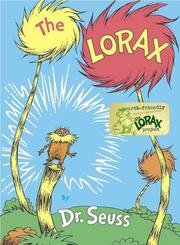
The Lorax
2,563-word summary 11 min read 72 pages in the book
- First published
- 1971
- Publisher
- Random House
- Pages
- 72
- ISBN
- 9780394823379
Reading options
What's inside (8 sections)
I picked up The Lorax again because my kid asked why there was an orange mustached fellow on a library poster about trees. Dr. Seuss published it in 1971 with Random House, a 72 page picture book that reads in ten minutes and sticks around for years. I remembered the ending word on the stone. I had forgotten how sad the middle gets when the sky changes color.
It starts not in the bright valley but after it. A boy walks through Grickle-grass past an old empty house on the Street of the Lifted Lorax. The wind smells sour. Snuffs of smoke hang low. He knocks and pays a tired old Once-ler in nails and snail shells and a pail to hear what happened. That frame matters. We are not watching ruin happen live. We are hearing a confession from someone who lived long enough to feel sick about it.
The Once-ler says he came once to a clean place with soft wind and ponds and bright Truffula Trees. He was young and looking for a shop to start. He cut one tree for his first test and that is when the Lorax popped out of the stump. Short, brownish gold, big yellow mustache, mossy eyebrows, arms crossed. He says he speaks for the trees, since trees have no tongues. The Once-ler mostly ignores him at first because the invention works.
That invention is the Thneed. The book calls it a Fine-Something-That-All-People-Need. It looks like a pinkish knit with many uses. Shirt, sock, tent, carpet, curtain, bicycle seat cover. The Once-ler knits one from Truffula silk tufts and a passing man pays on the spot. That first sale lights a hunger in him. He decides to make Thneeds faster and sell more.
The Street of the Lifted Lorax
The opening pages do a lot of work for a picture book. Seuss paints the present as grey and lumpy. Broken cement, old tires, pale grass that cannot stand up. Then the Once-ler lifts a shutter and his long pale arms come out first, then his face hidden under hat and shadows. You never see his full face. Kids notice that right away. My kid asked if he was a monster. I said no, he is just a man who does not want to be seen.
The boy pays to listen, which gives the whole book a campfire feel. The Once-ler rocks in his Lerkim chair while Whisper-ma-Phone tubes carry his voice down. That little detail charms kids and lets Seuss switch time without a hard cut. One minute the room is dark and dusty. Next minute the memory blooms in full color.
What I like here is that Seuss does not start with a lesson. He starts with curiosity. Empty street, strange name, locked house. Why is it called the Street of the Lifted Lorax if no Lorax is around to lift. The question pulls you forward. You want to know what lifted means. Flew away. Left. Gave up.
When the Once-ler starts talking, his voice is cranky and tired. He calls himself old and lonely. He is not asking for pity. He is just stating what greed left him with. A pile of stones with one word and no visitors except a kid brave enough to knock.
Parents reading aloud can pause here and ask what the child sees in the grey town. Mine pointed to the small hole where a Humming-Fish pond used to be. That habit of looking close helps later, when the color drains page by page and you need to notice.
Truffula Trees and a Bright Valley
Then the memory opens and the color hits. Truffula Trees with yellow and white striped trunks and big soft tufts in pink, orange, red. They smell sweet, like butterfly milk, the Once-ler says. Clouds move clean. A pond shines. Brown Bar-ba-loots bounce and eat Truffula Fruit. Swomee Swans fly with long necks. Humming-Fish hum in the water.
Seuss spreads this across two pages so you sit in it. I counted with my kid how many tufts we could see. We lost track near twenty. That plenty is the point. The valley feels endless. One tree cut down does not look like loss at first. There are hundreds behind it.
The art style here is pure Seuss curve. No straight lines. Trunks lean. Tufts puff out like cotton candy. Animals have round bellies and sleepy smiles. Even the Once-ler in memory looks bouncy in his striped hat and eager grin. He is not a villain in a black cape. He is a young maker who thinks he found something clever.
The sound of this part helps too. Seuss writes in his rolling anapests, short lines with bounce. It feels good to read aloud. Humming-Fish humming. Swans swooping. Bar-ba-loots in their Bar-ba-loot suits. Kids repeat the names because they are fun in the mouth. That fun makes the later loss land harder. You liked this place, so you mind when it fills with smoke.
I use these pages to talk about wants against needs. The valley already gives fruit, shade, clean air, homes for animals, music from fish. The Once-ler sees raw cloth. Both are real, but only one can regrow if you wait. The book never says this in plain words. It shows a full forest and lets you feel how much is there before anyone builds.
The Thneed and the First Warning
The Once-ler chops one Truffula to knit his first Thneed. Thunk. The Lorax arrives coughing and scolding. He shakes a finger and calls the chopping a shame. The Once-ler answers that he is doing nothing wrong. He is just knitting something people need. Then a customer arrives and buys it for almost four dollars. The Once-ler grins. See. Need.
This is the loop of the whole book in small form. Warning, cash, dismissal. It repeats bigger each time. First the Lorax protests the single tree. The Once-ler says one tree is nothing. Then his family arrives to help knit. Uncles, aunts, cousins in trucks. They set up a shop. Chop, knit, sell. The Lorax warns again, slower this time. The Once-ler offers him a spot on the payroll and keeps cutting.
What surprised me rereading as an adult was how quick the first sale feels. Seuss does not paint buyers as evil. They like the Thneed because it is soft and odd and new. A man in a tall hat wants one. Then more want one. Demand grows because supply makes it visible, and supply grows because demand pays. That circle is honest about how small shops turn into mills.
The Lorax in these scenes is funny and tired at once. He is small enough to be lifted by the seat of his pants at one point, but he keeps coming back. He does not cast spells. He points, counts stumps, asks who will speak if he stops. His power is only words and presence. The Once-ler has axes and money, so words lose for a while.
If you read with kids, this is a good place to stop and ask what else the Once-ler could have done. Could he knit Thneeds from fallen tufts. Could he plant a new tree for each one cut. Could he make fewer and charge steady. The book does not offer those paths yet. It lets the easier path win, which feels true to how shops grow when no one sets limits.
Bar-ba-loots, Swomee Swans, and Humming Fish
Seuss structures the ruin in three clear exits, one for each animal group, and each hits a different sense. Food, air, water. Kids follow it because the pattern is easy to hold.
First go the brown Bar-ba-loots. With most Truffula Fruit gone, there is nothing sweet to eat. Their bellies rumble. They get the crummies in their tummies. The Lorax gathers them and sends them off over the hills to find food. The picture shows a long line of sad bears walking away past stumps. My kid said they looked hungry, not angry. That is right. Hunger moves them, not fear.
Then go the Swomee Swans. The Once-ler builds a bigger factory to keep up with orders. Smoke pours from Smogulous Smoke stacks. The air turns grey and choky. Swans that used to sing in clean sky now cough and cannot sing a note. The Lorax sends them out by wing, sad and flapping through haze. The page color shifts here in a way you feel before you name it. Blue fades. Grey spreads from the top corner down.
Last go the Humming-Fish. The factory rinses and dumps Gluppity-Glup and Schloppity-Schlopp into the pond. The water thickens. Fish cannot hum. Their gills clog. The Lorax lifts one wriggling fish and walks it out himself. That image stayed with me from childhood more than any other. A small guardian carrying the last singer to clear water.
Between each exit, the Lorax returns to the Once-ler with the same complaint in stronger form. Trees falling faster. No fruit. No clean air. No clean water. The Once-ler answers each time with growth talk. Bigger shop. Bigger factory. More orders. He even invents the Super-Axe-Hacker to drop four trees at once. Progress, he calls it. The book lets his grin get wider as the land gets thinner.
What I value in this middle is that Seuss ties each harm to a clear cause. Not vague ruin. Trees cut means no fruit means bears leave. Smoke means swans choke. Sludge in water means fish fail. Cause and effect sit on facing pages, picture against picture. A five year old can trace it with a finger. Cut here, smoke there, sludge in pond.
The Last Tree Falls
After the fish leave, the factory keeps humming for a while because demand does. Trucks load Thneeds. Family counts money. The Once-ler watches numbers climb and feels big. Then the sound every reader waits for comes soft in the art. Whack. The very last Truffula Tree falls.
The mill stops that instant. No more silk. No more Thneeds. Workers pack and drive away. Family leaves in cars. The Once-ler sits alone in rubble with empty jars and old machinery rusting around him. The Lorax looks back once, lifts himself by the seat of his pants through a hole in the smog, and disappears. All he leaves behind is a small pile of rocks with one word: Unless.
Seuss draws this aftermath in pale tones. No bright tufts. No animals. Just stumps, cracked earth, one dingy building, and sky the color of old socks. The quiet on these pages feels loud after the busy factory spreads. My kid turned the page back and forth, checking if any color was hiding. There was none to find.
The Unless stone is the most argued line in all of Seuss. Unless what. The book withholds the answer until the final pages, when the Once-ler finally understands and tells the boy. Unless someone like you cares a whole awful lot, nothing is going to get better. It is not fancy. It puts care before fix. First care, then plant, then protect.
The confession lands because the Once-ler gains nothing by telling it. He is not selling. He gives the boy the last Truffula seed he kept for years, tells him to grow a forest, keep water clean, keep air clear, keep bears and birds and fish in mind while trees grow. The boy leaves down the empty street holding a small seed that feels heavier than a Thneed. Seuss ends with hope but not repair. One seed is not a forest yet.
Unless, Art, and What Still Stings
The art carries half the argument. Early pages glow with pink and gold. Mid pages mix glow with grey at the edges. Late pages go flat grey and brown. Seuss uses the same curved hills throughout so kids can see it is the same place changed, not a new place. That sameness teaches more than captions could. You watch home become scrap.
His line work also shifts mood. Truffula bark gets neat stripes. Factory pipes get hard angles and clutter. Lorax fur stays soft even when he scolds, which keeps kids on his side. The Once-ler fades from round faced youth to long hidden figure. You track guilt in how little of him you see.
Legacy is large for a 72 page book. Schools read it for Earth Day. Activists quote the Unless line on posters. The 1972 television special kept the songs simple and sour. The 2012 film added a town, a love story, action chases, and brighter jokes. Some families love the film colors. I prefer the book ending because it stays quiet. A boy, an old man, a seed. No parade.
Criticism is fair to name. Some readers find the book preachy. The Lorax lectures, the Once-ler keeps missing the point, the moral arrives carved on stone. Kids who love silly Seuss like Green Eggs and Ham or The Cat in the Hat may miss the jokes here. The rhymes still bounce, but the mood presses down. A few pages feel like a speech with pictures.
There is also the charge that the book scolds use without showing care in action until the last page. The Once-ler never plants while cutting. The buyers never ask where Thneeds come from. The boy gets the seed but we do not see the forest grow. If a child wants steps, the book gives only plant it, guard it, keep air and water clean. That is true but thin for kids near real mills or logging towns.
Loggers pushed back hard in the 1980s and after. One county in California tried to keep it off a school list. A response book called The Truax told a logger side with jobs and replanting. Teachers now often pair them to talk about work and woods both. I think that pairing helps. The Lorax never says people should have no homes or clothes. It says take without regrow will end the take.
For home reading, I suggest a slow pace. Name each animal group as they leave and ask where they might go. Count stumps on the factory spread. Find the Lorax small against big pipes. Let the grey pages sit without rushing to the seed. Then read the Unless pages twice, once for sound and once for plan. Ask what caring a whole awful lot could look like on your street. Water a sapling. Pick up cans near a drain. Visit a pond and listen.
I closed the book feeling both sore and steadied. Sore because the valley in my head was so bright at the start. Steadied because the last gift is practical. Not a wish. A seed and a job. Grow it where Truffulas can live, keep it safe from axes, share fruit with Bar-ba-loots, keep smoke thin, keep water clear. Unless you do, nothing changes. If you do, something might. For a short picture book from 1971, that trade still feels honest.
FAQ
When was The Lorax published?
Random House published it in 1971 as a 72 page picture book by Dr. Seuss.
What does Unless mean in The Lorax?
It means nothing gets better unless someone cares a lot, plants the last seed, and guards clean air and water.
Is The Lorax only for children?
No. Kids enjoy the rhymes and animals, while adults can discuss greed, pollution, jobs, and care.
Similar books
More like The Lorax →
The Cat in the Hat
A tall Cat turns a rainy day upside down for Sally and her brother, with Thing One and Thing Two in tow.
2,546-word summary · 11 min read

Goodnight Moon
A small bunny says goodnight to each object in the green room in this 1947 bedtime classic.
2,600-word summary · 12 min read

The Very Hungry Caterpillar
Eric Carle's hungry caterpillar eats through the week and turns into a butterfly: what the holes, counts, and days teach, and why kids still ask for it again.
2,413-word summary · 11 min read

Where the Wild Things Are
Maurice Sendak follows Max in his wolf suit from mischief to a forest of Wild Things, through the wordless rumpus and back home to supper waiting still hot…
2,585-word summary · 11 min read
The Giving Tree
A boy and a tree grow older together as he takes her apples, branches, and trunk until only a stump remains.
2,249-word summary · 10 min read
Oh, the Places You'll Go!
Seuss Sendoff follows life highs, slumps, and moving on with courage.
2,705-word summary · 12 min read