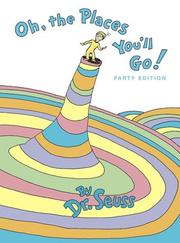
Oh, the Places You'll Go!
2,705-word summary 12 min read 64 pages in the book
- First published
- 1990
- Publisher
- Random House
- Pages
- 64
- ISBN
- 9780679805274
Reading options
What's inside (9 sections)
I first read Oh, the Places You'll Go! at a high school graduation, the way a lot of people meet it. Someone's name was called, envelopes floated, and a teacher held up the book and read the opening lines into a microphone that buzzed. I remember thinking it was sweet but simple, the kind of thing adults hand to eighteen year olds because they do not know what else to say. Years later I sat down with it properly, all sixty four pages in one slow sitting, and I was surprised by how strange and specific it gets. It is not only a pep talk. It has slumps and lurches and lonely stretches where nobody sings. That second reading changed how I think about it.
The book came out in 1990 from Random House, the last book published in Seuss's lifetime, and you can feel that valedictory mood in it. He was eighty six. He had written The Cat in the Hat and Green Eggs and Ham and all the loud, crowded classics. Here the voice is quieter and more direct. He talks to one reader, a kid he calls Kid, or you, who is about to leave and make choices. The pictures are still full of Seussian machines and hills and Truffula-like curves, but there are pages with a lot of empty sky. That empty space matters. The story is about moving through the world, and sometimes the world looks wide and a little bare.
Reading it as an adult, the rhythm pulls you along fast. Then you hit a dark spread and the bounce stops. That stop and start is the whole point. Life here is not one long climb. It rises, stalls, drops, waits, and climbs again.
You have brains and feet
The opening is famous for a reason. Seuss tells the reader straight out that they have brains in their head and feet in their shoes, so they can steer themselves in any direction they choose. It sounds obvious until you hear it read aloud to a room full of nervous graduates. The simplicity lands because it puts responsibility and freedom in the same sentence. You are the one who decides. You are also the one who has the tools.
What I like about this start is how physical it is. This is not abstract advice about following dreams. It is about feet and streets and doors and signs. The narrator names Great Places and Great Sights, books and noodles and puddles and bonus points. The illustrations show the Kid, a small boy in yellow pajamas with a big round head, standing at a crossroads with curving yellow roads rolling off in every direction. There are signposts and balloons and strange birds. Everything leans forward, as if the page itself wants you to pick a road.
In practice, when I read this with a five year old, this was the part where he pointed and shouted out colors and animals. When I read it alone as an adult, I heard something else. The line about choosing is kind but firm. Seuss does not say someone will choose for you. He says you will look up and down streets, look them over with care, and some you will not choose at all. That early note of caution keeps the book from floating away. From page one, choice means saying no to some roads.
The meter here is pure Seuss, short lines with a rolling beat, lots of internal rhyme, lots of exclamation. It is fun to perform. If you are reading aloud, lean into it. Let the bright pages feel bright. The trouble comes later, and it hits harder because the start felt so open and sunny.
Highs and parades
After the sendoff, the book gives you success. The Kid flies high, joins parades, wins fame, plays in a band with wild instruments. The pictures fill up with confetti and towers and creatures cheering from balconies. Seuss writes about winning and being the best of the best, about having everyone watch you take a bow. For kids, this is pure wish fulfillment. For older readers, it reads like a memory of a good month when everything clicked.
I find this section smarter than it looks. Seuss does not present success as a finish line. He presents it as weather. It comes, it feels great, it changes the scenery, and then the road keeps going. He even slips in odd details that keep it grounded. There are prunes and oysters and strange traffic jams in the sky. The weirdness reminds you that even good times in Seuss country are a little chaotic. You do not sit on a cloud and rest forever. You ride the high while it lasts and keep your steering ready.
Parents sometimes skip past these pages quickly, but I think they deserve a slow read. Look at how crowded the successful pages are compared to the lonely ones later. Full pages mean full times. Empty pages will mean empty times.
Slumps, lurches, and Bang-ups and Hang-ups
Then the tone shifts, and this is where the book earns its reputation. Seuss tells the reader that things can go wrong. You can get into a slump. You can get stuck in a Lurch on a hill where the view is bleak and the wind is cold. You can get confused and left in a fog. Most famously, you can get hung up with Bang-ups and Hang-ups, those spiky, frowning hazards that block the road.
The Lurch is one of my favorite images in all of Seuss. It is not a monster. It is a dip in the road, a lonely curve with striped hills leaning in. The Kid sits there small, wrapped in his own arms, looking out at nothing much. Anyone who has had a bad winter or a stalled job search or a long illness in the family knows that spot. It is not dramatic. It is just stuck. Seuss does not rush past it. He lets the page feel quiet.
Bang-ups and Hang-ups are louder. In the art they look like bristling traps and tangled wires, part thorn bush, part bad mood. The text warns that you can get so confused you will start in to race down long wiggled roads at a breaknecking pace and grind on for miles across weirdish wild space, headed for a scary‐sounding place. Reading that aloud, you can hear the panic build in the rhythm. The lines get longer and twistier. It feels like anxiety sounds inside your head.
What saves this section from being grim is honesty. Seuss does not say successful people avoid these patches. He says everyone hits them. He says unslumping yourself is not easily done. There is no trick offered. Getting out takes work and time, and you can do it even though it is hard.
When I talked about this part with a friend who teaches middle school, she said her students recognize the Slump faster than the happy parts. They live there sometimes. A bad grade stretch, a fight with friends, a move to a new town. They like that Seuss names it without making it shameful. You are not bad for feeling low. You are traveling, and this is one of the places.
The Waiting Place
If people remember one invention from this book, it is the Waiting Place. Seuss describes it as a dreary spot where everyone is just waiting. Waiting for a train to go or a bus to come, or a plane to go or the mail to come, or the rain to go or the phone to ring, or the snow to snow or waiting around for a Yes or No or waiting for their hair to grow. The illustration shows a long crowd of pale, slumped creatures sitting and standing in rows, all facing nowhere, all doing nothing.
As a kid, I thought this page was funny. The rhymes pile up and the creatures look bored in a cartoon way. As an adult, I found it uncomfortably accurate. The Waiting Place is not jail and it is not tragedy. It is drift. It is the year after college when you keep saying you will apply next week. It is the job where you stop learning but stay because leaving feels risky. It is scrolling and refreshing and telling yourself you are resting when really you are stalled.
Seuss is blunt here in a way most picture books avoid. He says waiting for something to happen to you is a trap. He tells the reader straight out that this is not for them. It is part pep talk, part dare. He is betting on the reader.
I have seen teachers act this out well. The class pretends to wait, shoulders drooping, sighing loudly, then on cue shakes it off and marches out. Waiting feels safe because nothing can go wrong while you wait. The cost is that nothing good happens either.
The passage also shows his control of sound. The repeated waiting for phrases build a lulling rhythm, like a clock ticking or a line inching forward. Then he breaks it with a short command to move on. When you read it aloud, pause before that break. Let the boredom settle for a beat. The exit feels like fresh air because you let the stale air gather first.
Ninety-eight and three-quarters percent guaranteed
Near the end comes the line everyone quotes at graduations. Seuss tells the Kid that they will succeed, and he gives it a number. Kid, you will move mountains. Today is your day. Your mountain is waiting. So get on your way. And then the famous hedge. Except when you do not. Because sometimes you will not. He writes that he is sorry to say so but sadly it is true, that Bang-ups and Hang-ups can happen to you. Then the guarantee. You will succeed. Yes. You will indeed. Ninety-eight and three-quarters percent guaranteed.
That fraction is doing a lot of work. It lets Seuss be encouraging without lying. He promises a lot and then leaves room for real life. The three quarters missing is where the Slump lives, where the Waiting Place waits, where luck and timing and other people get a vote. I love that he puts a number on hope. It sounds official and silly at the same time, which makes it easier to believe than a flat promise that everything will work out.
For graduates, this is the line that gets printed on cards and cakes. Sometimes it gets flattened into pure optimism, with the second half left off. Read the whole spread and the meaning changes. Seuss is not saying effort always wins. He is saying your chances are good if you keep moving, keep choosing, keep unslumping when you slump. The guarantee is high, not total. That gap is where courage lives.
There is also craft in how he stages it. The mountain pages open wide. The Kid stands small before a huge striped peak with a winding path to the top. After the crowded Waiting Place and the tangled Hang-ups, the clean climb looks inviting. The art says what the words say. The way forward is steep but clear. You can see where your feet go.
I read that ending to my nephew before his first day of middle school, not a graduation at all, and the number made him laugh. Ninety eight and three quarters. He repeated it on the walk to school like a shield. Did it protect him from anything. No. Did it give him a story to carry into a scary building. Yes. That is what the line is for. Not a contract. A companion.
Lines, color, and wide empty space
It helps to slow down and look at how the book is drawn, because the pictures carry half the story. Seuss works in his familiar style, looping black line, warm yellows and teals and coral reds, odd machines with horns and wheels, hills that curve like scoops of ice cream. But compared to The Lorax or The Sneetches, there is more air here. Some spreads leave big fields of pale sky or blank road. The Kid often appears small inside a large space.
That scale choice changes the feeling. When the Kid is high and celebrated, the pages crowd in. Banners cross the sky. When he is low, the crowd vanishes. You see one small figure and a long road.
Color does emotional work too. The bright parade pages glow yellow and pink. The Slump pages cool down into blues and grays. The Waiting Place is washed out, almost beige. Then the mountain pages warm up again. If you flip through without reading, you can track the mood by hue alone.
Seuss also loves funny background creatures, and they reward close looking. There are duck-like helpers, trumpet players with long horns, fish in bowler hats, roadside signs with jokes. On a second reading, kids start spotting repeat characters. The first pass is for the plot. The later passes are for the corners.
One practical note for reading aloud. The pages vary a lot in text density. Some have two short lines. Some have a block of longer rhyme. Do not rush the dense ones. The twisty sentences about wiggling roads need a slower pace so kids can picture the turns. Let the sparse pages sit. Silence after a short line like unslumping yourself is not easily done gives the words weight.
Why graduations claimed it, and where it runs thin
There is a reason this book shows up at every May and June ceremony. It is short, it rhymes, it names fear without dwelling, and it ends with a charge to move. It fits a ritual where people want hope with a little honesty. Schools can read it in three minutes. Families can sign the blank pages. It works for kindergarten promotion and medical school alike because the reader fills in their own mountains and waiting rooms.
That use is both a strength and a limit. Because the book is quoted so often, some readers meet the slogans before they meet the story. They think they know it from cards and speeches. The actual middle, with its fog and lurches and pale waiting crowd, can surprise them. I think that surprise is healthy. It returns the book from decoration to reading.
The fair criticism is that the advice stays general. Seuss tells you to keep going, to choose with care, to leave the Waiting Place, to climb. He does not tell you how to choose a road when both look foggy, or what to do when Bang-ups are other people who have power over you, or how money and health narrow the map. Older kids notice this. A fourteen year old dealing with real pressure may find the guarantee charming but thin. The book names hard feelings well, but its solutions are mostly will and motion.
That thinness does not ruin it, but it sets its place. This is a sendoff, not a guide. It is best paired with conversation. When I gave it to a cousin graduating college, we talked about what her personal Waiting Place looked like and what waiting for a Yes or No meant in job hunting. The book opened the talk. It did not finish it.
For younger children, the abstraction can also float past them. A four year old will love the sounds and pictures, but the idea of steering a life will not land yet. That is fine. The same child at seven and twelve and eighteen will hear different books inside the same pages.
My own copy now has pencil marks where I flagged lines to reread on stuck days. The Lurch page. The Waiting Place exit. The mountain charge with its careful hedge. I do not open it for answers. I open it for company and for rhythm, for the feeling of someone older saying plainly that roads get strange and you still have feet. For sixty four pages, that is plenty.
FAQ
What is the Waiting Place in Oh, the Places You'll Go!?
It is the book's image of drift, where creatures sit waiting for a train, mail, phone call, or Yes or No. Seuss tells the reader directly not to linger there.
Is Oh, the Places You'll Go! only for graduates?
No. It is a 64-page picture book from 1990 that young kids enjoy for rhyme and art, while older readers hear the parts about slumps and choices differently.
What does the ninety-eight and three-quarters percent guarantee mean?
It is Seuss promising success while admitting Bang-ups and Hang-ups happen. The missing fraction leaves room for luck, timing, and hard stretches.
Similar books
More like Oh, the Places You'll Go! →
How the Grinch Stole Christmas!
The Grinch steals Who presents and learns Christmas means more than gifts.
2,998-word summary · 13 min read
The Lorax
The Once-ler fells Truffula Trees for Thneed greed despite the Lorax, who speaks for the trees, warning him to stop.
2,563-word summary · 11 min read

The Cat in the Hat
A tall Cat turns a rainy day upside down for Sally and her brother, with Thing One and Thing Two in tow.
2,546-word summary · 11 min read

Goodnight Moon
A small bunny says goodnight to each object in the green room in this 1947 bedtime classic.
2,600-word summary · 12 min read

Witches
Colin Hawkins's rhyming picture book teaches small readers to spot witches, flaps and all.
2,783-word summary · 12 min read

The Very Hungry Caterpillar
Eric Carle's hungry caterpillar eats through the week and turns into a butterfly: what the holes, counts, and days teach, and why kids still ask for it again.
2,413-word summary · 11 min read