
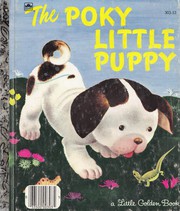
The Poky Little Puppy
2,322-word summary 10 min read 24 pages in the book
- First published
- 1942
- Publisher
- Golden Books
- Pages
- 24
- ISBN
- 9780307021342
Reading options
What's inside (8 sections)
I bought a used copy of this book for a dollar because its cover looked familiar in a way I could not place. It turned out to be one of those books I had owned as a child and then completely forgotten, which is a strange feeling: recognizing the object, drawing a blank on the words. I read it in about four minutes. Then I spent a good deal longer looking into where it came from, because a book that small having sold close to fifteen million copies is a fact worth sitting with. What follows is part retelling and part account of how a very slight story became one of the most printed children's books in America.
A twenty-four-page book that outsold nearly everything
The Poky Little Puppy was first published in 1942, and the standard edition runs twenty-four pages. Its author was Janette Sebring Lowrey, its illustrator was Gustaf Tenggren, and it appeared under the Golden Books name, part of the Little Golden Books line that Simon & Schuster had started with Western Printing of Racine, Wisconsin. The series had a simple idea behind it: children's books that ordinary families could afford. The first dozen titles were priced at a quarter each, bound with staples, and made in a format sturdy enough to survive being carried around by small children. Georges Duplaix, who worked for Western, is usually credited with the idea, and Mary Reed of Teachers College, Columbia University, served as the first editor.
The numbers around this book are almost absurd. By 2001, Publishers Weekly reported that it had sold nearly fifteen million copies, making it the top-selling hardcover children's book in the United States. It was the eighth of the original twelve Little Golden Books and the one that outlasted all the others. Three editions of the first twelve titles, totaling around 1.5 million books, sold out within five months of publication in 1942. When Random House bought the Golden Books assets in 2001 for around eighty-five million dollars, roughly fifteen million copies of this one title were already in print, in various languages. I find that hard to hold in my head alongside the actual reading experience, which is over so fast you wonder whether you opened the right book.
The book is still in print, and a copy bought today looks more or less like one printed in 1942, gold spine and all. That is part of the point of the series, I think. The design was meant to be recognizable, almost a promise that what is inside will be unchanged. The price crept up over the decades, to 29 cents in 1962, but the shape and the gold lettering stayed. By the series' golden anniversary in 1992, Golden Books claimed that a billion and a half Little Golden Books had been sold in total. This one puppy accounts for a small but very visible slice of that number.
The woman behind the puppies
Janette Sebring Lowrey was born in Orange, Texas, in 1892, and died in San Antonio in 1986, at the age of ninety-four. She wrote dozens of books for children and young adults from the 1930s through the 1970s. Her best known work by far is the one about the puppy, but she also wrote a historical novel for younger readers called Margaret, published in 1950, which was turned into a television serial called Walt Disney Presents: Annette that ran on The Mickey Mouse Club in 1958. Her other titles include Rings on Her Fingers from 1941 and a collection of Greek myths called In the Morning of the World from 1944. She also wrote stories about children in her home state of Texas.
What strikes me about Lowrey is how little of the fame came her way. The book outsold books by Dr. Seuss, and yet she stayed largely unknown until she died. The critic Gabriel Roth, writing in Slate in 2015, pointed out that neither Lowrey's name nor Tenggren's appears on the cover, and he reported that Tenggren received royalties while Lowrey did not. I cannot verify the royalty claim beyond Roth's piece and the sources he links, so I will leave it there, but the broader point is easy to check: the puppy's name became familiar in millions of homes, and the writer's name did not.
Tenggren himself was a well-known illustrator, a Swedish artist who had worked at Disney and whose name appears on a number of the first Little Golden Books. His drawings here give the puppies round faces and expressive bodies, and they do a great deal of the storytelling. The text is sparse. The pictures carry the comedy of a puppy falling behind while his brothers and sisters scamper ahead. When I went back to the book a second time, I noticed how much of the humor lives in the faces rather than the sentences, which is probably why it survives being read aloud for the hundredth time.
Five puppies go looking for the wide, wide world
Here is the whole story, and I am going to give it properly because it is so short. Five little puppies dig a hole under the fence and go for a walk in the wide, wide world. Four of them are quick. One is slow, the poky little puppy of the title, and he is always a step or two behind. Their mother is the only grown-up in the book, and she is mostly heard from at the end of the day.
On the first day, the four fast puppies reach the top of the hill while the slow one is still at the bottom. There he catches the smell of rice pudding. He eats it. The others hurry home, and their mother punishes them for sneaking out, so they are sent to bed with no dessert. The poky puppy arrives later, after his mother has gone to sleep, and eats the rice pudding that was denied to the others. He goes to bed content, with no idea that he has missed a punishment. The next day someone fills in the hole and puts up a sign telling the puppies never to dig under the fence again. The puppies dig a new hole anyway.
On the second day the pattern repeats, this time with chocolate custard. The four quick puppies get caught and lose their dessert. The slow one misses all of that, comes home late, and eats the chocolate custard by himself. He does not seem to understand that there was a punishment to avoid. He simply is not there when it happens. Again a sign goes up, with another word added to it, and again the puppies dig their way out. By this point the rhythm is the point. A small child can predict exactly what will happen, which I imagine is half the pleasure.
By the third day I found myself waiting for the turn that had to come. The dessert this time is strawberry shortcake. The four faster puppies are caught once more, but this time they do something different: after being sent to bed without dessert, they get up, fill in the hole they had dug, and repair the fence. Their mother sees them doing it and calls them down for strawberry shortcake. The poky puppy arrives too late. The hole is gone, so he has to squeeze between the fence boards, and by the time he gets in, his brothers and sisters are licking the last crumbs from their saucers. His mother tells him what a pity it is that he is so poky, because the shortcake is all gone. He goes to bed without a bite and feels very sorry for himself. On the last page a new sign appears: no desserts ever, unless the puppies never dig holes under the fence again.
That is it. Twenty-four pages, three days, three desserts, one lesson that arrives sideways.
A fable that refuses to behave like one
Here is where the book gets interesting for an adult reader. The story has the shape of a fable: animals acting like people, a rule that is broken, rewards and punishments, and that three-part repetition familiar from fairy tales. Roth argued in his Slate piece that as a fable it falls apart, because the numbers do not add up to a clean moral. The poky puppy gets all five helpings of dessert on the first two nights, ten portions in all. On the third night the four other puppies share his portion between them while he gets nothing. Over three days he is still far ahead. So what is the lesson? That being slow pays? That it pays most of the time but not always? Roth's answer is that Lowrey borrowed the shape of a fable without having a moral to put inside it.
I think that is too neat, and I also think it is not entirely wrong. Reading it as a grown-up, I kept waiting for the story to tell me what to think about the poky puppy's luck. The book never does. He is not rewarded for virtue, and he is not punished for a vice either, exactly. He is late. His lateness means he misses trouble twice and misses a reward once. The final page leaves the rule hanging in the air, a sign rather than a resolution. Roth compared the book unfavorably with Go, Dog, Go! for comedy, Where the Wild Things Are for psychology, and The Cat in the Hat for suspense. By those standards it is hard to defend.
The book is at its best, I think, when read as a small comedy about a child who is always arriving after the fun. Any parent of a slow child will recognize the dynamic: the others are already at the table, and the one who dawdles gets whatever is left. Whether that feels funny or sad depends on the day, and the book holds both. That is more than I expected from it, though I doubt very much that Lowrey intended a study of the emotional lives of slow children. On the third day, the puppy finally understands how his brothers and sisters must have felt on the earlier nights. That is the nearest thing the book has to an interior change, and it is handled in a sentence or two.
What does not work, for me, is the repetition. The puppies go up the hill, count themselves, and go down the hill again, three times. Young children may love that, and clearly generations have. I found myself impatient on the second telling and skimming on the third. The prose is plain to the point of flatness, and the sign gains an extra word each day as if that were the whole joke. Roth called the experience of reading it aloud actively painful, which overstates it, but I understand the complaint. If you are an adult looking for something to share that you can enjoy as well, there are far better choices on the shelf.
Why a small book kept being printed
The most convincing explanation for the book's longevity is not literary. Children's books can survive for decades on nostalgia alone. Adults who loved them as children buy them for their own children, and the cycle repeats. Roth noted that many of the book's five-star reviews on Amazon were from readers remembering a grandparent's voice, and that is a good deal more touching than the text itself. The book is a vessel for that memory, and it would be strange to judge it only as prose.
There was also a shrewd idea behind the series. Little Golden Books were cheap, durable, and sold in places ordinary families actually went, supermarkets and drugstores rather than bookshops. A family did not need to be a reading family to end up with one on a shelf. The Poky Little Puppy happened to be the title that stuck hardest, helped by Tenggren's expressive pictures and a name unusual enough to remember. When the line was adapted to CD-ROM in 2000, this book was among the six titles chosen, alongside Mother Goose, Jack and the Beanstalk, The Velveteen Rabbit, Tootle, and The Saggy Baggy Elephant.
The book has had other lives too. A Christmas special called The Poky Little Puppy's First Christmas aired on Showtime on December 13, 1992. A group of related characters was later sold under the name Poky and Friends. None of that changed the story. It merely kept the name in circulation, which is a different thing from keeping the book alive on its own merits.
Who this book is for
I would hand this to a parent of a child in the three-to-five range who likes animal stories and repetition, and I would expect it to be requested again and again. I would not hand it to an adult looking for a children's classic with the craft of Good Night Moon or Where the Wild Things Are, because it is not in that class. It is a cheap and sturdy little book with good pictures, a muddled moral, and a memorable title, and its place in history is secure for reasons that have very little to do with the words on the page.
I finished my dollar copy and put it on the shelf next to a stack of books I actually like. I expect it will outlast most of them. Its strange power is not that it is well made, but that it is remembered, and remembrance is its own kind of success in the world of children's books. Whether that is enough depends on what you think a book for small children is supposed to do. I am inclined to say yes, with a shrug, and to save my patience for the next reading.
FAQ
Who wrote and illustrated The Poky Little Puppy?
Janette Sebring Lowrey wrote it and Gustaf Tenggren illustrated it. Lowrey was a Texas-born author of dozens of children's books who stayed largely unknown despite this book's huge sales.
Why is this small book so famous?
It was among the first twelve Little Golden Books in 1942, and by 2001 it had sold nearly fifteen million copies, making it the top-selling hardcover children's book in the United States.
Does the story have a moral?
It has the form of a fable, but the slow puppy gains far more dessert than he loses, so critics such as Gabriel Roth argue that no clear moral emerges. The book ends with a warning sign rather than a stated lesson.
Similar books
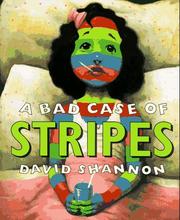
A Bad Case of Stripes
A 1998 Blue Sky Press picture book about Camilla Cream, whose skin turns into whatever the people around her suggest until she admits she loves lima beans.
2,604-word summary · 12 min read
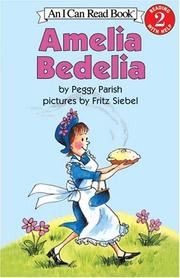
Amelia Bedelia
A literal-minded housekeeper follows her employer's list to disastrous and funny effect in the 1963 picture book that made wordplay a children's staple.
2,038-word summary · 9 min read
Clifford the Big Red Dog
Emily Elizabeth picks the smallest puppy in the litter, loves him as hard as she can, and wakes up to a dog the size of a house.
2,092-word summary · 9 min read
The Story of Ferdinand
A gentle Spanish bull would rather smell flowers than fight, and when he is taken to the bullring he simply sits down among the flowers in the ladies' hats.
2,135-word summary · 9 min read
Go, Dog. Go!
Dogs drive, work, play, and climb a tree for a party in this Beginner Book built on repetition, opposites, and one very unpopular hat.
2,196-word summary · 10 min read
The Gashlycrumb Tinies
Edward Gorey's 1963 alphabet book marches twenty-six children through a series of very bad endings, in thirteen rhyming couplets and a handful of unnervingly…
2,200-word summary · 10 min read
The Runaway Bunny
A little bunny says he will run away, and his mother promises to follow. This 1942 picture book turns a child's first wish for independence into a gentle,…
2,765-word summary · 12 min read
Momo
A girl with a gift for listening takes on grey-clad thieves who persuade a city to save its time, in Michael Ende's 1973 fable about efficiency and attention.
2,275-word summary · 10 min read
A Bear Called Paddington
In Michael Bond's 1958 first book, a small bear arrives at Paddington Station with a label and a suitcase, and the Browns take him home to Windsor Gardens.
2,492-word summary · 11 min read
The Mouse and the Motorcycle
A bored mouse named Ralph finds a boy's toy motorcycle in a hotel room and starts a secret life of night rides, mishaps, and unlikely friendship.
2,254-word summary · 10 min read
Sarah, Plain and Tall
A widowed prairie farmer advertises for a wife, and a woman from Maine answers for a one-month trial. This Newbery winner, told by his daughter, is about a…
2,331-word summary · 10 min read
Pollyanna
An eleven year old orphan arrives in a stern Vermont town and teaches it the Glad Game, until an accident tests her own optimism.
2,262-word summary · 10 min read
Strega Nona
A village witch doctor hires a boy who does not listen, and the pasta pot he was told not to touch floods Calabria with noodles he cannot stop.
2,587-word summary · 11 min read
Make Way for Ducklings
A pair of mallards raise eight ducklings on the Charles River and lead them across Boston to the Public Garden, with a little help from a friendly policeman.
2,044-word summary · 9 min read
The Mitten
Jan Brett retells a Ukrainian folktale about a boy, a lost white mitten, and the woodland animals that crowd inside until a bear sneezes.
2,609-word summary · 12 min read
Click, Clack, Moo: Cows That Type
Cows learn to type, demand electric blankets, and go on strike in a deadpan picture book about negotiation and withheld labor.
2,617-word summary · 12 min read
Caps for Sale
A peddler balances his caps on his head, naps under a tree, and wakes to find monkeys wearing his stock in this 1940 picture book.
2,787-word summary · 12 min read
Frog and Toad Are Friends
Five short stories about a cheerful frog and a grumpy toad who need each other for waking up, swimming, and waiting for the mail.
1,969-word summary · 9 min read
The Stinky Cheese Man and Other Fairly Stupid Tales
Scieszka and Lane Smith take nine fairy tales apart, joke by joke, while Jack, the narrator, keeps losing the pages.
2,206-word summary · 10 min read
The Borrowers
A family of tiny people live under the floorboards of an English house, borrowing what they need until a lonely boy and a suspicious housekeeper change…
2,164-word summary · 10 min read
Sideways Stories from Wayside School
Thirty stories, one class per floor, and a teacher who turns students into apples: Louis Sachar's absurd school classic.
2,045-word summary · 9 min read
Old Yeller
Travis Coates takes in a stray yellow dog that protects his family on the Texas frontier, and learns about loyalty and loss.
2,165-word summary · 10 min read
Don't Let the Pigeon Drive the Bus!
A bus driver leaves the reader in charge with one rule, and a very persuasive pigeon spends the rest of the book trying to break it.
2,084-word summary · 9 min read
Miss Nelson Is Missing!
Room 207 gets kind Miss Nelson, then terrible Viola Swamp instead.
2,597-word summary · 12 min read
Horton Hears a Who!
An elephant protects tiny Whos on a clover while jungle mocks.
2,375-word summary · 11 min read
The Snowy Day
Peter in his red snowsuit explores fresh snow, from footprints and angels to a melted pocket snowball, in Keats classic winter day.
2,375-word summary · 11 min read
The Little Engine That Could
Watty Piper follows a stranded toy train past proud engines that refuse, to a small blue switcher who agrees to try the mountain and pulls her chanting load…
2,311-word summary · 10 min read
Stellaluna
A baby fruit bat falls into a bird nest, learns to perch and eat bugs, then reunites with her mother in Cannon's acclaimed 1993 picture book about difference…
2,486-word summary · 11 min read
The Night Before Christmas
A father watches St Nicholas arrive with reindeer on Christmas Eve in classic poem.
1,986-word summary · 9 min read