
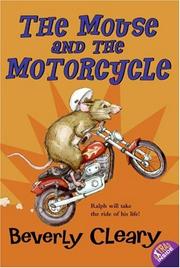
The Mouse and the Motorcycle
2,254-word summary 10 min read 158 pages in the book
- First published
- 1965
- Publisher
- William Morrow
- Pages
- 158
- ISBN
- 9780380709243
- Series
- Ralph S. Mouse (#1)
Reading options
What's inside (9 sections)
The first line, and why this book stayed with me
The Mouse and the Motorcycle begins with a sentence that knows exactly what it is doing. "KEITH, the boy in the rumpled shorts and shirt, did not know he was being watched as he entered room 215 of the Mountain View Inn." That is the whole setup in one breath. A boy, a hotel room, and a pair of eyes that the boy cannot see. Beverly Cleary published this book in 1965, and she gives away her premise immediately, because the fun was never going to be a mystery about who is watching. The fun is what happens once the watching starts.
I came back to it as an adult with a vague memory of a mouse on a tiny red motorcycle and a boy who could hear him talk. What I had forgotten was how practical the book is. Ralph does not get a magical power that solves his problems. He gets a toy with a stalled engine, a hotel full of vacuum cleaners and suspicious housekeepers, and a friendship that has to be built one small act of trust at a time. Cleary's great trick is to treat a mouse's difficulties with the same seriousness she gives to a human child's. A wastebasket is a canyon. A peanut-butter sandwich is a banquet. An aspirin tablet is a gamble with death.
The book is short, around 158 pages in the 1965 William Morrow first edition, and many later paperbacks run close to that. It won the William Allen White Children's Book Award in 1968 and became the first of three books about Ralph S. Mouse. Louis Darling drew the original illustrations, and his work is part of why the world feels so solid. You believe in the knothole and the telephone cord because somebody drew them with care.
Room 215 and the Mountain View Inn
Ralph lives with his large family behind a knothole in the wall of room 215 at the Mountain View Inn, a battered resort hotel in California's Sierra Nevada. The inn is run down in the way old hotels get run down: thin walls, tired furniture, staff who have seen everything, and guests who come and go without noticing the life behind the baseboard. Ralph's relatives are cautious creatures. They worry about being discovered, about traps, about the doors that open onto a world full of shoes. Ralph is the one who finds the caution suffocating. He wants speed and danger and a life beyond the mousehole.
That longing is the engine of the whole book, and Cleary never mocks it. Ralph is a reckless young mouse, as the jacket copy says, but his recklessness is really a refusal to accept the size of the life he has been handed. He is bored. He is also, quietly, brave. Those two things are not the same, and the book takes the distinction seriously. When he first spots the toy motorcycle on the bedside table after Keith arrives with his family, Ralph's whiskers quiver. The machine looks as if it were made for him. He cannot yet start it, but he knows what it is.
Cleary based the story partly on her son, who played with miniature cars and motorcycles while recovering from a fever, and partly on a neighbor who showed her a small mouse trapped in a bucket. Both origins show. The toys are observed with the precision of someone who watched a child push them across a floor, and the mouse is observed with the pity and curiosity of someone who has looked into a bucket and seen a frightened animal looking back.
Keith, and the gift of a tiny engine
Keith Gridley is the guest in room 215. He is a boy old enough to travel with his parents and young enough to leave a toy motorcycle on a bedside table. When Keith is out, Ralph climbs the telephone cord to the table and gets onto the bike. He cannot work out how to start it. Then a telephone rings, he is startled, and rider and motorcycle tumble into a metal wastebasket. The chapter is called "Trapped!", and it is exactly that. Ralph thinks he is finished, that he will be taken out with the trash.
Instead, Keith comes back, finds his missing motorcycle, and finds the mouse beside it. What follows is the heart of the book. Keith does not scream or reach for a shoe. He shows Ralph how to start the engine by making a noise like a motor. He lets Ralph ride, at night, when the hotel is quiet. An unlikely friendship forms in the gap between a boy who has always wanted a friend who understands him and a mouse who has always wanted somewhere to go fast. Cleary keeps the mechanics of it charming and simple. Ralph does not speak human words to Keith at first, the way he will in later books. Much of their early understanding is built through gesture, timing, and the shared fact of the motorcycle.
That restraint is something I admire more now than I did as a child. It would have been easy to give Ralph fluent speech from page one and turn the book into a comedy of banter. Cleary holds back. The silence makes the trust feel earned. When Keith leaves the room for the evening and the motorcycle is waiting, the anticipation belongs as much to him as to Ralph.
Night rides, a vacuum cleaner, and a lost bike
Once Ralph can start the bike, the hotel becomes a course to be ridden. He goes careening through the halls and corners of the inn after dark, past sleeping guests and along the edges of rooms where the lights are off. The chapter titles tell the story in miniature: "Adventure in the night," "A peanut-butter sandwich," "The vacuum cleaner," "A family reunion," "Ralph takes command." Cleary gives each of these its own beat, and the book moves with the stop-start rhythm of a very small vehicle being ridden by a very determined animal.
Keith's mother eventually sees what is happening. At first she thinks she is imagining things, a trick of the light or fatigue, but she becomes sure she saw a mouse riding a motorcycle. Cleary handles the adults well. They are not fools, and they are not villains. They are people trying to make sense of an animal that has decided to live a life no mouse is supposed to live. Ralph's own mother worries about human contact, with good reason, and the family arguments about Ralph's behavior have the blunt logic of concerned relatives everywhere.
The great chase comes when a maid's vacuum cleaner nearly swallows Ralph and the bike. He escapes by riding into a pile of linen and dirty sheets, then chews his way out, forced to leave the precious motorcycle behind. It is a wonderful sequence because the danger is entirely ordinary. Nobody is trying to kill a mouse. A housekeeper is doing her job, and the machine is doing what machines do. Ralph's peril comes from being small in a world built at another scale, which is the oldest and best kind of children's peril.
After the loss, the friendship strains. Keith stops trusting Ralph, though he still leaves food for the mouse colony. That quieter punishment hurts more than any shout would. Ralph has to live with the fact that he was trusted with something and careless with it. The book treats this as a real moral moment, not a speed bump on the way to a happy ending. A peanut-butter sandwich, a lost bike, a boy who no longer looks at the knothole the same way: Cleary understands how small the objects are and how large the feelings attached to them.
The errand of mercy
The turning point arrives when Keith falls ill. His parents have run out of aspirin and cannot get more until morning. Ralph, watching from the walls, understands what is needed and sets out to find a tablet in the hotel. The risk is not decorative. An aspirin meant for a boy could kill a mouse, and Ralph knows it. His own father died of a bad cold despite everything the family could do, so sickness is not an abstraction to him. Cleary lets that memory sit in the background, which gives the search a gravity the earlier joyrides never had.
Ralph hunts through the inn, finds a tablet, and borrows Keith's toy ambulance to bring it back. The image of a mouse driving a little ambulance through a hotel at night is absurd and completely right for this book. It is funny and urgent at the same time, and it pays off everything that came before. The reckless rider from the first chapter has become someone who uses his skill for another creature. Keith recovers, and the trust between them is restored in a way that feels earned rather than announced.
Then the motorcycle turns up. A housekeeper finds it hidden among the linens Ralph chewed through during his escape, and Keith gives it to Ralph to keep. Ralph sets up a garage for it under the television in the lobby. That final arrangement is the book's quiet flourish. The mouse does not go off to a new life beyond the hotel. He stays, but the terms have changed. He has a machine, a garage, and a friend who can hear him. The inn is still the inn. Ralph is no longer quite the mouse who lived behind the knothole.
The last chapter is titled "A subject for a composition," and Cleary closes on the idea that Keith's extraordinary friendship is something he might one day write about. It is a neat way to end a book about stories and the small lives that deserve them.
What Cleary gets right, and where it shows its age
The great strength is the scale. Cleary never talks down to children, but she never forgets that her hero is a mouse. Doors, floors, telephone cords, and shoes are all measured correctly. The humor comes from that precision rather than from winks at the reader. Ralph's cousins and relatives are funny because they are mice with family obligations, not because they are cartoons. Even the villains, if that word fits a vacuum cleaner or a suspicious housekeeper, are behaving naturally. Nobody in this book is cruel for the sake of being cruel.
The friendship is the other strength. Keith is a good boy without being a perfect one. He loses patience, he stops trusting, he gets sick and needs help. Ralph is brave and selfish and curious in turns. Their bond grows out of need on both sides, and Cleary never explains it to death. A page of them simply being together does more than a page of dialogue about friendship would.
The book has aged in a few small ways. The 1965 setting includes adults smoking in hotel rooms and a casual picture of hotel staff and guests that belongs to its decade. Some of the gendered assumptions about boys and girls are of their time, though Cleary's instinct was always to write children as individuals. The original illustrations by Louis Darling are specific to that era, and later editions were reillustrated by Tracy Dockray and others, so which version you read changes the flavor. None of this damages the story, but it is worth knowing that you are reading a book from 1965 rather than a timeless object with no date on it.
There is also a simplicity to the plot that a modern reader might notice. The structure is a series of rides, mishaps, and one rescue. There is no large antagonist and no elaborate scheme. For a child reader, that clarity is a virtue. For an adult looking for density, it will feel slight. I think the book knows what it is, and its brevity is part of why it has lasted.
The rest of the trilogy and the film
The Mouse and the Motorcycle was followed by Runaway Ralph in 1970 and Ralph S. Mouse in 1982. The later books move Ralph out into a wider world, including a summer at a summer camp and, eventually, a school setting, and they let him speak to humans more freely. Reading them in order makes sense because the friendship with Keith changes shape across the trilogy. The first book remains the purest version of the idea: a mouse, a motorcycle, and a hotel full of obstacles.
There was also a film adaptation in 1986, directed by Ron Underwood and produced by Churchill Films. It aired as an episode of ABC Weekend Special, used stop-motion animation by John Matthews, and featured Mimi Kennedy and Ray Walston. It won a Peabody Award, which is a strange and pleasing fact about a story that began with a mouse falling into a wastebasket. Cleary herself wrote the screenplay.
What I would tell a friend going in: read it slowly, and pay attention to how Cleary measures distance. A few feet of hotel corridor becomes a whole journey when you are an inch tall. The motorcycle is the hook, but the real subject is what it feels like to be small and to be underestimated, and to find one person who will take you seriously. That is why a book about a toy vehicle and a knothole has outlasted its decade.
FAQ
When was the book published and who illustrated it?
It was published in 1965 by William Morrow, with illustrations by Louis Darling. Later editions were reillustrated, including a 2006 version by Tracy Dockray.
Is this the first Ralph S. Mouse book?
Yes. It is followed by Runaway Ralph in 1970 and Ralph S. Mouse in 1982, which give Ralph more chances to speak with humans.
Is the story just a string of funny accidents?
Mostly, but the mishaps build toward a real rescue: Ralph risks his life to bring aspirin to Keith, and that changes their friendship for good.
Similar books
More from Ralph S. Mouse first, then related titles.
The Trumpet of the Swan
A mute trumpeter swan learns to read, write, and play a stolen trumpet to win a mate, in E.B. White's quiet 1970 tale of a boy who watches.
2,309-word summary · 10 min read
The Book of Three
A restless assistant pig-keeper in mythical Wales chases his escaped oracle pig and finds himself beside Prince Gwydion in a war against the Lord of Annuvin.
2,019-word summary · 9 min read
My Side of the Mountain
Sam Gribley leaves a crowded New York apartment for the Catskills, builds a home in a tree and trains a falcon to help him survive.
2,242-word summary · 10 min read
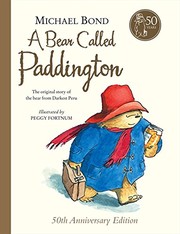
A Bear Called Paddington
In Michael Bond's 1958 first book, a small bear arrives at Paddington Station with a label and a suitcase, and the Browns take him home to Windsor Gardens.
2,492-word summary · 11 min read
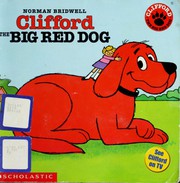
Clifford the Big Red Dog
Emily Elizabeth picks the smallest puppy in the litter, loves him as hard as she can, and wakes up to a dog the size of a house.
2,092-word summary · 9 min read
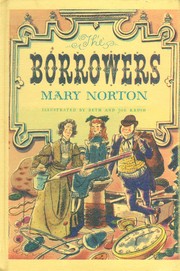
The Borrowers
A family of tiny people live under the floorboards of an English house, borrowing what they need until a lonely boy and a suspicious housekeeper change…
2,164-word summary · 10 min read
Harriet the Spy
Eleven year old Harriet Welsch fills notebooks with honest, often cruel observations about her neighbors, until her classmates read one and turn her spy route…
2,510-word summary · 11 min read
Into the Wild
Housecat Rusty joins ThunderClan and learns clan law before war.
2,597-word summary · 12 min read
Hoot
Roy tracks a shoeless boy to save burrowing owls from a pancake house.
2,290-word summary · 10 min read
Gregor the Overlander
Gregor follows Boots down a grate into the Underland and a war prophecy.
2,516-word summary · 11 min read
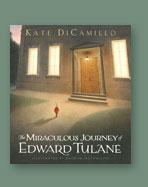
The Miraculous Journey of Edward Tulane
A china rabbit lost at sea learns to love through owners kind and cruel across many years.
2,002-word summary · 9 min read
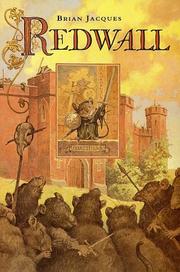
Redwall
A novice mouse hunts for Martin the Warrior's lost sword while Cluny the Scourge besieges Redwall Abbey.
2,727-word summary · 12 min read
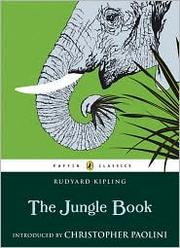
The Jungle Book
Mowgli, raised by wolves in the Seeonee Hills, learns the Law from Baloo and Bagheera while Shere Khan circles. Kipling's 1894 story collection.
2,799-word summary · 12 min read
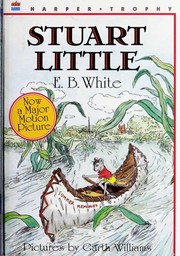
Stuart Little
A two-inch boy in a New York family befriends a canary, loses her, and drives off alone to find her.
2,591-word summary · 12 min read
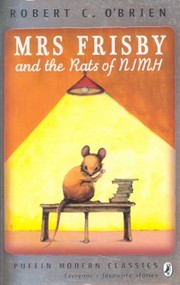
Mrs. Frisby and the Rats of NIMH
A widowed mouse races the spring plow to save her sick son Timothy, and finds help from the intelligent rats of NIMH hiding under the rosebush.
3,159-word summary · 14 min read
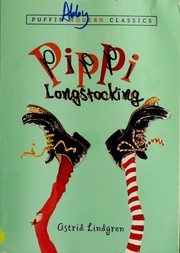
Pippi Longstocking
A super-strong nine-year-old lives alone in Villa Villekulla, upending school, circus and town rules with neighbors Tommy and Annika.
3,115-word summary · 14 min read
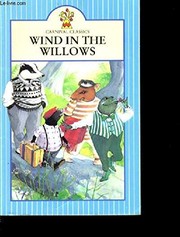
The Wind in the Willows
Mole, Rat, Badger, and Toad mess about in boats, lose themselves in the Wild Wood, and retake Toad Hall.
2,033-word summary · 9 min read
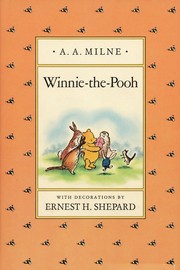
Winnie-the-Pooh
Edward Bear comes downstairs bump-bump-bump and into the Hundred Acre Wood for honey, hunneys, and heffalumps.
2,068-word summary · 9 min read
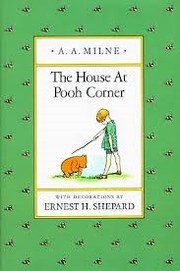
The House at Pooh Corner
Tigger bounces into the Hundred Acre Wood while Pooh builds Eeyore a house and Piglet does a grand thing.
2,022-word summary · 9 min read
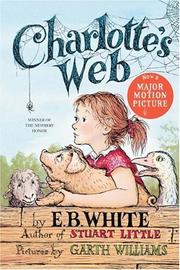
Charlotte's Web
E. B. White's Charlotte's Web retold: Wilbur the pig, Charlotte the spider, and the words that save him.
2,059-word summary · 9 min read
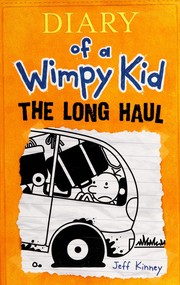
The Long Haul
Greg Heffley's summer road trip goes sideways with a towed boat, a live pig, and a family in a purple van.
2,311-word summary · 10 min read
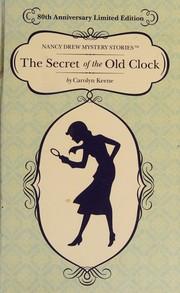
The Secret of the Old Clock
The first Nancy Drew novel: a sixteen-year-old detective follows a clue hidden in a clock to overturn a will and restore a family's inheritance.
2,011-word summary · 9 min read
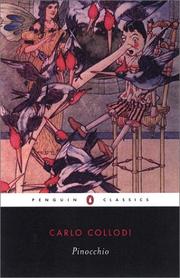
Pinocchio
A wooden puppet with a talent for trouble gets chance after chance to become a real boy. Collodi's 1883 original is stranger, darker and funnier than the…
2,600-word summary · 12 min read
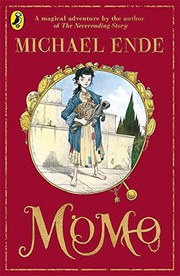
Momo
A girl with a gift for listening takes on grey-clad thieves who persuade a city to save its time, in Michael Ende's 1973 fable about efficiency and attention.
2,275-word summary · 10 min read
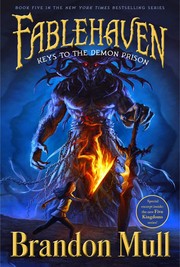
Keys to the Demon Prison
The fifth and final Fablehaven book sends Kendra and Seth Sorenson across secret preserves to keep the last keys to the demon prison out of rival hands.
2,251-word summary · 10 min read
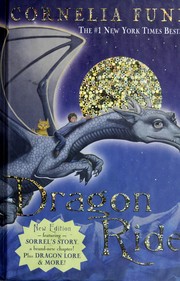
Dragon Rider
A silver dragon, a sharp-tongued brownie and a lonely orphan boy cross deserts and seas to find the dragons' lost homeland, pursued by a golden killer made by…
3,188-word summary · 14 min read
Pollyanna
An eleven year old orphan arrives in a stern Vermont town and teaches it the Glad Game, until an accident tests her own optimism.
2,262-word summary · 10 min read
Kristy's Great Idea: A Graphic Novel (The Baby-Sitters Club Graphic Novels #1)
Raina Telgemeier adapts Ann M. Martin's first Baby-Sitters Club novel into a full-color graphic novel about four Stoneybrook friends who start a babysitting…
2,373-word summary · 11 min read
Make Way for Ducklings
A pair of mallards raise eight ducklings on the Charles River and lead them across Boston to the Public Garden, with a little help from a friendly policeman.
2,044-word summary · 9 min read