
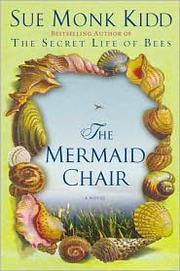
The Mermaid Chair
2,237-word summary 10 min read 335 pages in the book
- First published
- 2005
- Publisher
- Viking
- Pages
- 335
- ISBN
- 9780670033942
Reading options
What's inside (10 sections)
I came to The Mermaid Chair expecting a quieter book than The Secret Life of Bees, and in some ways it is. Sue Monk Kidd published it in 2005, three years after that first novel, and it went straight to number one on the New York Times bestseller list and stayed on the lists for nine months. It won the 2005 Quill Award for general fiction and has been translated into more than twenty languages. A Lifetime movie starring Kim Basinger followed in 2006. All of that is worth knowing because the book itself is small in scope. One island, one house, one marriage in trouble, and a monk who is close to making a vow he may not be able to keep.
What surprised me is how physical the book is. Kidd writes about desire, aging bodies, and the hunger to be seen with a frankness that still feels unusual in a novel about a woman in her fifties. The mermaid of the title is not a cute decorative detail. It is a whole argument about what happens when a person spends decades being reasonable.
Jessie goes back to Egret Island
Jessie Sullivan gets the call that sends her back to Egret Island, the South Carolina sea island where she grew up. Her mother, Nelle, is in trouble, and Jessie is the one who has to come and deal with it. She arrives with Hugh, her husband of many years, a steady and practical man who expects this to be a short, unpleasant visit. He has taken time off work and booked a return ticket. He assumes the problem will be managed and they will go home.
Egret Island is one of those places that works on people. It is beautiful in a damp, unbending way, with marshes and water and weather that gets into everything. Kidd clearly loves the setting, and she gives it a kind of agency. The island does things to the people who live there. It preserves them, or traps them, depending on how you look at it. The house Jessie returns to has been standing for a long time, and it holds the shape of the family that lived in it.
Jessie has spent her adult life becoming a certain kind of woman: capable, composed, the person other people rely on. The return to her mother's house undoes all of that quickly. She is no longer the woman who runs a household and a career. She is a daughter again, and a daughter who is angry. The island strips away the roles she has built, and what is left is a woman who does not quite recognize herself.
Nelle and the house that will not open
Nelle is the hardest part of the book, and I mean that as a compliment. She has lived in the same house for decades and has made a fortress of it. She is agoraphobic, or something close to it, and she has not meaningfully left the place in years. The house is dark, closed up, full of the objects of a life that stopped moving. Jessie has to care for her, feed her, sit with her, and listen to her.
The mother daughter relationship here is not sentimental. Nelle is difficult. She is sharp, controlling, and full of a grief she has never put into words. Jessie resents her and also feels responsible for her, and those two feelings sit on top of each other for most of the novel. Kidd is good on the particular fury of a grown child who is asked to parent the parent who failed her. There is love here, but it is buried under so much history that it barely registers as love at all.
I found these chapters the most honest in the book. There is no tidy reconciliation waiting around the corner. Nelle does not become a sweet old woman because her daughter has come home. What changes is smaller and more real: Jessie starts to understand that her mother's fear is not really about her, even though it has shaped her whole life. That understanding does not fix anything, but it changes the way Jessie sits in the room with her.
Hugh and the comfortable life
Hugh is not a villain, which is part of the point. He is a good man. He has been faithful, he has provided, and he loves Jessie in the way he knows how. He comes to the island, tries to help, and genuinely does not understand why his wife is changing. From his side of the story, nothing is wrong. They have a home, a marriage, a shared history, and a future that makes perfect sense on paper.
From Jessie's side, something is very wrong. She has spent so long being the reasonable one that she no longer knows what she wants apart from what is expected of her. The marriage has become a matter of logistics. She can list Hugh's qualities the way you would list the features of a house, and the listing itself is the problem. A person should not have to inventory a spouse's virtues to explain why she stays.
Kidd handles this without making Hugh stupid or cruel, and that restraint is one of the book's strengths. The trouble in a long marriage often has no clear culprit. Two people can do everything right and still drift into separate rooms. Jessie's restlessness is not a verdict on Hugh. It is a verdict on a life she did not choose often enough, and on the parts of herself she agreed to set aside in order to be easy to live with.
Brother Thomas and the mermaid chair
Then there is Thomas. He is a monk at the monastery on the island, a man who has taken temporary vows and is close to taking his final ones. He is young, handsome, and quietly certain of a life that has left no room for someone like Jessie. He is also aware of her in a way that makes both of them uneasy. Their first real conversations are careful and indirect, full of the things they are not saying.
The attraction between them is the engine of the plot, and Kidd writes it as a collision of two kinds of hunger. Jessie wants to be wanted as a woman rather than as a wife, mother, or caretaker. Thomas wants to be sure that the vow he is about to make is real. Each one sees in the other the life they are not living, and that recognition is both thrilling and frightening.
The mermaid of the title sits inside this. There is a carved chair associated with the monastery and the old stories of the island, and mermaids keep turning up in Jessie's thoughts and in the water around her. For Kidd, the mermaid is a figure for the wild, sensual, unmeasured part of a person that organized religion and ordinary duty have taught women to hide. Jessie's whole life has been an effort to be the opposite of a mermaid. Meeting Thomas makes that effort start to fail, and the failure feels like a kind of waking up.
The old wound under the island
Running underneath the romance is the story of Jessie's father. He died when Jessie was young, thirty years before the novel's present, and the circumstances have never been settled between mother and daughter. Nelle will not speak of it plainly. Jessie has built a whole architecture of assumption around the silence, filling in what she does not know with the worst versions she can imagine.
This is where the book becomes more than a midlife romance. The question of what happened to her father is also the question of what Nelle has been protecting, and what Jessie has been pretending to remember. Kidd lets the answer come slowly, in fragments, and the delay is mostly effective. It gives the novel a mystery shape without turning it into a thriller. The past keeps pressing on the present, so that every argument Jessie has with her mother carries an unspoken third person into the room.
Part of what makes this thread work is that Jessie is not a reliable witness to her own childhood. She has a set of images in her head, a few overheard sentences, and a story she has told herself so many times that it has hardened into fact. Kidd lets those images shift as new information arrives. The reader has to sit with the uncomfortable possibility that Jessie has been as determined as Nelle to keep one version of the past intact. It is a smart choice, because it makes the mother and daughter mirrors of each other rather than simple opposites.
The past and the present converge in a scene near the end that I will not fully give away. It involves water, and a return to a moment both women have spent thirty years avoiding. It is the most emotionally direct part of the book, and it makes the earlier, quieter chapters pay off. For a while you wonder whether Kidd has been staging the whole novel just to get to that confrontation, and in a way she has.
What the ending asks
Without spoiling the last pages, the novel does not give Jessie a simple exit. She does not simply leave Hugh and ride off with the monk, and she does not simply settle back into her old life either. Kidd is interested in a harder question: can a person change the terms of a life without burning the life down? The answer the book offers is messy and specific rather than sweeping.
The ending is gentle and a little unsatisfying in the way that realistic endings often are. Jessie has to decide which parts of herself she will keep and which she will finally stop editing out. Her relationship with Nelle shifts, but it does not become easy. Her marriage is tested, and what survives is different from what was there before. Nobody gets a clean win, which is probably the honest outcome.
Thomas's fate is tied to his vow, and the book treats his choice seriously rather than as a romantic obstacle to be removed. That is to Kidd's credit. A lesser novel would have made the monk simply abandon the cloth the moment a woman looks at him twice. This one understands that a vow made in earnest is not nothing, and that wanting someone does not cancel it. The cost of that choice is allowed to stand.
Where the book loses its footing
I should be honest about the parts that did not work for me. The middle of the novel drags. Once Jessie and Thomas are clearly drawn to each other, the book spends a long time circling the same emotional ground, and the mermaid symbolism is repeated until it starts to feel insisted upon rather than discovered. There are only so many ways to say that a woman has a wild self, and Kidd uses most of them.
The mystical elements are also a matter of taste. The mermaid lore and the moments of almost-visionary experience around the monastery give the book its distinctive flavor, but they can tip into the portentous. If you prefer your novels firmly on the ground, some of this will feel overheated. The dialogue, too, occasionally sounds like a theme being stated aloud rather than two people talking. A few late conversations explain the book's own symbols back to the reader.
And the resolution, while honest, is tidier than the rest of the book. The father's death mystery is resolved in a way that feels slightly rushed given how long it has been building. Still, these are complaints about a book that is genuinely trying to say something difficult about women, faith, and desire. It earns its ambition even when it does not fully meet it.
Who should read it
I would hand this to readers who like their fiction interested in interior life, and who do not need a fast plot to stay engaged. If you wanted more of the voice that made The Secret Life of Bees work, you will find it here, though the mood is darker and the questions are harder. It is a book about a woman waking up late, and about what it costs to do that honestly rather than gracefully.
It is not for everyone. Readers looking for a conventional romance will find the ending too divided. Readers who want clean answers about the past may be frustrated by how long the truth is held back. But if the idea of a woman in midlife suddenly finding that her life no longer fits her appeals to you, Kidd treats that situation with more seriousness and more tenderness than most writers would bother to bring to it.
One more thing is worth saying. Kidd writes about faith without settling the question of whether Jessie's experiences are real in any ordinary sense. The monastery, the vows, the strange pull of the mermaid stories, all of it is left open to interpretation. Readers who want a firm answer about what Jessie believes will not get one, and the book is better for refusing to provide it. That openness is probably the most honest thing in a novel about a person learning to live with uncertainty.
FAQ
Is The Mermaid Chair a sequel to The Secret Life of Bees?
No. It is a standalone novel, though both are by Sue Monk Kidd and share her interest in the inner lives of women. It was published in 2005, three years after The Secret Life of Bees.
Does Jessie end up with Brother Thomas?
The novel does not give them a simple romantic ending. Thomas treats his vow as a real commitment, and Jessie has to decide which parts of her old life she can keep rather than simply fleeing it.
Is the book a mystery?
Not mainly. The circumstances of Jessie's father's death thirty years earlier form a slow mystery thread, but the focus stays on her marriage, her mother, and her own late awakening.
Similar books

A Spool of Blue Thread
Four generations of the Whitshank family in Baltimore, and the silences, resentments and quiet love they hand down without ever saying so.
2,408-word summary · 11 min read

The Rest of Our Lives
A law professor drives his daughter to college, then heads west instead of home, testing a private promise he made twelve years ago.
2,238-word summary · 10 min read

The Vacationers
A New York family's two-week stay in Mallorca turns into a comedy of exposed secrets when a magazine editor's affair and a son's debts come to light.
2,324-word summary · 10 min read
The Collected Regrets of Clover
A death doula who writes down the last words of strangers keeps her own heart locked away, until a new neighbor, a dying photojournalist and a road trip to…
3,055-word summary · 14 min read

Hollow Bones
On 11 September 2001, two-month-old Molly Fitzgerald loses her mother at the World Trade Center. She grows up planning for disasters, until a crisis in her new…
2,703-word summary · 12 min read

Sam's Letters to Jennifer
A grieving journalist reads her grandmother's letters and finds a decades-long love affair that changes how she sees her family.
2,310-word summary · 10 min read

Two by Two
Sparks's twentieth novel turns from first love to a marriage breaking up: Russell Green loses his wife and his job, then rebuilds his life around his…
2,192-word summary · 10 min read

At First Sight
Jeremy and Lexie are married and expecting a baby when anonymous emails tell him the child may not be his.
2,317-word summary · 10 min read
The Accidental Tourist
Grieving Macon writes travel guides for haters of travel, then Muriel intrudes.
2,252-word summary · 10 min read
The Switch
A burned-out consultant and her 79-year-old grandmother swap London and Yorkshire homes for two months, facing grief, dating apps, and village politics.
2,782-word summary · 12 min read
Transcendent Kingdom
A neuroscientist studies addiction in mice while mother prays at home.
2,020-word summary · 9 min read

The Wedding
Wilson Lewis courts his own wife again with Noah's help as daughter Anna plans her wedding.
2,076-word summary · 9 min read
Home Front
A Guard pilot deploys, comes home wounded, while husband and daughters fight to heal together.
2,091-word summary · 9 min read
Forever, Interrupted
Elsie elopes in May, loses Ben nine days later, and learns grief beside the mother in law she never met.
2,051-word summary · 9 min read

Life's Too Short
A travel YouTuber facing possible ALS takes in baby Grace and falls for Adrian, the lawyer next door.
2,913-word summary · 13 min read

Freedom
A St. Paul couple and their grown children strain marriage, loyalty, and ideals in 2000s America.
2,678-word summary · 12 min read
Still Me
Lou spends a year in New York working for the Gopniks, torn between Josh, distant Sam, and the life she wants.
2,939-word summary · 13 min read

Just for the Summer
Emma and Justin date to break a matching curse, then face sudden guardianship and illness on Lake Minnetonka.
3,090-word summary · 14 min read

All Your Perfects
Quinn and Graham's perfect love frays under infertility, and they must decide what perfect means now.
2,072-word summary · 9 min read

Reminders of Him
Kenna returns after prison to meet the daughter she lost, facing the family that blames her.
2,168-word summary · 10 min read

The Wilderness
Four Black women move through twenty years of friendship in Angela Flournoy's discontinuous, widely praised second novel.
2,141-word summary · 10 min read
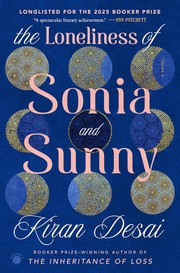
The Loneliness of Sonia and Sunny
Two Indian families, a failed arranged match, and years between Allahabad and New York shape a slow, sprawling romance.
2,092-word summary · 9 min read
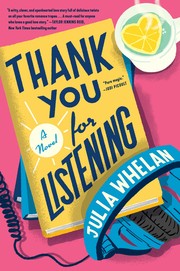
Thank You for Listening
A former child star turned audiobook narrator takes a final romance job to help her grandmother, only to fall for the secretive voice reading opposite her.
2,148-word summary · 10 min read
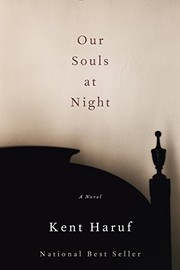
Our Souls at Night
A widow asks her widower neighbor to lie beside her at night, not for sex but for company, and two lonely people in a small Colorado town begin again.
2,582-word summary · 11 min read
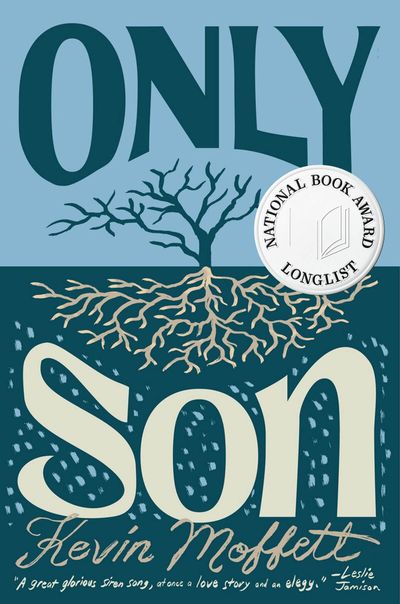
Only Son
A brief, funny, melancholy debut about a boy whose father dies in 1982 Florida, and the man he becomes, still trying to read the mystery of that loss.
2,170-word summary · 10 min read

One Boat
A woman returns to a Greek coastal town after her father's death, and the holiday she took nine years earlier after her mother's death keeps breaking through.
2,143-word summary · 10 min read

Love Forms
A Trinidadian mother sent away at sixteen returns to the loss of her daughter forty years later, in Claire Adam's quiet, longlisted novel.
2,153-word summary · 10 min read

Whistler
Ann Patchett's eleventh novel follows a New York teacher who reconnects with a former stepfather at the Met and hears the strange story of a chestnut mare.
2,697-word summary · 12 min read

Three Days in June
A Baltimore mother loses her job, and her ex-husband turns up with a rescue cat, in Anne Tyler's short, funny novel about the three days around her daughter's…
2,867-word summary · 13 min read
The Emperor of Gladness
Ocean Vuong's second novel follows a young addict pulled back from a bridge in a dying Connecticut mill town and into the home of an elderly immigrant woman…
2,693-word summary · 12 min read