
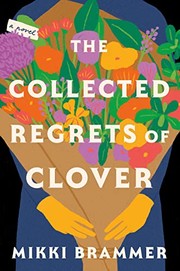
The Collected Regrets of Clover
3,055-word summary 14 min read 320 pages in the book
- First published
- 2023
- Publisher
- St. Martin's Press
- Pages
- 320
- ISBN
- 9781250284396
Reading options
What's inside (9 sections)
I picked this one up on a friend's recommendation, with fair warning that it was a book about death. That turned out to be both accurate and a little misleading. Clover Brooks does spend her working days with people who are dying. But the novel is at least as interested in the woman who has arranged her whole life around those deaths, and in what happens when that careful arrangement begins to come apart at the seams. By the last page I found myself thinking less about dying than about how small a life can get when you decide, without ever quite deciding, that safety matters more than contact with other people.
Mikki Brammer published this as her first novel in 2023, and St. Martin's Press brought it out in the United States at 320 pages. It has the outward shape of a book club pick, with short chapters and a warm, insistent rhythm, but it is doing more patient work than that label suggests. This is the story as I read it.
A woman who keeps other people's last words
Clover is thirty-six and lives in a rent-controlled apartment in New York's West Village, in the building her grandfather left her. Her job, if you can call it that, is death doula. She sits with strangers in their final days, in hospitals and in bedrooms, and when they die she writes down what they said in their last moments. She keeps these lines in three leather-bound notebooks with labels on the spines: Regrets, Advice, Confessions. That detail is the hook of the book, and Brammer uses it well, because you start reading every dying person's last words as a clue to the kind of life Clover is too afraid to lead herself.
The novel opens with Clover at work, noting that this is around her ninetieth or so death observation, and the cases arrive in quick sketches. There is Guillermo, who confesses at the end to killing his sister's hamster when he was eleven. There are clients whose last words are funny, or bitter, or strangely ordinary. Clover does not try to make them profound. Her gift, and the part of the job she believes in, is to bear witness without pasting on false optimism. She will go home afterward and sometimes act out an unfinished wish on a client's behalf, buying mangoes or signing up for a language class, then quietly let it go. She never builds anything of her own out of it.
Brammer fills in Clover's backstory in pieces, and it is a heavy one. When Clover was five, her kindergarten teacher died in front of the class, an event that left her with a childhood fascination with what happens at the end. A year later her parents died while she was in China with them, or while she was away in Asia in some tellings, and the specifics matter less than the fact that she was suddenly on her own. Her grandfather Patrick, a remote and thoughtful academic, raised her. The great wound of her life came when she was traveling in Asia at twenty-three and Patrick died alone of a heart attack while she was far away. She carries the guilt of that absence the way other people carry a physical ache.
So she came home, kept his apartment exactly as he had left it, and turned toward the dying as a way of being near death without ever having to risk much in her own life. She has been diagnosed with what she calls chronic grief, a persistent bereavement disorder, and she defends the diagnosis stubbornly when other people suggest she should be over it by now. Her routines are narrow and carefully defended. She watches romantic comedies in her spare hours, drops in on death cafes where strangers talk openly about dying, and keeps her distance from almost everyone alive.
Leo, Sylvie, and the couple across the courtyard
The first person who clearly loves Clover and asks nothing dangerous of her is Leo Drake, an eighty-seven-year-old neighbor in the same building. Leo is dapper and theatrical, a Harlem-born man who dresses in sharp tailored clothes from another decade and talks with real flourish. He is Clover's only friend. They play mahjong on Sundays, and he is the one who tells her, early on, that a new tenant is moving into the empty second-floor apartment. To Clover this is bad news. Unpredictability is the enemy, and a new neighbor means noise, demands, and the chance of being known.
Leo also keeps a photograph of his wife Winnie on the wall. She died fifty years ago, and he still speaks to her memory with the easy affection of someone who had a full life with her. Through him Clover gets her first quiet lesson in the idea that love and loss might be connected rather than opposed. She does not take it in at first. When Leo presses her about keeping her world so small, she argues that dying people are safe company. There are no pretenses with them, no long-term risk of being rejected. The line is sad because it is partly true, and because she cannot hear how sad it sounds.
The new neighbor is Sylvie, a warm and persistent young woman who refuses to accept Clover's polite distancing. Sylvie drags her to coffee, to yoga, to a dance class, and slowly becomes the second real friend Clover has ever had. Sylvie is the book's great warmer of cold rooms. Where Clover sees a threat, Sylvie sees a person worth knowing, and the friendship grows in small, stubborn increments rather than in one scene.
There is also a strange parallel story Clover has built for herself across the courtyard. She spends evenings watching a couple in the apartment opposite, a woman she calls Julia and a man she takes to be her husband. She watches them dance, argues with herself about the nature of their perfect marriage, and treats them as proof that lasting love exists somewhere even if it will never be hers. She is essentially a spectator with binoculars, and Brammer lets that habit sit for a long time before showing Clover how wrong her reading of it was. It is one of the quieter ironies in a book full of them.
Sebastian and the photography student lie
The plot proper gets moving when Clover keeps running into a man named Sebastian Wells. They meet at a death cafe, where he sits near her and talks about his emotionally stunted family, and she immediately assumes the worst of him. When she sees him handing his card to an elderly woman at the meeting, she decides he is running some kind of funeral scam. Later, after a bungled MetroCard forces her back up to street level, she confronts him outside a drugstore, and the misunderstanding unravels. Sebastian is an economic modeler with the Federal Reserve. He is also a cellist, and he is looking for help with his grandmother.
Sebastian hires Clover to care for his grandmother Claudia, a ninety-one-year-old former photojournalist who is dying of pancreatic cancer. The catch is that his father has instructed the doctors not to tell Claudia her diagnosis, so Sebastian asks Clover to prepare her spiritually while keeping up the fiction. Clover is uneasy about the deceit but agrees, partly because the work appeals to her and partly because Sebastian is hard to refuse once he has been honest. She even lies to Claudia about who she is, claiming to be a friend with an interest in photography.
Claudia lives in a grand townhouse on West 84th Street, surrounded by striking black-and-white photographs she took in the 1950s. She wears red lipstick and cornflower-blue shawls, and she turns out to be far sharper than anyone in her family expects. Within a few visits she reveals that she knows perfectly well she is dying; she called the specialist herself and got the truth. She is amused by Clover's cover story rather than fooled by it, and when Clover confesses that she is actually a death doula, Claudia is delighted. From there the two women build something close to friendship, and Claudia becomes the mentor Clover did not know she needed.
Sebastian, meanwhile, is more complicated than the scam-artist Clover first imagined. He plays cello for his grandmother to comfort her, and his awkwardness around Clover has less to do with manipulation than with his own family's emotional stiffness. Brammer is generous with him. He gets a life and a past, including an ex named Jessie, and he is allowed to be wrong about things without becoming a villain.
Claudia's ten days with Hugo
The heart of the book lies in the hours Clover spends with Claudia, going through old bankers boxes of photographs from 1956. Claudia was one of the few female photojournalists of her generation, working in Tunisia and the south of France, and she gave up a brilliant career when she married and came back to New York. She does not romanticize that choice. Looking at the pictures, she keeps returning to one of a handsome curly-haired man on a boat, and eventually she tells Clover his name: Hugo Beaufort.
What follows is the story of ten days Claudia spent sailing toward Corsica with Hugo after missing a train to Paris. It was a brief, complete romantic connection, the kind that can only exist in the space before ordinary life closes in. She remembers kissing the scar on his chin. When she came home she married the sensible man, raised a family, and built the respectable life that her son and husband now guard so fiercely. Her regret is not that she stopped loving Hugo, exactly, but that she let the person she might have been disappear along with him.
Claudia is also honest about the parts of her life that do not photograph well. In one of their strongest conversations she admits that when her son was small, she felt a surge of resentment toward him, toward her husband, and toward the house that kept her from living her own life. It is a difficult thing to say aloud at ninety-one, and Brammer handles it without softening or judging it. Clover, who has made a career out of collecting other people's confessions, finally has a living person telling her one in person. It changes her. Claudia wants to die with honesty rather than with the tidy story her family has prepared for her, and she asks Clover to help.
The road trip to Maine
Sylvie, using a contact in Marseille, manages to track Hugo Beaufort to an address in Lincolnville, Maine. He emigrated to the United States in 1957, and if he is still alive, a phone call or a visit might give Claudia the one thing she says she wants before she dies. Clover proposes they drive up for the weekend to find him. Sebastian hesitates, worried about the family drama it might stir up, but he changes his mind and insists on coming.
The road trip is the novel's most conventional stretch and also its liveliest. Clover and Sebastian argue, and the argument turns into the book's real confrontation. He accuses her of hiding from life by pouring all her energy into dying people, of using other people's endings as a way of never having to risk her own. It is exactly what Leo has been hinting at for months, but it lands harder coming from Sebastian, because he is a man Clover might be starting to care about. She is angry at first. Then she thinks about it, and she decides to keep going.
In Maine they find a dirt driveway down to Megunticook Lake and a sagging jetty with an old houseboat tied to it. The man who comes out is a dark-haired Hugo Beaufort in his thirties, a landscape architect, and it takes a moment to understand that he is the old man's grandson. The elder Hugo died only a couple of months earlier. He had told his grandson on his deathbed about the great love he left behind in France, and he had asked for his ashes to be scattered in Corsica. Clover and the young Hugo share dinner at a local pub called the Curious Whaler, over lobster rolls and pie while a storm blows outside, and she feels a connection that unsettles her precisely because it is with someone who is actually alive.
The drive back is quieter. Sebastian argues that they should never tell Claudia the old Hugo is dead, since it would only hurt her, and Clover reluctantly agrees. Back in New York she retreats to her apartment and rewinds through old romantic comedies, and slowly she admits to herself that Sebastian was right about her hypocrisy. She has spent her life arranging to be near death and away from the risk of love.
Letters, an ending, and a life beginning
Hugo Jr. calls Clover after finding her number through the motel, and they meet at a cafe in the city. He has been through his grandfather's things on the houseboat and found a box of letters between Hugo senior and Claudia, including one that was never sent. In that 1957 letter Hugo explains that he came to America for Claudia, that he saw her happy one day in a bookstore with her husband, and that he decided then to stay away and never disturb the life she had chosen. It is a painful and generous act, and it gives Clover the courage to do what she has been avoiding.
She goes to Claudia's townhouse, where the doctor says the end is a day or two away. Claudia is fading, surrounded by the family who have spent the book trying to manage her death. Clover tells her what she learned, and for two hours she reads Hugo's letters aloud, the unsent one included. Claudia is comforted by the knowledge that she was truly loved, and she dies peacefully, with Sebastian playing I'll Be Seeing You on his cello as the family gathers. It is a carefully staged ending, and it works on the page in a way I did not expect it to.
Clover's own changes come in smaller scenes. Walking home through Times Square, she notices the energy of the living and wants in on it. She opens her Regrets notebook and writes her own name at the top of a blank page: she regrets not taking more chances, not opening her heart, existing out of habit. Because she wrote it in pencil, she notes, there is still time to change it. She apologizes to Sylvie, and learns that the woman across the courtyard is named Bridget, that she and her husband are in an open relationship, and that Sylvie is part of it. The perfect marriage Clover had been envying was a story she invented to keep love at a safe distance.
Then Leo dies. Clover finds him in his apartment, refusing an ambulance, asking only that she sit with him. He tells her that the secret to a beautiful death is to live a beautiful life, and urges her to put her heart out there, to take risks and make mistakes. She tells him she loves him, he tells her the same, and he goes quietly. It is the book's most direct statement of its theme, and because it comes from Leo after hundreds of pages of his company, it does not feel like a slogan.
The last chapters send Clover out into the world. She clears out Patrick's study, donates his books and specimens, and makes plans for a long trip. She also becomes a photographer, which is the vocation Claudia's life quietly pointed her toward. Hugo Jr., now working in Brooklyn, drives her to the airport and gives her a journal marked Adventures. Three months later the two of them meet on the cliffs of Corsica and scatter the combined ashes of Claudia and the elder Hugo into the Mediterranean, and the romance between Clover and Hugo gets its start. It is an unabashedly happy ending for a novel that begins with so much death.
What works, and where it pushes its luck
The best thing here is the company. Clover, Leo, Sylvie, Claudia, and even the prickly Sebastian are drawn with real affection, and Brammer has a good ear for the way people deflect pain with humor and manners. The scenes between Clover and Claudia are the strongest, largely because Claudia is allowed to be difficult, vain, regretful, and funny all at once. The notebooks idea could have been a gimmick, but it gives the book a quiet structure, and Clover writing her own name in one of them is a genuinely satisfying turn.
Where the book pushes its luck is in the neatness of its coincidences. Hugo is tracked down through one well-placed contact, the grandson turns out to be charming and available, the unsent letter says exactly the thing everyone needs to hear, and nearly every loose thread is tied with the same tidy ribbon. There are moments when the machinery of the plot feels arranged rather than lived, and the ending in particular asks you to accept a great deal of good fortune at once. Brammer also leans hard on the quirky-and-grieving register, and Clover's habit of narrating her own emotional block can start to feel repeated before the book is through. Readers who dislike books in which a deathbed dispenses life lessons may find the final chapters hard to take.
I would still hand this to someone who wants a gentle, character-led novel about grief and the fear of getting close to people. It is a book about how a life can become a small, defended thing, and about the friend who will not let it stay that way. It will not satisfy a reader looking for a spare or unsentimental treatment of death. What it offers instead is warmth, a few memorable people, and the steady argument that the way to stop fearing an ending is to be more fully present for the living parts.
FAQ
Is The Collected Regrets of Clover a sad book?
It deals with death and grief throughout, but it is written as a warm, character-led novel with plenty of humor and an unapologetically happy ending. Clover's work as a death doula supplies the premise rather than a bleak tone.
Who is Leo in The Collected Regrets of Clover?
Leo Drake is Clover's eighty-seven-year-old neighbor and her only real friend at the start of the book. They play mahjong on Sundays, and his advice about living a beautiful life helps push Clover toward change.
Does Clover end up with Sebastian?
No. Clover and Sebastian grow tense on the road trip to Maine and argue, and he later reconciles with his ex. The romance that develops at the end is with Hugo, the grandson of Claudia's old lover.
Similar books
My Friends
A dying artist sends an eighteen-year-old stranger a painting, pulling her into the story of four teenagers and one summer on an abandoned pier.
2,219-word summary · 10 min read
Heart the Lover
Lily King's seventh novel revisits a 1980s college love triangle thirty years on, as a woman who once gave up a baby decides what to tell the lover who never…
2,441-word summary · 11 min read
The Mermaid Chair
Jessie Sullivan returns to her childhood home on Egret Island to care for her agoraphobic mother, then finds her marriage, her faith, and a monk's vow thrown…
2,237-word summary · 10 min read

The First to Die at the End
On the night Death-Cast launches, a boy with a bad heart meets a model with everything ahead of him, and one of them gets the call.
2,908-word summary · 13 min read

Big Swiss
A transcriptionist for a sex coach falls for one of his clients, the tall Swiss gynecologist she calls Big Swiss, in a funny novel about work and secrets.
2,523-word summary · 11 min read

The No-Show
Three women are stood up on Valentine's Day by the same man, but the timeline is not what it seems. O'Leary's warmest book with a knife in it.
2,127-word summary · 9 min read
Beautiful World, Where Are You
Two friends Alice and Eileen trade letters while navigating love with Felix and Simon.
2,872-word summary · 13 min read

The Wilderness
Four Black women move through twenty years of friendship in Angela Flournoy's discontinuous, widely praised second novel.
2,141-word summary · 10 min read

The Distance Between Us
Seventeen-year-old Caymen Meyers distrusts rich people, then a wealthy boy keeps proving her wrong while her mother's doll shop struggles to survive.
2,231-word summary · 10 min read
Thank You for Listening
A former child star turned audiobook narrator takes a final romance job to help her grandmother, only to fall for the secretive voice reading opposite her.
2,148-word summary · 10 min read
Our Souls at Night
A widow asks her widower neighbor to lie beside her at night, not for sex but for company, and two lonely people in a small Colorado town begin again.
2,582-word summary · 11 min read

One Boat
A woman returns to a Greek coastal town after her father's death, and the holiday she took nine years earlier after her mother's death keeps breaking through.
2,143-word summary · 10 min read
The Vacationers
A New York family's two-week stay in Mallorca turns into a comedy of exposed secrets when a magazine editor's affair and a son's debts come to light.
2,324-word summary · 10 min read

The Rachel Incident
A funny, sharp novel about two twenty-somethings in recession-era Cork whose bookshop friendship, tangled romance and a married professor's lie leave a secret…
2,346-word summary · 10 min read
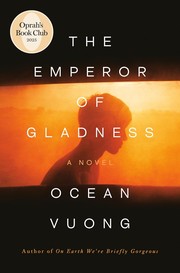
The Emperor of Gladness
Ocean Vuong's second novel follows a young addict pulled back from a bridge in a dying Connecticut mill town and into the home of an elderly immigrant woman…
2,693-word summary · 12 min read

Tara Road
After her husband admits to an affair, a Dublin woman swaps houses for the summer with a grieving American, and each begins to heal inside the other's life.
2,020-word summary · 9 min read

Hollow Bones
On 11 September 2001, two-month-old Molly Fitzgerald loses her mother at the World Trade Center. She grows up planning for disasters, until a crisis in her new…
2,703-word summary · 12 min read

Finding Perfect
A novella that closes the Hopeless series, following Daniel and Six as a long kept secret about their son forces them to finally talk, search, and find a…
2,315-word summary · 10 min read
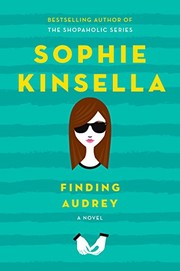
Finding Audrey
A fourteen-year-old who cannot leave the house or remove her dark glasses finds her way back through therapy, a film project and a patient new friend.
2,559-word summary · 11 min read
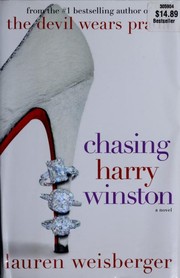
Chasing Harry Winston
Three friends turn thirty in Manhattan and make a wild pact: Emmy will sleep her way around the world, Adriana will settle down, and Leigh watches from the…
2,185-word summary · 10 min read
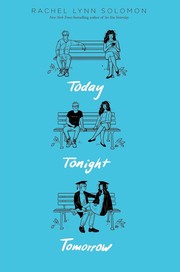
Today Tonight Tomorrow
On the last day of senior year, academic rivals Rowan Roth and Neil McNair team up for a citywide Seattle scavenger hunt and start seeing each other…
2,233-word summary · 10 min read
Tell Me Three Things
A grieving Chicago teen lands in her new stepfamily's Los Angeles mansion, then gets anonymous emails promising to guide her through a brutal private school.
2,292-word summary · 10 min read
Last Night in Brooklyn
A copywriter in 2005 Fort Greene trades a scripted engagement for a bar crowd, a rising designer, and a neighborhood being remade around her.
2,540-word summary · 11 min read
Alone With You in the Ether
Two people in Chicago agree to six conversations, and the experiment becomes a love affair that is also a study of bipolar disorder, obsession, and the shape…
2,713-word summary · 12 min read

Dumplin'
Willowdean Dickson enters her town's beauty pageant as a protest and discovers that confidence is harder to keep once she lets someone close.
1,922-word summary · 9 min read

Sam's Letters to Jennifer
A grieving journalist reads her grandmother's letters and finds a decades-long love affair that changes how she sees her family.
2,310-word summary · 10 min read

Amy & Roger's Epic Detour
Amy Curry has not driven since the crash that killed her father. With Roger at the wheel and a box of maps between them, a cross-country trip becomes a slow…
3,034-word summary · 13 min read

We Are Okay
Marin fled San Francisco after her grandfather vanished and stopped answering anyone. When Mabel visits her college dorm, she has to say what happened.
2,253-word summary · 10 min read

One to Watch
A plus-size fashion blogger takes the lead role on a reality dating show to prove she belongs on television, and finds she might want what the cameras offer.
2,478-word summary · 11 min read
Eligible
Austen's Bennet sisters move to modern Cincinnati, where marriage is a reality show and the house is losing its value.
2,293-word summary · 10 min read