
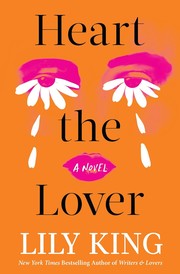
Heart the Lover
2,441-word summary 11 min read 256 pages in the book
- First published
- 2025
- Publisher
- Grove Press
- Pages
- 256
- ISBN
- 9780802165176
- Series
- Casey Peabody (#2)
Reading options
What's inside (9 sections)
I picked this up for two reasons. I had loved Writers & Lovers, and I was curious what Lily King would do with a second book built around the same narrator. I had also heard that this one takes a college love triangle and comes back to it thirty years later, which sounded like the kind of gamble that either works beautifully or falls apart on the page. It is her seventh novel, published by Grove Press in October 2025, and it runs 256 pages. What I found was a book quieter than its premise, and more interested in the shape of a whole life than in the heat of its central romance.
The narrator is Casey Peabody, the same woman who narrated Writers & Lovers, though almost everyone here calls her Jordan, a nickname Sam gives her in college that sticks for the rest of the book. You do not need to have read the earlier novel. King gives you enough to stand on her own, and the shared name feels more like a private joke with old readers than a gatekeeping device.
A triangle in the literature department
Part one is set in the 1980s. Jordan is an undergraduate taking a class in seventeenth-century literature, and that detail matters more than it first appears. She is a student of old texts, someone trained to read feeling into syntax and to find whole lives in the margins of a page. It is the kind of education that makes a person attentive to what is not said, which is exactly the skill the rest of the book will ask of her and, at times, deny her.
She meets two boys in this world. One is Sam, religious and certain of himself, who starts calling her Jordan almost immediately. The other is Yash. Jordan dates Sam first. The relationship lasts a few months and ends badly, the sort of ending that leaves a person sorting through what was real and what was performance. When it is over, she and Yash stay an extra semester, and somewhere in that extra time they begin a relationship of their own.
I want to be careful here, because the book is careful. King does not write this as a simple story of the wrong boy and the right boy. Sam is not made into a villain and Yash is not offered up as a prize. The triangle is less about choosing than about how a young woman learns what she wants by wanting the wrong things first. The nickname is telling in that light. Sam hands her a new name, and Yash, later, is the one who writes to her day after day when she is far away. Both of them, in their different ways, are trying to hold her inside a story of their own making.
Sam's faith is part of what draws Jordan and then what pushes her away. He has a framework for the world that feels settled to him, and for a while she is willing to borrow its certainty. When the relationship ends badly after a few months, it leaves her suspecting that the certainty was never really shared. Yash offers something harder to define. He stays an extra semester without a clear plan, and the relationship that grows between them is built on time spent rather than on labels applied. King sets the two men against each other without ever saying which one deserves her, and the refusal is what gives this section its texture.
After graduation Jordan goes to Paris as an au pair. Yash stays behind and writes to her. The letters are the connective tissue of this stretch of the novel, and they build a future that feels solid because it is put into words so often. They will share an apartment in New York. She believes it. He writes as if he believes it. Then she arrives, and he never shows up. He has moved to Atlanta instead. And he does not know that she is pregnant.
King does not linger over the moment of being stood up, and that choice is interesting. A less restrained writer would have given us the hours in the city, the calls that go unanswered, the slow understanding that the plan was never real. Here the fact arrives almost flatly, and the weight of it is carried by what comes after rather than by the scene itself. The pregnancy turns a piece of carelessness into a life that will keep unfolding long after the two of them have gone their separate ways. That is the novel's central trick: the smallest failure of nerve in a young man produces a consequence he will never even know about.
That last fact is the hinge the whole novel turns on. Everything after it is a consequence of a single piece of information that one person has and the other does not.
The visit
Part two jumps forward thirty years. Jordan is married to Silas, with two young sons, and Yash comes to visit. The first strange thing is how easily he fits. He gets along with the children without seeming to try, and at the park he is mistaken for their father. It is a small scene, but King lets it carry a great deal. In the space of an afternoon, Yash slips into the role of the man who never showed up in New York, the father of children who are not his, and no one in the park knows the difference.
At dinner he tells her about a first date he has been on, and about seeing a huge display for her new novel. Jordan has become a published writer. The news lands oddly, because it confirms that Yash has followed her career from a distance while missing the central fact of her life. He has seen her books in a shop window. He has not known the woman who wrote them.
She thinks about telling him. She thinks about the pregnancy and the baby girl she carried and gave up for adoption. She decides against it. This is the most painful section of the book for me, not because anything dramatic happens but because nothing does. The decision is made in silence, and that silence has to hold thirty years of consequence. King is very good at this kind of restraint. She understands that the most important thing two people can fail to say is often the thing that would change how they see each other.
The secret she carries
The baby girl is the novel's great unsaid thing, and King handles her with care. Jordan does not mention the adoption casually, and the reader is never allowed to treat it as a plot device waiting to be revealed. It is a life she made a decision about, and the decision has kept its weight. By the time Yash comes to visit, the girl would be a grown woman, but in Jordan's mind she is still the child she chose not to keep.
What interested me is how the secret changes meaning depending on who is in the room. With Silas it is a known part of their marriage, something they have built a life around. With Yash it becomes a piece of information he has no claim to and yet, somehow, the one thing he is most entitled to hear. That tension is real and King does not flatten it. Jordan's choice not to tell him at dinner is not cowardice exactly. It is a recognition that some truths arrive too late to be given freely, and that telling now would be as much about her own relief as about him.
The life she built with Silas
Silas is easy to overlook in a book built around two old flames, and I think that is part of the point. He is the man who stayed. When Yash comes to visit, Silas is the one who opens the house, who takes the visit in stride, who lets his wife's former lover sit at the dinner table and get along with their sons. The patience in that arrangement is never commented on at length, which is how you know King trusts the reader to notice it.
He also knows the whole story. The adoption and the pregnancy are part of the marriage in a way they can never be part of the conversation with Yash. I found myself wanting more of Silas's side of that, more about what it has meant to love someone who made a decision before he arrived and then carried it quietly for decades. The book gives him fewer pages than the triangle deserves, and that is one of its smaller missed chances. Still, his role at the end is clear. He is the one who urges Jordan to go and say what she has to say to Yash before it is too late. A lesser novel might have made him jealous or obstructed the reunion. King lets him be generous, and the generosity costs him nothing on the page because it is who he is.
That steadiness is what makes the final stretch bearable. By the time the two cancers arrive, the reader already understands that the marriage is not a pause in Jordan's real story but the life she actually made, the one full of school runs and ordinary days and a husband who can be mistaken for no one else at the park.
The last days
Part three moves forward again. Jordan is in her forties. Her eldest son has cancer and is waiting for surgery in Texas. Yash is in hospice with cancer as well. Sam, now divorced, is at Yash's side. The two men who once competed for Jordan have ended up in the same room near the end of one of their lives, and the arrangement makes a quiet kind of sense. Sam is the one who stayed close, in the end.
Silas is the one who pushes her. He encourages her to go, to say what she has to say before it is too late. She misses three flights. That detail is almost comic on the page, and then it stops being comic, because you understand what it costs her to keep postponing the trip. When she finally tells Yash about their daughter, whose name is Daisy and who would now be twenty-seven and has never contacted her, he is delighted. That response is the reward the book has been quietly setting up. He does not judge the decision or ask what might have been. He is glad to know that a piece of their brief time together turned into a living person.
Daisy's silence is its own quiet fact in all of this. She is twenty-seven, she has never reached out, and the book does not give Jordan the comfort of a reunion or even an explanation. King leaves the daughter mostly outside the frame, which is both a strength and a limitation. It keeps the story focused on what Jordan chose to hide and what Yash never knew, but it also means Daisy exists more as an idea than a person. I kept wanting to know what she might think of the man who was delighted to hear of her at the very end of his life.
Jordan's son is accepted for surgery in Houston, and she leaves. Not long after, Sam texts that Yash has died. The timing is deliberate and it hurt me more than I expected. The book refuses a deathbed scene in the usual sense. There is no long reconciliation, no final conversation in which everything is said and forgiven. There is a daughter who was never contacted, a son who is going into surgery, and a text message from the other boy.
The melodrama question
King drew on a real college love triangle for this novel, and you can feel the grain of something lived in the best pages. The reviews split in a way that makes sense once you have read it. Publishers Weekly called the plot clunky melodrama and said it lacked the staying power of her earlier work. Kirkus gave it a starred review for its characterization. The Guardian's headline called it a love story to treasure, and the Wall Street Journal wrote about young love and what comes after. All of those responses are defensible.
The Publishers Weekly complaint has teeth. The coincidence of the two cancers, the son and the former lover facing treatment in the same stretch of years, the missed flights and the text message, all of it can feel arranged. There are moments when the machinery of the plot shows through and the characters seem to be moving because the story needs them to. If you loved the cleaner ache of Writers & Lovers, this book can feel like it is reaching for more than it can comfortably hold.
What answers that complaint, for me, is the characterization that Kirkus praised. Jordan is not made noble by her secret. Yash is not made wise by his illness. Sam is allowed to be a real man in his fifties rather than a lesson from her twenties. King is at her best with the small social details: the park, the dinner, a man who is at ease with children who are not his. Those scenes do more work than the large ones, and they are the reason the book stays with you even when the plot does not.
What stays with you
I finished this thinking less about the triangle than about the years after it. The title points toward the lover, but the book is really about the long habit of not telling, and about the strange mercy of being told something at the very end that you never expected to hear. Yash's delight at learning about Daisy is the emotional center here, and it arrives without any of the drama the setup could have demanded of it.
This is a novel with real limits. It leans on coincidence, and the last act asks you to accept a great deal in a short span of pages. But it is also a careful, often tender book about how a single choice in your twenties can keep echoing into your forties, and about how different it feels when you finally say it out loud. I would hand it to someone who liked Writers & Lovers and wants to see more of Jordan, and I would tell them to expect a quieter, stranger book than the one they are imagining.
FAQ
Do I need to have read Writers & Lovers first?
No. Heart the Lover stands alone, though it features the same narrator, Casey Peabody, whom most people here call Jordan. Knowing the earlier book adds context but is not required.
Is Heart the Lover based on a true story?
King drew on a real college love triangle for the novel. The characters and events are her own, but the premise came from that experience.
Why is this called a Casey Peabody book?
It is the second novel to feature Casey Peabody, the narrator of Writers & Lovers, though it stands on its own and shares little beyond that character and her nickname.
Similar books
More from Casey Peabody first, then related titles.
The Collected Regrets of Clover
A death doula who writes down the last words of strangers keeps her own heart locked away, until a new neighbor, a dying photojournalist and a road trip to…
3,055-word summary · 14 min read
Writers & Lovers
A broke waitress in Boston grieves her mother, finishes a novel, and chooses between two men.
2,473-word summary · 11 min read
Our Souls at Night
A widow asks her widower neighbor to lie beside her at night, not for sex but for company, and two lonely people in a small Colorado town begin again.
2,582-word summary · 11 min read
The Emperor of Gladness
Ocean Vuong's second novel follows a young addict pulled back from a bridge in a dying Connecticut mill town and into the home of an elderly immigrant woman…
2,693-word summary · 12 min read
The Art of Hearing Heartbeats
When a New York lawyer vanishes, his daughter follows an old love letter to Burma, where a stranger narrates the story of the father she never knew.
2,950-word summary · 13 min read

Tara Road
After her husband admits to an affair, a Dublin woman swaps houses for the summer with a grieving American, and each begins to heal inside the other's life.
2,020-word summary · 9 min read
My Friends
A dying artist sends an eighteen-year-old stranger a painting, pulling her into the story of four teenagers and one summer on an abandoned pier.
2,219-word summary · 10 min read
The Mermaid Chair
Jessie Sullivan returns to her childhood home on Egret Island to care for her agoraphobic mother, then finds her marriage, her faith, and a monk's vow thrown…
2,237-word summary · 10 min read
Tell Me Three Things
A grieving Chicago teen lands in her new stepfamily's Los Angeles mansion, then gets anonymous emails promising to guide her through a brutal private school.
2,292-word summary · 10 min read

Say You'll Remember Me
A vet who writes off a sick kitten falls for the woman who saves it, then follows her into the hard, funny work of caring for a mother with dementia.
2,293-word summary · 10 min read
Alone With You in the Ether
Two people in Chicago agree to six conversations, and the experiment becomes a love affair that is also a study of bipolar disorder, obsession, and the shape…
2,713-word summary · 12 min read

We Are Okay
Marin fled San Francisco after her grandfather vanished and stopped answering anyone. When Mabel visits her college dorm, she has to say what happened.
2,253-word summary · 10 min read

The First to Die at the End
On the night Death-Cast launches, a boy with a bad heart meets a model with everything ahead of him, and one of them gets the call.
2,908-word summary · 13 min read

Big Swiss
A transcriptionist for a sex coach falls for one of his clients, the tall Swiss gynecologist she calls Big Swiss, in a funny novel about work and secrets.
2,523-word summary · 11 min read

The No-Show
Three women are stood up on Valentine's Day by the same man, but the timeline is not what it seems. O'Leary's warmest book with a knife in it.
2,127-word summary · 9 min read

The Little Paris Bookshop
A Paris bookseller who prescribes novels as medicine finally opens a twenty one year old letter from his lost love and sails south through France to find her.
2,050-word summary · 9 min read

Someone Like You
Halley and her best friend Scarlett face a summer of grief, a surprise pregnancy, and Halley's dangerous first romance in Sarah Dessen's 1998 young adult novel.
2,218-word summary · 10 min read
By the River Piedra I Sat Down and Wept
Pilar, 29, meets her childhood friend again in Madrid and finds a rumored miracle worker. One winter week through the Pyrenees to the river Piedra, and the…
2,845-word summary · 13 min read
The Accidental Tourist
Grieving Macon writes travel guides for haters of travel, then Muriel intrudes.
2,252-word summary · 10 min read
The Marriage Plot
At Brown in 1982, Madeleine loves Austen while torn between brilliant Leonard and steady Mitchell.
2,804-word summary · 12 min read
Where Rainbows End
Told in letters and emails, Rosie Dunne and Alex Stewart grow from Dublin childhood to midlife, missing chances at love while raising Katie.
1,943-word summary · 9 min read
You've Reached Sam
After Sam dies, Julie calls his phone to hear his voicemail and he answers, forcing her to face grief and learn how to say goodbye.
2,887-word summary · 13 min read
Evvie Drake Starts Over
A widow hiding a painful secret rents her back apartment to a pitcher who lost his throw, and they slowly learn to start again.
2,584-word summary · 11 min read
The Unlikely Pilgrimage of Harold Fry
A retired man in Devon walks to Berwick to visit a dying friend, hoping his steps keep her alive.
2,246-word summary · 10 min read
The Immortalists
Four siblings visit a fortune teller in 1969 who tells each their death date, shaping how they live and love.
2,007-word summary · 9 min read
Beautiful World, Where Are You
Two friends Alice and Eileen trade letters while navigating love with Felix and Simon.
2,872-word summary · 13 min read

Norwegian Wood
Toru recalls 1969 Tokyo, torn between fragile Naoko and lively Midori after a friend's suicide.
2,051-word summary · 9 min read
Euphoria
Three anthropologists in 1930s New Guinea turn fieldwork into a love triangle, and a real history breathes behind them.
2,048-word summary · 9 min read

The Wilderness
Four Black women move through twenty years of friendship in Angela Flournoy's discontinuous, widely praised second novel.
2,141-word summary · 10 min read
The Midnight Train
An eighty-one-year-old bookshop magnate dies and wakes young again aboard a train that carries him back through the moments that mattered most.
2,299-word summary · 10 min read