
The Midnight Train
2,299-word summary 10 min read 352 pages in the book
- First published
- 2026
- Publisher
- Viking
- Pages
- 352
- ISBN
- 9780593833377
Reading options
What's inside (10 sections)
A train built from a childhood toy
I picked up The Midnight Train because I liked the idea of a book that takes the old question of what you would change if you could go back and gives it a setting with actual wheels. Matt Haig published it in 2026, and the Viking hardcover runs to 352 pages. It came out in Britain through Canongate a few days before the American edition, and the plan was to bring it out in twenty-five territories, which tells you something about the size of the audience Haig has built. This is his ninth novel for adults, and it is described as a companion to The Midnight Library rather than a sequel. You do not need to have read that book to follow this one, though the earlier novel's enormous success is clearly part of why this story exists.
The first surprise is the scale of the premise. Wilbur Budd, the man at the center of it, dies in his eighties and wakes up young again at a railway station. The train that pulls in is not an ordinary train. It is a full-size version of the toy train he owned as a boy. Haig takes that image seriously, and it sets the tone for everything that follows. This is a book about a man who got very rich and very old and is now being given a second look at the moments that made him. The toy train is both a prop and an argument: somewhere under the suits and the fortune, the boy is still there.
I want to be clear about what kind of book this is. Wikipedia files it as fantasy and as an example of British magical realism, and that seems right. There is no explanation of how the train works or who built it, and the rules it runs on are delivered as facts rather than mysteries to be solved. If you need a mechanism, you will be disappointed. What Haig is interested in is the emotional use of a fantastic device, not the device itself.
Wilbur Budd, and the phone call
Wilbur made his money by taking a beloved bookshop and turning it into a global bookstore chain. That single sentence explains a great deal about him. There was a time when books were the center of his life, and then books became a business, and the business swallowed the rest. His marriage did not survive it. He neglected his wife, Maggie, and lost her many years before the novel opens. His daughter lives at a distance, and there is no one waiting at home for him now. He is eighty-one and alone in a life that looks, from the outside, like a success.
The book opens with a phone call from Maggie. She says she would like them to be friends again. It is a small, plain request, and it arrives out of nowhere, which is the point. Shortly afterward Wilbur collapses and dies. I did not find that sequence as shocking as it is meant to be, because the call has already told us where his mind is. He has been living with the thought of Maggie for a long time. The death is a doorway, not a twist.
What waits on the other side is a station and a younger body. Wilbur has been returned to the age he was when he and Maggie honeymooned in Venice. That choice is deliberate and a little cruel. He has been given back not his healthiest or his happiest decade, but the specific stretch of time he is most likely to want to relive. The train is waiting, and aboard it is Agnes Bagdale, the woman who ran the bookshop he frequented as a boy. She appears as a younger version of herself, which makes her both a guide and a reminder of where his life started.
The rules of the train
Agnes explains the journey to him. He is being taken to significant places and events from his own life, and he is forbidden to interfere, because changing what happened might change the course of other people's lives. The train runs on three rules, and Haig states them bluntly. Get on and get off when you are told to. Never try to speak to yourself. Never be there when you fall asleep.
Those rules are the spine of the book, and they are cleverer than they first appear. The first strips Wilbur of control, which is hard for a man who spent his life making decisions for a whole company. The second denies him the one thing he most wants, which is a conversation with the person he used to be. The third is stranger and more interesting. It means that the dead cannot stay in the past, that they are called away the moment they would become truly present in a scene. It keeps the visit temporary, and it keeps the ache alive.
Wilbur struggles with all three. He is a self-described maverick, and he has never been good at being told what he cannot do. Haig gets a good deal of mileage out of the gap between the rules and Wilbur's instincts. The man built an empire on the idea that his judgment was better than everyone else's, and now he is on a train where judgment counts for nothing. Watching him chafe against that is one of the quiet pleasures of the early chapters.
Venice, and the rule he breaks
The rule about not speaking to yourself is the one Wilbur cannot keep. At the Venice honeymoon, he breaks it and talks to his younger self. I do not think Haig presents this as a triumph, and the consequences are left loose in a way that suits the book. What matters is the act itself. Wilbur looks at the young man who had Maggie beside him and who had not yet traded her for the business, and he cannot stay silent. He wants to warn him, or comfort him, or perhaps just to ask him what it felt like to be that happy.
This is where the novel's central tension comes into view. The train offers a review of a life, but it forbids revision. You can see everything and touch nothing. That is a cruel gift, and it is also, the book argues, an honest one. Most of us who want to go back are not really asking for a do-over. We want to stand in the old room one more time and know what we know now. Haig understands that distinction and builds the book around it.
The Venice scenes are the most tender in the novel, and they are also the most overtly sentimental. There is a honeymoon, there is a young couple, there is an old man watching them from the edge of the scene. If that combination sounds like it is steering straight for a tearjerker, it is. Haig does not pretend otherwise. The question is whether the feeling is earned, and for my money it is, because Wilbur's regret has been established in the plainest possible terms before we get there.
Charlie's lunch, and the thing Wilbur missed
Away from the Venice material, the novel gives Wilbur a conversation with an old friend named Charlie over lunch at a trendy restaurant. Charlie tells him that his constant ambition is itself a failing. It is the kind of thing a friend might say too late, and here it arrives at exactly the right time. Wilbur has spent decades believing that drive was his great virtue, the quality that lifted him out of a small shop and into a global chain. Hearing it named as a fault takes something apart in him.
That lunch is the book's argument in miniature. Wilbur gradually recognizes that Maggie was his true love and the lodestar of his life, and that he spent thirty years walking away from the one thing he claimed to value. Haig is not subtle about this. He does not need to be. The recognition arrives in pieces rather than in one flash, which keeps it from feeling like a lecture. Wilbur is a man learning to read his own life backwards, and the lessons come in the order he can bear them.
Kirkus noted that the journey has unexpected consequences for several people as well as lessons for Wilbur, and that surprised me in a good way. I had expected a strictly private reckoning, one man and his memories. Haig lets the past push back on other lives, which gives the story more motion than its premise suggests. It also raises the stakes of the rule about interference. If the past can be disturbed, then the rules about not changing things carry real weight rather than being decorative.
What the journey is really for
Underneath the train and the rules and the time travel, this is a book about a life review, about the fact that the past cannot be changed, and about second chances that arrive too late to be used in the ordinary way. It is also about the consolations of books and friendship. Wilbur's fortune came from selling books, but the books in his story are not inventory. They are the things that connected him to his mother's shop, to Agnes, and eventually to Maggie. Haig is doing something similar with reading itself: treating it as a kind of companionship that survives the people who introduced it to you.
The novel is unabashedly sentimental, and I think it is better for being honest about that. Kirkus placed it in the company of novels set in bookshops, libraries and reading groups, in what that review called the seriously sentimental category, alongside titles such as The Guernsey Literary and Potato Peel Pie Society and Mr. Penumbra's 24-Hour Bookstore. That is fair company. These are books that ask to be liked rather than admired, that offer warmth as their main product.
But there are sharper observations tucked into the softness. Haig writes about ambition and regret with a clarity that cuts through the glow. Wilbur's story is not really about whether he loved his wife, which he clearly did. It is about what he chose to put in front of her, and how easy it is to keep choosing the wrong thing once a life has momentum. A man does not have to be cruel to waste a marriage. He only has to be busy.
The sentimentality argument
Let me give the other side its due. Kirkus found a shaky balance between the saccharine and the sage, and judged that the result would appeal to Haig's existing fans and to readers looking for balm, while acknowledging the quieter and sharper observations about ambition and regret. Publishers Weekly felt that Haig sometimes slips into platitudes, and quoted a line about it taking a moment to die but a whole lifetime to learn how to live. That reviewer also concluded that Haig authentically evokes Wilbur's fears and regrets across a life marked by sacrifice.
Both of those responses match my own experience. There are passages where the emotion feels pre-packaged, where the book seems to know which nerve it is touching and presses a little too deliberately. There are also passages where Wilbur's regret is so specific and so ordinary that it is hard to dismiss. The line about learning how to live is exactly the sort of sentence that can sound profound in a novel and hollow on a mug. I winced a little. Then I kept reading, because the surrounding pages had earned enough trust to carry it.
This matters because the book's biggest risk is not its fantasy but its tone. A novel about a man revisiting his dead wife's best day could easily become manipulating. Haig avoids the worst of that by keeping Wilbur's flaws in view. He is vain about being a maverick, he is used to getting his own way, and his regret does not make him a good man, only a sadder and more aware one. That distinction saved the book for me.
Who this book is for
If you want a tightly plotted fantasy with an explained machine and a clean resolution, this will not satisfy you. The train's rules are asserted, not argued, and the ending leaves several threads loose. If you want a cozy novel about books that mostly wants to make you feel warm, you will find plenty to like, and there is no shame in that. Haig knows exactly what he is offering. The subtitle in the marketing about a magical, time-travelling love story from the world of The Midnight Library tells you which shelf it belongs on.
I would hand it to someone who has ever replayed an old argument in their head, or who has a person they wish they had treated differently. It is a book that assumes regret is normal and worth examining, and it treats the desire to go back as something human rather than foolish. It is also a book about learning to stop, for a man who never did. Wilbur spends the story being carried somewhere he did not choose, and by the end the ride starts to look less like a punishment.
What I took away was not the fantasy but the arithmetic of it. One phone call, one death, one train, and a long list of moments a man can no longer touch. Haig has written a book that is easy to read quickly and harder to shake. I finished it thinking about the people I have been busy with, and the ones I have been busy for, and the difference between the two.
FAQ
Do I need to read The Midnight Library first?
No. The Midnight Train is a companion to that 2020 novel rather than a sequel, and it stands on its own. It was published in 2026 by Viking in the United States and by Canongate in Britain.
Who is Agnes Bagdale?
She is the woman who ran the bookshop that Wilbur visited as a boy. On the train she appears as a younger version of herself, and she explains the rules of his journey to him.
Why is the book classified as fantasy?
The story involves a man who dies and is made young again, carried by a train that recreates scenes from his life. Wikipedia classifies it as fantasy and as British magical realism, though the machinery is never explained.
Similar books

If Cats Disappeared from the World
A dying postman takes the Devil's deal: each extra day costs one thing erased from the world. As phones, films and clocks vanish, he must decide whether even…
2,354-word summary · 10 min read
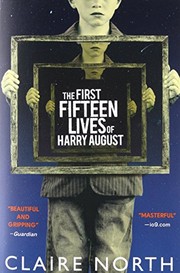
The First Fifteen Lives of Harry August
Harry August dies and is born again into the same life, again and again, until a warning from a child tells him the world is ending faster with each pass.
2,189-word summary · 10 min read
Bridge to Terabithia
Katherine Paterson's Bridge to Terabithia retold: Jess Aarons and Leslie Burke build an imagined kingdom and face sudden loss.
2,673-word summary · 12 min read
The Sorcerer in the North
A young Ranger posted to a quiet fief goes undercover as a jongleur to investigate a supposed sorcerer haunting a wood and a poisoned castle.
2,246-word summary · 10 min read
The Iron Trial
Call Hunt tries to fail the entrance tests for the Magisterium, only to be chosen and drawn into a secret about the war that killed his mother.
2,248-word summary · 10 min read
One Boat
A woman returns to a Greek coastal town after her father's death, and the holiday she took nine years earlier after her mother's death keeps breaking through.
2,143-word summary · 10 min read
Wolfsong
Ox Matheson grows up believing he is worth nothing. Then the Bennett family moves in next door, werewolves with a secret, and a boy named Joe begins to howl…
2,823-word summary · 13 min read
Whistler
Ann Patchett's eleventh novel follows a New York teacher who reconnects with a former stepfather at the Met and hears the strange story of a chestnut mare.
2,697-word summary · 12 min read

Water Moon
A woman inherits a Tokyo pawnshop that trades in regrets, finds her father gone and one glowing bird freed, and crosses into another world to learn what her…
2,087-word summary · 9 min read
The Travelling Cat Chronicles
A stray cat with a crooked tail and the man who rescued him drive across Japan to visit old friends, each stop hiding part of a secret neither can say aloud.
2,865-word summary · 13 min read
The Impossible Fortune
Osman gathers the Coopers Chase pensioners for a fifth mystery that opens on a quiet year, a wedding, a vanishing guest and a code worth a fortune in Bitcoin.
2,685-word summary · 12 min read
The Everlasting
A broken scholar is sent into the past to live the legend of Sir Una Everlasting, only to find that the story demands her death and that he is writing the lie.
2,464-word summary · 11 min read
The Emperor of Gladness
Ocean Vuong's second novel follows a young addict pulled back from a bridge in a dying Connecticut mill town and into the home of an elderly immigrant woman…
2,693-word summary · 12 min read
The Collected Regrets of Clover
A death doula who writes down the last words of strangers keeps her own heart locked away, until a new neighbor, a dying photojournalist and a road trip to…
3,055-word summary · 14 min read
The Book of Three
A restless assistant pig-keeper in mythical Wales chases his escaped oracle pig and finds himself beside Prince Gwydion in a war against the Lord of Annuvin.
2,019-word summary · 9 min read
The Book of Lost Things
A twelve-year-old boy grieving his mother's death slips through a crack in the garden wall into Elsewhere, where fairy tales and a fading king guard the secret…
2,441-word summary · 11 min read
Tara Road
After her husband admits to an affair, a Dublin woman swaps houses for the summer with a grieving American, and each begins to heal inside the other's life.
2,020-word summary · 9 min read
Saving CeeCee Honeycutt
A twelve-year-old girl loses her mother and is packed off to Savannah, where a great-aunt, a housekeeper and a street of eccentric women teach her how to…
2,627-word summary · 12 min read
Oathbound
Bree Matthews has exiled herself from the Legendborn Order to protect the people she loves, but an unbreakable bargain with a shapeshifting demon has bound her…
2,751-word summary · 12 min read
My Friends
A dying artist sends an eighteen-year-old stranger a painting, pulling her into the story of four teenagers and one summer on an abandoned pier.
2,219-word summary · 10 min read
Lover Reborn
A grieving vampire warrior learns that the only way to free his dead mate from a cold afterlife is to love another, as a rival clan challenges the Blind King's…
2,768-word summary · 12 min read
Keys to the Demon Prison
The fifth and final Fablehaven book sends Kendra and Seth Sorenson across secret preserves to keep the last keys to the demon prison out of rival hands.
2,251-word summary · 10 min read
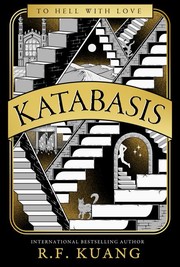
Katabasis
Kuang sends a Cambridge doctoral magician into the underworld to fetch the supervisor she killed, all for a letter of recommendation. Academic satire turns…
2,374-word summary · 11 min read
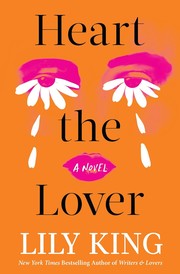
Heart the Lover
Lily King's seventh novel revisits a 1980s college love triangle thirty years on, as a woman who once gave up a baby decides what to tell the lover who never…
2,441-word summary · 11 min read
Dragon Rider
A silver dragon, a sharp-tongued brownie and a lonely orphan boy cross deserts and seas to find the dragons' lost homeland, pursued by a golden killer made by…
3,188-word summary · 14 min read
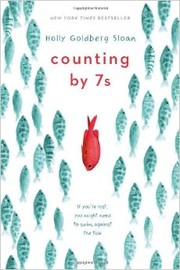
Counting by 7s
A gifted twelve-year-old who counts by sevens loses her parents in a car crash and gradually builds a new family with help from a counselor, a taxi driver, and…
2,306-word summary · 10 min read
Alchemised
A memory-wiped alchemist wakes a prisoner of the regime that won Paladia's civil war, and her captor is the former rival who wants what remains inside her head.
2,596-word summary · 12 min read

13 Little Blue Envelopes
A seventeen-year-old follows thirteen letters from her dead aunt across Europe, with no phone, no journal and no spare cash, and learns who she is on her own.
2,515-word summary · 11 min read
Tell Me Three Things
A grieving Chicago teen lands in her new stepfamily's Los Angeles mansion, then gets anonymous emails promising to guide her through a brutal private school.
2,292-word summary · 10 min read
Oona Out of Order
Each New Year's Eve, Oona Lockhart wakes up in another year of her own life, with the mind of the woman she was and no memories to match her new body.
2,429-word summary · 11 min read