
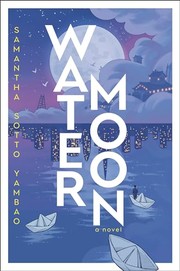
Water Moon
2,087-word summary 9 min read 374 pages in the book
- First published
- 2025
- Publisher
- Del Rey
- Pages
- 374
- ISBN
- 9780593724996
Reading options
What's inside (8 sections)
The shop that sells regrets
Hana Ishikawa has spent her whole life dreading the day she has to inherit her family's pawnshop. From the street it looks like a ramen restaurant, which is deliberate. Inside, it trades in something else. Clients come to surrender painful choices they wish they had never made. Each surrendered choice is stored as a glowing bird, and every month the birds must be handed over to the Shiikuin, terrifying figures in pale Noh masks who enforce the bargain. It is one of the most appealing premises I have read in a while: a shop where the thing you regret can be taken out of you and kept in a cage, at a price.
Samantha Sotto Yambao published this in January 2025, and the first-edition hardcover runs to 374 pages. It is a magical realist fantasy that moves between modern Tokyo and a world called Isekai. The book is less interested in explaining that world than in letting you walk through it. Rules are revealed when a character needs them, and the logic is dreamlike rather than systematic. This is the right approach. A pawnshop for regrets makes sense on an emotional level before it makes sense on any other.
The rules of the shop are revealed in pieces. Clients surrender the choice itself, not an object associated with it, and what is stored is a bird whose glow seems to depend on how much the choice still matters. The monthly handover to the Shiikuin is presented as an obligation rather than a transaction, which is an important distinction. Nobody pays the shop to be relieved of a regret. They pay by giving it up, and the shop is then responsible for what happens next. Hana has inherited a business and a debt at the same time, and she did not ask for either.
Her dread is easy to understand. She has watched her father Toshio run the place for years, and she knows that the work changes the people who do it. The shop is not a clue in a mystery so much as a condition she has been living inside her whole life. When she finds it ransacked on her first morning, her reaction is not only fear for her father. It is the sudden, terrible realization that she has been left responsible for something she never understood.
The opening image of the birds is what stayed with me. A regret given physical form, glowing and alive, handed over on a monthly schedule like rent. The Shiikuin who collect them are genuinely frightening, and the masks do a great deal of work. A masked figure does not need to explain its power. It simply arrives.
The morning everything is gone
On Hana's first morning as proprietor, she finds the shop ransacked. Her father Toshio is gone. One of the choice-birds has been freed. The rest of the story is set in motion by that single absence, and by the arrival of a man who should not be able to get in. Minatozaki Keishin, a human theoretical physicist, walks through the front door and insists on helping her find her father.
Kei, as Hana calls him, is a good counterweight to the mystical machinery of the book. He is a man who works in equations and theories, and he keeps trying to find a rational account of what is happening. The book gives him room to be wrong in interesting ways. His presence also keeps the story anchored in something like the modern world. Tokyo is not replaced by Isekai. The two sit on top of each other, and the transitions between them are handled as mundane acts: jumping into puddles, folding yourself into paper, climbing ladders through clouds.
Hana's mother was executed for stealing a choice. That fact hangs over everything Hana does. She knows exactly what the price of defying the rules can be, which makes her reluctance to break them feel earned rather than convenient. She is not a reckless heroine. She is a woman who has watched the cost of recklessness up close, and who has spent her life trying to be the kind of person who never triggers it.
Kei's own reason for staying is partly professional and partly something he cannot explain. As a theoretical physicist he is interested in the structure of the worlds they are crossing, in the fact that a puddle can function as a door and that a person can fold into paper without losing herself. He keeps reaching for a model that will hold. The book lets him fail at this in a way that is charming rather than foolish. He is a man who has spent his life assuming that if something happens, there must be a description of it, and Isekai resists him at every turn.
Hana, who has lived with the impossible since childhood, finds his bewilderment oddly comforting. It is the first time someone has looked at her world from the outside and been honest about not understanding it. That is the beginning of what grows between them, and it is a more interesting foundation than shared danger.
The search for Toshio becomes a journey through other people's regrets. Hana and Kei follow the trail of Takeda Izumi, the woman who pawned the choice in the first place, and of her abandoned lover Junichiro. That story runs parallel to Hana's own, and the book gradually makes clear that the two are versions of the same story. A person makes a choice out of fear or pride, and then spends years living inside the consequences. The magical apparatus exists to make that ordinary condition visible.
Crossing between worlds
The best chapters are the ones in transit. Yambao has a gift for images that arrive without explanation and somehow feel inevitable. Hana and Kei jump into puddles to cross from Tokyo into Isekai. They fold themselves into paper to travel. They climb a ladder that goes up through the clouds and arrive at a night market suspended in the sky. Each transition is described with a lightness that makes the extraordinary feel casual, as though the characters are taking the train.
This is the quality that BookPage praised when it called the worldbuilding marvelous and digestible. Nothing is over-explained. The rules of Isekai are learned the way you learn the rules of a new city, by bumping into them. The night market in the clouds is the clearest example. It appears, it has a logic, the characters navigate it, and the book moves on. A lesser fantasy would have stopped to build a history for it.
Locus reviewer Alexandra Pierce admired the whimsy with an unexpectedly sharp edge, and that is the right description of the tone. The book is funny and often playful, but the regrets are real. Every glowing bird represents a life bent by a decision, and the Shiikuin are not whimsical once they arrive. The whimsy is the surface the story uses to get you close to something painful.
Kei and the moon in the water
The romance develops slowly and with unusual maturity for a fantasy. Both characters are adults with prior lives, and neither is looking for rescue. Kei tells Hana that she is the moon in the water, close enough to touch and yet beyond reach. It is a lovely line and a fair description of their relationship. They are together in the sense that matters, but the worlds they come from make a permanent arrangement difficult to imagine.
What I liked is that the book lets them talk. When there is a decision to make, they discuss it. This sounds like a small thing, but it is rare in a genre that often resolves emotional conflict through a kiss or a sacrifice. BookPage specifically praised the mature, communicative leads, and it is easy to see why. Hana and Kei disagree, they explain themselves, and they arrive at choices together. Their romance grows out of conversation rather than out of proximity.
The Shiikuin pursue them throughout, which supplies whatever suspense the book has. But this is not a thriller. The masks are frightening and the stakes are real, yet the pacing stays gentle. The chase exists to keep the characters moving through the world rather than to make the reader afraid they will be caught. If you are looking for a novel where the tension ratchets upward chapter by chapter, this is not that book.
The story of Takeda Izumi and Junichiro gives the book its emotional counterweight. Izumi pawned a choice, and the consequences spread outward to the man who loved her and never got an explanation. Hana and Kei follow the traces of that decision the way a detective follows a paper trail, except that the trail runs through dreams and markets above the clouds. The abandoned lover is one of the saddest figures in the book because his regret was never his to surrender. He is living inside someone else's bargain.
That is what the title is doing as well. The moon in the water is an image of something that appears close and is not. It describes Kei's view of Hana, but it also describes the regrets in the shop. They look solid and reachable, glowing there in their cages, but the moment you grasp at one, the surface breaks. Yambao does not explain the metaphor, which is probably why it works. The reader feels it before being told.
The secret and the choice
Near the end, Hana has to reveal a personal secret and decide whether to rewrite her own fate. The book handles this without a grand speech. Her choice grows out of everything the journey has shown her about the cost of living inside a decision you did not make freely. Takeda Izumi's story, her mother's execution, her father's disappearance and the freed bird all point to the same question: what does a person owe to a bargain made in a moment of pain?
The answer the book arrives at is characteristically gentle. Hana does not overthrow the system. She makes a different choice for herself, and that is enough. The scope stays personal, which is both the book's limitation and its intention. It is a story about one woman deciding what to do with one life, told through a world in which other people's regrets are literally hanging in cages.
The criticism is predictable once you understand that intention. It is a deliberately low-suspense read. The Shiikuin never feel quite as dangerous as they should, and the ending resolves things more neatly than the setup suggests. Readers who want a fantasy with epic stakes or a romance with more heat may find it too mild. There is also a reliance on beautiful images that occasionally arrive faster than the book can give them weight. The cloud market is wonderful, but it is gone before it has had time to mean anything.
Why it works
I think the book succeeds because the premise is emotionally exact. Everyone has a choice they would take back if they could, and everyone knows that taking it back would change the shape of the life that followed. Yambao turns that into a shop with a waiting room and a monthly collection schedule. The glow of the birds makes the regret beautiful, which is the book's sharpest insight. We do not always experience our regrets as ugly. Sometimes we cherish them, because they are evidence of a person we once were.
That is what makes the Shiikuin so unsettling. They want to take the birds away on a schedule, as though regret were a debt to be paid. The whole novel is an argument about whether that is a fair way to treat a person. Hana's answer, when she finally has to give one, is not that regrets should be kept or destroyed. It is that the person who made the choice should be the one to decide.
I finished the book wanting more time in the world, which is usually a good sign. The rules are tantalizing and several of the secondary stories, particularly Junichiro's, could have carried another novel. But the book knows what size it is. It is a gentle fantasy about a woman learning that her father's disappearance, her mother's execution and the glowing birds in the shop are all part of one question she has to answer for herself. The answer is worth getting to.
FAQ
What is Water Moon about?
It is a 2025 magical realist fantasy about a woman who inherits a Tokyo pawnshop that trades in regrets. When her father disappears and a stored regret is freed, she crosses into another world to find him.
What are the glowing birds in the shop?
They are the regrets clients surrender. Each choice is stored as a glowing bird, and the birds must be handed over each month to the Shiikuin, masked figures who enforce the bargain.
Is Water Moon a high-stakes fantasy?
No. Reviewers described it as a deliberately low-suspense, gentle read whose stakes stay personal. The pursuit by the Shiikuin keeps the story moving rather than making it frightening.
Similar books

Wizard's First Rule
Woods guide Richard joins Kahlan and wizard Zedd to find the Boxes of Orden before Darken Rahl, learning why people believe lies.
2,220-word summary · 10 min read
The Magician's Land
Exiled from Fillory, Quentin takes a teaching job at Brakebills, joins a crew of magical thieves, and must help rebuild a dying world to finish the trilogy.
2,204-word summary · 10 min read
Forced Bonds
The Sanctuary's shield is down and the Resistance is inside. Oli must complete her bond group, including the hostile Nox, before the war costs her everything.
2,316-word summary · 10 min read
Wings
A homeschooled fifteen-year-old grows a blue flower from her back and learns she is a faerie sent to guard a hidden gate. Pike's debut makes plant lore feel…
2,506-word summary · 11 min read
This Kingdom Will Not Kill Me
A grocery delivery driver wakes in a fantasy capital she knows from an unfinished trilogy, only to discover she cannot die.
2,339-word summary · 10 min read
The Knight and the Moth
Six of seven Diviners vanish, and the last one flees a cathedral with a mocking knight and a gargoyle who calls everyone Bartholomew. Gillig's gothic fantasy…
2,936-word summary · 13 min read
The Girl of Fire and Thorns
Rae Carson's debut follows Elisa, an insecure princess born with a godstone in her navel, who is married to a foreign king and must grow into the leader a…
2,331-word summary · 10 min read

The Everlasting
A broken scholar is sent into the past to live the legend of Sir Una Everlasting, only to find that the story demands her death and that he is writing the lie.
2,464-word summary · 11 min read

The Darkest Part of the Forest
In a town built around a sleeping horned boy in a glass coffin, a girl discovers she has been spending her nights as a faerie king's knight and remembers none…
2,012-word summary · 9 min read
The Binding
In an alternate Victorian England, binders remove unbearable memories into books, and a young apprentice discovers his own past was erased from him.
2,036-word summary · 9 min read
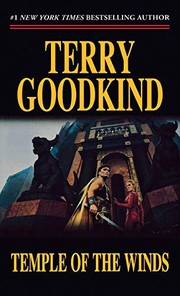
Temple of the Winds
In Sword of Truth book four, a magical plague sweeps the Midlands and prophecy demands that Richard enter the Temple of the Winds, but only through an…
2,962-word summary · 13 min read
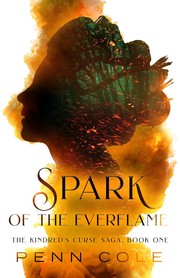
Spark of the Everflame
A village healer stops taking the powder that keeps her strange powers quiet. After a dying king names her his heir, Diem Bellator faces a choice between a…
2,293-word summary · 10 min read
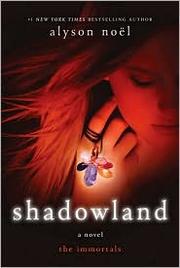
Shadowland
Ever Bloom cannot touch Damen without risking his life. As she hunts for a cure, a mysterious surfer named Jude arrives and her loyalty to Damen is tested.
2,301-word summary · 10 min read
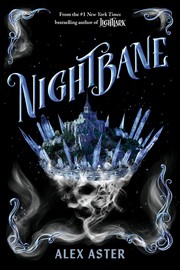
Nightbane
Isla Crown has thirty days to defend Lightlark after Grim threatens to destroy it, while memories of the year she spent with him return.
2,353-word summary · 10 min read

Magic Study
Sentenced to die in Ixia, Yelena returns to the land she was stolen from to learn the magic that made her an outlaw.
2,542-word summary · 11 min read

Magic Bleeds
The fourth Kate Daniels novel finds Kate investigating a magical plague in Atlanta while her relationship with Curran fractures and an ancient enemy tied to…
2,236-word summary · 10 min read
Keys to the Demon Prison
The fifth and final Fablehaven book sends Kendra and Seth Sorenson across secret preserves to keep the last keys to the demon prison out of rival hands.
2,251-word summary · 10 min read
Katabasis
Kuang sends a Cambridge doctoral magician into the underworld to fetch the supervisor she killed, all for a letter of recommendation. Academic satire turns…
2,374-word summary · 11 min read

If Cats Disappeared from the World
A dying postman takes the Devil's deal: each extra day costs one thing erased from the world. As phones, films and clocks vanish, he must decide whether even…
2,354-word summary · 10 min read
Golden Fool
FitzChivalry Farseer returns to Buckkeep as a servant and a grieving Skillmaster, teaching Prince Dutiful while court intrigue, the Piebalds and a…
2,583-word summary · 11 min read
Fool's Fate
Prince Dutiful must kill a dragon to secure his betrothal, and FitzChivalry Farseer is caught between the Fool and Chade over Icefyre's fate.
2,247-word summary · 10 min read

Brida
A young Irishwoman convinced she has a spiritual Gift seeks out a forest Magus and a Dublin witch, and learns that her gift is to bridge the visible and…
2,012-word summary · 9 min read
Blood of the Fold
In Sword of Truth book three, Richard Rahl takes command of Aydindril while a zealot army and an emperor who walks in dreams threaten everything he loves.
2,321-word summary · 10 min read
The Wind Through the Keyhole
Sheltering from a killing storm, Roland tells his ka-tet a tale of his youth, then a boy's fairy tale that mirrors his own loss.
2,504-word summary · 11 min read

The Paper Magician
A graduate magician is assigned to paper magic instead of metal, then must face a woman who tears out her mentor's heart.
2,454-word summary · 11 min read

Quicksilver
Saeris Fane steals from the desert queen's reservoirs until a gateway flings her into the frozen fae world, where Kingfisher needs her alchemist magic.
2,311-word summary · 10 min read
Onyx Storm
A quest south with Violet Sorrengail, a dragon rider racing to cure Xaden before he turns venin. Yarros trades the academy for islands, irids and a costly war.
2,368-word summary · 11 min read
Magic Strikes
Drafted into the Order of Merciful Aid, Kate Daniels investigates the beating of her friend Derek and finds a hidden tournament where rakshasas fight in human…
2,012-word summary · 9 min read

Innamorata
A mute necromancer heiress engineers a royal marriage to reach a forbidden library, then falls for the prince she plans to use.
2,464-word summary · 11 min read
Dominion
Jean Kwok opens a trilogy in a world of four Dominions, where a memoryless refugee bonds with a tyger queen and uncovers a royal past.
2,213-word summary · 10 min read