
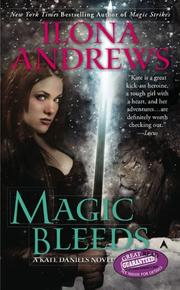
Magic Bleeds
2,236-word summary 10 min read 384 pages in the book
- First published
- 2010
- Publisher
- Ace
- Pages
- 384
- ISBN
- 9780441018529
- Series
- Kate Daniels (#4)
Reading options
What's inside (9 sections)
- A bar fight and a disease that should not exist
- The Steel Mary and a pattern of plague
- Family, the City Eater, and what Kate has been hiding
- The Mole Hole and the decision to leave
- A confession, and the problem with smelting happiness
- The fight with Erra and what victory costs
- Aftermath, and a place to stand
- Key takeaways
- FAQ
I picked up the fourth Kate Daniels book because the third one had left me in the middle of a mess I wanted resolved, and because I had heard that this was where the series stopped playing around. That turned out to be true in a way I did not expect. The book opens not with a monster but with something almost domestic. Kate has cooked dinner for Curran, the Beast Lord, after losing a bet, and he does not show up. She waits. The food goes cold. By the time the phone rings with a real emergency, the evening has curdled into something that sits under everything that follows.
Ace published Magic Bleeds in 2010, and the 384 page mass market paperback reads like a book that knows it is a hinge. It is the fourth entry in the Kate Daniels series, and it spends its length closing old doors and shoving Kate through a new one. That opening matters because so much of what happens here is about a relationship that has stalled. Kate and Curran have been circling each other for three books, trading banter and blows and the occasional near honest moment. The missed dinner is the point where the almost stops being enough. Kate is angry, and she is also hurt, and she throws herself into the case that lands on her desk partly because it gives her somewhere to put both.
A bar fight and a disease that should not exist
The emergency is at the Steel Horse, a bar that sits midway between the territories of the Pack, Atlanta's clan of shapeshifters, and the People, the necromancers who pilot the dead. It is one of the few places where both sides will gather and behave, which is a relative term when your clientele can grow claws or loose a vampire. Kate takes the call in her capacity as a liaison for the Order of the Knights of Merciful Aid, the group she works for officially. Unofficially she is the person who cleans up the paranormal problems nobody else wants, especially when shapeshifters are involved.
What she finds is worse than an ordinary brawl. A man is dead, pinned to a pole with a crowbar, and his body is infested with a living, intelligent disease. Kate throws up wards and calls in the Order's Biohazard team to contain it. The victim turns out to have been a shapeshifter, which is supposed to be impossible, since shifters are resistant to ordinary sickness. This thing is not ordinary. A witness mentions a figure in a cloak who started the fight, and just like that Kate has a new case and a new reason to avoid going home to that cold dinner.
I liked how the book handles this stretch. The world of these novels runs on waves of magic that sweep across Atlanta and knock out engines and guns when they are high, then recede and let technology work again. Andrews uses that rule for more than atmosphere. A disease that can slip past a shapeshifter's defenses is a genuine problem in this world, and Kate's containment work feels like the practical, unglamorous job it is. There are wards, there are hazmat people in suits, there is a great deal of swearing. The stakes arrive through competence before they arrive through violence.
The Steel Mary and a pattern of plague
The cloaked figure acquires a name: the Steel Mary. Kate starts to see a shape in the attacks. A fight breaks out in a place where the city's factions mingle. A magical infection spreads. The strongest fighter dies and becomes a carrier. The Mary is not just killing people, she is building something, gathering power and leaving a trail of the dead behind her. Soon the attacks reach both the Pack and the People, and a necromancer's casino is hit by something that should not be possible either, dead mages wielding elemental magic. Kate's old allies get pulled in. There is Saiman, the businessman with his own agenda, and Ghastek among the necromancers, and Jim on the Pack side, each useful and none of them entirely trustworthy.
The deeper Kate digs, the more the mythological underside of this world shows through. The Mary's seven undead servants and their command of fire, water and air are not random. They echo a very old story, and Kate's reading of ancient scrolls starts to look less like research and more like a family history she has been avoiding. This is where the book shifts from a plague investigation into something stranger. The further back the story reaches, the closer it comes to Kate herself.
One thing I appreciated is that Kate earns her answers. She is not handed the solution by a convenient expert. She reads, she argues, she gets infected and scared and keeps going. The writing gives her a voice that is funny even when she is frightened, and that combination is the series at its best. There is a moment where she mutters about the kind of person who would attack a bar full of psychotic killers and people who pilot the undead, and it made me laugh out loud. The humor does not undercut the danger. It is how Kate keeps herself steady.
Family, the City Eater, and what Kate has been hiding
The Steel Mary is Erra, and Erra is family. She is the sister of Roland, the ancient power who calls himself Roland and who is Kate's father. Long ago, in the story the series has been telling in pieces, Erra was a warlord who fought at Roland's side when magic ruled and they ruled with it. When the age of technology pushed magic out, they slept for thousands of years, kept alive by the small amounts of magic that never vanished. Now magic is returning in waves, and Erra has woken with a grudge against shapeshifters, whom she regards as an abomination. She has another name, the City Eater, and she has earned it.
This is the reveal the earlier books have been circling, and it lands because the personal and the mythic are the same thing here. Kate has spent her life hiding her bloodline, and not without reason. Her father is a power who wants her dead or worse, and the people around her would think twice about standing beside her if they knew where she came from. Erra knows exactly who Kate is. The attack on Atlanta is not random cruelty from a distant villain, it is a family visit with a grudge attached.
The author's note on the publisher's page describes this opponent as the most powerful the team had written to that point, and describes Kate as outclassed and underpowered, facing a choice between standing against her bloodline and probably dying or running and abandoning everyone she cares about. That is a fair description of the book's emotional engine. What makes Erra frightening is not a bigger body count. It is that she has no mercy and no weakness Kate can exploit, and that she knows everything about Kate's people before Kate has told them anything.
The Mole Hole and the decision to leave
The Order of the Knights of Merciful Aid is not portrayed kindly here. Its leadership, including Ted Moynohan, is rigid and prejudiced, and when they try to trap Erra in a public spectacle at a ruined amphitheater called the Mole Hole, the plan collapses. Erra looses her undead warriors, panic spreads, and knights and civilians die. It is an ugly, chaotic sequence, and Kate is forced to decide where her loyalty actually lies. She tears off her badge and chooses the Pack.
I found this the most satisfying part of the book, because it is a decision rather than a fight. Up to now Kate has been a hired gun who keeps her distance and answers to whoever pays her. Leaving the Order is not just a change of employer. It is Kate deciding that the people in front of her matter more than the institution that signs her checks. She also has to admit something worse, which is that her connection to Roland makes her a danger to the shapeshifters she has been protecting. Her distance was never really going to keep them safe.
There is a protector she did not know she had, a crocodile shapeshifter assassin named Naeemah who is bound by a debt to Hugh d'Ambray, one of Roland's people. I mention it because it is a good example of how crowded this book is with obligations and bargains. Nobody in Kate's world helps for free, and the helpers who appear here are as complicated as the enemies.
A confession, and the problem with smelting happiness
Curran wants Kate to move into the Pack's Keep, where he can keep her close and keep her alive. Kate resists. She does not surrender her independence easily, and she knows that being near her could bring Erra down on the Pack. But the attacks keep coming, and the argument stops being abstract. She tells Curran the truth: Roland is her father. He answers with his own history, about the loups who killed his family and the Keep he built so his people would have a home that was safe.
Their reconciliation works because both of them give something up. Curran admits that he needed her and handled it badly. Kate admits that she has been building a wall out of secrets. The line the publisher quotes in the author interview says it plainly: you cannot smelt happiness from a lie, the world does not work that way. That is the argument of the whole book in one sentence. Kate has to tell the truth before the relationship can become real, and telling the truth means pulling Curran into her private war. She knows he will not back down. That is the point.
The romance has never been my favorite part of these books, which sometimes let the bickering run long, but here it has weight. The author interview frames this as the book where Kate and Curran decide, where there is no turning back for either of them. I believe it. The choice costs Kate her job and nearly costs her her life, and it costs Curran the certainty that he can keep the people he loves safe.
The fight with Erra and what victory costs
The confrontation is brutal. Erra's magic is especially dangerous to men and to shapeshifters, and Curran joins the fight anyway. She overwhelms him, drives him into a wild state, and leaves him comatose. Kate faces her aunt and kills her with blood magic, and the victory nearly kills her too. She wakes in the Keep with wounds that will not hurry to heal and with Curran unable to stand beside her.
The battle itself is well staged, but I want to be honest about a reservation. By this point the book has spent a lot of pages on scrolls and old names and the rules of Erra's power, and the climax leans on that machinery. Readers who came for the sharp, grounded fights of the earlier books may find the mythological exposition heavy going. The villain is ancient and formidable, but she is also more of a force than a person, and I missed having someone with Erra's intelligence to spar with on the page. That said, the results matter more than the choreography. Erra is stopped, the plague is ended, and Kate has survived the thing she was raised to fear.
Aftermath, and a place to stand
The last stretch is not a victory lap. With Curran in a coma, members of the Pack question Kate's right to remain at his side. She has to fight for her place as his consort, and these are challenges under Pack law, not arguments. Shapeshifters heal faster than she does, and she has to win again and again while running on damage. She does it. When Curran wakes, he is furious that the Pack put her through it. The book ends with the immediate threat gone and Kate's life rearranged: out of the Order, committed to Curran, and inside the Pack's leadership whether everyone there likes it or not.
I closed this one with mixed feelings, and I mean that in a good way. Magic Bleeds is a book of consequences. The sword Kate shattered in the previous novel comes due, a job ends, a secret is spoken, and a relationship crosses a line it cannot uncross. It also sets up a great deal for what comes next, and a reader looking for a tidy resolution should know that this is a turning chapter rather than a destination. The city is saved. Kate's larger war with her father is not over.
What I will remember is the dinner at the start. A woman waits up for someone who does not come, and by the end she has chosen exactly what she is willing to lose for him. That is a long way to carry a cold meal, and it is why this book works better than its body count would suggest. Andrews ties the small humiliation to the large danger and never lets go of either. The result is the strongest Kate Daniels book I have read so far, and the one that made me want the next immediately.
FAQ
Do I need to read the first three Kate Daniels books before Magic Bleeds?
Yes. The reveal about Kate's father, the Pack politics and her relationship with Curran all build on Magic Bites, Magic Burns and Magic Strikes, and this book pays off threads from all three.
Who is the villain in Magic Bleeds?
The Steel Mary, also called the City Eater, is Erra, an ancient power who is the sister of Kate's father Roland and therefore Kate's aunt. Her magic spreads a dangerous plague across Atlanta and targets shapeshifters.
What happens to Kate and Curran by the end of Magic Bleeds?
Kate kills Erra, but Curran falls into a coma and she has to defend her place as his consort against challenges from the Pack. By the time he wakes, she has left the Order and tied her future to his.
Similar books
More from Kate Daniels first, then related titles.
Magic Bites
A broke Atlanta mercenary takes her murdered guardian's last case and walks into a war between vampires and shapeshifters.
2,272-word summary · 10 min read

Magic Burns
A magic flare hits Atlanta, and mercenary Kate Daniels must recover stolen maps, find a missing witch, and keep a teenage girl alive while Celtic gods try to…
2,021-word summary · 9 min read
Magic Strikes
Drafted into the Order of Merciful Aid, Kate Daniels investigates the beating of her friend Derek and finds a hidden tournament where rakshasas fight in human…
2,012-word summary · 9 min read
Forced Bonds
The Sanctuary's shield is down and the Resistance is inside. Oli must complete her bond group, including the hostile Nox, before the war costs her everything.
2,316-word summary · 10 min read

The Darkest Part of the Forest
In a town built around a sleeping horned boy in a glass coffin, a girl discovers she has been spending her nights as a faerie king's knight and remembers none…
2,012-word summary · 9 min read
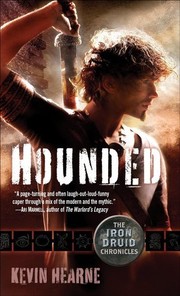
Hounded
A two-thousand-year-old druid runs a bookshop in Arizona, hides from an Irish god who wants his sword back, and talks to his dog.
2,159-word summary · 10 min read
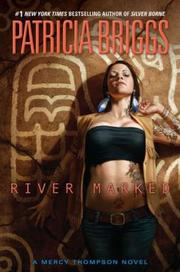
River Marked
Mercy and Adam's honeymoon on the Columbia River turns into a fight with an ancient river devil, and Mercy finally learns the truth about her father.
2,008-word summary · 9 min read

Blood Bonds
Oleander is chained in a Resistance camp, and her five Bonds have to find her before Silas Davies finishes what he started in this third Bonds that Tie book.
2,018-word summary · 9 min read

The Siren
Saved from a shipwreck in 1930, Kahlen becomes a siren who sings men to their deaths for the Ocean, until a boy in a college library makes her want a life she…
2,369-word summary · 11 min read

Lore
Lore Perseous, the last of a hunted bloodline, is pulled back into the Agon when a wounded Athena offers her revenge against the god who killed her family.
2,188-word summary · 10 min read
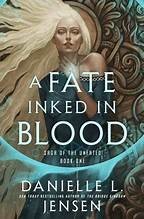
A Fate Inked in Blood
In Norse-inspired Skaland, a fish gutter hiding a goddess's blood is claimed by a jarl, bound by oath, and guarded by the son she cannot want.
1,971-word summary · 9 min read
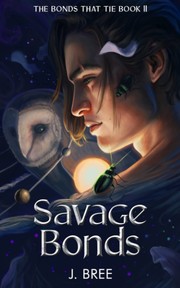
Savage Bonds
Oli's deadly gift is out in the open, her Bond runs the show, and the Resistance is closer than ever in the second Bonds that Tie novel.
2,431-word summary · 11 min read

The Indigo Spell
Sydney Sage hunts an aging witch, learns forbidden magic, and finally admits she loves Adrian, while the Alchemist tattoo on her cheek may be controlling her.
2,604-word summary · 12 min read
Dreamfever
With the walls between worlds down and Mac broken by the Fae, Dreamfever is the darkest volume of the Fever series, and the one that changes everything.
2,007-word summary · 9 min read

Bitten
Elena Michaels is the world's only female werewolf, and keeping that world away from her human life in Toronto works fine until the Pack calls in a favor.
2,039-word summary · 9 min read
Silver Borne
Mercy hides a Fae book while Samuel slips and the fae close in.
2,571-word summary · 11 min read
Shadowfever
Mac Lane hunts the Sinsar Dubh in Dublin as Fae walls fail and Barrons secrets surface.
3,016-word summary · 13 min read
One Foot in the Grave
Cat hunts vampires with Bones while her Sire plots from the grave.
2,200-word summary · 10 min read
Half-Blood
Half-blood Alex trains at the Covenant while gods stir and rules close in.
2,601-word summary · 12 min read
Cry Wolf
Omega Anna joins Charles to hunt a rogue werewolf in Montana.
2,463-word summary · 11 min read
Bloodfever
Mac hunts the Sinsar Dubh in Dublin while Barrons tests her.
2,124-word summary · 9 min read
Broken Bonds
Oleander returns after five years on the run to face the five men she is bonded to, in J. Bree's 2021 opener of resentment, training, and slow trust.
2,582-word summary · 11 min read
A Light in the Flame
Held by Nyktos in the Shadowlands, Sera faces trials, Kolis and the Rot while broken trust is tested.
2,577-word summary · 11 min read

The Golden Lily
Sydney Sage guards Jill at Amberwood Prep in Palm Springs, studies forbidden magic, favors Adrian over Brayden, and faces Alchemist custody in this second…
2,988-word summary · 13 min read
Dead Witch Walking
Witch and runner Rachel Morgan quits the agency with a death mark on her head and hunts an untouchable crime lord.
2,709-word summary · 12 min read
Halfway to the Grave
Half vampire Cat hunts rogues to atone until Bones captures her and pulls her into vampire politics and love.
2,995-word summary · 13 min read
House of Earth and Blood
Bryce Quinlan hunts a killer in Crescent City with fallen angel Hunt Athalar.
2,496-word summary · 11 min read
A Game of Fate
The Fates choose a queen for Hades, but the god of the dead resists, and the journalism student sent to expose him defies him at every turn.
2,373-word summary · 11 min read
Wolfsong
Ox Matheson grows up believing he is worth nothing. Then the Bennett family moves in next door, werewolves with a secret, and a boy named Joe begins to howl…
2,823-word summary · 13 min read