
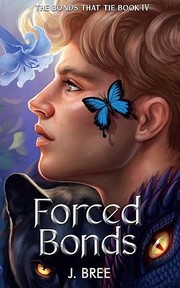
Forced Bonds
2,316-word summary 10 min read 490 pages in the book
- First published
- 2022
- Publisher
- Jenna Crannage
- Pages
- 490
- ISBN
- 9781923072039
- Series
- The Bonds that Tie (#4)
Reading options
What's inside (9 sections)
Starting with the wreckage
I picked up Forced Bonds because the third book in The Bonds That Tie had ended on one of those cliffhangers that makes you check the next publication date before you have finished the page. This fourth installment was first published in 2022, and the edition I read, the Jenna Crannage one that matches the rest of the series on my shelf, runs about 490 pages. It begins exactly where Blood Bonds stopped, which is a gift to anyone who hates loose ends and a small trap for anyone who has forgotten who was on which side. The blurb promises that the line between friend and enemy has become impossible to trust. That turns out to be the book's real subject. Most of the tension comes from the fact that somebody inside the Sanctuary has been feeding the Resistance, and nobody can say for sure who.
Oleander, called Oli by almost everyone, is nineteen and, by the general agreement of the Gifted, the most powerful person alive. She can kill with a thought and she knows it. What she cannot manage is persuading the five men bonded to her to let her go on a mission. That contradiction powers much of the opening. Oli spends chapters grumbling that she is bored and sidelined while her bonds explain, each in his own way, that the world cannot afford to lose her. The Sanctuary, the settlement her bond North built as a haven for the Gifted, was supposed to be a stable foundation. In this book that foundation gets ripped away, the shield comes down, and Resistance fighters walk in.
A war with familiar faces on both sides
The Resistance in this series has never been a subtle organization. Its members want power over the non-Gifted and they are willing to kill the Gifted to get it. By book four that conflict has moved from skirmishes to something closer to open war, and Oli finds herself on the front line whether she wants to be there or not. The twist the author leans on is that the enemy is not a faceless army outside the walls. Sage, a young man Oli and her group trusted, is tied to the breach that lets the Resistance in. Kieran turns up in the same tangle. Later in the book there are references to Void Eyes and to the Wastelands, new problems that widen the map just as the old ones were starting to make sense.
I appreciated that the political argument stays messy in one specific way. North's achievement in building the Sanctuary is real, and the book is at its sharpest when Oli notices that some of the people living there rent free still find reasons to complain. That is a small, specifically observed frustration and it gives the settlement some texture. The wider war is thinner. Atlas points out at one point that the Resistance has supporters because of propaganda and indoctrination, but the story never shows us that machinery at work. For long stretches the enemy is simply evil, which makes it easy to cheer for the people defending the walls and hard to worry about the moral questions. The civil war among the Gifted is a backdrop, and the real drama happens in the bond group's shared house and in the training yard.
Five men and one very difficult sixth member
The heart of this series is the reverse harem, and by Forced Bonds the group has settled into a shape. North Draven is the caretaker and provider, the man who poured his money and his time into building the Sanctuary and asks for nothing in return. He can kill with a touch, a detail the book oddly never uses in a fight, and his devotion to Oli is the steady fact the other relationships orbit. Gryphon is the quiet one who can hear her thoughts, a protector who has known from the start when to push her and when to leave her alone. Gabe is the golden retriever of the group, endlessly cheerful, secretly capable of shifting into almost anything, and carrying a mistake about a past relationship that he finally corrects here. Atlas is the loyal shield, the one who has changed least across four books but who keeps finding a new place inside the unit. Gabe and Atlas develop a teasing friendship that gives the book some of its best lighter moments.
Then there is Nox Draven, who is the reason this book has its title. Nox is North's brother, badly damaged by something in his past, and he has spent the series treating Oli with a cruelty that the other bonds keep trying to explain away. He flinches from skin contact. He hurls insults. He insists he does not want her, and the story keeps insisting that this is fear rather than hatred. Readers argued about him fiercely when the book came out, and it is easy to see why. A character who assaulted the heroine in the first book cannot be made lovable simply by giving him a tragic backstory, and this installment tries harder than it should to do exactly that. Gabe at one point tells Atlas that if the hallway incident had really been assault, Oli's bond would have hurt Nox in the moment, and the narrative treats that as fact rather than as one man's excuse. It is a strange thing to hang a redemption on.
The book also keeps tripping over its own trigger warnings. In an earlier volume a phrase of praise directed at Nox sent him into a breakdown, and the reaction from the people around him was irritation that he had not managed it better. Here the story wants us to understand that his trauma is real and that the same trauma is not an excuse for how he treats Oli. Holding both ideas at once is a decent aim. The execution is less convincing, because the book keeps tipping its hat to the problem and then moving on as though tipping the hat settled it. Nox's own chapters, when they arrive, are the parts readers single out. He gets the most interesting internal material, which makes the earlier whitewashing of his behavior harder to forgive, not easier.
The bond that nobody quite chooses
The central plot engine of Forced Bonds is simple. The group believes they can gain an advantage in the war only if the bond circle is complete, and that means Nox has to bond with Oli. Her own bond, the powerful instinctive part of her, is apparently willing to take matters into its own hands. Gryphon ends up acting as a chaperone in the room while the two of them complete the connection, a decision that gives the book its most uncomfortable chapter. On the page, the scene is framed as something between a necessity and a surprise. Plenty of readers saw something closer to coercion, and I think they are right. The story keeps telling us that Nox does not want this, then asks us to enjoy the result because the bond made him do it. That is a hard sell, and it sits badly beside the book's own habit of reminding us that trauma does not excuse behavior.
There is an odd structural choice right after that. A major development happens offstage, and the reaction is handed to us as a known fact rather than shown. One reviewer put it well by asking where North was in all of it, since his feelings about Nox joining the circle are a huge part of what the reader has been waiting for. The surprise of the scene was bought at the cost of a character beat, and the trade never feels worth it. The same complaint applies to Sage and Kieran, who complete a bond of their own and get barely a line of acknowledgment. For a book this invested in the mechanics of bonding, it is strange how quickly it skips the moments that should matter most.
What does work is the shift that follows. Once the connection is complete, Oli stops bracing for a fight every time she walks into a room. She starts taking strength from each of the men in a different way, and they start learning to work as a unit rather than as five rivals with a shared claim. There is a moment where Nox puts himself between Oli and the rest of the Bond Group without anyone asking him to, and it lands because we have spent three books watching him do the opposite. Oli is allowed to be frightened of what she is and still be the person who holds the group together, which is a more interesting position than the invincible heroine the blurbs suggest.
What the book does well
For all my complaints, Forced Bonds is hard to put down. J. Bree understands that a romance built on five relationships needs each one to have its own texture, and she gives them small, specifically observed moments rather than grand declarations. A mirror scene between North and Oli, a dragon reveal from Gabe, a training session where Gryphon refuses to go easy on her, these are the scenes that make the group feel like a family rather than a checklist of tropes. Oli's sass is dialed down a little here, which reads as maturity rather than a loss of spark. She is still quick with a joke, but she is also allowed to be vulnerable in front of people who are no longer fighting her.
The pacing is uneven but the book knows when to slow down. After the immediate chaos of the breach, a good chunk of the middle is given over to relationship housekeeping, and that is a reasonable choice. You cannot resolve a war and five romances in the same few hundred pages without shortchanging something. The author chooses the relationships, and for a reader who came for the bonds that is the right call. The reverse harem element stays central, the heat is high, and the author's note at the front warns that the material may be difficult for some readers and that the book ends on a cliffhanger. Both warnings are accurate. The book is recommended for adults, and that is not a polite suggestion.
I also found myself forgiving a lot because the group dialogue is genuinely funny. Atlas and Gabe spend half their scenes competing over small things, and their bickering gives the heavier chapters a release valve. When Oli tells all of her bonds that she loves them, shadows and all, the line works because the book has earned the right to say it. That is the quiet strength of the series. The men are ridiculous, possessive, and frequently wrong, but the bond group is the place where Oli is least alone, and the writing understands why that matters more than any battle.
Where it drags
The most common complaint, and the one I found myself making around the midpoint, is repetition. The word bond and its variants appear so often that the meaning starts to thin out. Readers counted it on nearly every page. Oli's frustration at being kept on the base gets voiced in nearly identical terms chapter after chapter, long after the first explanation should have been enough. The Resistance never develops a convincing leader with a real program, so the war becomes a series of attacks and retaliations rather than a conflict with stakes that shift. Silas Davies, the man who held Oli captive earlier in the series, is described as formidable, but we never learn what he can actually do, and Oli's refusal to simply kill him is never justified in a way that satisfies.
The worldbuilding has similar soft spots. If Oli truly could wipe out a state, the logic of keeping her on the sidelines while her friends fight is hard to defend. Gryphon can read her thoughts and refuses to teach her to block him, even though she asks repeatedly and complains about having no privacy. The book treats this as a joke, but a heroine who has no autonomy because of her partners is an uncomfortable thing to laugh at. Readers who enjoyed the first three books as escapist fun were more willing to forgive these gaps. Readers who wanted the questions answered by book four were still waiting. Both reactions seem fair to me. The book also leans on the word "monster" so often that it loses its sting, and the darker schemes the blurb mentions never quite become a threat I believed in.
The ending and what it sets up
I will not pretend the last chapter is a surprise if you have read the reviews. Nox, having spent the book moving from enemy to something like an ally, delivers a farewell that wrecked a lot of readers. The line is a blockquote waiting to happen.
I'll see you in the next life, Bonded. Maybe I can love you right there.
It reads as a death, or a sacrifice, or very possibly a fake death given how the series likes to withhold answers. Either way it is a brutal note to end on, and it does its job as a hook. Two more books followed, so the door was never truly closed. What I took from Forced Bonds is that J. Bree is at her best when she lets the relationships carry the weight and at her weakest when she pushes a puzzle box of a plot that she does not seem eager to solve. Read it right after Blood Bonds, because the opening assumes you remember the breach and the betrayals. Go in willing to accept a slow middle and a heroine who is more powerful than the story knows what to do with, and the bond group will do the rest.
FAQ
Is Forced Bonds the fourth book in The Bonds That Tie?
Yes. It follows Blood Bonds, was first published in 2022, and two more books came after it.
Do I need to read the earlier books first?
Yes. The story opens immediately after Blood Bonds and assumes you remember the breach, Sage's role in it, and the bond group's history.
Does the book end on a cliffhanger?
Yes. The author warns about this at the start, and the last chapter delivers an apparent sacrifice that the next two books address.
Similar books
More from The Bonds that Tie first, then related titles.
Broken Bonds
Oleander returns after five years on the run to face the five men she is bonded to, in J. Bree's 2021 opener of resentment, training, and slow trust.
2,582-word summary · 11 min read
Savage Bonds
Oli's deadly gift is out in the open, her Bond runs the show, and the Resistance is closer than ever in the second Bonds that Tie novel.
2,431-word summary · 11 min read

Blood Bonds
Oleander is chained in a Resistance camp, and her five Bonds have to find her before Silas Davies finishes what he started in this third Bonds that Tie book.
2,018-word summary · 9 min read
Spark of the Everflame
A village healer stops taking the powder that keeps her strange powers quiet. After a dying king names her his heir, Diem Bellator faces a choice between a…
2,293-word summary · 10 min read
Magic Bleeds
The fourth Kate Daniels novel finds Kate investigating a magical plague in Atlanta while her relationship with Curran fractures and an ancient enemy tied to…
2,236-word summary · 10 min read

Quicksilver
Saeris Fane steals from the desert queen's reservoirs until a gateway flings her into the frozen fae world, where Kingfisher needs her alchemist magic.
2,311-word summary · 10 min read
Onyx Storm
A quest south with Violet Sorrengail, a dragon rider racing to cure Xaden before he turns venin. Yarros trades the academy for islands, irids and a costly war.
2,368-word summary · 11 min read
Magic Strikes
Drafted into the Order of Merciful Aid, Kate Daniels investigates the beating of her friend Derek and finds a hidden tournament where rakshasas fight in human…
2,012-word summary · 9 min read

Magic Burns
A magic flare hits Atlanta, and mercenary Kate Daniels must recover stolen maps, find a missing witch, and keep a teenage girl alive while Celtic gods try to…
2,021-word summary · 9 min read

The Indigo Spell
Sydney Sage hunts an aging witch, learns forbidden magic, and finally admits she loves Adrian, while the Alchemist tattoo on her cheek may be controlling her.
2,604-word summary · 12 min read
A Light in the Flame
Held by Nyktos in the Shadowlands, Sera faces trials, Kolis and the Rot while broken trust is tested.
2,577-word summary · 11 min read

The Golden Lily
Sydney Sage guards Jill at Amberwood Prep in Palm Springs, studies forbidden magic, favors Adrian over Brayden, and faces Alchemist custody in this second…
2,988-word summary · 13 min read
Wrecked
A reckless Formula 1 driver meets the PR specialist hired to shadow him, and both are forced to face the grief they have been outrunning.
2,329-word summary · 10 min read
Wolfsong
Ox Matheson grows up believing he is worth nothing. Then the Bennett family moves in next door, werewolves with a secret, and a boy named Joe begins to howl…
2,823-word summary · 13 min read
Wings
A homeschooled fifteen-year-old grows a blue flower from her back and learns she is a faerie sent to guard a hidden gate. Pike's debut makes plant lore feel…
2,506-word summary · 11 min read

Water Moon
A woman inherits a Tokyo pawnshop that trades in regrets, finds her father gone and one glowing bird freed, and crosses into another world to learn what her…
2,087-word summary · 9 min read
The Knight and the Moth
Six of seven Diviners vanish, and the last one flees a cathedral with a mocking knight and a gargoyle who calls everyone Bartholomew. Gillig's gothic fantasy…
2,936-word summary · 13 min read
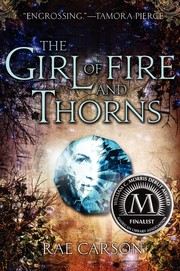
The Girl of Fire and Thorns
Rae Carson's debut follows Elisa, an insecure princess born with a godstone in her navel, who is married to a foreign king and must grow into the leader a…
2,331-word summary · 10 min read

The Darkest Part of the Forest
In a town built around a sleeping horned boy in a glass coffin, a girl discovers she has been spending her nights as a faerie king's knight and remembers none…
2,012-word summary · 9 min read
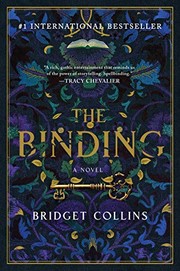
The Binding
In an alternate Victorian England, binders remove unbearable memories into books, and a young apprentice discovers his own past was erased from him.
2,036-word summary · 9 min read
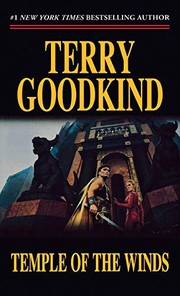
Temple of the Winds
In Sword of Truth book four, a magical plague sweeps the Midlands and prophecy demands that Richard enter the Temple of the Winds, but only through an…
2,962-word summary · 13 min read
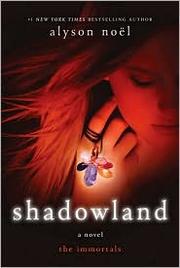
Shadowland
Ever Bloom cannot touch Damen without risking his life. As she hunts for a cure, a mysterious surfer named Jude arrives and her loyalty to Damen is tested.
2,301-word summary · 10 min read
Nightbane
Isla Crown has thirty days to defend Lightlark after Grim threatens to destroy it, while memories of the year she spent with him return.
2,353-word summary · 10 min read

Magic Study
Sentenced to die in Ixia, Yelena returns to the land she was stolen from to learn the magic that made her an outlaw.
2,542-word summary · 11 min read
God of Wrath
Rina Kent's God of Wrath pairs a quiet REU student who spies on a rival club with the ruthless leader who catches her. A dark college romance of obsession,…
2,740-word summary · 12 min read
Daggermouth
A trained killer is sent to execute the Executioner, then bound to him in a forced marriage that could ignite a revolution. H. M. Wolfe's dark dystopian…
2,798-word summary · 12 min read

Brida
A young Irishwoman convinced she has a spiritual Gift seeks out a forest Magus and a Dublin witch, and learns that her gift is to bridge the visible and…
2,012-word summary · 9 min read
Blood of the Fold
In Sword of Truth book three, Richard Rahl takes command of Aydindril while a zealot army and an emperor who walks in dreams threaten everything he loves.
2,321-word summary · 10 min read

The Paper Magician
A graduate magician is assigned to paper magic instead of metal, then must face a woman who tears out her mentor's heart.
2,454-word summary · 11 min read

The Bone Season
In 2059 London, clairvoyance is a crime and Paige Mahoney is a dreamwalker in the underworld. After her arrest, she meets Scion's founders and must decide whom…
2,326-word summary · 10 min read