

The Bone Season
2,326-word summary 10 min read 480 pages in the book
- First published
- 2013
- Publisher
- Bloomsbury
- Pages
- 480
- ISBN
- 9781620401392
- Series
- The Bone Season (#1)
Reading options
What's inside (9 sections)
The buzz, and what held up
I came to The Bone Season with the suspicion most people who picked it up in 2013 probably felt: the noise around it was almost deafening. Here was a young British writer fresh out of Oxford whose debut had been bought by Bloomsbury, the same house that published Harry Potter, and whose book was already being described as the first of seven volumes. Comparisons to J. K. Rowling arrived before the novel did, and the Today show selected it for its monthly book club. That is a great deal of weight to place on a first book. I wanted to find out what remained once the publicity was set aside.
What held up, for me, was the setting and the sheer nerve of the idea. Shannon was writing a dystopia that had swallowed the supernatural whole, at a time when most speculative fiction kept those shelves apart. The notion reportedly came to her while she was interning for a literary agent in London's Seven Dials, picturing a girl doing the same dull office job she was doing, except that this girl happened to be clairvoyant. From that small what-if grew a novel about a police state that has made an entire class of people criminal for the offense of having unusual minds. It is a strong hook, and the book is at its best whenever it commits to it without flinching.
Shannon wrote the book while studying English at St Anne's College, Oxford, and she put that place to work. The university becomes the site of a prison colony, with the polished lawns and old stone of the colleges standing in for the quarters of the ruling class, while the captives are shoved into a shanty town wedged between the buildings. That visual, the squalor pressed up against inherited grandeur, is the most memorable thing she builds. It gives the book a physical center that the plot, which often races, keeps circling back to.
The city Scion made
The year is 2059. For roughly two centuries the Republic of Scion has run a patient, thorough campaign against what it calls unnaturalness, and in London that campaign has become the ordinary texture of daily life. Checkpoints, surveillance, and a deep public suspicion of anyone who seems different are the background hum. The state does not merely punish clairvoyance; it has spent generations teaching its citizens to fear it, so that fear does half the governing.
That matters because the people with gifts are not an organized opposition at the start. They are scattered, frightened, and picked off one by one. Scion's genius in this book is bureaucratic rather than theatrical. It does not need enormous spectacles of violence when a form, a registration, a tip from a neighbor will do. The regime's power lives in the small transactions of ordinary life, and Shannon is good at showing a heroine who has learned to move through a city that is built to notice her.
Language does part of the work. The word unnatural is used as both accusation and insult, a label that lets decent neighbors report one another without thinking of themselves as cruel. Once a society has agreed on a word for a kind of person, the machinery that follows can present itself as housekeeping. Paige's daily life is a long exercise in performance: the right clothes, the right associates, the careful absence of any gesture that might betray what she can do. Shannon understands that for people living under this kind of pressure, freedom is mostly a matter of small, unremarkable choices that no one else would think twice about.
The London of the early chapters has a convincing underworld, the clandestine network of gifted people who survive by hiding in plain sight and selling what they can do. It is here that the book feels most alive, because the rules are intimate and the stakes are immediate. A wrong word, a careless display, a friend who talks too much, and the whole arrangement collapses. I found myself caring about the mechanics of that hidden life more than about some of the larger machinery the plot later introduces.
Paige Mahoney, dreamwalker
Paige Mahoney is nineteen, and she is one of the gifted living in Scion's London. Her particular ability is dreamwalking, which means she can enter the minds of others while they sleep and move around inside what she finds there. It is a useful talent in the criminal world she inhabits and a horrible one to possess, because it makes privacy something she can violate and something she can never quite enjoy herself. Shannon treats this as a job before she treats it as a destiny. Paige has a boss, routines, debts, and a reputation to maintain.
That boss is the White Binder, a ruthless figure in the underworld for whom Paige works as a trusted right hand. The relationship is one of the sharper parts of the early book. The White Binder is not a benevolent mentor; she is a operator who values Paige precisely because Paige is useful and dangerous. Paige's loyalty is complicated by fear and by the narrowness of her options, which is a more interesting motivation than simple devotion. When the novel later asks her to place trust in people who ought to be her enemies, the earlier lessons about power and usefulness give that question some weight.
Paige's gift also isolates her in a quieter way. To dreamwalk is to be a permanent intruder, someone who can never take another person's account of events at face value because she has seen how minds rearrange the truth. The book keeps returning to the problem of what it means to trust someone when you have spent your life learning that everyone is an open book if you know the right way to look. It is the human question underneath the invented vocabulary, and it is the reason Paige is more than the sum of her abilities.
Arrest, and the road to Oxford
The turn comes when Paige is arrested for murder. The charge is a doorway rather than a destination, because what the authorities want is not a trial but access to what she can do. She is swept into a system that has been waiting for people like her, and the investigation quickly becomes a kind of inventory of her usefulness. This is where the novel stops being a story about evading the police and becomes a story about what a state does with a person it has decided to own.
She is transported to Sheol I, the penal colony established at Oxford. The choice of Oxford is more than decorative. Shannon has said she imagined the neat lawns and careful buildings as the quarters of the Rephaim, the ancient beings who founded and secretly direct Scion, while the humans they exploit live in the shanty town she invented between the colleges. Paige arrives as a captive among captives, expected to make herself valuable to masters who regard her as a resource rather than a person.
The middle stretch of the book is largely an education in that place. Paige learns the hierarchy, the privileges, the small cruelties, and the fragile alliances among the prisoners. Some of this works well, particularly the moments where the enforced intimacy of the colony produces genuine, awkward human connections. Some of it drags. Shannon has a habit of pausing the action to explain another form of clairvoyance, another rank, another piece of invented terminology, and the vocabulary can feel like homework at exactly the moment the story wants to accelerate. I found myself skimming a few of those passages, then slowing down again whenever a character did something concrete.
Warden and the people who rule
The founders of Scion turn out to be the Rephaim, an otherworldly race with an ancient history and a detailed caste system of their own. They are not a faceless enemy. The interesting ones are individuals with tastes, rivalries, and a history that predates the regime they built, and Shannon clearly enjoys giving them marketing copy and manners. The danger is that the book leans on how strange they are, when the more unsettling fact is how ordinary their domination looks once it has been institutionalized.
Warden is the Rephaite who takes the closest interest in Paige, and he becomes the figure she must decide whether to trust. Their relationship is the emotional engine of the novel, and it is also its most awkward element. It grows inside a situation of profound coercion. He belongs to the class that owns her; she is a prisoner with every reason to read his attention as another form of acquisition. The book wants this to be a story of two people recognizing something in each other across an impossible divide, and there are quiet scenes that earn that. But the power imbalance never fully goes away, and a reader who is allergic to romance built on captivity will find it hard to accept the softening here.
To the book's credit, Paige's judgment is not presented as simple surrender. She is wary, calculating, and aware that each of them is trying to use the other. The attraction is allowed to be uncomfortable. That unease is the right tone for a relationship that begins in a prison, and it keeps the romance from feeling like a reward handed out for enduring the plot. Warden himself is drawn with some care, as someone whose loyalties are divided by the politics of his own people, which is more than can be said for several of the surrounding antagonists.
The season of the title
The phrase of the title refers to a period within the colony, a span of time that the captives anticipate with dread because the arrangements that normally govern the place give way to something rawer and more arbitrary. It is during this stretch that Paige's peculiar value becomes impossible for the Rephaim to ignore. There is something unusual about the way her mind works, something that makes her more than a useful dreamwalker, and the discovery turns her from a prisoner into an object of contention among people who already treat lives as inventory.
The climax trades the slow accumulation of rules for a burst of physical danger, and Shannon writes those scenes with a clearer hand than she writes her exposition. Paige's abilities, which have been described and debated at length, finally matter in the immediate, physical way that a reader has been waiting for. The payoff is earned in the sense that the book has spent its pages establishing what she can and cannot do, even if some of that establishment arrived in the form of lectures. I closed the section satisfied that the pieces fit, which is not a small achievement for a first novel juggling this many inventions.
The ending leaves Paige altered and the larger arrangement unsettled rather than resolved, which suits a book that was always planned as an opening move. The second volume, The Mime Order, appeared in 2015, and the series eventually ran through The Song Rising, The Mask Falling, and, much later, The Dark Mirror. In 2023, for the tenth anniversary, Shannon released an Author's Preferred Text with substantial changes to the style, plot, and characters. That fact is worth knowing if you read the 2013 version and wonder why later discussions of the book sometimes seem to describe a different one.
Where it stumbles, and who it suits
The honest case against The Bone Season is that it is overstuffed. The invented language is thick from the first chapter, and Shannon asks the reader to hold a great many proper names and categories before the characters have done anything memorable with them. The middle section repeats its lessons. The romance, for all the care taken with Paige's suspicion, rests on a foundation that some readers will find impossible to get past. And the early reception that compared the book to Harry Potter and The Hunger Games was not entirely wrong: there is a familiar shape here, of a gifted outsider discovering a hidden war and a dangerous attraction, that the marketing did its best to flatten into a slogan.
What survives those complaints is a real sense of place and a genuine moral question. Shannon is interested in what a society does when it decides that some minds are illegal, and she understands that such a society runs on ordinary cooperation rather than on villains in uniforms. Paige is a decent protagonist for that question because her gifts make her both victim and intruder, a person who can be harmed by the state and who can also harm the people around her. That double position gives the book a tension that the series comparisons never quite captured.
The book also benefits from taking its underworld seriously. The gifted community in London is not a magical resistance with a clear cause; it is a criminal economy full of people making the best of a bad bargain, some decent and some not. That refusal to sanitize Paige's surroundings keeps the story from settling into an easy good-versus-evil pattern. Even the Rephaim, who are genuinely frightening, are most interesting when their cruelty looks like an extension of ordinary privilege rather than monstrous appetite.
I would hand this to readers who enjoy dense secondary worlds and do not mind being made to work for the rules, and I would steer away anyone looking for a brisk, self-contained adventure. It is a debut that shows its seams and its ambitions in equal measure, and it is more interesting in its details than in the grand claims made on its behalf. Read it for the city, for Paige's uneasy bargain with her own talent, and for the questions about power that the best scenes keep asking. Those are the parts that last.
FAQ
Is The Bone Season a standalone novel?
No. It is the first book in Samantha Shannon's seven-book The Bone Season series, followed by The Mime Order in 2015.
When was The Bone Season first published?
It was first published in the United Kingdom by Bloomsbury on 20 August 2013, and it was Shannon's debut novel.
Why does the book get compared to Harry Potter and The Hunger Games?
Early reviews pointed to the gifted outsider, the hidden war, and the seven-book plan. Shannon's folding of clairvoyance into a police state is what sets it apart.
Similar books
More from The Bone Season first, then related titles.

Forced Bonds
The Sanctuary's shield is down and the Resistance is inside. Oli must complete her bond group, including the hostile Nox, before the war costs her everything.
2,316-word summary · 10 min read
The Sorceress
Flamel takes the twins to London to find Gilgamesh, while Perenelle fights for her life on Alcatraz and an older threat wakes.
2,684-word summary · 12 min read
Spark of the Everflame
A village healer stops taking the powder that keeps her strange powers quiet. After a dying king names her his heir, Diem Bellator faces a choice between a…
2,293-word summary · 10 min read

Magic Bleeds
The fourth Kate Daniels novel finds Kate investigating a magical plague in Atlanta while her relationship with Curran fractures and an ancient enemy tied to…
2,236-word summary · 10 min read

Daggermouth
A trained killer is sent to execute the Executioner, then bound to him in a forced marriage that could ignite a revolution. H. M. Wolfe's dark dystopian…
2,798-word summary · 12 min read
Magic Strikes
Drafted into the Order of Merciful Aid, Kate Daniels investigates the beating of her friend Derek and finds a hidden tournament where rakshasas fight in human…
2,012-word summary · 9 min read
Dominion
Jean Kwok opens a trilogy in a world of four Dominions, where a memoryless refugee bonds with a tyger queen and uncovers a royal past.
2,213-word summary · 10 min read

Magic Burns
A magic flare hits Atlanta, and mercenary Kate Daniels must recover stolen maps, find a missing witch, and keep a teenage girl alive while Celtic gods try to…
2,021-word summary · 9 min read
Year One
A plague released in Scotland kills most of humanity, and the survivors discover magic, build a town, and wait for a child who may save them.
2,029-word summary · 9 min read
Blood Bonds
Oleander is chained in a Resistance camp, and her five Bonds have to find her before Silas Davies finishes what he started in this third Bonds that Tie book.
2,018-word summary · 9 min read
Savage Bonds
Oli's deadly gift is out in the open, her Bond runs the show, and the Resistance is closer than ever in the second Bonds that Tie novel.
2,431-word summary · 11 min read

The Indigo Spell
Sydney Sage hunts an aging witch, learns forbidden magic, and finally admits she loves Adrian, while the Alchemist tattoo on her cheek may be controlling her.
2,604-word summary · 12 min read

Every Heart a Doorway
Nancy returns from the Halls of the Dead to a school for travelers, where a murder forces portal children to face grief, belonging and the price of going home.
2,400-word summary · 11 min read
Broken Bonds
Oleander returns after five years on the run to face the five men she is bonded to, in J. Bree's 2021 opener of resentment, training, and slow trust.
2,582-word summary · 11 min read
A Light in the Flame
Held by Nyktos in the Shadowlands, Sera faces trials, Kolis and the Rot while broken trust is tested.
2,577-word summary · 11 min read

The Golden Lily
Sydney Sage guards Jill at Amberwood Prep in Palm Springs, studies forbidden magic, favors Adrian over Brayden, and faces Alchemist custody in this second…
2,988-word summary · 13 min read
Dead Witch Walking
Witch and runner Rachel Morgan quits the agency with a death mark on her head and hunts an untouchable crime lord.
2,709-word summary · 12 min read
The Young Elites
Adelina survives fever and execution to join a secret group of gifted malfettos plotting against the queen of Kenettra.
3,310-word summary · 15 min read
Mary Poppins
A stern, vain nanny blows in on the East Wind to 17 Cherry Tree Lane and leads Jane and Michael through a year of small, strange magic.
2,729-word summary · 12 min read
A Gathering of Shadows
Kell and Lila reunite for magical games in Red London while a new power hunts Antari blood.
2,055-word summary · 9 min read
King's Cage
Chained by Maven with Silent Stone, Mare endures while Cal and the Guard gamble on rescue and alliance.
2,001-word summary · 9 min read
A Darker Shade of Magic
Antari Kell Maresh, a blood magician who travels between Londons, meets thief Delilah Bard after she steals a stone of Black London magic that should have…
2,541-word summary · 11 min read
The Hero of Ages
Vin and Elend face ash, mist, and Ruin itself as the prophecies fail and Sazed searches old faiths for answers.
2,559-word summary · 11 min read
The Final Empire
A street thief with rare powers joins a crew planning the impossible: overthrowing the immortal Lord Ruler.
2,150-word summary · 10 min read
The Magician's Land
Exiled from Fillory, Quentin takes a teaching job at Brakebills, joins a crew of magical thieves, and must help rebuild a dying world to finish the trilogy.
2,204-word summary · 10 min read
The Iron Trial
Call Hunt tries to fail the entrance tests for the Magisterium, only to be chosen and drawn into a secret about the war that killed his mother.
2,248-word summary · 10 min read
The Demon King
A thief steals an amulet once owned by a legendary sorcerer, while a princess flees a forced marriage in the first volume of Cinda Williams Chima's high…
2,371-word summary · 11 min read

Jade City
On an island where jade grants power, two clans fight over the mineral, the family name, and the right to decide what loyalty costs.
2,403-word summary · 11 min read
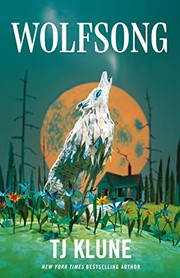
Wolfsong
Ox Matheson grows up believing he is worth nothing. Then the Bennett family moves in next door, werewolves with a secret, and a boy named Joe begins to howl…
2,823-word summary · 13 min read
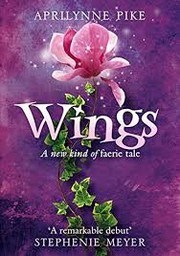
Wings
A homeschooled fifteen-year-old grows a blue flower from her back and learns she is a faerie sent to guard a hidden gate. Pike's debut makes plant lore feel…
2,506-word summary · 11 min read