
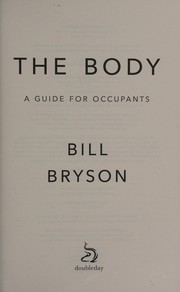
The Body: A Guide for Occupants
2,249-word summary 10 min read 464 pages in the book
- First published
- 2019
- Publisher
- Doubleday
- Pages
- 464
- ISBN
- 9780857522405
Reading options
What's inside (9 sections)
I picked this up because I had enjoyed A Short History of Nearly Everything and wanted to see what Bryson did when he turned the same method on the thing I live inside. The Body came out in 2019, his second book of popular science, published by Doubleday in Britain on 3 October. The hardback is listed at 464 pages, ISBN 9780857522405. It is a tour of human anatomy, but it is also a record of Bryson's own curiosity, and the two aims pull against each other in interesting ways. He asks how a blood cell works and why we cannot live forever, then goes looking for people who can answer him. Ceri Radford, writing in the Independent, described him bringing poetry and precision to the warm wobble of flesh, and said the book runs on endless curiosity. That fits the opening pages, where Bryson sounds less like a lecturer than a visitor shown into a very old house who cannot stop opening doors. The results are funny, dense, and sometimes angry.
How to Build a Human
The introduction is called How to Build a Human, and its central question is why a pile of ordinary elements self-organizes into something that can read a sentence and wonder about itself. Bryson has no answer, and he says so. Nobody really knows. What he can do is price the materials. A Royal Society of Chemistry calculation puts the raw elements of a body the size of Benedict Cumberbatch at £96,546.79, excluding VAT. Most of that is carbon, about thirty pounds of it worth £44,300, with oxygen and hydrogen cheap by comparison. Those two cheaper elements make up sixty-one percent and ten percent of you respectively, mostly bound up as water. Bryson also notes that a single body contains something like seven billion billion billion atoms. The number is absurd and the point behind it is serious: the ingredients are commonplace, and the arrangement is not. He knows the price is a stunt, but it is a stunt with a purpose, which is to make the ordinary elements feel strange again.
He quotes a line that stayed with me. All the cleverest people who have ever lived, given everything we know, could not make a single living cell from those elements, let alone a replicant Benedict Cumberbatch. The same thought returns in a different form later, when he stretches the DNA in one body end to end. It runs about ten billion miles, past the orbit of Pluto. "Think of it: there is enough of you to leave the solar system," he writes. "You are in the most literal sense cosmic." It is the kind of line that a lesser writer would have to earn, and Bryson earns it by keeping the arithmetic in view.
Skin, hair, and the trillions of tenants
Bryson deals with skin and hair quickly, observing that no one ever died of baldness, then moves on to the bacteria that share our bodies. They are not merely passengers. They swap genes with one another, he writes, like Pokémon cards, and they affect digestion, immunity, and mood. A study of sixty people's belly buttons found 2,368 species of bacteria, 1,458 of them unknown to science. You shed roughly half a kilo of skin flakes in a year, a fact that he delivers with the relish of a man who knows exactly when to say it.
This is the book's rhythm in miniature. A strange statistic arrives, Bryson finds the person who produced it, and a short biographical interlude follows before the next fact. Gavin Francis, reviewing the book in the Guardian, called it a directory of wonders and described the prose as a finely tuned engine running on jokes, factoids, and biographical interludes. That is accurate, and it is also a warning about what the engine cannot do. It goes very fast.
From the brain to the genitals
After the introduction, the chapters take the body in sections. The brain, head, throat, heart, liver, skeleton, lungs, guts, and genitals each get a turn, followed by chapters on disease and aging. Within each one Bryson explains what the organ does and then how scientists came to understand it, usually with a detour through the history of the discovery. The cartilage in your joints is smoother than glass and has a friction coefficient five times lower than ice. When you exercise, your bones release a hormone that lifts mood, fertility, and memory, and helps hold off frailty and dementia. Taste receptors trigger the release of insulin before you swallow, and receptors of the same kind have been found in the testicles. Your ears can distinguish a trillion factors of amplitude in volume. Over a lifetime the heart does work equivalent to lifting a tonne a hundred and fifty miles into the air. A nursing mother's body samples the microbes in her baby's saliva through her nipples and adjusts the antibodies in her milk accordingly.
The chapter on reproduction is blunt about the odds. The chance of conceiving from a single randomly timed act of sex is about three percent, and Bryson describes the sperm reaching the egg "like a long-lost if curiously diminutive friend." He also tells readers where to find the average size of the human penis, which is page 287. The coyness of the joke and the precision of the page number are typical of his voice.
The pace is where criticism gathers. Six pages cover the whole history of cardiac surgery, a subject Thomas Morris gave more than four hundred pages in The Matter of the Heart. In the chapter on pain and nerves, migraine gets a paragraph and so does the pain of cancer. If you want to understand how a heart works, this is not the book. If you want to be startled by what a heart does, it is close to ideal.
Standing up and paying for it
Bryson is at his best when he connects a fact about the body to the long history of the species. Walking upright freed our ancestors' hands and let them see over grass, but our skeletons were still built for four legs. Putting the spine under that load caused the discs that cushion it to slip, and back pain afflicts something like sixty percent of adults. Knees and hips wear out with dispiriting regularity. The price was highest for women, because a narrower pelvis made childbirth far more dangerous. His line on that is hard to forget: until recent times no other animal on Earth was more likely to die in childbirth than a human.
The chapter on skin takes a similar turn toward history, and toward politics. At a dissection, a surgeon peeled back a thin layer and told him that was all race was, a sliver of epidermis. Bryson follows the anthropologist Nina Jablonski in treating skin colour as a reaction to sunlight, with populations de-pigmenting and re-pigmenting as they moved and as diets changed. Then he quotes her on what humanity has done over that sliver of skin: enslaved, hated, lynched, and denied fundamental rights. The move from anatomy to moral history is abrupt, but it is the point of the chapter rather than an aside.
Miracles, immunity, and disease
Bryson collects the extreme cases that make ordinary bodies look like miracles. He tells of a toddler who was fully revived after her heart stopped for hours from hypothermia, a flight attendant who survived a fall of thirty-three thousand feet because fir trees broke her fall, a Spanish diver who held his breath for twenty-four minutes, and Chilean miners doing hard labour nineteen thousand feet up a mountain. These stories show how narrow the margin is between an ordinary body and one that does something extraordinary.
Two chapters deal with disease, and the discussion of immunity is among the most useful. Bryson reports the estimate that between one and five of your cells turn cancerous every day and that the immune system finds and kills them. There is no single immune system, he explains. Each person's is unique and changes with stress and exhaustion, which is one reason so much about illness remains obscure. Autoimmune conditions, in which the body attacks itself, are poorly understood and hard to cure, and he calls the category grossly sexist because eighty percent of sufferers are women. The chapters on aging circle the same question the introduction raised, and Bryson is honest that most of the answers are provisional. The tone here is quieter than in the wonder chapters, and the uncertainty is left standing.
Expiry dates
Bryson is concerned with when bodies stop working as much as how they work. He notes that life expectancy rose further in the twentieth century than in the previous eight thousand years, and that the first thousand days from conception shape the health of the rest of a life. Stress in the womb and in early childhood makes for a less healthy and less happy adult. Then he turns to the present. Junk food and sedentary lives mean children born now may live shorter lives than their parents, and he delivers a bitter line about eating ourselves into early graves while breeding children to join us.
The figures get more local and more uncomfortable. Men in the East End of Glasgow have a life expectancy of fifty-four, roughly twenty-five years below the national average. A thirty-year-old black man in Harlem has a worse outlook than a thirty-year-old Bangladeshi, even if you leave shootings and drug deaths out of the calculation and count only stroke, diabetes, and heart disease. Bryson's point is that these gaps are produced by the conditions people live in rather than by their bodies, and that they could be changed by decisions governments make.
The final chapters get angrier, and they are the most interesting part of the book. Bryson points out that even rich Americans die younger than people on average incomes in Europe. The average American eats about two entire cheesecakes worth of surplus calories a week compared with the Dutch or the Swedes, shoots and drinks and drives more carelessly than almost anyone, and wears a seatbelt less often than all but the Italians. Insulin, whose patent the discoverers donated, costs six times as much in the United States as in Europe. Cuba and Lithuania have better infant survival rates. The American health system employs twice as many financial administrators as doctors. He does not spare Britain: austerity between 2010 and 2017 is linked to roughly 120,000 preventable early deaths, and cancer survival lags behind much of the developed world.
He also goes after medical certainties that deserve a harder look. Richard Ablin, who discovered the PSA test in 1970, told Bryson it was hardly more effective than a coin toss and called the resulting industry a profit-driven disaster. Against all the bad news he sets something smaller and stranger. A good social and emotional life appears to protect DNA, and in one study of diabetic care, patients of doctors rated highly for compassion had forty percent fewer complications. When Bryson asks what improves your chances, his answers are dry: it helps to be rich, and it is not a good idea to be American.
What the book is for
The reviews welcomed it. Gavin Francis called the tone wry, companionable, avuncular and always lucid, and ran his Guardian piece under the headline about a directory of wonders, noting that the book carries anger and life advice alongside the stories about hearts and lungs. Ceri Radford in the Independent praised the childlike determination to keep asking questions until something is understood well enough to explain, and focused on the facts that will keep a pub conversation going. Neither review claimed this was a reference work, and that seems right. Both noticed the same thing: the book is a bundle of facts held together by a voice. That is its charm and its limit. Bryson has read a library of papers and interviewed scores of physicians and biologists, but the engine runs on the next surprising detail, and the reader who wants a system explained all the way through will keep being handed an anecdote instead.
There is also the matter of tone. The avuncular voice that makes the early chapters easy to like sits awkwardly beside the fury of the last ones, and the book never quite settles whether it is a cabinet of curiosities or an argument about how wealthy countries treat their own citizens. A reader looking for a clean verdict on any single organ will be frustrated. A reader who likes following a curious mind from one surprising fact to the next will find plenty to keep going.
The last pages offer a prescription that is almost insultingly simple after four hundred pages of specimen cases. Bryson asks how we celebrate the glory of our existence and answers that most of us do it by exercising minimally and eating maximally. The book's own conclusion, as the Guardian reviewer put it, is to eat a little bit less and move a little bit more. I closed it thinking about the £96,546.79 body I occupy, which is mostly water and carbon, and which will one day be worth very little on the open market. The odd thing is how much that ordinary pile of elements can notice about itself while it lasts.
FAQ
What does The Body cover?
After an introduction called How to Build a Human, chapters move through skin, brain, heart, lungs, skeleton, guts, genitals, disease, and aging, with the history of the science behind each.
Is this a medical guide or health advice book?
No. It is popular science written with a comic voice, and critics noted its breakneck pace. Several subjects get only a paragraph, so it works better as a survey than as a reference.
When and where was it first published?
Doubleday published it in Britain on 3 October 2019. The hardback is listed at 464 pages with ISBN 9780857522405.
Similar books
Everything Is Tuberculosis
John Green tells the story of a boy with tuberculosis in Sierra Leone and argues that a disease curable since the 1950s still kills a million people a year…
2,015-word summary · 9 min read
Breath: The New Science of a Lost Art
Journalist James Nestor investigates how modern humans learned to breathe badly, and what researchers, athletes, and breathwork practitioners have found about…
2,011-word summary · 9 min read
Stiff: The Curious Lives of Human Cadavers
What happens to donated bodies, from crash labs and decay farms to composting and space tests.
2,051-word summary · 9 min read
At Home: A Short History of Private Life
Bill Bryson tours his own Norfolk rectory room by room to explain how private life and the modern home got built.
2,334-word summary · 10 min read
How to Change Your Mind
Pollan blends the history of psychedelic research, his own guided trips, and current neuroscience to ask what these drugs reveal about consciousness.
2,466-word summary · 11 min read
The Emperor of All Maladies
A biography of cancer from Galen to chemo through one doctor cases.
2,255-word summary · 10 min read
The Hot Zone
Ebola and Marburg move from African outbreaks to a Virginia monkey house and an Army response in suits.
2,291-word summary · 10 min read
In Defense of Food
Pollan argues we stopped eating food and started eating nutrients, and offers a plain way back.
2,320-word summary · 10 min read
What If?: Serious Scientific Answers to Absurd Hypothetical Questions
Randall Munroe of xkcd answers absurd science questions with real physics, rough math and stick figures, from relativistic baseball to draining the oceans.…
2,932-word summary · 13 min read
Why We Sleep: Unlocking the Power of Sleep and Dreams
A Berkeley sleep scientist explains how sleep shapes memory, mood, and health, and what happens when we miss it.
2,755-word summary · 12 min read
The Omnivore's Dilemma
Four meals traced from corn fields to foraging show what industrial food costs and what else is possible.
1,918-word summary · 9 min read
Surely You're Joking, Mr. Feynman!
Feynman drums, cracks safes, and learns by doing from Los Alamos to Caltech classrooms.
1,946-word summary · 9 min read
The Immortal Life of Henrietta Lacks
The cells of a poor Black tobacco farmer revolutionized medicine, taken without her knowledge in 1951.
2,139-word summary · 10 min read
Notes from a Small Island
Bill Bryson's 1995 farewell tour of Britain, funny and fond, from Dover to London, the north, Scotland and Wales.
2,301-word summary · 10 min read
In a Sunburned Country
Bryson revisits Australia by city walks and long trains, with reef trips, critter comedy, and explorer history.
2,387-word summary · 11 min read
A Short History of Nearly Everything
Bryson asks how we know what we know, from atoms to continents, with humor and awe.
2,134-word summary · 9 min read
The Hidden Life of Trees
A German forester argues that trees communicate through root networks and that forests thrive when left largely undisturbed.
2,078-word summary · 9 min read
I Feel Bad About My Neck: and Other Thoughts on Being a Woman
In short, funny essays written just after her sixty-fifth birthday, Nora Ephron takes on aging, vanity, a White House summer, and the daily upkeep of looking…
2,099-word summary · 9 min read
Brief Answers to the Big Questions
A short posthumous collection in which Hawking answers ten big questions about God, the universe, time, and humanity's future.
2,464-word summary · 11 min read
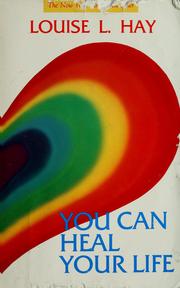
You Can Heal Your Life
Louise Hay's 1984 bestseller argues that thoughts and beliefs shape the body, pairing a mirror-and-affirmation workbook with an A to Z list of ailments and…
3,672-word summary · 16 min read
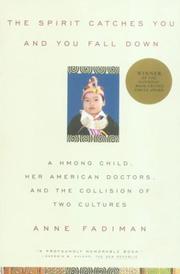
The Spirit Catches You and You Fall Down: A Hmong Child, Her American Doctors, and the Collision of Two Cultures
Anne Fadiman's account of a Hmong girl's epilepsy and the two cultures that tried to treat her, literary journalism about translation, trust and the limits of…
2,972-word summary · 13 min read
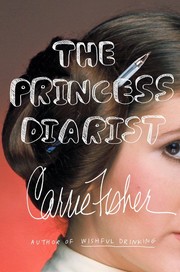
The Princess Diarist
Built from diaries Fisher kept at nineteen while filming the first Star Wars movie, this 2016 memoir revisits her affair with Harrison Ford and the strange…
2,360-word summary · 10 min read
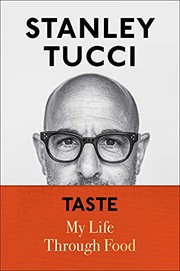
Taste: My Life Through Food
Stanley Tucci's memoir traces his life through food, from a Calabrian family kitchen in Katonah to film sets, marriage and a cancer fight that cost him his…
2,503-word summary · 11 min read
Mountains Beyond Mountains: The Quest of Dr. Paul Farmer, a Man Who Would Cure the World
Tracy Kidder travels with Dr. Paul Farmer from Haiti to Peru, tracing how a Harvard doctor built a health system for the poor and what that work cost him.
3,095-word summary · 14 min read
Mark Twain
Ron Chernow's 1,200-page biography follows Samuel Clemens from the Mississippi River to worldwide fame, weighing a literary genius against a lifetime of…
2,501-word summary · 11 min read
I Am America (And So Can You!)
Stephen Colbert's 2007 debut extends his Colbert Report pundit into print, a mock-conservative tour of American life with margin notes, stickers and Fun Zones.
2,635-word summary · 12 min read

Sybil
A 1973 case study of a woman treated for multiple personalities, and the book that made dissociative identity disorder a household phrase.
2,054-word summary · 9 min read
Moonwalking with Einstein: The Art and Science of Remembering Everything
A journalist spends a year training for the U.S. Memory Championship and discovers that extraordinary memory is mostly technique, attention, and a lot of…
2,027-word summary · 9 min read
Beautiful Boy: A Father's Journey Through His Son's Addiction
David Sheff recounts watching his son Nic slide into meth addiction, and his own desperate, humbling search for how to help without destroying them both.
2,076-word summary · 9 min read
This Time Next Year
Two women give birth minutes apart on New Year's Day 1990, and one takes the other's lucky name. Thirty years on, their children meet again.
2,194-word summary · 10 min read