
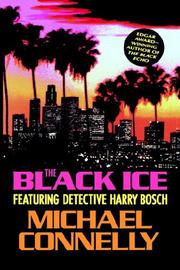
The Black Ice
2,399-word summary 11 min read 336 pages in the book
- First published
- 1993
- Publisher
- Little, Brown and Company
- Pages
- 336
- ISBN
- 9780316153829
- Series
- Harry Bosch (#2)
Reading options
What's inside (8 sections)
I read this one right after The Black Echo, which is probably the right way into it and also the hardest way, because the first book set such a particular tone. The Black Ice was published in 1993 by Little, Brown and Company, the second novel in Michael Connelly's Harry Bosch series, and it picks up the detective a few months later in the same city with the same habits. What surprised me on rereading is how much of it is about a man working a case nobody assigned him. Bosch does not get the call on Christmas night. He hears it on the radio, and he goes anyway. That is the whole book in miniature: a detective who cannot leave a death alone even when his own department would prefer that he did.
A death on Christmas night
The novel opens on Christmas, with Bosch alone and listening to the police scanner. A call comes in about a body at a motel. He realizes at once that he has been bypassed, that the Robbery-Homicide Division has taken the case, and that nobody thought to tell him. On paper this is a small professional slight. To Bosch it is an insult and, more interestingly, a puzzle. He goes to the motel anyway.
What he finds is a scene arranged to look like a suicide. There is a body in the room, a gun nearby, and a typed note, but something about the layout does not sit right with him. A deputy chief shows up and orders him away in fairly blunt terms. Bosch goes, then quietly reads the newly found note once he is alone again. It is a small act of defiance, almost petty, and it is the first sign that his instincts about this case will keep putting him in conflict with his superiors. Connelly is very good at this kind of scene. Nothing dramatic happens. A man reads a note he was told not to read, and the reader knows the shape of the trouble to come.
The dead man is likely Calexico Moore, a missing Los Angeles Police Department cop. That detail is what turns a random death into an obsession. Bosch knew Moore, or knew of him, and the fact that a fellow officer may have killed himself while under an internal cloud gives him a personal stake before he has even met the widow.
There is something else going on with that timing, and Connelly lets it sit under the surface. Bosch is not merely curious about the dead cop. He is annoyed that the Robbery-Homicide Division cut him out, and he is aware that the department sees him as a difficult employee whose particular skills are useful only when convenient. The scanner call arrives on a holiday when everyone else is with their families, and Bosch's decision to go to the motel is both a professional reflex and a way of refusing the small place he has been assigned. He is a man who does his best work when someone tells him he is not wanted. That trait will carry him through the whole novel, and it will also keep him from seeing that his superiors sometimes have reasons for their caution.
The widow and the missing cop
Bosch goes to notify Sylvia Moore, the estranged wife, and he finds himself drawn to her strength. There is an attraction there that Connelly handles carefully, because it could easily become the easy romance that the first book flirted with. Sylvia is dealing with more than grief. Moore was under internal scrutiny over a letter, a letter she denies writing, and that little mystery sits inside the larger one. Bosch's interest in her and his annoyance at being left off the case feed each other. He wants to know what happened to Moore, and he also wants Sylvia to know that he took her seriously when the department did not.
His superiors respond by burying him in old cases, which is a familiar maneuver and a useful one for a plot. One of the stale cases is the unsolved beating of a man who was never identified, a John Doe. Bosch notices that the beating may connect to Moore. Then Moore's former colleagues leave a file in a squad car where Bosch will find it, which is an oddly informal way to pass classified information but fits the mood of a department full of people who would rather not make trouble officially.
The file is the hinge of the book. It contains what Moore had been working on before he disappeared, and it hands Bosch a thread that leads out of Los Angeles and into a drug trade he was not supposed to be touching.
That detail about how the file arrives is worth pausing on. Moore's former colleagues do not hand it to Bosch openly or put it in his mailbox with a note. They leave it in a squad car where they know he will find it, which is a very Los Angeles Police Department way of doing a brave thing without attaching a name to it. Connelly is interested in that kind of institutional behavior, the way good cops protect themselves by pretending they are not doing anything at all. Bosch, who has never been good at that sort of self-protection, takes the file as if it were a gift. He does not ask who left it or why. He simply starts reading.
Black Ice and the fruit flies
The file is about Black Ice, a Hawaiian drug sold by Mexican dealers. Connelly has said the drug is a mix involving coke, heroin and PCP, and the invented name gives the book its title and its particular flavor. Moore had been asking questions about a dead Hawaiian dealer, and the two lines of inquiry meet. There is also a suggestion that an arrest was made because of a tip from the very man Bosch had found beaten, which means that the beating may have been retaliation. Mexicans and Hawaiians are fighting over control of the market, and a dead cop is somewhere in the middle of it.
The person who helps Bosch make sense of the physical evidence is Teresa Corazon, his lover and a medical examiner. She gives him the autopsy report on the John Doe. Fruit flies were found on the body, and the particular kind matters, because these are insects that are dyed and irradiated as part of a labor process. The man had been working where those flies were raised. Teresa also tells Bosch, privately, that Moore was murdered, since a head wound does not fit a suicide. Her boss does not want the death called a homicide, and she asks Bosch to keep the finding quiet. He agrees and then leaks it, which is one of those Bosch decisions that is easy to approve of in the moment and complicated to defend later. He uses people. He means well by them. Both things are true.
This middle section is where Connelly's procedural instincts are at their strongest. The clue is not a footprint in a ballroom or a dying message. It is a species of fly, a detail about how fruit fly containers enter the country from Mexico without being searched, and a paystub with a company name on it. Most readers will have no prior interest in the fruit fly industry, and yet the trail works because Bosch follows it with such single-minded patience. He is a detective who believes that the dullest record will eventually tell you something.
Mexicali and the half-brother
Bosch traces the flies to a company called EnviroBreed, and he connects the John Doe to a missing Mexican laborer. That takes him across the border to Mexicali, where a local police contact helps him identify the dead man. He searches the laborer's home and finds paystubs from EnviroBreed. He survives a shooting at his hotel, which raises the stakes from procedural to genuinely dangerous, and then breaks into the fly business itself. Inside he discovers a secret passageway that runs to the ranch of a man named Zorrillo, who lives across the street.
Zorrillo turns out to be a drug lord, and the passage is how the operation moves product. It is also how Bosch finds the truth about his own connection to the case. He has been studying old childhood photographs at Moore's apartment, and when he sees Zorrillo he recognizes a family resemblance. The two men are half-brothers. Bosch's father, the same absent figure who haunts the later books, turns out to have left another son behind. Connelly drops this revelation without much ceremony, which is both a strength and a weakness. It is startling, and it also feels like a large coincidence arriving late to tidy up a plot.
During a raid Bosch enters the passageway from his side. The boot prints tell him something crucial: Zorrillo is dead but the man who wore those boots is not. The person who has been playing both roles is Calexico Moore himself.
The raid and the truth about Calexico Moore
Bosch finds Moore at his father's house. The story Moore tells is small and almost ordinary, which is what makes it land. He had asked Zorrillo for money to buy back his childhood home, and in exchange he offered protection. That arrangement went wrong, Moore killed Zorrillo, and the only way out was to make everyone believe that he had died instead. The suicide scene at the motel was a stage set. The note was part of the performance. The letter that Sylvia denied writing was part of it too, and the internal investigation was the price of the scheme.
Moore draws a weapon and Bosch has to shoot him. He then makes a decision that defines the ending. Rather than expose the whole mess, he conceals enough of the body and the truth so that Sylvia Moore will receive her husband's pension. It is a choice that a by-the-book detective would never make and that Bosch makes without hesitation. He has spent the book ignoring orders, reading notes he was told not to read, leaking autopsy findings, and crossing a border on his own initiative. The final act of covering for a widow is simply the last step in the same direction. His loyalty is to the people he has actually met, not to the institution that employs him.
I find that ending both satisfying and a little too easy. Bosch's code is appealing because it is personal and because it produces a clear good act at the end. But the book never really reckons with what it means for an officer to hide the truth of a killing so that a benefits office will pay out. The problem is solved emotionally and not practically. Connelly is writing a detective fantasy here, and the fantasy is that a single man with good instincts can cut through a dishonest department and arrange a just result.
What holds together and what does not
The Black Ice is a shorter, cleaner book than The Black Echo, and it is less memorable in some ways. The tunnel bank robbery in the first novel gave that story a physical engine that this one lacks. Here the machinery is a drug investigation built around a dying man and a species of fly, and the villains, particularly Zorrillo, never become as vivid as the people around them. The Sylvia Moore thread also echoes Eleanor Wish from the first book rather closely, down to a detective being drawn to a woman connected to the case. You can feel Connelly finding his patterns in this second outing. Some of them will serve him well for decades, and a few of them already feel like repeats.
The half-brother reveal is the other shaky piece. It reframes the Mexicali trip as a family story, which gives the book a private stake, but it arrives so late that Bosch's reactions have to do a lot of work to make it feel inevitable. Connelly has said he modeled some of Bosch's fatherless background on his own life, and that shows in how seriously the book treats the discovery. Even if the mechanics are convenient, the emotional logic is sound. A man who has spent his life wondering about his father suddenly finds a brother on the wrong side of a border, and it changes how he sees the case he is already pursuing.
It is worth remembering where this book sits in the larger run of Bosch novels. Connelly had introduced Harry Bosch in The Black Echo the year before, and he would follow The Black Ice with The Concrete Blonde in 1994. Read in order, the three books form a clear first arc, with a detective still being defined by the cases he takes rather than the ones he is given. There was even talk of a film version in the early nineties, with a producer at Paramount acquiring the rights and John Travolta being considered for the lead, though nothing came of it. The novel stands on its own without any of that history, but it rewards a reader who has come to the series through the first book, because so much of what Bosch does here is a reaction to what happened to him there.
What keeps the whole thing working is Bosch himself. He is not a particularly warm man. He is suspicious, proud, and quick to decide that he knows better than his bosses, and yet the book keeps giving him reasons to be right. Connelly's prose is plain and unshowy, built from short scenes and small observations rather than grand set pieces. When Bosch sits alone on Christmas listening to a scanner, the reader understands him immediately. When he reads a note he was told to leave alone, we are on his side. That is the contract these novels make, and The Black Ice honors it even when the plot around it wobbles. It is not the best Bosch novel, but it is a clean example of what the series does: take a death that the system wants to file away, hand it to a man who cannot file things away, and let him follow it until it reaches somewhere uncomfortable.
FAQ
Where does The Black Ice fit in the Harry Bosch series?
It is book two, published in 1993 by Little, Brown and Company, after The Black Echo and before The Concrete Blonde. It reads fine on its own.
What is Black Ice?
It is a fictional Hawaiian drug sold by Mexican dealers in the novel, described as a mix involving coke, heroin and PCP. It gives the book its title and drives the investigation.
Does Bosch solve the case by the book?
No. He ignores orders, reads a note he was told to avoid, leaks an autopsy finding, and finally conceals part of the truth so a widow can collect her husband's pension.
Similar books
More from Harry Bosch first, then related titles.
The Black Echo
Harry Bosch links a fellow veteran's death to a tunnel bank robbery and a dangerous FBI investigation in Los Angeles.
2,133-word summary · 9 min read
The Last Coyote
On stress leave, Harry Bosch reopens the unsolved murder of his mother, a prostitute strangled when he was twelve, and finds corruption reaching the DA's…
2,069-word summary · 9 min read
Nightshade
Connelly launches Detective Stilwell on Catalina Island, where a beheaded buffalo and a Jane Doe in the harbor pull a quiet sheriff's post into violence and…
2,272-word summary · 10 min read
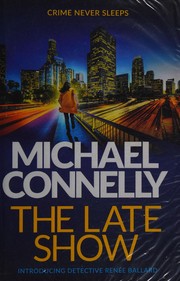
The Late Show
Exiled to the LAPD night shift after accusing her supervisor, Renée Ballard keeps two cases that were meant to be handed off at dawn: a brutal assault and a…
2,563-word summary · 11 min read
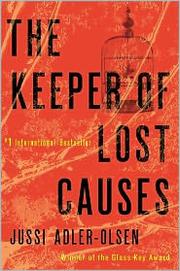
The Keeper of Lost Causes
Jussi Adler-Olsen introduces Carl Mørck and Department Q, a Copenhagen cold-case unit in a basement, and a missing politician whose file refuses to stay closed.
2,759-word summary · 12 min read
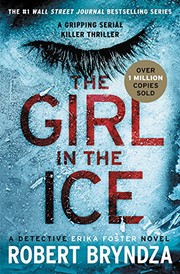
The Girl in the Ice
A young socialite is found frozen beneath the ice in a south London park, and DCI Erika Foster returns to work to lead the case. Grief, privilege and three…
2,492-word summary · 11 min read
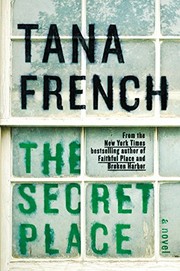
The Secret Place
Two Dublin detectives revisit a murder on the grounds of a girls' boarding school, where a bulletin board note and rival cliques hide the truth.
2,271-word summary · 10 min read
How the Light Gets In
Gamache investigates the murder of the last Ouellet quintuplet while the Sûreté he served is dismantled from inside by the man who took his protégé.
2,279-word summary · 10 min read
Bury Your Dead
Recovering from a failed raid that killed his officers, Gamache investigates a murder in a Quebec City library while Beauvoir reopens a case in Three Pines.
2,022-word summary · 9 min read
The Trespasser
A Dublin Murder Squad detective investigates a staged dinner-party killing and finds a cover-up that reaches into her own department.
2,051-word summary · 9 min read

Rules of Prey
Minneapolis detective Lucas Davenport hunts a killer who leaves a new rule at every scene and treats murder as a game of wits.
1,914-word summary · 9 min read
The Bat
Oslo detective Harry Hole aids Sydney police after a young Norwegian woman is murdered and finds a wider pattern. Grief, drink, and a lost partner shape the…
2,766-word summary · 12 min read
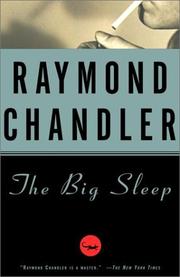
The Big Sleep
Marlowe takes a blackmail job for the Sternwoods and finds murder and daughters money cannot save.
2,243-word summary · 10 min read
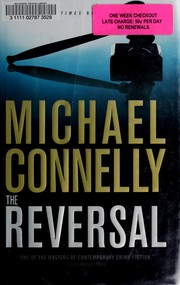
The Reversal
Mickey Haller prosecutes a child killer's retrial with ex-wife Maggie and half-brother Harry Bosch on his team.
2,056-word summary · 9 min read
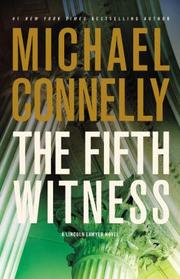
The Fifth Witness
A foreclosure case turns into a murder trial when a client's banker turns up dead, and a slick Los Angeles lawyer wins a case he wishes he had lost.
2,154-word summary · 10 min read
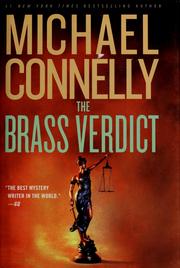
The Brass Verdict
Mickey Haller takes over a murdered lawyer's caseload and a Hollywood double-murder trial, with Harry Bosch circling the edges.
2,672-word summary · 12 min read
The Lincoln Lawyer
Mickey Haller defends a rich assault suspect from his Lincoln while doubting his innocence.
2,317-word summary · 10 min read

There Will Be Bodies
Digging out a villa buried by Vesuvius, Flavia Albia finds chained corpses and a death someone tried to hide for ten years.
2,152-word summary · 10 min read
The 5th Horseman
Two linked cases pull Lindsay Boxer and the Women's Murder Club into a hospital full of strange deaths and a luxury-car murder spree.
2,609-word summary · 12 min read
Evil Under the Sun
Poirot's Devon holiday turns deadly when a flirtatious actress is strangled at a secluded seaside hotel in this 1941 puzzle.
2,380-word summary · 11 min read
The Word Is Murder
A fictionalised Anthony Horowitz is talked into chronicling a prickly ex-detective's case: a woman murdered hours after planning her own funeral. A clever…
2,296-word summary · 10 min read
The Unquiet Grave
In Dervla McTiernan's fourth Cormac Reilly novel, a body found in a Galway bog turns out to be a missing school principal, and the case opens into something…
2,253-word summary · 10 min read
The Running Grave
In the seventh Cormoran Strike novel, Robin goes undercover inside a Norfolk cult while Strike digs into a child's death from decades earlier.
2,615-word summary · 12 min read
The Ice Princess
Camilla Läckberg's debut follows writer Erica Falck and detective Patrik Hedström as a frozen bathtub in a small Swedish town unravels a secret kept for…
2,321-word summary · 10 min read
The Hallmarked Man
A body in a silver vault behind Freemasons' Hall sends Strike and Robin into a world of coded letters, secret societies and a girl whose whole identity may be…
3,084-word summary · 14 min read
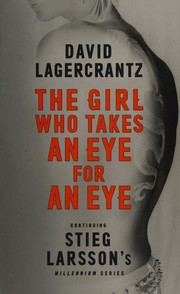
The Girl Who Takes an Eye for an Eye
Lisbeth Salander investigates a secret childhood experiment from prison while Mikael Blomkvist uncovers a twin conspiracy behind a wealthy businessman.
2,059-word summary · 9 min read
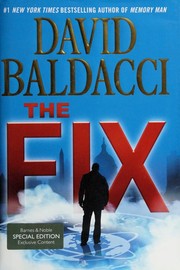
The Fix
Amos Decker watches a government contractor shoot a teacher outside FBI headquarters, then turn the gun on himself. The DIA wants the case shut.
2,315-word summary · 10 min read
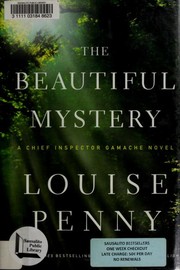
The Beautiful Mystery
In a cloistered Quebec monastery, a chant-singing monk is murdered and Gamache must break a vow of silence to find the killer. Eighth in the Chief Inspector…
2,262-word summary · 10 min read
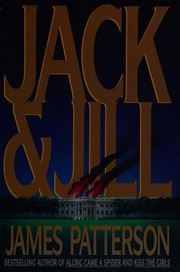
Jack & Jill
A senator is killed with a nursery-rhyme calling card as a child is murdered near Alex Cross's home. The third Alex Cross novel pulls him toward two cases, one…
2,646-word summary · 12 min read
Fractured
In Karin Slaughter's second Will Trent novel, a mother kills the wrong man in an Atlanta mansion, and a GBI agent with a hidden reading difficulty finds a…
2,219-word summary · 10 min read