
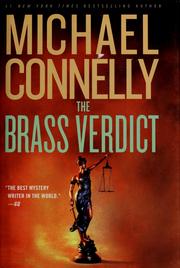
The Brass Verdict
2,672-word summary 12 min read 422 pages in the book
- First published
- 2008
- Publisher
- Little, Brown and Company
- Pages
- 422
- ISBN
- 9780316166294
- Series
- Lincoln Lawyer (#2)
Reading options
What's inside (9 sections)
I picked this up because I wanted to know what happens to Mickey Haller after a case nearly gets him killed. The Lincoln Lawyer left my nerves shot and the back of the Lincoln full of files, and Connelly's follow-up, published by Little, Brown and Company on October 14, 2008, opens with Mickey in rough shape. The first hardcover runs 422 pages and carries ISBN 9780316166294. It is book two of the Lincoln Lawyer series, and it also sits as the nineteenth novel in the sprawling Harry Bosch universe. You can read it cold, I think, but knowing the first book gives the opening scenes a weight they would otherwise lack.
The year since the Roulet case has not been kind. Mickey was wounded, then got hooked on the painkillers they gave him, and the story starts with him trying to claw his way back to steady ground. He is thinner, jumpier, more aware of his own mortality. Then a call comes that yanks him back in. An old acquaintance, a defense lawyer named Jerry Vincent, has been shot dead in his office, and somebody has to take over the man's caseload. Mickey, broke and restless and still tasting the pills, agrees to do it. That is the engine of the whole book, and it is a strong one. A dead man's files become Mickey's ticket back to the big time and the door into a much darker room.
A dead man's caseload
Jerry Vincent's death is the first thread Connelly pulls, and he uses it to get Mickey back behind the wheel fast. Vincent was a high profile defense attorney with a roster of rich, dangerous clients, and when Mickey inherits the paperwork he also inherits their problems. The crown jewel of the pile is the upcoming trial of Walter Elliott, a Hollywood mogul accused of murdering his wife Mitzi and her German lover. This is the franchise case every defense lawyer dreams about, the kind that pays a year's overhead in one retainer and brings a dozen more clients in its wake. Mickey knows exactly what it is worth, and he wants it badly.
The catch is timing. Elliott's trial is set to begin in nine days, and a normal lawyer would ask for a continuance to get up to speed. Mickey instead promises Elliott he will not seek a postponement, because a delay would give the prosecution room to regroup and give the client time to get cold feet. That gamble is pure Haller: read the other side, find the pressure point, move before anyone can think. It also means he is defending a man he has barely met, on a double murder charge, with a week and a half of prep. The ticking clock gives the book most of its momentum, and Connelly keeps the pages turning by letting Mickey complain about every minute of it.
Mickey does not work alone, though the people around him are a ragtag bunch. Lorna, his office assistant and longtime ally, keeps the files straight and the billable hours honest, and she has seen enough of Mickey's relapses to call him on his excuses. Cisco, the investigator he brings in, does the legwork that Mickey is too vain or too busy to do himself. These two give the book its working rhythm. Where the first novel leaned on Earl the driver and Dennis the ex cop, this one trades on Lorna's dry competence and Cisco's quiet digging, and the shift keeps familiar material fresh.
What I liked is that Connelly never lets Mickey fully off the hook about taking the case. The money pressure is real, the painkiller fog is real, and the old hunger for a headline client is real. Mickey tells himself he can do good with the file, that somebody has to defend the unpopular, but you can feel him rationalizing. That tension between a noble story he tells about himself and the fee he is chasing is the best thing about these books, and it is front and center here.
Bosch, circling the edges
Running alongside the trial is a second investigation, this one into Jerry Vincent's murder, and it belongs to LAPD detective Harry Bosch. Bosch is maverick, relentless, and unimpressed by money or celebrity, which puts him in a different universe from Mickey's clients. He figures out early that Vincent's killer may well come after whoever took over the man's work, so he warns Mickey and pushes him to cooperate. Mickey, who would rather keep his distance from the police, resists at first. The push and pull between the two men is one of the quiet pleasures of the book.
Their methods could not be more different. Bosch works crime scenes, ballistics, and old grudges; he talks to widows and bends rules when the rules get in the way. Mickey works discovery, motions, and jury psychology; he bends rules of a different sort and then writes memos to justify them. Connelly lets them circle each other for most of the story, each solving half of the other's problem, neither fully trusting the other. When Bosch suggests that the lawyer is now a target, Mickey's first instinct is to check the locks, not to ask for protection. That mixture of bravado and fear is what makes him human.
For readers who know the series, the Bosch threads carry a special charge. Mickey keeps noticing things about the detective that remind him of his own father, a famous defense lawyer, and the resemblance nags at him. Connelly is planting the seed for the reveal at the end, and he does it gently enough that it reads as character observation rather than a clue being waved at you. If you have never read a Bosch novel, none of this is required. He functions here as the stubborn cop who happens to be good at his job, and the deeper family connection lands as a surprise rather than a homework assignment.
The smaller case that shows the better man
Not everything in Vincent's caseload is a Hollywood double murder. Mickey also picks up the file of a former surfing champion named Patrick, who hurt himself in an accident, got hooked on painkillers, and stole a diamond necklace from a friend's home while he was out of his head. On paper it is an open and shut theft, the kind of low level case Mickey would normally process for a quick fee. But Patrick's addiction reminds Mickey of his own recent battle with the same drugs, and that recognition changes what he is willing to do.
Mickey takes Patrick on, hires him to drive the Lincoln, and starts looking for a way out of the charge. His break comes from a hunch that the stolen diamonds are not genuine. If the necklace is fake, the whole value of the theft collapses, and so does the case the prosecution thinks it has. I enjoyed this strand a lot because it shows Mickey doing the job for a person rather than a paycheck. He sees a kid who got lost in the same chemical fog he just escaped, and he uses his skills to pull him out. Connelly keeps it short, but it does more for Mickey's character than a dozen speeches about justice would.
The Patrick subplot also does something smarter. It gives the reader a small, clean win before the big case gets muddy, and it reminds us what a good defense lawyer looks like when money is not the point. Patrick is grateful in a quiet, embarrassed way, and Mickey's kindness toward him is awkward and unshowy. That awkwardness is convincing. Mickey is not a warm man by nature, and when he acts decently it looks like effort, which is more interesting than effortless virtue.
Building the Elliott defense
The heart of the book is the work Mickey and Cisco do on the Elliott case, and this is where Connelly's procedurals earn their reputation. The prosecution's centerpiece is gunshot residue found on Elliott's hands. Mickey's counter rests on a simple physical explanation: Elliott had ridden in a police car earlier that day, a car that had transported another prisoner, and the residue came from that ride rather than from firing a gun. It is the kind of defense that sounds absurd for about ten seconds and then starts to feel airtight, and Connelly walks through it with enough detail to satisfy a reader who likes the mechanics of a trial.
Mickey also attacks the assumed motive. Everyone thinks the killer was after Mitzi, the wife, but Mickey starts asking whether the real target was her German lover instead. That shift in perspective opens gaps in the prosecution's story and lets Mickey plant reasonable doubt without ever having to prove a competing theory. Along the way Elliott admits to Mickey that he has ties to the Mafia and believes the mob killed both Mitzi and Jerry Vincent. Now Mickey has a client who is possibly a killer, possibly a victim, and definitely hiding things, and he has nine days to sort it out. The layers stack up cleanly, one problem feeding the next.
What Connelly gets right here is the texture of a courtroom race. Motions get filed at odd hours, witnesses are located and then vanish, and every small discovery has to be evaluated for how a jury will hear it, not just for whether it is true. Mickey narrates all of it in that dry, fast voice of his, counting the hours and cracking wise when the stress gets high. The legal maneuvering is dense enough to feel real but never so dense that a non lawyer gets lost. I came away with a fresh respect for how much of a trial happens before anyone steps into a courtroom.
Where the machine starts to groan
I enjoyed the book, but it has seams, and they show most in the middle. The nine day clock is a fine device, yet it asks you to accept that a double murder defense can be assembled from a dead man's files in a little over a week. Connelly papers over the implausibility with Mickey's frantic energy, and for the most part it works, but there are moments when the pace feels like a screenwriter's trick rather than real legal work. If you read crime fiction for strict realism, the clock may irritate you.
Some of the players are thinner than they should be. The Mafia angle, the corrupt judge, and the planted juror all feel like types that have appeared in a hundred thrillers before this one. Walter Elliott in particular is hard to read. He is charming and frightened and evasive, and Connelly keeps him partly hidden for plot reasons, but that means the client at the center of the trial never becomes a fully realized person. The glitz of Hollywood is more backdrop than substance, and the book never quite uses the setting for anything beyond a few parties and a lot of money.
The painkiller recovery thread is another missed chance. The book opens with Mickey freshly sober and shaky, which is promising, but once the caseload arrives the addiction mostly slips into the background. There are a few honest moments where he feels the old pull, and those are the best parts of his arc, but they are few. I wanted more of that internal fight, because it is the most interesting thing about this version of Mickey. A lesser complaint, but a real one: the ending resolves the emotional threads a bit quickly after all the buildup.
The trap closes
The final stretch is where Connelly ties the two investigations together, and it is a busy, satisfying knot of a finale. Working off Bosch's findings, Mickey comes to suspect that Jerry Vincent bribed someone in the legal system to plant a juror who would deliver an acquittal for Elliott no matter what the evidence said. He digs and finds that one of the jurors is living under a stolen identity. That discovery stops the trial cold, which is exactly what Mickey needs, though it also means the jury he spent days shaping is gone.
Then Elliott confesses. He tells Mickey that he really did kill Mitzi and her German lover, which turns the whole defense inside out. Mickey is now a lawyer who has built a brilliant case for a man who has admitted guilt to him, and he cannot repeat that to anyone without destroying his own position. That evening he gets a phone call that appears to be from the police, asking him to help a former client. He drives to the scene and is attacked by a man trying to shove him over a precipice. Bosch and his team, who have been watching Mickey all along, arrive in time to save him, and the attacker turns out to be the planted juror.
From there the corrupt judge is exposed. Mickey confronts her with what he has pieced together, and the FBI steps in to make the arrest. When Elliott and his secretary are later found murdered, Mickey assumes the judge ordered it, but Connelly has one more turn ready: the killings were carried out by the family of Mitzi's lover before they returned to Germany, an act of private vengeance rather than another piece of the conspiracy. In the aftermath Mickey finally says out loud what he has been sensing about Bosch, that the resemblance to his father is not a coincidence and that the two men are half brothers. It is a strong close to the personal thread and a clean bridge to later books.
What I carried away
The question running under everything is the same one that drove the first book: what does a defense lawyer owe a client he believes is guilty, and what does he owe the truth? The Brass Verdict gives that question a harder test, because Mickey's client admits his guilt directly and then Mickey has to keep defending him anyway. The book does not offer an easy answer. It just keeps putting Mickey in rooms where the honest choice and the survivable choice are not the same, and lets him pick as best he can.
There is also the matter of recovery. Mickey's year of painkillers and the nine day sprint to prove himself are two sides of the same impulse, a man testing how much damage he can absorb and still function. The book is at its best when it treats that fragility as real, when Mickey's bravado slips and you see how close he is to the edge. It is at its weakest when it trades that interior tension for another concrete threat, another car, another gun. There is plenty of both, and some readers will be grateful. I found myself wishing for a few more quiet scenes.
The rewards are worth it for fans of legal thrillers with real street grit. Connelly won the 2009 Anthony Award for Best Novel with this book and was nominated for the CWA Ian Fleming Steel Dagger the same year, and it is easy to see why the book connected. It also became the basis for the Netflix series The Lincoln Lawyer, which tells you how well the character translates to the screen. Mickey talks his way through a case in a way that begs to be performed.
I closed it with the same feeling I had after the first book: I do not trust Mickey Haller, but I want to spend more time in his car. He is a man who bills by the hour and still, on a good day, tries to do the right thing when nobody is keeping score. The Lincoln is battered again by the end, inside and out, and Mickey is still driving. That is the whole appeal. He never solves the problem of who he is. He just keeps showing up for the next client, and the next file slides across the back seat.
FAQ
Is The Brass Verdict part of a series?
Yes. It is the second Lincoln Lawyer novel and the nineteenth book in the wider Harry Bosch universe, but it reads fine on its own.
When was The Brass Verdict published?
Little, Brown and Company published it on October 14, 2008. The first hardcover runs 422 pages with ISBN 9780316166294.
Do I need to read The Lincoln Lawyer first?
It helps. This book opens with Mickey recovering from wounds and a painkiller addiction sustained in the first novel, though the case itself stands alone.
Similar books
More from Lincoln Lawyer first, then related titles.
The Lincoln Lawyer
Mickey Haller defends a rich assault suspect from his Lincoln while doubting his innocence.
2,317-word summary · 10 min read
The Reversal
Mickey Haller prosecutes a child killer's retrial with ex-wife Maggie and half-brother Harry Bosch on his team.
2,056-word summary · 9 min read
The Fifth Witness
A foreclosure case turns into a murder trial when a client's banker turns up dead, and a slick Los Angeles lawyer wins a case he wishes he had lost.
2,154-word summary · 10 min read
Nightshade
Connelly launches Detective Stilwell on Catalina Island, where a beheaded buffalo and a Jane Doe in the harbor pull a quiet sheriff's post into violence and…
2,272-word summary · 10 min read
The Unquiet Grave
In Dervla McTiernan's fourth Cormac Reilly novel, a body found in a Galway bog turns out to be a missing school principal, and the case opens into something…
2,253-word summary · 10 min read
Fractured
In Karin Slaughter's second Will Trent novel, a mother kills the wrong man in an Atlanta mansion, and a GBI agent with a hidden reading difficulty finds a…
2,219-word summary · 10 min read
Eight Perfect Murders
A Boston bookseller's old blog post listing eight perfect fictional murders becomes the blueprint for a real killer, and the narrator knows more than he admits.
2,292-word summary · 10 min read

The Beach House
A young valet is beaten to death at a Hamptons party, and his law-student brother spends a year building a case against the family that covered it up.
2,049-word summary · 9 min read

4th of July
Lindsay Boxer shoots two armed teenagers in self-defense, faces a wrongful-death trial, and spends her leave chasing a string of throat-slashing murders in…
2,192-word summary · 10 min read

3rd Degree
The third Women's Murder Club novel follows a San Francisco terror cell and a three-day killing schedule, and it costs the club a member.
2,685-word summary · 12 min read
The Racketeer
A jailed lawyer trades a judge murder secret for freedom and revenge.
2,434-word summary · 11 min read
The Judge's List
Lacy Stoltz hunts a sitting judge who murders off his list.
2,513-word summary · 11 min read
The Guardians
A innocence lawyer reopens a prison murder where the wrong man waits on death row.
2,564-word summary · 11 min read
The Club
A luxury island resort for the rich turns deadly when secrets, staff and guests collide.
2,386-word summary · 11 min read
Presumed Innocent
Rusty Sabich must solve coworker Carolyn Polhemus's murder while hiding his affair with her, then stands accused himself in Turow's 1987 Kindle County debut.
2,726-word summary · 12 min read
Jar of Hearts
At sixteen Geo helped bury her best friend. Fourteen years later the body is found, she goes to prison, and the killing starts again.
2,389-word summary · 11 min read
The Kind Worth Killing
A plane seat chat about murder becomes a pact, then a game where no one tells the full truth.
2,080-word summary · 9 min read
The Last Coyote
On stress leave, Harry Bosch reopens the unsolved murder of his mother, a prostitute strangled when he was twelve, and finds corruption reaching the DA's…
2,069-word summary · 9 min read
The Black Ice
Harry Bosch works a Christmas-night death the Robbery-Homicide Division does not want him near, and the trail runs from a dead cop to a drug operation across…
2,399-word summary · 11 min read

The Late Show
Exiled to the LAPD night shift after accusing her supervisor, Renée Ballard keeps two cases that were meant to be handed off at dawn: a brutal assault and a…
2,563-word summary · 11 min read
The Poet
A crime reporter investigates his twin brother's apparent suicide and uncovers a killer who leaves Edgar Allan Poe quotes behind, in the novel that took…
2,020-word summary · 9 min read
The Black Echo
Harry Bosch links a fellow veteran's death to a tunnel bank robbery and a dangerous FBI investigation in Los Angeles.
2,133-word summary · 9 min read

There Will Be Bodies
Digging out a villa buried by Vesuvius, Flavia Albia finds chained corpses and a death someone tried to hide for ten years.
2,152-word summary · 10 min read
The Hangman's Daughter
In 1659 Bavaria, a hangman ordered to torture an innocent midwife instead investigates the deaths of children marked with a strange tattoo.
2,523-word summary · 11 min read
The 5th Horseman
Two linked cases pull Lindsay Boxer and the Women's Murder Club into a hospital full of strange deaths and a luxury-car murder spree.
2,609-word summary · 12 min read
Th1rt3en
A former con artist turned defense lawyer takes a celebrity murder trial while a serial killer sits on the jury, steering the verdict.
2,254-word summary · 10 min read
Make Me
Reacher drifts into a quiet Midwestern town and finds a missing investigator, a trail of killers, and a deep web secret.
2,352-word summary · 10 min read
Zero Day
Army investigator John Puller is sent alone to a West Virginia coal town to solve a colonel's murder, and finds a much larger secret buried nearby.
3,434-word summary · 15 min read
The Word Is Murder
A fictionalised Anthony Horowitz is talked into chronicling a prickly ex-detective's case: a woman murdered hours after planning her own funeral. A clever…
2,296-word summary · 10 min read
The Summons
A law professor is summoned home to find his judge father dead and more than three million dollars hidden in the house.
2,265-word summary · 10 min read