
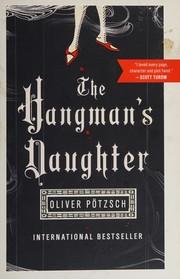
The Hangman's Daughter
2,523-word summary 11 min read 435 pages in the book
- First published
- 2008
- Publisher
- Houghton Mifflin Harcourt
- Pages
- 435
- ISBN
- 9780547745015
- Original title
- Die Henkerstochter
- Series
- The Hangman's Daughter (#1)
Reading options
What's inside (10 sections)
- Schongau in the winter of 1659
- The shadow of 1624
- A body in the river and a mark on the shoulder
- Three investigators who do not belong together
- The midwife, the torture, and the moral center
- Where the book slows down, and where it earns its keep
- The resolution and the road ahead
- Who this is for
- Key takeaways
- FAQ
I picked this one up because of a detail I could not get past: the main character is a hangman, and he is the good guy. Not a detective who moonlights, not a doctor with a morbid hobby. An actual executioner, licensed, with a house and a family and a reputation that makes respectable people cross the street. Oliver Pötzsch writes about a man whose job is to kill people and who spends the opening chapters being ordered to do it to someone he believes is innocent. That is a strange place to start a story, and it is the reason the book stayed with me after I closed it.
The novel first appeared in Germany in 2008 as Die Henkerstochter, published by Ullstein. The English edition I read came from Houghton Mifflin Harcourt, translated by Lee Chadeayne, and runs to about 435 pages. It opens the series that carries the same name, with two sequels arriving in short order and several more in the years after. Knowing it is book one helps, because Pötzsch takes his time introducing a whole town and its habits before he lets the mystery gather speed. This is a writer building a world he intends to live in for a while.
There is a bit of real history behind that choice. Pötzsch was born in Munich in 1970, the son of an elementary school teacher, and he comes from a long line of hangmen. He was also one of the first German writers to find mass success through e-books, and by the time the fourth book in this series came out in 2012 the run had sold well over eight hundred thousand copies. You can feel that mixture of family lore and commercial instinct in the pages. The hangman is not a costume the author put on for fun. He is a figure Pötzsch grew up hearing about, and the familiarity shows in the unglamorous, workmanlike way the trade is described.
Schongau in the winter of 1659
The setting does a great deal of work here. The story is set in Schongau, a small Bavarian town on the River Lech, and the main action begins in 1659. A short prologue reaches back to 1624, to the witch trials that burned themselves into the memory of the place. That gap of thirty-five years matters enormously. The people in the main story are still living with what their parents and grandparents did, and Pötzsch keeps that history close to the surface without ever turning it into a lecture.
He draws the town in terms of who lives where. The Hof Gate is the main entrance, and inside it the respected tradesmen have stone houses that stand up straight and dry. Down by the river is the tanners' quarter, with its smell and its moisture, and on the eastern side is the butchers' quarter. You can read the whole social order off the map. Pötzsch clearly enjoyed building this place, and the enjoyment is contagious. By the time the investigation really starts, Schongau feels like somewhere you could walk through, with its inns, its aldermen, its narrow streets and its long memories.
That careful geography is one of the book's real strengths. This is historical fiction that trusts the details of ordinary life to carry the tension. There is a great deal about who sells what, who owes whom, and which family married into which trade. Readers who want their history as a clean backdrop for nonstop action may find the early chapters slow. I found them absorbing, partly because the slowness is the point. In a town this size, everyone already knows everyone else's business, and a rumor travels faster than any official could.
The year matters too. This is a place only a few decades past the Thirty Years' War, with all the hunger and displacement that implies. Pötzsch does not dwell on the larger politics of the period, but the scars are everywhere in the behavior of his characters. People hoard, people watch one another, and people are terrified of being blamed for something they did not do. The weather and the season add to the pressure, since much of the story plays out in the cold months when a town turns inward and there is nowhere else to go.
The shadow of 1624
The prologue is short, but it is the key to everything that follows. In 1624, the town dealt with a charge of witchcraft in the way towns of the period often did, and the consequences were written into the families who remained. When the main story opens decades later, nobody has forgotten. The memory of the women burned still haunts the streets, and it shapes how the citizens react when a new piece of frightening evidence appears. Pötzsch understands that a witch hunt is not an event that ends. It is a habit of mind that a community passes down.
This is what gives the book its moral weight. The people of Schongau are not depicted as fools or monsters. They are ordinary men and women who have inherited a set of explanations for misfortune and who reach for those explanations when something terrible happens. The prior trials have taught them that a confession will restore order, and they want order back more than they want the truth. That is a much more unsettling idea than a story about one evil person manipulating a crowd, and it is closer to how such things actually happen.
Pötzsch keeps returning to the contrast between what the town remembers and what it is willing to learn. Seventy years of hindsight have not produced much wisdom. The same fears, the same assumptions and the same appetite for a quick confession are all still in place, waiting for a trigger. The trigger arrives in the form of a dying boy pulled out of the river.
A body in the river and a mark on the shoulder
The plot starts with that boy, half drowned and carrying a crude tattoo on his shoulder. In 1659 a mark like that means one thing to the people of Schongau: witchcraft. The town has spent decades looking over its shoulder for the next witch, and here is what looks like proof washing up in the river. The local authorities want the case handled quickly and in the familiar way. Find the woman responsible, make her confess, burn her, and put the fear to rest.
The woman they settle on is the town midwife, the same woman who helped deliver Jakob Kuisl's own children. That is the cruel hinge of the story. The hangman is ordered to use torture to extract a confession from a woman he has every reason to believe is innocent, and he refuses to accept the easy version. He is not a sentimental man, and he knows exactly what his trade requires. But he also knows the difference between a confession and the truth, and he has seen enough of both to distrust the first.
More children go missing. Another boy turns up dead, marked with the same tattoo. The hysteria in the town grows, and with it the pressure on Jakob to do his job and stop asking questions. The book's pacing tightens here. Pötzsch is very good on the way fear spreads through a small community, on how a single assumption hardens into a certainty because nobody wants to be the person who doubts it. The tattoo is a piece of evidence that everyone reads the same way, which is precisely what makes it so dangerous.
Three investigators who do not belong together
Jakob does not solve this alone, and the pairing is the liveliest part of the book. His daughter Magdalena is sharp, impatient and far more willing than her father to go where she is not wanted. She has a mind for the small details people overlook and the nerve to follow them. Then there is Simon Fronwieser, the university-educated son of the town physician, Bonifaz Fronwieser. Simon brings book learning and a doctor's eye for a body, while Jakob brings the practical knowledge of a man who has spent his life around death and the law's brutal machinery.
The three of them make an odd team, and the friction between them is well observed. Jakob is a man of few words who carries his reputation like a weight. Magdalena chafes at the limits placed on her because she is a woman and a hangman's daughter. Simon is the outsider with the education, able to walk into rooms that Jakob cannot, yet dependent on local knowledge he does not have. Watching them learn to trust one another is half the pleasure of the book.
Pötzsch gives the supporting cast just enough to feel real. There is the parish priest Konrad Weber, the court clerk Johann Lechner, and a burgomaster who also runs the inn. Resl works as a server at the Goldener Stern, and she hears things that men in authority never do. These are not deep portraits, and the book is not trying to make them one. They are figures in a town where everybody has a role, and the roles are what matter when the pressure eventually comes down. The aldermen who appear as witnesses and officials are drawn with the same light, efficient touch.
The midwife, the torture, and the moral center
The strongest chapters are the ones about the midwife and what Jakob is being asked to do to her. This is where the historical mystery turns into something more uncomfortable. Torture is not a plot device here. It is a tool the town expects to be used, sanctioned by law and custom, and the argument about whether to use it runs through the whole book. Jakob's refusal is not framed as a modern hero's objection dropped into the past. He is a hangman. He has done his share of killing. His objection is practical and moral at once: a confession taken on the rack tells you what the torturer wants to hear, not what actually happened.
That idea is the book's center. Pötzsch keeps asking how a community can be certain of something that is untrue, and what happens when the machinery of justice is built to produce certainty rather than truth. The witch trials of 1624 hang over every scene for this reason. The town burned people once and convinced itself it had done the right thing. Now it is ready to do it again, and the same habits of thought are in play. The method has not changed, and neither has the willingness to call the result justice.
The midwife herself is handled with care. She is not romanticized as a wise woman with secret knowledge, and she is not a helpless figure with nothing to do. She is an old woman caught in a system that has already decided what she is. Her friendship with Jakob's family gives the case its personal stakes, and her fate is the question the plot keeps circling. I found these pages the most affecting in the book, and also the clearest statement of what Pötzsch thinks he is writing about.
Where the book slows down, and where it earns its keep
I should be honest about the parts that dragged for me. The first hundred pages or so spend a long time on the town, its trades and its officials, and there are stretches where the mystery seems to have been forgotten. If you like your historical fiction lean, this will feel padded. There are also repeated descriptions of the same streets and the same smells, and a few conversations that go around a point without ever landing it.
The prose, in translation, is competent rather than beautiful. There are lines that feel flat, and the dialogue sometimes has the stiff, explanatory quality of a writer making sure the reader has followed the chain of reasoning. A few of the minor characters are little more than types, present to fill a role in the town's hierarchy. This is popular fiction, written to keep a story moving across a long series, and it shows. Nobody is going to quote this book for its sentences.
But the slowness pays off once the case tightens. Because Pötzsch has spent so long showing you how Schongau works, the final movement carries real weight. When the pressure comes down, you understand exactly which institutions and which fears are pushing on the characters. The accumulated detail turns into momentum. The town stops being scenery and becomes a force that acts on everyone in it. That is the payoff for the patient reader, and I think it is worth the wait.
The resolution and the road ahead
Without giving everything away, the investigation leads Jakob and Magdalena toward the truth behind the tattoo and the deaths, and the answer is bound up with the town's older sins. The resolution is satisfying in the way a good historical mystery should be: the puzzle closes, but the moral question does not. A confession is not the same as justice, and the book is careful not to suggest that catching a culprit undoes what the community was willing to do to an innocent woman along the way. The last chapters pull the threads together cleanly without pretending that Schongau has learned much from the experience.
The book ends in a way that opens the door to the sequels, as a first installment should. The Kuisl family and Simon will return, and Pötzsch has clearly been building a world he intends to keep using. That can be a weakness in a debut, the feeling that you are being handed a brochure for the next three books. Here it mostly works, because the case itself reaches a proper ending. I closed it satisfied rather than teased.
Who this is for
This is a good pick if you like historical mysteries with a strong sense of place and a willingness to sit with uncomfortable material. It asks real questions about how fear turns into certainty and how easily a community can justify cruelty, and it asks them through characters who are flawed and often difficult to like. If you want a fast thriller with a clean hero and a tidy ending, this may test your patience. The hangman is no hero in the usual sense, and the book is better for it.
What stayed with me was the idea of a man whose job gives him a particular kind of knowledge about death, using that knowledge to argue against the easiest answer. Pötzsch, who comes from a family of executioners himself, clearly understands the appeal of that contradiction. The result is a book that is smarter about justice than its genre usually asks it to be, and more honest about the cost of a quiet conscience than most historical mysteries bother to be. It is not a polished book, but it is a memorable one, and that is enough to recommend it to anyone willing to give Schongau a few chapters to reveal itself.
FAQ
Is The Hangman's Daughter based on a true story?
No. It is a work of fiction, though Oliver Pötzsch descends from a family of Bavarian hangmen and sets the novel in the real town of Schongau in 1659.
Do I need to read the sequels to understand this book?
No. This is the first volume of a series, but the murder case reaches its own conclusion, and the recurring characters simply return in later books.
Is this a gentle historical mystery or a dark one?
It is fairly dark. Torture, witch trials and the threat of execution are central, and the book favors moral unease over cozy puzzle solving.
Similar books
More from The Hangman's Daughter first, then related titles.
There Will Be Bodies
Digging out a villa buried by Vesuvius, Flavia Albia finds chained corpses and a death someone tried to hide for ten years.
2,152-word summary · 10 min read
The Unquiet Grave
In Dervla McTiernan's fourth Cormac Reilly novel, a body found in a Galway bog turns out to be a missing school principal, and the case opens into something…
2,253-word summary · 10 min read
The Reversal
Mickey Haller prosecutes a child killer's retrial with ex-wife Maggie and half-brother Harry Bosch on his team.
2,056-word summary · 9 min read
The Paying Guests
A widowed mother and her unmarried daughter take in lodgers in 1922 south London, and a secret affair between Frances and Lilian pulls them into a murder case.
2,661-word summary · 12 min read
The Luminaries
Eleanor Catton's Booker-winning novel drops a young prospector into an 1866 New Zealand gold town where twelve men untangle a web of hidden gold, murder and…
2,949-word summary · 13 min read
The Hallmarked Man
A body in a silver vault behind Freemasons' Hall sends Strike and Robin into a world of coded letters, secret societies and a girl whose whole identity may be…
3,084-word summary · 14 min read
The Brass Verdict
Mickey Haller takes over a murdered lawyer's caseload and a Hollywood double-murder trial, with Harry Bosch circling the edges.
2,672-word summary · 12 min read
Fractured
In Karin Slaughter's second Will Trent novel, a mother kills the wrong man in an Atlanta mansion, and a GBI agent with a hidden reading difficulty finds a…
2,219-word summary · 10 min read
Eight Perfect Murders
A Boston bookseller's old blog post listing eight perfect fictional murders becomes the blueprint for a real killer, and the narrator knows more than he admits.
2,292-word summary · 10 min read
A Drop of Corruption
Bennett's second Shadow of the Leviathan novel pairs a blindfolded detective and an engraver with perfect recall in a locked-room case during an imperial…
2,333-word summary · 10 min read
The Christie Affair
Agatha Christie vanishes for eleven days in 1926, and her husband's mistress claims to know why. Nan O'Dea's account runs from an Irish convent to a Yorkshire…
2,384-word summary · 11 min read
Nightshade
Connelly launches Detective Stilwell on Catalina Island, where a beheaded buffalo and a Jane Doe in the harbor pull a quiet sheriff's post into violence and…
2,272-word summary · 10 min read
Child 44
Tom Rob Smith's 2008 debut follows Soviet secret policeman Leo Demidov as he hunts a child killer in a country that officially has no crime.
2,428-word summary · 11 min read
The Art Forger
A disgraced Boston painter agrees to copy a Degas stolen from the Gardner Museum, then begins to suspect the original she is copying is itself a forgery.
2,117-word summary · 9 min read
The Black Dahlia
James Ellroy builds a fiction around the real Black Dahlia murder, following two Los Angeles cops whose partnership and obsessions destroy them.
2,533-word summary · 11 min read

3rd Degree
The third Women's Murder Club novel follows a San Francisco terror cell and a three-day killing schedule, and it costs the club a member.
2,685-word summary · 12 min read
Death Comes to Pemberley
P.D. James drops a murder onto the Pemberley estate and sends Wickham to trial, reading Austen's most famous marriage through the machinery of Georgian justice.
2,318-word summary · 10 min read

The Redbreast
Harry Hole chases an ageing sniper through modern Oslo while two Norwegian volunteers on the Eastern Front carry a fifty-year-old betrayal toward a royal…
2,453-word summary · 11 min read
The Club
A luxury island resort for the rich turns deadly when secrets, staff and guests collide.
2,386-word summary · 11 min read
Fingersmith
A thief plots to cheat an heiress, then the scheme flips twice in Victorian London.
2,532-word summary · 11 min read
The Body in the Library
A strange girl found dead in a library pulls Miss Marple into lies about dance halls and film.
2,017-word summary · 9 min read
Maisie Dobbs
A maid turned war nurse opens a London inquiry agency in 1929 and traces a quiet case to a refuge for shattered soldiers.
2,382-word summary · 11 min read
Jar of Hearts
At sixteen Geo helped bury her best friend. Fourteen years later the body is found, she goes to prison, and the killing starts again.
2,389-word summary · 11 min read
Shutter Island
A U.S. marshal hunts a missing patient on a locked asylum island in 1954, where every clue turns back on him.
2,761-word summary · 12 min read
The Kind Worth Killing
A plane seat chat about murder becomes a pact, then a game where no one tells the full truth.
2,080-word summary · 9 min read
The Last Coyote
On stress leave, Harry Bosch reopens the unsolved murder of his mother, a prostitute strangled when he was twelve, and finds corruption reaching the DA's…
2,069-word summary · 9 min read
The Innocent Man: Murder and Injustice in a Small Town
Grisham's first nonfiction book tells how Ron Williamson lost eleven years on death row for a murder he did not commit in Ada, Oklahoma.
2,245-word summary · 10 min read
The 5th Horseman
Two linked cases pull Lindsay Boxer and the Women's Murder Club into a hospital full of strange deaths and a luxury-car murder spree.
2,609-word summary · 12 min read
Make Me
Reacher drifts into a quiet Midwestern town and finds a missing investigator, a trail of killers, and a deep web secret.
2,352-word summary · 10 min read
Evil Under the Sun
Poirot's Devon holiday turns deadly when a flirtatious actress is strangled at a secluded seaside hotel in this 1941 puzzle.
2,380-word summary · 11 min read