
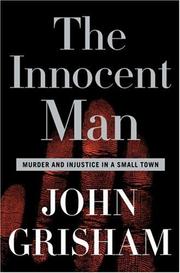
The Innocent Man: Murder and Injustice in a Small Town
2,245-word summary 10 min read 368 pages in the book
- First published
- 2006
- Publisher
- Doubleday
- Pages
- 368
- ISBN
- 9780385517232
Reading options
What's inside (9 sections)
I came to this book expecting a John Grisham novel and got something harder to categorize. It was published in 2006 by Doubleday, it runs about 368 pages in the hardcover, and it is his first work of nonfiction. The full title, The Innocent Man: Murder and Injustice in a Small Town, tells you what you are in for. Grisham is not inventing a courtroom drama here. He is reconstructing one that actually happened, in Ada, Oklahoma, and the facts are stranger and sadder than anything he might have made up.
The case has become familiar in the years since, partly because Netflix turned the book into a six-part documentary series in 2018. That familiarity can work against the book. You may already know where it ends. Grisham seems aware of this, and he spends his energy on the texture of the small town and the slow accumulation of mistakes rather than on surprise. What emerges is less a whodunit than an account of how a legal system can fail a person in a hundred small ways and still call the result a verdict.
Ada, Oklahoma, and a body in a garage apartment
Ronald Keith Williamson, called Ron by nearly everyone, grew up in Ada and left to play baseball. He had some talent and signed with organizations affiliated with the Oakland Athletics and the New York Yankees, moving through the minor leagues without ever finding a stable place. A shoulder injury ended the career in practical terms. The pain stayed, steady work became hard to hold, and Williamson sank into alcoholism. By the time the book's central crime occurs, he is a man whose failures have been stacked up in plain sight for anyone in Ada to see.
Early on the morning of December 8, 1982, the body of Debra Sue Carter was found in her garage apartment in Ada. She was twenty one years old and worked as a cocktail waitress. She had been beaten, raped, and suffocated. Grisham does not turn her death into a puzzle box. The horror of the scene is stated plainly, and the investigation that follows is the real subject.
Ada's police force was small and underfunded, and the case went nowhere for five years. Witnesses were missed. Leads went cold. The file gathered dust while Carter's family waited. Then attention settled on Williamson and his drinking companion, Dennis Fritz. Both men were charged, and in 1988 they were convicted of the rape and murder. Williamson was sentenced to death. Fritz received life. The evidence that got them there was flimsy, and much of it came from the kind of police work that assumes a solution and then works backward to support it.
Grisham spends real time on Ada itself, and the portrait is not flattering. This is a place where a man's reputation is formed early and hard to change later. Williamson's years in the minors, his injured shoulder, his inability to hold steady work, all of it fed a story about him that the town already believed. Once the police had a suspect who fit that story, the harder question of whether the evidence fit became secondary. The book is full of small details about how information moved through Ada, who talked to whom, and which rumors hardened into facts. That is the small town of the subtitle doing real work. It is not scenery.
Dreams, witnesses, and a case that would not hold
The most unsettling part of the book is not the violence of the crime. It is the casual way the convictions were assembled. Grisham details the use of so-called dream confessions, statements obtained in circumstances that make a person suggestible, along with witnesses whose accounts shifted under pressure and physical evidence that never pointed clearly at the two men. Pontotoc County District Attorney Bill Peterson led the prosecution with a determination that looks less like diligence after you have read the whole record.
Fritz's situation adds another layer of cruelty. His wife had been murdered seven years earlier, and he was raising their only daughter when he was arrested. He spent years in prison for a crime the evidence did not support, separated from a child who needed him. The book keeps returning to what the wrongful conviction did to families as well as to the men in the cells.
Grisham writes the legal proceedings with the patience of someone who has spent a career inside them. He walks through the appeals, the filings, the hearings, and the long grind of a death penalty case, where every conviction automatically triggers another round of review. That machinery, which might have been tedious in less capable hands, becomes the point. The system has procedures for almost everything except admitting, early and plainly, that it got the wrong people.
The investigation into the errors leaned on the Innocence Project and on Williamson's attorney, Mark Barrett. They found holes in the prosecution's case and serious problems with the credibility of its witnesses. U.S. District Court Judge Frank H. Seay ordered a retrial. DNA evidence did the decisive work. After eleven years on death row, Williamson and Fritz were exonerated and released on April 15, 1999. Williamson was the seventy eighth inmate freed from death row since 1973, a statistic that lands with a thud because of how ordinary his case had seemed.
What eleven years did to Ron Williamson
The book's hardest chapters are the ones about the aftermath. Williamson was five days away from execution in September 1994 before a habeas corpus petition stayed the sentence. He had been treated at different times for manic depression, personality disorders, alcoholism, and mild schizophrenia. It was later established that he was mentally ill and unfit to have been tried or sentenced to death in the first place. Read that sentence twice. A man who could not fairly face a capital trial spent more than a decade under a death sentence.
Grisham does not make Williamson sympathetic by cleaning him up. He was difficult, unstable, and often his own worst enemy. He drank, he drifted, and he made bad decisions long before the police came for him. But the book keeps insisting on a distinction that matters: none of that made him a rapist or a murderer. A flawed person can still be an innocent person, and the legal system in Ada seemed unable to hold both ideas at once.
The damage was permanent. Williamson never recovered what the years took. He was diagnosed with cirrhosis of the liver after decades of drinking and died on December 4, 2004, in a nursing home in Broken Arrow, Oklahoma. He was fifty one. Fritz went back to Kansas City and was reunited with his daughter Elizabeth. In 2006 he published his own account of the experience, Journey Toward Justice. Their shared exoneration led to very different endings, and Grisham does not pretend otherwise.
Two men, two sentences
It is worth pausing on how different the two lives after release were, because the book resists the easy ending where both men are simply vindicated. Williamson had been under a death sentence, which meant his case carried the automatic machinery of appeal, and that machinery is part of what eventually exposed the errors. Fritz received life, and his path through the system was quieter. He lost the same years, but the state did not spend a decade preparing to execute him. The difference in their sentences shaped the difference in their lives afterward.
That contrast raises one of the more uncomfortable questions the book raises without answering directly. Who gets the benefit of a second look? Williamson's mental illness, which should have prevented his trial in the first place, became part of the case for freeing him. Fritz had no such argument to make. His innocence had to be proven on the evidence alone. Grisham lets the two stories sit side by side, and you can feel how arbitrary the distinction is. A man's fate turned partly on which charge a jury chose and partly on how damaged the system understood him to be.
Neither man got an apology. Williamson and Fritz sued and won a civil settlement, but the state and the county never admitted that they had been wrong. Grisham returns to this refusal more than once, and it is the book's real complaint. Exoneration without acknowledgment leaves the underlying habits intact. The detectives and prosecutors who built the case kept their careers. The men who lost everything had to make lives out of what remained, one in a nursing home and one back in Kansas City with a daughter he barely knew.
The other cases in the shadows
One of the reasons this is a book and not an article is the way Grisham widens the frame. The Innocent Man includes accounts of other wrongful convictions out of the same region and the same period. Tommy Ward and Karl Fontenot were convicted in the abduction, rape, and alleged murder of Denice Haraway, a case also driven by dream confessions. Greg Wilhoit was convicted in the rape and murder of his estranged wife, Kathy. At one point all of these men were housed on the same death row, which tells you something about how systematically the process failed.
Those cases had been documented earlier, most notably in Robert Mayer's 1987 book The Dreams of Ada. Grisham is working with known material, and he is careful about it. He uses the subplots to show that Williamson was not an isolated error, the sort of thing a careful reader might dismiss as bad luck in one county. The pattern points toward habits of investigation and habits of thought that survived because no one in a position of power wanted to revisit them.
The actual killer, Glen Gore, was eventually convicted in June 2003 and sentenced to death. That sentence was overturned in 2005. He was convicted again at a second trial in June 2006 and received life without parole after the jury deadlocked on sentencing. Williamson and Fritz won a settlement of five hundred thousand dollars from the City of Ada in 2003, along with an out of court settlement with the State of Oklahoma for an undisclosed amount. Money arrived, but no official ever admitted error. The city and county officials even threatened to re arrest Williamson, which is a detail that stayed with me longer than almost anything else in the book.
What Grisham does with the material
The strengths are the ones you would expect from a novelist. Grisham knows how to keep a chapter moving, and he understands the small humiliations of legal life: the waiting, the paperwork, the way a person's future can turn on what one detective wrote in a report. He gives Ada itself a real presence. It is a place where everyone knows everyone, where reputation travels faster than facts, and where the desire to close a case can overpower the duty to solve it. His anger is steady rather than shouted, which makes it more persuasive.
There are things that drag. The book is long for what it is, and some of the procedural detail repeats itself. Grisham's focus stays so tightly on Williamson that Debra Sue Carter can start to feel like a device for his story rather than a person who was killed. That is a fair criticism of true crime as a form, and this book does not entirely escape it. Readers looking for a neutral account of the investigation may also notice that the prose sometimes reaches for novelistic effects when a plainer sentence would do.
None of that undoes the central achievement. Grisham takes a case that could have been reduced to a list of outrages and gives it the shape of a life. By the end you are not only angry at the detectives and the prosecutor. You are tired for everyone involved, including the people who worked the case badly, because the book shows how easy it was for them to believe they were doing right. That is a more useful feeling than simple outrage, and it is the reason this book has lasted.
Why it still matters
The Innocent Man was Grisham's first nonfiction title, and it arrived at a moment when DNA testing was beginning to expose how many convictions had been built on confident mistakes. The timing matters. The book helped bring a local tragedy to a national audience, and the Netflix series introduced it to another generation. It is not a comfortable read, and it was never meant to be. It asks you to sit with the fact that a man can lose eleven years and then die with the state still insisting it did nothing wrong.
I finished it wanting to know more about Fritz and about the families who were left behind, which is a good sign in a book about absence. Grisham has said he chose this story because it was close to his own part of the country, and that familiarity shows in the details. He knows how people in a town like Ada talk, what they excuse, and what they refuse to discuss. That knowledge makes the failure feel local and specific rather than abstract. Injustice is easier to ignore when it is written as a concept. It is harder to ignore when it has a street, a courthouse, and a name.
FAQ
Is The Innocent Man a novel?
No. It is John Grisham's first nonfiction book, published by Doubleday in 2006. It reconstructs a real wrongful conviction in Ada, Oklahoma.
Who is the innocent man of the title?
Ron Williamson, a former minor league baseball player who spent eleven years on death row before DNA evidence helped free him in 1999.
Was there a Netflix series based on it?
Yes. Netflix released a six-part documentary series called The Innocent Man in December 2018, drawn from this book and the same case.
Similar books
The Street Lawyer
Michael Brock survives a hostage morning at his rich D.C. firm, then quits for a street clinic after learning a buried eviction file cost a mother and kids…
2,745-word summary · 12 min read
London Falling
A nineteen-year-old falls from a London balcony in 2019, and a New Yorker writer traces the lies, money and menace around his death.
2,371-word summary · 11 min read
Red Notice
An American financier in Moscow exposes a $230 million tax fraud, watches his lawyer die in prison, and turns the case into an international human rights law.
2,008-word summary · 9 min read
Catch and Kill: Lies, Spies, and a Conspiracy to Protect Predators
Ronan Farrow recounts how NBC killed his Harvey Weinstein reporting, then how The New Yorker published it and helped ignite #MeToo.
2,057-word summary · 9 min read
The Stranger Beside Me
Ann Rule's classic memoir of her friendship with Ted Bundy, written by the true-crime author who knew him long before the world learned what he had done.
2,481-word summary · 11 min read
Midnight in the Garden of Good and Evil
Berendt spends five years in Savannah and gets drawn into the Jim Williams murder trials, among eccentrics and root doctors.
3,123-word summary · 14 min read
If You Tell
Three sisters survive fear in a Raymond farmhouse and help police face long hidden murders.
3,166-word summary · 14 min read
In Cold Blood
Capote reconstructs the Clutter murders and the killers' flight in the book that invented true crime.
1,965-word summary · 9 min read
The Summons
A law professor is summoned home to find his judge father dead and more than three million dollars hidden in the house.
2,265-word summary · 10 min read
The Litigators
Two Chicago ambulance chasers and a burned-out Harvard Law graduate take on a drug giant, only to find the case sliding toward disaster.
2,244-word summary · 10 min read
Rogue Lawyer
A street lawyer with a bulletproof van and a gun takes on clients no one else will defend, from a wrongly accused teenager to a mobster on death row.
2,353-word summary · 10 min read
The Last Juror
A young editor buys a dying Mississippi paper and covers the murder trial that defines his town for a decade. Grisham's small-town novel about race, juries,…
2,528-word summary · 11 min read
Gray Mountain
A Manhattan associate furloughed after the financial crash takes a year of unpaid legal aid work in Appalachian coal country, and finds the case of her life…
2,026-word summary · 9 min read
The Guardians
A innocence lawyer reopens a prison murder where the wrong man waits on death row.
2,564-word summary · 11 min read
Sycamore Row
Jake Brigance returns to defend a contested will that leaves a fortune to a Black housekeeper in racially tense Clanton.
2,017-word summary · 9 min read
The Runaway Jury
A tobacco trial in Biloxi is quietly rigged from inside the jury box and by a woman offering to sell the verdict.
2,920-word summary · 13 min read

The Client
Eleven-year-old Mark Sway learns a mob secret in Memphis and hires lawyer Reggie Love for one dollar.
2,536-word summary · 11 min read
A Time to Kill
Lawyer Jake Brigance defends a father who killed his daughter's attackers.
2,064-word summary · 9 min read
Zeitoun
A Syrian-American contractor rides out Hurricane Katrina by canoe, rescuing neighbors and stray dogs, until a routine arrest turns into twenty-three days…
2,097-word summary · 9 min read

There Will Be Bodies
Digging out a villa buried by Vesuvius, Flavia Albia finds chained corpses and a death someone tried to hide for ten years.
2,152-word summary · 10 min read
The Hangman's Daughter
In 1659 Bavaria, a hangman ordered to torture an innocent midwife instead investigates the deaths of children marked with a strange tattoo.
2,523-word summary · 11 min read
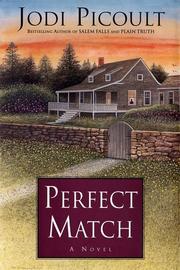
Perfect Match
A Maine prosecutor shoots the priest she believes abused her son, then faces a trial that questions what justice can mean.
2,241-word summary · 10 min read
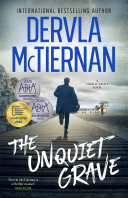
The Unquiet Grave
In Dervla McTiernan's fourth Cormac Reilly novel, a body found in a Galway bog turns out to be a missing school principal, and the case opens into something…
2,253-word summary · 10 min read
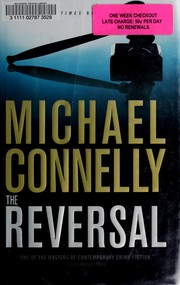
The Reversal
Mickey Haller prosecutes a child killer's retrial with ex-wife Maggie and half-brother Harry Bosch on his team.
2,056-word summary · 9 min read
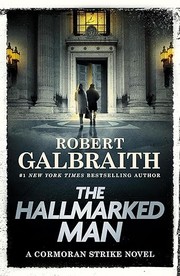
The Hallmarked Man
A body in a silver vault behind Freemasons' Hall sends Strike and Robin into a world of coded letters, secret societies and a girl whose whole identity may be…
3,084-word summary · 14 min read
The Fifth Witness
A foreclosure case turns into a murder trial when a client's banker turns up dead, and a slick Los Angeles lawyer wins a case he wishes he had lost.
2,154-word summary · 10 min read
The Brass Verdict
Mickey Haller takes over a murdered lawyer's caseload and a Hollywood double-murder trial, with Harry Bosch circling the edges.
2,672-word summary · 12 min read
Men Explain Things to Me
A short collection of essays that begins with a man explaining Solnit's own book to her and expands into an argument about who gets believed, who gets heard…
2,019-word summary · 9 min read
Fractured
In Karin Slaughter's second Will Trent novel, a mother kills the wrong man in an Atlanta mansion, and a GBI agent with a hidden reading difficulty finds a…
2,219-word summary · 10 min read
Eight Perfect Murders
A Boston bookseller's old blog post listing eight perfect fictional murders becomes the blueprint for a real killer, and the narrator knows more than he admits.
2,292-word summary · 10 min read