
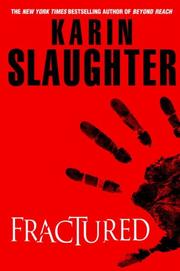
Fractured
2,219-word summary 10 min read 400 pages in the book
- First published
- 2008
- Publisher
- Delacorte Press
- Pages
- 400
- ISBN
- 9780385341950
- Series
- Will Trent (#2)
Reading options
What's inside (9 sections)
I came to this one straight from Triptych, mostly because I wanted to spend more time with Will Trent and because people kept describing Fractured as the book where the Georgia Bureau of Investigation agent really comes into his own. It was published in 2008 by Delacorte Press, the second Will Trent novel, and it runs to about four hundred pages in the hardcover. What I remember most is not the puzzle but the heat. Slaughter sets the thing in Atlanta in summer, and the city feels like a pressure cooker, with the wealth of Ansley Park on one side and the ruins of a few perfect lives on the other.
A nightmare in Ansley Park
The book opens in the kind of neighborhood where the lawns are trimmed and the streets are lined with trees. Abigail Campano comes home unexpectedly one afternoon and finds a broken window, then a bloody footprint on the stairs, then her teenage daughter lying in blood on the landing with a man standing over her holding a knife. The man is Adam Humphrey, a college student. Abigail attacks him and beats him to death with her bare hands. It is only afterward that the facts start to rearrange themselves. The dead girl on the landing is not her daughter Emma. It is Emma's friend Kayla Alexander. And the man Abigail killed was not the attacker. He had been stabbed too, by somebody else, and left there.
That is the engine of the book, and it is a strong one. Abigail has killed a man in the belief that she was saving her child, and the belief was wrong. Her guilt is immediate and private, and Slaughter keeps returning to it even after the bigger case takes over. Emma is gone. The police think they have a murder and a hero mother. Will Trent, who arrives as a favor to the Atlanta police because the crime scene technically belongs to them, looks at the trail of blood and the footprints and decides that a second crime happened in that house. Somebody carried Emma out. He calls it a kidnapping within minutes of stepping through the door, and from there the investigation belongs to the GBI.
The opening is brutal and it is meant to be. Slaughter does not soften the sight of the landing or Abigail's panic, and there is a moment early on where the sheer physical ugliness of the scene made me want to put the book down. I am glad I did not. The messiness is the point. This is a book about lives that look polished from the street and are falling apart inside the front door.
Will, Faith, and the trouble between them
If you have read Triptych you know that Will is a GBI agent who cannot read easily. He is dyslexic and hides it from most of the people he works with, reading crime scenes the way other people read a page. In this book that habit of looking closely is both a gift and a source of embarrassment, and Slaughter uses it constantly. Will notices the footprint, the powder, the arrangement of a room. He is not a man who announces what he sees. He keeps his cards close, which annoys everyone working with him.
His partner here is Faith Mitchell, an Atlanta police detective who has every reason to hate him. Six months earlier Will closed a corruption investigation that got six narcotics officers fired and forced the retirement of Faith's mother, Evelyn, a police captain. The department closed ranks, and Will became the outsider who cleaned their house in public. Faith is assigned to the case and bristles from their first exchange. Their early scenes have a good, sour energy. There is a small moment where Faith corrects him: it was seven officers, not six, because her mother counted too. Will accepts the correction without an argument. That exchange told me more about both of them than a page of background would have.
Amanda Wagner, Will's supervisor, is the one who puts them together, and she does it with the calm of someone who knows exactly what she is doing. Will is engaged to Angie Polaski, a vice cop on medical leave, and Angie is around in the background, though this is much more Faith's book. The relationship between Will and Faith works because neither of them is trying to be liked. They circle each other, swap information, and slowly arrive at a professional respect. By the end Faith is offered a job with the GBI as Will's permanent partner, which is the closest this book gets to a happy ending for the working pair.
The trail through Georgia Tech and Westfield Academy
Once it is clear that Emma may be alive, Will and Faith follow the people around Adam and the two girls. Adam's friend Gabriel Cohen at Georgia Tech helps explain how Adam knew Emma. They had met through an online video site for people with learning disabilities, and Adam had been getting threatening notes. That detail matters because Will's own reading difficulty makes him attentive to how people like Adam and Emma communicate when print is a wall.
The other location is Westfield Academy, the private school Emma and Kayla attend. Faith talks to a teacher named Mary Clark, who reveals that Kayla had once made a false accusation of sexual misconduct against a teacher. Will interviews Evan Bernard, the reading tutor who seems to understand dyslexia better than anyone else at the school. This is where the book plays its longest con. Bernard is presented as the sympathetic adult, the one person who might read Will the way Will reads a crime scene. That apparent kinship is a trap, and Slaughter lets the reader sit with the discomfort when the evidence turns.
The case breaks open with a ransom call demanding a million dollars. That call proves Emma is alive and also tells the investigators that Bernard, who was at the school when it came in, cannot be working alone. The search then moves between the campus, the school, and the Campano house, with the heat rising and the families waiting. Slaughter is good at the ordinary details of an investigation: who was where, which door was open, what was on a security tape. I liked those stretches even when I was guessing wrong.
Bernard, Warren, and the shape of the crime
The forensic material points at Bernard. DNA recovered from Kayla's body matches him, and he has an old arrest involving a fifteen-year-old. Faith searches his apartment and finds a bedroom made up like a little girl's room, with a hidden camera. Mary eventually tells Faith that Bernard abused her when she was a student. The picture that emerges is of a man who groomed students over years, using the trust of a school to get close to them.
His accomplice is Warren Grier, who manages a copy center, cannot read, and grew up in foster care. Warren had been watching Emma through cameras near a parking garage, and he had Adam's student ID. Like Will, Warren uses colors to organize what he cannot put into words, and that echo is one of the more interesting ideas in the book. Will understands Warren in a way the other investigators cannot, because they share a border between the world of print and the world outside it. When Warren runs with a revolver and the gun misfires as he points it at Will, the scene is almost absurd, and then Faith arrests him.
Warren admits that Kayla was supposed to let him into the Campano house. The plan went wrong because Kayla mocked him and reacted angrily to her relationship with Adam, and in the struggle Warren stabbed Adam and killed Kayla before taking Emma. Slaughter lets Will try to draw the location out of Warren by talking about his childhood in care. It does not work. Warren breaks down but says nothing useful, and then he kills himself in his cell. That is a hard turn, and it leaves the case resting on the thin evidence Will has been gathering.
That evidence is a powder sample from the crime scene, Warren's fixation on colors, and a set of color-coded CDs. The powder came from a construction site working on a water main on Peachtree, which links Warren to the house. The recordings catch Bernard coaching Warren through the abduction, telling him what to do and making him rehearse so he will not make a mistake. Without those recordings the case against Bernard would have been far weaker, and with them it holds. I found the recording device a little too convenient, but at least the book earns it by showing Warren's need to get things exactly right.
Finding Emma, and the cost of it
Mary Clark identifies a house on North Avenue where Bernard used to live. Will goes there and finds Emma hidden in the attic, above a pink bedroom, and has to break through the ceiling to reach her. She is dehydrated and badly injured, and she is frightened nearly out of her mind, but she is alive. Her account backs up what is on the recordings: Bernard planned the kidnapping and directed Warren, and Warren carried it out. The case closes on that combination of testimony and tape.
The aftermath is deliberately unglamorous. Emma comes home, but her recovery is slow. She cannot bear to be around men and she starts therapy. Paul Campano, her father, had been unfaithful, and he ends his affairs and tries to hold the family together. Abigail has to live with the fact that she killed a young man who was himself a victim. Faith accepts the GBI job. Angie appears and does not do anything disastrous, which, if you know this series, is a relief.
I keep thinking about the attic scene. After all the movement between campuses and schools and parking garages, the resolution happens in a house that has been empty for years, with a girl hidden above a child's bedroom. It is a chilling image, and it is the kind of concrete detail Slaughter does well. The book is less interested in a chase than in what a room can tell you.
What works and what does not
The strongest material is the partnership. Faith's resentment has a real source, and Will's refusal to explain himself gives their scenes a friction that carries the middle of the book. The Campano household gives the story its emotional weight, and Abigail's mistake is a genuinely painful idea: a mother who kills the wrong man while trying to save her child. The Atlanta setting does real work too, with the heat and the gated streets making the wealthy neighborhood feel less safe the longer you stay in it.
The parts I found harder to accept are mostly in the plotting. The chain from a ransom call to a reading tutor to a copy-center manager depends on several coincidences, and the color-coded recordings arrive just when the case needs them. Warren's suicide removes a defendant and shifts all the weight onto Bernard and a tape. Some readers will also find the treatment of sexual violence rough going. This book is not shy about what Bernard has done, and there are passages involving Kayla and Mary that are unpleasant in a way that is not always earned by the story. Slaughter writes about abuse often, and here the detail sometimes feels like it is there to alarm rather than to reveal.
There is also the matter of length. At roughly four hundred pages, the investigation has room to breathe, but some stretches repeat the same function. Will and Faith revisit the school, the house, and the parking garage more than once, and I caught myself skimming a few exchanges. The book is at its best when it trusts a single image, like the footprint on the stairs or the hidden room, instead of restating the theory behind it.
Why I finished it
I finished because I wanted to know how Will and Faith would end up, and because Slaughter understands that a crime scene is a kind of text. Her detective reads blood and powder and the way a room is arranged. That idea fits a hero who has spent his life hiding the fact that he struggles to read words. The book is at its best when those two things line up, when Will's private difficulty becomes the reason he can see what everyone else misses.
It is not the easiest entry point to the series. You would be better off starting with Triptych, which introduces the players with more care. But as a second book it widens the world in useful ways, gives Faith a real arc, and shows what kind of detective Will is when nobody wants him on the case. I would recommend it to readers who like their procedurals grounded in a place and willing to be ugly. I would be cautious with readers who want a clean puzzle and a tidy resolution, because Fractured leaves Abigail with a killing she cannot undo and Emma with a recovery that will take years. That unease is the book's honest note.
FAQ
Do I need to read Triptych before Fractured?
It helps. Fractured is the second Will Trent novel and assumes you know Will, Angie Polaski and the basics of the series, though the Campano case itself stands alone.
Who is Faith Mitchell?
She is an Atlanta police detective paired with Will Trent who resents him because his earlier corruption investigation forced her mother's retirement and got several officers fired. By the end she joins the GBI as his partner.
Is Fractured based on a true story?
No. It is a work of crime fiction set in Atlanta, published in 2008 by Delacorte Press as the second book in Karin Slaughter's Will Trent series.
Similar books
More from Will Trent first, then related titles.
Triptych
A GBI agent with dyslexia hunts a rapist while two Atlanta cops hide pasts.
2,576-word summary · 11 min read

3rd Degree
The third Women's Murder Club novel follows a San Francisco terror cell and a three-day killing schedule, and it costs the club a member.
2,685-word summary · 12 min read
The 5th Horseman
Two linked cases pull Lindsay Boxer and the Women's Murder Club into a hospital full of strange deaths and a luxury-car murder spree.
2,609-word summary · 12 min read
The Unquiet Grave
In Dervla McTiernan's fourth Cormac Reilly novel, a body found in a Galway bog turns out to be a missing school principal, and the case opens into something…
2,253-word summary · 10 min read
The Running Grave
In the seventh Cormoran Strike novel, Robin goes undercover inside a Norfolk cult while Strike digs into a child's death from decades earlier.
2,615-word summary · 12 min read
The Keeper of Lost Causes
Jussi Adler-Olsen introduces Carl Mørck and Department Q, a Copenhagen cold-case unit in a basement, and a missing politician whose file refuses to stay closed.
2,759-word summary · 12 min read
Jack & Jill
A senator is killed with a nursery-rhyme calling card as a child is murdered near Alex Cross's home. The third Alex Cross novel pulls him toward two cases, one…
2,646-word summary · 12 min read
Nightshade
Connelly launches Detective Stilwell on Catalina Island, where a beheaded buffalo and a Jane Doe in the harbor pull a quiet sheriff's post into violence and…
2,272-word summary · 10 min read

Rules of Prey
Minneapolis detective Lucas Davenport hunts a killer who leaves a new rule at every scene and treats murder as a game of wits.
1,914-word summary · 9 min read
The Club
A luxury island resort for the rich turns deadly when secrets, staff and guests collide.
2,386-word summary · 11 min read

2nd Chance
Lindsay Boxer and the Women's Murder Club hunt the Chimera killer after a church shooting in San Francisco.
2,572-word summary · 11 min read
Troubled Blood
Strike and Robin take a year long cold case: doctor Margot Bamborough vanished in 1974, with a nurse hiding more.
2,211-word summary · 10 min read
Holly
Grieving detective Holly Gibney takes a missing-girl case in 2021 and traces it to two polite retired professors with a basement secret.
2,607-word summary · 12 min read

Jar of Hearts
At sixteen Geo helped bury her best friend. Fourteen years later the body is found, she goes to prison, and the killing starts again.
2,389-word summary · 11 min read
End of Watch
A dying Bill Hodges and Holly Gibney face Brady Hartsfield again, as rigged game consoles push hurt teens toward suicide.
2,923-word summary · 13 min read
Finders Keepers
A boy finds a murdered writer's notebooks while the killer leaves prison hunting them and Hodges closes in.
2,157-word summary · 10 min read
The Kind Worth Killing
A plane seat chat about murder becomes a pact, then a game where no one tells the full truth.
2,080-word summary · 9 min read
Mr. Mercedes
Retired Hodges hunts Mercedes killer Brady Hartsfield concert plot.
2,281-word summary · 10 min read
1st to Die
Lindsay, Claire, Cindy and Jill hunt a honeymoon killer terrorizing San Francisco.
2,536-word summary · 11 min read
Along Came a Spider
Detective Alex Cross hunts Gary Soneji after two children vanish from a Washington school and a Lindbergh echo grows.
2,523-word summary · 11 min read

Girl, Forgotten
A rookie US marshal guards a judge with a stalker and ends up reopening the 1982 prom-night murder of the judge's pregnant daughter.
2,111-word summary · 9 min read
Pieces of Her
After her mother kills a mall shooter with shocking skill, Andy Oliver uncovers a hidden 1980s past of radicals and wealth.
2,791-word summary · 12 min read
The Good Daughter
Twenty eight years after a home invasion shattered her family, a lawyer witnesses a school shooting that reopens old wounds.
2,505-word summary · 11 min read
Pretty Girls
Estranged sisters Claire and Lydia reunite after a murder exposes snuff films, their sister Julia's fate, and a killer near Lydia's daughter.
2,498-word summary · 11 min read

There Will Be Bodies
Digging out a villa buried by Vesuvius, Flavia Albia finds chained corpses and a death someone tried to hide for ten years.
2,152-word summary · 10 min read
Make Me
Reacher drifts into a quiet Midwestern town and finds a missing investigator, a trail of killers, and a deep web secret.
2,352-word summary · 10 min read
Zero Day
Army investigator John Puller is sent alone to a West Virginia coal town to solve a colonel's murder, and finds a much larger secret buried nearby.
3,434-word summary · 15 min read
The Word Is Murder
A fictionalised Anthony Horowitz is talked into chronicling a prickly ex-detective's case: a woman murdered hours after planning her own funeral. A clever…
2,296-word summary · 10 min read
The Reversal
Mickey Haller prosecutes a child killer's retrial with ex-wife Maggie and half-brother Harry Bosch on his team.
2,056-word summary · 9 min read
The Midnight Line
A West Point class ring in a Wisconsin pawnshop sends Jack Reacher across the Midwest, from a biker's lie to a wounded veteran hiding from the opioid trade.
2,590-word summary · 12 min read