
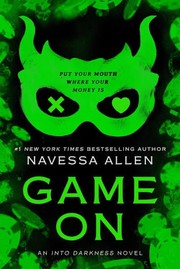
Game On
2,395-word summary 11 min read 384 pages in the book
- First published
- 2026
- Publisher
- Slowburn, a Zando imprint
- Pages
- 384
- ISBN
- 9781638932277
- Series
- Into Darkness (#3)
Reading options
What's inside (8 sections)
I came to Game On already knowing Tyler Neumann, though not in a way that made me like him. He is the roommate of Josh, the hero of Lights Out, and in the earlier Into Darkness books he kept hovering at the edge of the action with a grievance you could feel coming off him. Navessa Allen gives him the whole stage in this third and final volume. The book was published on March 31, 2026 by Slowburn, a Zando imprint, and runs 384 pages. Reading it felt less like watching a hero get his reward and more like being handed the keys to a character who had been driving toward a crash for two books straight.
A grudge with a long memory
Tyler's whole life is organized around one grievance, and Allen does not spend much time softening it. He grew up poor while knowing, with complete clarity, that his wealthy father had the means to help him and simply chose not to. That is not the standard forgotten-child setup where the parent never noticed. This is a man who watched help sit within reach and be withheld, and the knowledge curdled into a plan. He has built his adult life around a single aim: destroy his father, and use anyone who might get him there.
Allen is careful about one thing: Tyler's anger is not self-pity. He is not a man who wants to be understood or forgiven. He wants his father to lose something, and he is willing to arrange other people's lives around that goal. That makes him a difficult hero to get comfortable with, which is presumably the point of a dark romance. The book asks you to enjoy watching a man be ruthless and then, later, to decide whether ruthlessness was ever going to satisfy him.
That last phrase is the engine of the book. Tyler is not picky about who gets pulled into the orbit of his revenge. People are instruments to him, valuable for the doors they can open or the pain their families can be made to feel. Allen writes him as someone whose thinking has narrowed to a single corridor, and the dark romance label gives that narrowing a kind of permission. In this subgenre, a hero who behaves badly is often part of the offer. The trick is whether the story can make that behavior interesting rather than merely ugly, and that is where Game On spends most of its energy, for better and sometimes for worse. Allen seems to know that a reader will either find that focus magnetic or suffocating.
What struck me on rereading the setup is how little the vendetta actually resembles a plan. Tyler talks about destroying his father, but the book keeps routing him through other people's lives instead of toward the man himself. That choice matters later. A revenge story lives or dies on momentum, and several critics found that this one never gathers much of it, a complaint I will come back to when I talk about the ending.
A chair in the tattoo studio
Stella McCormick is the person Tyler settles on, and on paper she is his opposite in almost every way that matters to him. She is the privileged daughter of a rich family, a tattoo artist whose chronic illness has left her painfully thin. Allen puts them together in Stella's studio, where Tyler takes the chair and pushes straight into provocation. There is no slow burn of mutual curiosity here. He arrives already looking for a fight, and she gives him one.
The studio matters as a setting because it is Stella's territory, not his. Tyler walks into a place where she is the skilled person and he is the body in the chair, and even that small reversal does not put him off. He provokes her anyway. Allen uses the physical details of Stella's life, her work and the illness that has made her painfully thin, to give the reader a way to read her that Tyler initially cannot. He sees the rich girl and the easy target. We are allowed to see the person doing the work.
Their first exchange establishes the register the rest of the book stays in. They trade insults, and the loathing is immediate and returned in equal measure. Readers of the series will recognize Allen's signature enemies to lovers setup, the same current that made the earlier books work, now turned up to full volume. The pleasure is in the friction: two people who clearly want the same thing from each other and are determined to call it hatred for as long as they can.
Stella's illness and her thinness are part of how the two see each other, and part of what Tyler gets wrong. He reads her as a spoiled rich girl, a convenient key to her family's world, and the book slowly takes that assumption apart. I found that thread more convincing than the revenge material. Watching a character who prides himself on reading people fail to see the person right in front of him gives the story a sharper edge than any of its schemes do.
The bargain
The provocation turns into a transaction. Tyler blackmails Stella into posing as his girlfriend, and the point of the arrangement is access. Her family moves in glittering circles, and hurting the McCormicks is his chosen route to his father. So the fake relationship is not a romance device first. It is a weapon he is trying to aim through her.
Part of the fun, if fun is the right word, is watching how seriously Tyler takes the performance. A fake dating arrangement only works as a plot engine if the characters commit to it in public, and this one requires Stella to play the part in front of her family and their circles. Every introduction is a chance for Tyler to get closer to the McCormicks and, he believes, one step nearer his father. Stella knows it. The reader knows it. The tension comes from how long they can keep the performance from collapsing into something real.
Blackmail and fake dating are a familiar pairing in the genre, and Allen knows exactly which buttons the combination presses. Forced proximity does the rest of the work. Once Tyler and Stella are locked into performing a couple, the performance keeps leaking into the real thing. Stella sees through him quickly, which is important. She is not a woman waiting to be fooled. She knows she is being used and stays anyway, and that choice gives her more agency than a simple captive-of-circumstance setup would have.
What changes, slowly, is the hatred. Allen lets the forced proximity of the fake dating turn their loathing into something harder to name. The book is careful, at least early on, not to announce the shift. It accumulates through the barbed exchanges that become their private language. I liked this part of the build. The arguments have a rhythm, and the tension between the leads is the thing supporters point to when they defend the book, and on that narrow measure they have a case.
Heat, brat play, and the accusation problem
The physical relationship is where Game On fully commits to being a dark romance. The book is built around those barbed exchanges and a run of explicit encounters that lean into brat play and power exchange. Reviewers repeatedly single out the sex scenes as the hottest in the series, and I think that reputation is earned. Allen writes the power dynamic as a kind of argument carried on with bodies instead of words, which fits a pair that has been sparring since the first page.
It is worth saying what kind of heat this is, because the label matters. The encounters are built on brat play and power exchange, which means the arguments and the sex run on the same current. Tyler wants control and Stella, who has spent her life being read as fragile, pushes back. That push and pull is the reason the scenes have the reputation they do. When the power balance works, the book is at its best. When Tyler's accusing habit spills into the bedroom, the same intensity starts to feel less like chemistry and more like a character flaw the story is enjoying a little too much.
That same commitment is also the source of the book's most fair criticism. Tyler's cruelty is not a small flaw he quickly outgrows. He has a habit of accusing without asking questions, and that habit is doing a lot of work in the plot, because the misunderstandings and the heat feed off each other. If you can enjoy a hero who is arrogant about his own read of events, this will land. If you need your leading man to check his facts before he condemns someone, the early going will test your patience.
Stella draws some of the same fire. Critics point to her immaturity despite being in her mid thirties, and there is something to it. The sharpness that makes her a good match for Tyler also reads, at times, like a refusal to grow into the life she actually has. The book seems aware of this, especially once Tyler's assumptions about her start to break down, but it never fully resolves the tension. She is written as a woman with a real, limiting illness and a real, privileged background, and those two facts pull her in different directions the story does not always reconcile.
Where AJ comes in
The most divisive thread is not the revenge or the kink. It is AJ, a man from Stella's past, and the way Allen brings him into the book. He shows up for a single chapter and is then folded into the couple's physical relationship in a threesome near the middle. That is a very fast trip from minor character to intimate third party, and a lot of readers found it hard to accept.
Several Goodreads reviewers call this sharing element abrupt and badly motivated. Their argument is straightforward: AJ is never developed, so there is no reason to care that he is there, and no emotional logic for why Stella and Tyler would bring him in. I agree with the complaint about development. A character who arrives for one chapter and then becomes central to a defining scene feels less like a choice the story earned and more like a box the author wanted to tick.
The epilogue makes the disagreement worse rather than better. In it, the pair talk about asking AJ to join them, and critics describe the moment as tacked on. If the middle of the book had done the work of making AJ matter, that closing beat might have felt like a consequence. Instead it reads as an afterthought attached to a relationship the reader was never given a reason to include. Supporters of the book tend to let this thread go and point back to the banter and the chemistry, which is a fair way to survive it, but it is still the roughest seam in the narrative.
The ending that refuses to pay off
As the story moves forward, Tyler's rigid assumptions about Stella are challenged, and he starts to examine why he is so consumed by revenge. That inward turn is the real climax, if the book has one. The expected payoff would be a confrontation in which he destroys his father and walks away triumphant. Allen declines to give it to him. Instead of triumphantly destroying his father, Tyler abandons the vendetta and begins therapy.
Reviewers describe that resolution as anticlimactic, and I understand the reaction. A hero primed for revenge for three books deserves a reckoning, and the story opts for a quieter, more adult ending. There is a case for it: a man who has organized his life around hurting someone because he was hurt is arguably more interesting if he stops. There is also a case that the book has spent so little time building the actual revenge plot that dropping it feels less like a decision and less like running out of road. Both readings are available, and the text does not do enough to favor one.
Therapy is an unusual destination for a dark romance hero, and Allen does not dress it up as a victory. Tyler does not solve his father problem by winning; he steps out of the contest. That is a mature outcome, but it also starves the book of the confrontation it has been promising since page one. I finished the last chapter unsure whether I had just watched a character grow or watched the story decline to do the hard part. Honestly, a little of both is probably the fair answer.
What it does supply, almost as an apology, is an extra epilogue told from a cat's perspective. That coda has become a beloved comic note for fans, and it is easy to see why. After all the cruelty, the blackmail, and the therapy, a chapter told by a cat is a way of letting the reader leave the book laughing. It does not fix the ending, but it is a graceful piece of tone control, and it shows Allen knows what kind of response she wants from the last page.
So where does that leave the trilogy? Critics point to Tyler's cruelty, his accusing before he asks, Stella's immaturity, a revenge plot that never gathers real momentum, and a resolution that declines to land. Supporters answer that the banter is genuinely funny and the tension between the leads carries the book. Goodreads readers rate it around 3.9 out of 5, which feels about right for a book with a strong central pairing and a lot of arguable choices around it. This third volume completes the series, and it finishes on the two things Allen has always been best at here: two people who cannot stop talking to each other, and a hero who has to decide whether the grudge he inherited is worth the life he is building. Tyler's answer, in the end, is to put the grudge down and go to therapy. That is not the victory the setup promised, but it is a more interesting place to leave him than a trophy would have been.
FAQ
Is Game On part of a series?
Yes. It is the third and final volume of Navessa Allen's Into Darkness trilogy, following Lights Out. Tyler Neumann appeared in the earlier books as the roommate of Josh, the hero of Lights Out.
Does Tyler actually destroy his father in the end?
No. The ending refuses that payoff: Tyler abandons the vendetta and begins therapy instead, a resolution that some reviewers found anticlimactic.
Why is the AJ storyline controversial?
AJ, a man from Stella's past, appears for a single chapter before being folded into the couple's physical relationship in a threesome near the middle. Several reviewers found the sharing abrupt and poorly motivated, and the epilogue about asking him to join felt tacked on.
Similar books
More from Into Darkness first, then related titles.
My Dark Romeo
A debutante ball kiss traps Dallas Townsend in a marriage to Romeo Costa, a man who wants her as leverage in a war against his father and her fiance.
2,530-word summary · 11 min read
The Dare
A prom queen and the goth outcast she once bullied settle an old score over a beer pong game at a Halloween party.
2,152-word summary · 10 min read
Steel Princess
After a near drowning, Elsa Quinn starts recovering the memories that explain her fear of water and the boy who promised to destroy her.
2,204-word summary · 10 min read
Twisted
A dark contemporary reimagining of Aladdin in which a ruthless COO removes his rival, marries the woman he wants and turns their marriage into a struggle for…
2,051-word summary · 9 min read
The Sacrifice
On her wedding day Laikyn Minson is handed to Tyson Crawford, a Lord who wants her family's ruin, in a dark revenge romance set inside a brutal secret society.
2,603-word summary · 12 min read
God of Wrath
Rina Kent's God of Wrath pairs a quiet REU student who spies on a rival club with the ruthless leader who catches her. A dark college romance of obsession,…
2,740-word summary · 12 min read

Daggermouth
A trained killer is sent to execute the Executioner, then bound to him in a forced marriage that could ignite a revolution. H. M. Wolfe's dark dystopian…
2,798-word summary · 12 min read
Betting on You
Bailey and Charlie clash on a flight to Omaha over whether guys and girls can be friends. Three years later, a wager at a waterpark changes everything.
2,293-word summary · 10 min read
Barbarian Alien
Stranded on a frozen alien world, Liz accepts a symbiont to survive and finds it choosing Raahosh, the tribe's grumpiest hunter. A stubborn, steamy fight for…
2,778-word summary · 12 min read
The Ex Talk
Two rival public radio producers pretend to be exes for a dating show, then fall for each other while the lie grows.
2,389-word summary · 11 min read
Nightfall
Emory Scott wakes in Blackchurch, a remote house for the sons of the powerful, where the boy she once loved is imprisoned and the story she told about him…
2,339-word summary · 10 min read
Deviant King
A scholarship student at an elite boarding school is targeted by the king of the Four Horsemen, who seems to know her forgotten past.
2,384-word summary · 11 min read
There Are No Saints
Two rival artists circle a struggling San Francisco painter. Cole Blackwell wants her, Alastor Shaw wants her dead. Book one of the Sinners duet.
2,190-word summary · 10 min read
The Predator
Coder Morana Vitalio and mob enforcer Tristan Caine chase stolen software while a case of missing girls from twenty years back catches up with them both.
2,296-word summary · 10 min read
Savage Bonds
Oli's deadly gift is out in the open, her Bond runs the show, and the Resistance is closer than ever in the second Bonds that Tie novel.
2,431-word summary · 11 min read
Wretched
The Wicked Witch of the West becomes a heroin chemist, and the DEA agent sent to destroy her family falls for the very woman he was assigned to ruin.
2,117-word summary · 9 min read
The Sinner
Sin, a Lord at Barrington, rigs his secret society's rules to claim Elli, the girl he has protected since killing her abuser, while the conspiracy around her…
2,059-word summary · 9 min read
Pestilence
Firefighter Sara Burns shoots the Horseman Pestilence and discovers he cannot die. Taken captive, she rides with him as his plague sweeps the world.
2,508-word summary · 11 min read
The Kiss Thief
Promised to one man, taken by another, Francesca must choose in Chicago.
2,545-word summary · 11 min read
Bound by Honor
An arranged mafia marriage between a Chicago girl and a New York heir turns to love.
2,586-word summary · 11 min read
Kill Switch
Out of prison, Damon moves into Winter's house with keys and a plan, and old lies about that night crack open.
2,732-word summary · 12 min read
God of Malice
Rina Kent's God of Malice fully retold: Glyndon King, Killian Carson's fixation, secret societies, and the Devlin twist that resets everything.
2,849-word summary · 13 min read
Below Zero
Stranded at an Arctic station, NASA engineer Hannah is rescued by rival Ian, and a storm forces them to face old grudges and attraction.
2,555-word summary · 11 min read
Stuck with You
Sadie gets stuck in a New York elevator with Erik, the rival she blames for a lost client. A short, spicy STEM novella about rivalry and repair.
3,378-word summary · 15 min read
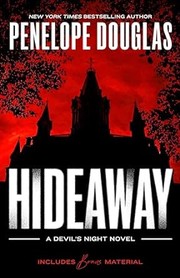
Hideaway
Ex-con Kai hunts a hotel secret while Banks hides who she really is.
2,481-word summary · 11 min read
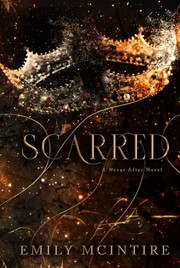
Scarred
A spy bride sent to ruin a scarred king learns his scars first.
2,074-word summary · 9 min read
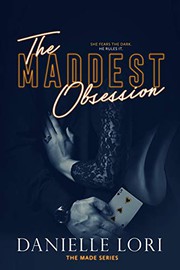
The Maddest Obsession
Sharp-tongued Gianna spars with secretive Christian Allister in this 2019 Made #2 mafia romance, where teasing hides danger and lies.
3,903-word summary · 17 min read
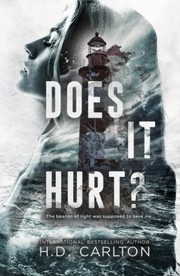
Does It Hurt?
Running Sawyer hitches a sailboat with guarded Enzo and wrecks off the Australian coast.
2,251-word summary · 10 min read

Reckless
Guarded Winter and charming Theo fake date through wedding season.
2,051-word summary · 9 min read
Corrupt
College student Rika Fane faces Michael Crist and his friends three years after Devil's Night put them in prison.
2,870-word summary · 13 min read