

The Sinner
2,059-word summary 9 min read 638 pages in the book
- First published
- 2022
- Publisher
- Independently published
- Pages
- 638
- ISBN
- 9798367835427
- Series
- L.O.R.D.S. (#2)
Reading options
What's inside (8 sections)
The Sinner is the second book in Shantel Tessier's L.O.R.D.S. series, and it assumes you either read The Ritual or at least know what you are walking into. It came out in December 2022, self published like the rest of the series, and it is longer than it has any need to be, darker than its predecessor in a few specific ways, and completely committed to its own logic. If you are not already inside this world, start with the first book, and read the content notes at the end of this summary before you decide anything.
The L.O.R.D.S. are a secret society at Barrington University, and their creed is printed in the prologue: a Lord is a Leader, believes in Order, knows when to Rule, and is a Deity. Initiates swear three years of celibacy and endure trials. Senior Lords are given a chosen woman, a Lady, and when a Lord dies, his Lady is passed on to another Lord like an asset. The series takes that arrangement seriously as a fact of its world, and then builds romances inside it. The Sinner's love story is about a man who rigged every rule of the society so that one woman would end up with him.
The book arrived in December 2022, self published, and by then the series had escaped the usual containment of indie dark romance. The Ritual had turned the L.O.R.D.S. into a fixture of the online reading communities that trade recommendations the way older generations traded paperbacks, and the series' own publicity for The Sinner cites placement in Amazon's top five on release and appearances on the USA Today and Wall Street Journal bestseller lists. Those numbers speak less to reviews than to a large, organized readership that knows exactly what it wants and buys it on release day. The series has since grown into companion books set at other campuses and in other families, each running on the same engine: a secret society with rituals, a woman marked for possession, and a man willing to burn the society's own rulebook to keep her.
Sin and his little demon
Easton Sinnett, called Sin, is a senior Lord just finishing his celibacy term, and he has been fixated on Ellington Asher since they were children. Elli is a student at Barrington whose father, Nicholas Asher, supposedly killed himself when she was twelve. Her mother, Laura, is a sex therapist who conducted sessions in the family home, and one of her clients, a man named James, groomed Elli from childhood, raped her repeatedly, passed her to other Lords, and made her call him daddy. Two years before the novel begins, a masked man broke into the house and killed James. That masked man was Sin, on a society assignment, and Elli never learned his identity.
What she learned instead was the mask itself. After James died, a masked visitor began appearing in her bedroom at night, bringing relief from her own head, asking nothing she did not offer, and installing a camera in her room. She does not know it is Sin. He watches her, keeps her secrets, and waits for his term to end so he can claim her properly. The first problem is that Elli is not on the list of women being chosen. The second problem is that her mother is being handed to Lincoln, the Lord who runs the initiates' house, and Lincoln is one of the men who used Elli when she was a child.
Part of what makes the middle of the book work when it works is that Sin is not a boyfriend who happens to be dangerous. He is the institution. By the time the marriage license surfaces inside the house paperwork, the reader understands that every door in Elli's life has been opened or closed by the same hand, and the romantic fantasy of total provision is inseparable from the horror show of total surveillance. Tessier refuses to pretend the two are different things. A cleaner romance would split them apart and keep the soft half. This book keeps both and asks you to hold them at once, which is either the most honest thing about it or the most troubling, depending on the reader.
The claim
The plot is a long, deliberate campaign. Sin balances three fronts at once: the stalker fantasy he and Elli have built at night, an arranged public pairing with a woman named Amelia to keep the elders satisfied, and a quiet war against the men who hurt Elli. David, a professor and one of her abusers, keeps recordings, which makes him the most dangerous loose end, and Sin kills him. At a club called the Blackout, a Lord named Marcus propositions Elli in a way that does not survive the evening, and a detective named Haynes starts circling the deaths. Meanwhile Elli's own coping mechanisms are escalating, wine and molly and worse, until an overdose at a party lands her with the society's doctor, Gavin.
Sin's solution to the chosen list is elegant in a way only a dark romance would find charming. He hides a marriage license and an officiant inside the paperwork for a house purchase, so he and Elli are legally married before anyone thinks to stop it. This is the book's central promise and its central problem: consent here is a negotiation conducted inside a rigged game, and the novel knows it, which is why so much of the middle is spent giving Elli choices that are real but never free.
The conspiracy
The back half reveals that everything is bigger than a love story. Lincoln has been orchestrating Elli's marriages to control her inheritance of Asher Corp, the family weapons company. Nicholas Asher is not dead. He has spent years in Carnage, the society's prison, while the Lords covered up his disappearance with the body of his shunned twin brother, staging a suicide. And the true architect of the whole arrangement is Liam Sinnett, Sin's father, who participated in Elli's childhood abuse, carried on an affair with Laura, and had James killed to get his hands on Asher Corp.
That reveal turns the novel from a romance into a revenge ledger. Elli passes a loyalty interrogation from Chance Beckham, the Lord who was promised her, without giving up Sin. Masked intruders attack her at her parents' house, and she kills one of them, who turns out to be Amelia, and the aftermath leaves her dosed and helpless until Sin arrives and kills Chance. The Spade brothers, who run Carnage, collect their debt in the end, and the debt is Sin himself: he takes Nicholas's place in the prison so Elli can go free. His ally Tyson delivers his ring and his journal to her, and the book's last movement is about who pays for what.
The ending and the epilogues
The resolution is the part that surprised me. Elli's family trades Liam and Laura, plus the unborn child Laura is carrying, for Sin's release, and the Spade brothers keep both of them for as long as they live, which the epilogue frames as the cycle of abuse returning to its architects. Sin and Elli adopt Liam and Laura's baby, raising the last product of the conspiracy as their own child. It is the kind of ending that either works for you emotionally or reads as grotesque, and the book does not hedge.
The second epilogue jumps years ahead. Elli is a licensed sex therapist with a practice outside her home, a pointed contrast with her mother. Sin controls Asher Corp. Their children, Annaleigh and Brexton, are running around, and Elli is pregnant again. The couple that began in masks and surveillance ends in a house with a garden-variety future, if you can call anything about this world garden variety.
What works and what strains
What works is commitment and momentum when the plot is actually moving. Once the conspiracy clicks into gear in the last third, the book is hard to put down. Sin's dual role as monster and protector is the engine, and the earlier book's fans will find the same propulsive, boundary-pushing escalation here, with the added satisfaction of a villain reveal that connects to the series' founding families. The dual first person structure, alternating Sin and Elli chapters, keeps both agendas in view, and Elli's diary entries give the book its only quiet register.
What strains is everything between the plot points. The middle is a very long stretch of repetitive intimacy and restated rules, and Tessier explains the society's mechanics more often than the reader needs. The most common complaint in reviews is about pacing, with readers estimating that the actual story happens almost entirely in the final third; a widely shared Goodreads review argues that eighty percent of the book is explicit content and that it should be marketed as dark erotica rather than romance. One romance review site called it the darkest book its reviewer had ever read, which in this genre is a compliment with an asterisk attached. The page count varies wildly across editions and databases, which tells you how loose the self-published ecosystem is around this series. There are typos. There are decisions by characters that exist to force the next scene. None of that ruins the book, but none of it is small either.
The rating picture makes the split legible. On Goodreads the book sits just under four stars across more than a hundred thousand ratings, and on Amazon it holds above four across tens of thousands more, which means the audience that finishes it tends to love it hard. The readers who bounce do so loudly, and their complaints cluster: pacing, grammar, repetition, and the sense that the marketing promises romance while the pages deliver something closer to a ritual. Both groups are describing the same book. If the consensus bothers you, know that the series treats the criticism as weather. The next volume keeps the same channel.
Content notes and who it is for
I am going to be direct, because this series attracts readers who want exactly this and repels readers who do not, and both need the same information. The front matter lists its own trigger warnings, which is now standard in this corner of publishing and was not a decade ago, and the care behind that list is real. So is the darkness, and both facts belong in the same sentence. Readers who finish the book often describe a split experience: rolling their eyes at the pacing in the middle, then refusing to put the last third down, then buying the next volume anyway. That pattern, more than any single review, is the honest reception history of this series.
The Sinner includes on-page rape and sexual assault, child sexual abuse in backstory, grooming, branding and piercing as ownership rituals, sexual acts with an unconscious or impaired character, drug overdose, pregnancy loss, torture, murder and suicide framing. The published trigger warnings are listed inside the book, and they are not decorative. This is not a romance with a dark edge. It is a dark book with a romance inside it.
Read it if you finished The Ritual and want the next brick in the wall, or if you read dark romance for the plot engine of obsession, revenge and conspiracy rather than the promise of comfort. Skip it if you need the relationship to be ethically clean, if explicit content bores you, or if you want the series' worldbuilding to move faster than it does. For everyone else: it delivers what it promises, and it knows exactly how far it is willing to go.
The series' fandom treats The Sinner as the emotional volume, the one readers hand to a friend right after The Ritual, and the epilogues are the reason. A home, a practice, children, an ordinary morning in a house built out of conspiracy: the contrast does the work that no amount of final dialogue could. Whether the happy ending was earned here is a fair fight and readers have it constantly. Whether it was delivered is not an open question. This is the book that proves the L.O.R.D.S. formula can hold grief as well as heat, and if the series has one volume that deserves the argument, this is it.
FAQ
Is The Sinner a standalone novel?
It is a complete couple story set in the same world as The Ritual, with the society and several characters carrying over, so reading the first book is strongly recommended.
Is The Sinner darker than The Ritual?
Yes. It includes on-page assault, child abuse in backstory, and ownership rituals, and the content warnings listed in the book are accurate.
Who is the villain in The Sinner?
Liam Sinnett, Sin's father, works with Lincoln and Laura to control Elli's inheritance, and the final act reveals the staged deaths and betrayals behind it.
Similar books
More from L.O.R.D.S. first, then related titles.
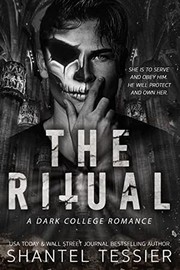
The Ritual
Blakely chosen for lord game seeks mother truth with Ryat breaking her.
2,030-word summary · 9 min read
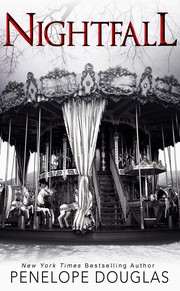
Nightfall
Emory Scott wakes in Blackchurch, a remote house for the sons of the powerful, where the boy she once loved is imprisoned and the story she told about him…
2,339-word summary · 10 min read
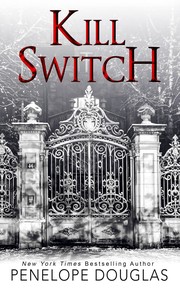
Kill Switch
Out of prison, Damon moves into Winter's house with keys and a plan, and old lies about that night crack open.
2,732-word summary · 12 min read
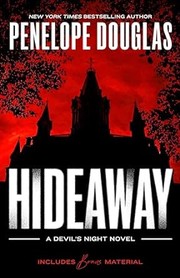
Hideaway
Ex-con Kai hunts a hotel secret while Banks hides who she really is.
2,481-word summary · 11 min read
Corrupt
College student Rika Fane faces Michael Crist and his friends three years after Devil's Night put them in prison.
2,870-word summary · 13 min read
Too Late
Sloan is trapped with drug lord Asa until undercover Luke offers a way out.
2,958-word summary · 13 min read

Deviant King
A scholarship student at an elite boarding school is targeted by the king of the Four Horsemen, who seems to know her forgotten past.
2,384-word summary · 11 min read
There Are No Saints
Two rival artists circle a struggling San Francisco painter. Cole Blackwell wants her, Alastor Shaw wants her dead. Book one of the Sinners duet.
2,190-word summary · 10 min read
Pen Pal
A grieving widow receives letters from a man in prison who signs himself Dante, and the haunting in her house turns out to be the story of her own death.
2,066-word summary · 9 min read
The Finish Line
Tobias King seeks forgiveness from Cecelia as the Ravenhood past closes in.
2,868-word summary · 13 min read

The Darkest Temptation
Sheltered Mila flies to Moscow and falls for captor Ronan, a Russian enforcer seeking revenge.
2,023-word summary · 9 min read
God of Malice
Rina Kent's God of Malice fully retold: Glyndon King, Killian Carson's fixation, secret societies, and the Devlin twist that resets everything.
2,849-word summary · 13 min read
The Maddest Obsession
Sharp-tongued Gianna spars with secretive Christian Allister in this 2019 Made #2 mafia romance, where teasing hides danger and lies.
3,903-word summary · 17 min read
Den of Vipers
Handed to the four Vipers over her father's debt, Roxy fights to hold her ground in their guarded house and busy club in this long 2020 dark romance.
4,247-word summary · 19 min read
Hunting Adeline
Trafficked and caged, Adeline fights back while Zade tears the underworld apart to find her.
2,730-word summary · 12 min read
Six Scorched Roses
A dying scholar bargains with a reclusive vampire for blood, and six roses turn a transaction into a slow, dangerous romance.
2,663-word summary · 12 min read
Her Soul to Take
A paranormal vlogger in a cult-run town summons a bound demon, and the only way to survive the god beneath the mine is to give him her soul.
2,089-word summary · 9 min read
My Dark Romeo
A debutante ball kiss traps Dallas Townsend in a marriage to Romeo Costa, a man who wants her as leverage in a war against his father and her fiance.
2,530-word summary · 11 min read
Persuader
Reacher goes undercover in a Maine crime family to find a missing DEA agent and the man he once failed to kill, and Lee Child keeps the whole thing tight,…
2,278-word summary · 10 min read
The Predator
Coder Morana Vitalio and mob enforcer Tristan Caine chase stolen software while a case of missing girls from twenty years back catches up with them both.
2,296-word summary · 10 min read
The Chemist
A former government interrogator on the run takes one last job, then learns the case she was handed was built to pit her against him.
2,249-word summary · 10 min read

Indigo Ridge
A new police chief in a Montana town meets the founding family's eldest son in a bar, and one night later a body turns up under their cliff.
2,763-word summary · 12 min read

Bad Luck and Trouble
A deposit of $1,030 summons Jack Reacher back to his old army unit, which is being picked off one name at a time.
2,366-word summary · 11 min read
See Me
A law student with a violent past falls for a prosecutor whose old case returns as a stalker, in a romance with a thriller at its center.
2,007-word summary · 9 min read

Say You're Sorry
A widowed prosecutor defends the teenager accused of killing her babysitter, uncovering a small town's secrets and a killer hiding in plain sight.
2,116-word summary · 9 min read
Ghosted
After seven perfect days with Eddie, Sarah is ghosted, and her search for answers uncovers a secret tied to the accident that changed both their lives.
2,011-word summary · 9 min read

Rule
A tattoo artist still grieving his twin and the polished girl who has loved him since she was thirteen finally collide one drunken night in Denver.
2,014-word summary · 9 min read
Savage Bonds
Oli's deadly gift is out in the open, her Bond runs the show, and the Resistance is closer than ever in the second Bonds that Tie novel.
2,431-word summary · 11 min read
Wretched
The Wicked Witch of the West becomes a heroin chemist, and the DEA agent sent to destroy her family falls for the very woman he was assigned to ruin.
2,117-word summary · 9 min read
Pestilence
Firefighter Sara Burns shoots the Horseman Pestilence and discovers he cannot die. Taken captive, she rides with him as his plague sweeps the world.
2,508-word summary · 11 min read