
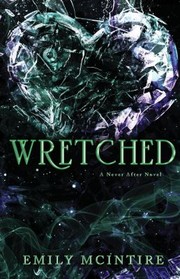
Wretched
2,117-word summary 9 min read 432 pages in the book
- First published
- 2022
- Publisher
- Bloom Books
- Pages
- 432
- ISBN
- 9781728278360
- Series
- Never After (#3)
Reading options
What's inside (11 sections)
Wretched is the third book in Emily McIntire's Never After series, and it is the one that made the series a genuine phenomenon rather than a curiosity. The premise of Never After is simple and a little brilliant: take a fairy tale or a classic story, cast the villain as the romantic lead, and let the reader fall for the person the original story told them to hate. Hooked did it with Captain Hook, Scarred did it with the villain of a princess tale, and Wretched does it with the Wicked Witch of the West, relocated to the heroin trade of a small Illinois town that nobody would ever mistake for Oz.
I like this one most of the three. McIntire stops treating the gimmick as a gimmick and starts using it. Evelina Westerly is not a misunderstood sweetheart with a mean streak. She is a killer, a drug manufacturer, and a woman who has decided that being the bad guy is a role she can own, and the novel refuses to sand her down. The romance works because it does not ask her to become good. It asks whether someone can love a woman who is genuinely dangerous, which is a harder question and a much more interesting one.
Evelina Westerly, the family's secret weapon
The prologue sets the whole tragedy in motion. Seven years before the main story, Evelina is seventeen at the memorial Mass for her eldest sister, Nessa, who raised her. Their father, Farrell Westerly, has just been released from prison. Their mother abandoned the family years ago. Nessa is dead, and Evelina knows two things that she will carry for the rest of the book. She is furious at Nessa for getting killed, and she is certain that her middle sister, Dorothy, killed her. The shoes matter, and they will matter again, because Dorothy wears Nessa's shoes to deliver the eulogy, and in Oz the shoes are never just shoes.
By the time the novel proper begins, Evelina is in her mid twenties and she is the engine of the Westerly criminal empire. Farrell has rebuilt the family business around a new product called Flying Monkey, a potent heroin, and Evelina is the one who made it. Under a cottage on the family estate she keeps a hidden underground greenhouse where she cultivates poppies and refines the drug. Nobody knows she is the supplier, not even the rest of the family, except her father. She is the brains, the botanist, and the enforcer, and the book lets her be terrifying. She kills a man selling counterfeit product for the family before she has even had her first scene with the hero.
What makes her more than a power fantasy is the grief underneath. Evelina is stuck. She cannot move past Nessa's death, she cannot trust the family she protects, and she has built her entire identity around being useful to a father who treats her as a tool. Her revenge on Dorothy and her need for her father's approval have swallowed everything else. She is a woman who has decided that if she has to be the bad guy, she will be the best bad guy there is.
Nicholas Woodsworth, the fed
Nicholas Woodsworth is the opposite problem. He is a DEA agent whose childhood was destroyed by drugs, a mother lost to addiction and a sister, Rose, whom he rescued from the same fate. He hates the drug trade with a personal, scorching hatred, and when his supervisor Galen assigns him to infiltrate the Westerly organization, he takes the job with pleasure.
His cover is a jewel thief named Brayden Walsh, and his assignment is to get close to Dorothy, because intelligence says she is Farrell's weak spot. Before he goes in, he meets a woman at a Chicago nightclub. They have sex in a bathroom, exchange first names, and part. He does not think about it again until the new lackey role brings him face to face with the woman running the operation, and he realizes that she is Evelina Westerly, the youngest daughter and the one person he was never meant to notice.
That collision is the best thing the book does structurally. Nicholas wants to destroy the family, and the woman he cannot stop wanting is the family's most valuable asset. He despises what she represents, and he recognizes, almost immediately, that she is as broken and as driven as he is. McIntire gives the book two first-person voices, and the alternation makes the trap feel mutual rather than one-sided. He is not just deceiving her. She is also a bad bet, and he knows it.
Dorothy and the family war
The villain of the novel, strangely, is not the couple. It is the family. Farrell is a domineering patriarch who sees his daughters as instruments, and he backhands Evelina when she refuses to teach Dorothy to run the greenhouse. Dorothy is the loud, favored, confident sister who has everything Evelina lacks, including their father's public affection, and she is the one who killed Nessa and got away with it. The scene where she throws Nessa's silver shoes overboard and whispers that she did not mean to kill their sister but is glad she did is one of the coldest moments in the series.
The family war gives the book a real plot beneath the romance. A rival Italian syndicate, a charity gala on the yacht where Nessa died, a trip to Chicago, the politics of a drug deal that would make the Westerlys subordinate to a larger power, all of it raises the pressure on a relationship that is already unstable. Evelina's ally inside the organization is a hacker friend called Cody, and her father's associate Ezekiel O'Connor is flipped by Nicholas and Seth, so the story has a web of informants and betrayals to keep the tension moving.
The dual unmasking
The middle of the book is a series of unmaskings, and McIntire handles them well because each one hurts differently. Evelina catches Nicholas on the phone with his partner Seth, hears him called Nick, and confronts him at gunpoint. He admits he is a federal agent. She presses the gun to his chest and asks whether he would let Seth shoot her, and his silence answers the question. She leaves.
Then it is her turn. Nicholas, reeling from a mention by Dorothy that Evelina taught her to make the product, realizes that the woman he loves is the supplier he was sent to find. His mission and his heart are the same disaster. McIntire keeps both reveals close together so the reader gets the satisfaction of the mutual wound, and the trust that had been building collapses in a way that feels earned rather than convenient.
The characters also get good, sharp dialogue about morality. Rose tells Nicholas that the woman he loves deserves the same grace he gives his own sister, which is the closest the novel gets to stating its thesis out loud. Evelina, for her part, does not ask to be forgiven. She burns the poems she wrote for Nicholas at Nessa's grave, confronts Ezekiel and lets him live, and pivots to the revenge she has been planning since the prologue.
The greenhouse and the escape
The climax happens in the greenhouse, which is exactly where it should. Evelina lures Dorothy there, drugs her, and suspends her over a barrel of hydrofluoric acid. Farrell arrives, and Evelina finally confronts him with the truth about Nessa, which he has known all along. He attacks her and starts to strangle her. Ezekiel, who followed him, shoots him dead. Both Farrell and Dorothy die, and Evelina's revenge is complete in a way that feels less like triumph than like relief.
Then Cody arrives and reveals that he has been an FBI agent for years, building a case against her the whole time. He arrests her. Nicholas, warned that the FBI is moving in, arrives and shoots Cody, uncuffs Evelina, tells her his real name, confesses that he loves her, and tells her to run. She escapes through the tunnel under the greenhouse, and he stays behind to stage the scene. He resigns from the DEA.
The ending is deliberately soft after all that violence. More than a year later a private investigator tracks Evelina to Doolin, on the coast of Ireland, where her dyed hair has grown back to its natural brown and she is writing in a new notebook. Nicholas approaches her with the same line he used the night they met, and she gives him a real smile. The extended epilogue, five years on, puts them in a cottage in a Northern Irish forest, unofficially married, with Nicholas running a furniture business called the Tin Roof and Evelina tending a garden and writing poetry.
The Oz scaffolding
The references are light enough to reward fans without overwhelming anyone. Flying Monkey is the drug. Winkies is the family bar, and the Yellow Brick is a strip club. Dorothy gets the shoes, Evelina gets the wickedness, and Nicholas, the man who spent years denying his emotions in service of a mission, is the Tin Man who has to learn he has a heart. There is no wizard behind the curtain, only a father who was never the man his daughters needed. McIntire does not force the parallels into a fantasy, and the book's insistence that it is not a retelling is fair. It borrows motifs and lets them sharpen the emotional beats.
Content, tone, and who this book is for
It is worth being direct about what Wretched is. This is not a spicy romance with a naughty streak. It is a dark romance with murder, torture, drug manufacture, and explicit sex, and McIntire fronts the content warnings rather than burying them. The relationship is built on deception and violence, and the characters say and do cruel things to each other. Readers who want their couples to be fundamentally decent underneath will struggle, because Evelina is not decent underneath. She is exactly what the title says, and the book thinks that is a reason to love her rather than a reason to fix her.
The tone is the series' signature blend of lush and grim. McIntire writes attraction as compulsion, and the prose leans into the gothic register of a fairy tale even while the setting is strip clubs and greenhouses. It runs closer to melodrama than to realism, which is part of the appeal and also the source of the complaints. If you like a heroine with a body count and a romance that has to survive the truth, this hits. If you want warmth and moral clarity, look elsewhere.
The series in context
Wretched sits third in Never After, after Hooked and Scarred, and it is the entry where the formula sharpens into something with its own identity. The earlier books are more devoted to the fairy tale furniture. Wretched folds the Oz echoes into a crime story and lets the romance carry the weight, which is why it is the one most often recommended to people who want to start the series without committing to all of it. It reads fine as a standalone, though the shared dedication to villainous heroines is the point of the series and the later books only get darker.
What works and what sags
The strengths are Evelina, the voice, and the pacing. She is the best-drawn hero of the series so far, and the book respects her rage instead of domesticating it. The dual point of view keeps the tension taut, and the side characters, especially Seth and Rose, do more than stand around being supportive.
The weaknesses are the ones the reviews tend to name. Nicholas never quite learns to deserve Evelina, and the final reconciliation skips the reckoning the reader has been waiting for. The book is short, and the back half moves fast enough that some of the emotional work gets compressed. The romantic beats lean on lust as much as love, which is fine for a dark romance but leaves the ending doing a lot of sudden weight-bearing. And the villains, Dorothy and Farrell, are effective but flat, villains by function rather than character.
None of that stopped Wretched from becoming the entry that put the series on the map, and it is easy to see why. It is a book about a woman who refuses to be redeemed and a man who has to decide whether he can live with that, and it ends with both of them choosing each other anyway. That is a more honest promise than most fairy tales make.
FAQ
Is Wretched part of a series?
Yes. Wretched is the third book in the Never After series, after Hooked and Scarred. Each book is a standalone fractured fairy tale about a villain, so they can be read in any order.
When was Wretched published?
Emily McIntire first published it in 2022, and Bloom Books released the trade edition. The cited edition runs 432 pages with ISBN 9781728278360.
What fairy tale is Wretched based on?
It draws on The Wonderful Wizard of Oz. Evelina is the Wicked Witch figure, the family product is called Flying Monkey, and Nicholas, the agent who hides his feelings, echoes the Tin Man.
Similar books
More from Never After first, then related titles.
Hooked
James Hook kidnaps Wendy to take revenge on Peter Pan in this dark retelling.
2,584-word summary · 11 min read
Scarred
A spy bride sent to ruin a scarred king learns his scars first.
2,074-word summary · 9 min read
The Predator
Coder Morana Vitalio and mob enforcer Tristan Caine chase stolen software while a case of missing girls from twenty years back catches up with them both.
2,296-word summary · 10 min read
Bound by Honor
An arranged mafia marriage between a Chicago girl and a New York heir turns to love.
2,586-word summary · 11 min read
My Dark Romeo
A debutante ball kiss traps Dallas Townsend in a marriage to Romeo Costa, a man who wants her as leverage in a war against his father and her fiance.
2,530-word summary · 11 min read
There Are No Saints
Two rival artists circle a struggling San Francisco painter. Cole Blackwell wants her, Alastor Shaw wants her dead. Book one of the Sinners duet.
2,190-word summary · 10 min read
Savage Bonds
Oli's deadly gift is out in the open, her Bond runs the show, and the Resistance is closer than ever in the second Bonds that Tie novel.
2,431-word summary · 11 min read
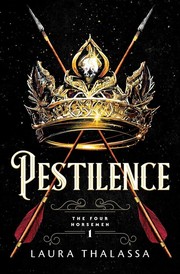
Pestilence
Firefighter Sara Burns shoots the Horseman Pestilence and discovers he cannot die. Taken captive, she rides with him as his plague sweeps the world.
2,508-word summary · 11 min read
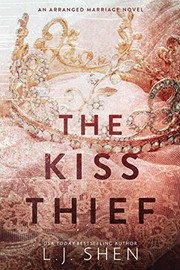
The Kiss Thief
Promised to one man, taken by another, Francesca must choose in Chicago.
2,545-word summary · 11 min read
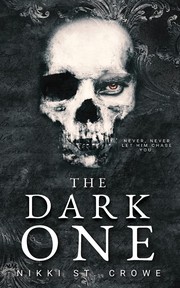
The Dark One
Winnie trades with Hook while Peter Pan turns cruel in Neverland.
2,596-word summary · 12 min read
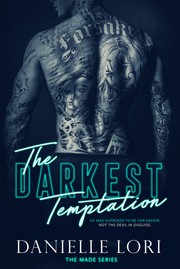
The Darkest Temptation
Sheltered Mila flies to Moscow and falls for captor Ronan, a Russian enforcer seeking revenge.
2,023-word summary · 9 min read
God of Malice
Rina Kent's God of Malice fully retold: Glyndon King, Killian Carson's fixation, secret societies, and the Devlin twist that resets everything.
2,849-word summary · 13 min read
The Maddest Obsession
Sharp-tongued Gianna spars with secretive Christian Allister in this 2019 Made #2 mafia romance, where teasing hides danger and lies.
3,903-word summary · 17 min read
Does It Hurt?
Running Sawyer hitches a sailboat with guarded Enzo and wrecks off the Australian coast.
2,251-word summary · 10 min read
Neon Gods
Promised to Zeus, Persephone flees to Hades and trades fake dating for real choice in Olympus.
2,002-word summary · 9 min read
Six Scorched Roses
A dying scholar bargains with a reclusive vampire for blood, and six roses turn a transaction into a slow, dangerous romance.
2,663-word summary · 12 min read
Her Soul to Take
A paranormal vlogger in a cult-run town summons a bound demon, and the only way to survive the god beneath the mine is to give him her soul.
2,089-word summary · 9 min read
Blood Bonds
Oleander is chained in a Resistance camp, and her five Bonds have to find her before Silas Davies finishes what he started in this third Bonds that Tie book.
2,018-word summary · 9 min read
Cruel Beauty
A girl raised to kill the demon prince who rules her cursed land instead falls in love with him, in a retelling that mixes Beauty and the Beast with Bluebeard…
2,669-word summary · 12 min read
The Ex Talk
Two rival public radio producers pretend to be exes for a dating show, then fall for each other while the lie grows.
2,389-word summary · 11 min read
Nightfall
Emory Scott wakes in Blackchurch, a remote house for the sons of the powerful, where the boy she once loved is imprisoned and the story she told about him…
2,339-word summary · 10 min read
Deviant King
A scholarship student at an elite boarding school is targeted by the king of the Four Horsemen, who seems to know her forgotten past.
2,384-word summary · 11 min read
The Casanova
Kate Landon's boss is also the pen pal she falls for online, hiding behind fake names, until family secrets and a trip to Paris get in the way.
2,274-word summary · 10 min read

The Rose & the Dagger
Shahrzad is pulled from her Caliph husband and left in a desert camp of rebels, needing to break his curse and end a war before it ends her.
2,520-word summary · 11 min read

Indigo Ridge
A new police chief in a Montana town meets the founding family's eldest son in a bar, and one night later a body turns up under their cliff.
2,763-word summary · 12 min read
Fearless Fourteen
Bounty hunter Stephanie Plum babysits a teenager, guards a fading singer, and hunts nine stolen million dollars under her boyfriend's basement.
2,466-word summary · 11 min read
Eligible
Austen's Bennet sisters move to modern Cincinnati, where marriage is a reality show and the house is losing its value.
2,293-word summary · 10 min read
Stars Above: A Lunar Chronicles Collection
Nine Lunar Chronicles stories fill in the histories of Cinder, Wolf, Thorne, Cress, Winter, and Jacin, and end with a wedding after the war.
2,230-word summary · 10 min read

Say You're Sorry
A widowed prosecutor defends the teenager accused of killing her babysitter, uncovering a small town's secrets and a killer hiding in plain sight.
2,116-word summary · 9 min read
Lean Mean Thirteen
Stephanie Plum's ex-husband disappears after she attacks him, leaving her suspected of murder and chasing a forty-million-dollar secret through Trenton.
2,100-word summary · 9 min read