
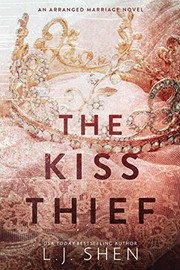
The Kiss Thief
2,545-word summary 11 min read 322 pages in the book
- First published
- 2019
- Publisher
- Independently published
- Pages
- 322
- ISBN
- 9781732624719
Reading options
What's inside (8 sections)
I picked up The Kiss Thief because a friend who reads a lot of mafia romance kept telling me this was the one that made her uncomfortable in a way she could not drop. First published in 2019 as an independently published book, about 322 pages in print, it promises a simple setup. A sheltered Chicago girl promised to one man gets taken by another on her wedding day. I expected a quick enemies to lovers story with suits and threats and a lot of staring. What I got was slower and stranger. It is still a fantasy of power and possession, but Shen spends a lot of time inside the house where that fantasy has to be lived day by day.
Francesca Rossi is nineteen when the book opens. She grew up inside a Chicago crime family with rules about dress and church and who she may speak to. Her father treats her as an asset to settle a feud. The plan is a marriage to Angelo Bandini, son of another family, meant to join money and territory and stop the shooting for a while. Francesca does not love Angelo. She barely knows him apart from reputation. She has trained herself to accept the match because girls in her world do not get to refuse. Then Wolfe Keaton walks into the wedding and ruins it.
A wedding that never belonged to the bride
The opening wedding sequence is the strongest part of the book. Shen gives you the church satin and the heavy perfume and the weight of the dress. Francesca stands at the front trying to breathe normally while men she has known since childhood watch her like a contract being signed. Angelo waits with a flat smile. Her father watches for obedience.
Wolfe does not sneak in. He arrives with papers and armed men and a claim that her father owes him a debt that can only be paid with her. In his version, the Rossi family and their allies destroyed something he loved years earlier, and he has waited to collect in the most public way possible. So he stops the ceremony and announces that Francesca will marry him instead. Not date him. Marry him. The priest objects. Guests shift in pews. Angelo looks humiliated and furious. Francesca understands, very fast, that saying no in front of all these men will get someone shot, possibly her father, possibly herself.
What makes the scene work is how little choice Shen gives her without making her blank. Francesca notices small things. The cold air from the open door. The way Wolfe does not look at Angelo at all, only at her father, like the rest of the room is furniture. The way her hands shake so hard she has to press them into her skirt. She agrees because refusal has a price she cannot pay that day. I believed her fear. I also believed her anger that her own wedding could be stolen and everyone present would treat it as business.
Wolfe Keaton keeps score
Wolfe Keaton is thirty two, a senator from Illinois with a sharp public profile and a private fortune. Shen writes him as a man who plans everything. He runs, he boxes, he works late, he remembers slights. He bought his way out of a rough start and now moves between boardrooms and political fundraisers with ease. Voters see discipline. Enemies see a man who never forgives.
His grievance against the Rossi and Bandini families is personal. Without giving away the late reveal in full, he lost his first love in an attack tied to their wars, and he blames Francesca's father for letting it happen. He cannot bring the dead back, so he builds a revenge that looks legal on paper. He finds old debts and forged signatures and threats, then uses them to force a marriage contract. In his head this is justice. Take the daughter they were selling, place her under his roof, make the fathers watch.
He houses Francesca in a guarded modern mansion outside the city. Staff have instructions. Drivers log her movements. Phones are monitored. He sets rules about meals and visitors and school. He tells her she may continue her art classes but only with his driver waiting outside. He tells her she will appear with him at events and smile. If she disobeys, he threatens people she loves rather than hitting her. That distinction matters to him. He prides himself on never raising a hand. The book wants you to see that as restraint. I read it as another form of control, cleaner but still heavy.
There are flashes that humanize him. He cooks once, badly. He remembers how she takes coffee after only being told once. He keeps a worn book from his youth on a shelf no visitor sees. Shen does not let him stay a statue. But for the first third he is mostly will and silence. He watches Francesca the way a prosecutor watches a witness, waiting for a slip.
Living in the enemy house
Much of the middle happens inside that house, and this is where the book finds its rhythm. Francesca starts as a prisoner who refuses the label victim. She argues about curfews. She leaves doors open on purpose. She wears the clothes he buys in ways meant to annoy him. She studies him the way he studies her, looking for soft spots.
Shen is good at domestic friction. A shared breakfast where neither will pick up a plate first. A car ride to a gallery where Francesca talks about color for ten minutes while Wolfe pretends to check email and actually listens. A fundraiser where she must wear a red gown and stand beside him while reporters ask how they met, and she lies with a bright smile that fools everyone except him. These small scenes build more heat than the bedroom scenes early on, because they show two stubborn people learning each other's tells.
Secondary people drift through. Angelo simmers in the background, sending messages that swing between apology and threat. Francesca's mother calls and cries and tells her to obey. Her younger sister looks up to her and does not grasp the danger. Wolfe's right hand man, a former soldier type, treats Francesca with cool politeness and reports everything back. A friendly staffer slips her extra time at the studio. None of these side figures get a full arc. They exist to tighten or loosen Wolfe's grip.
Francesca clings to painting. Her sketchbooks fill with the house, the lake beyond it, hands, mouths. Shen uses the art to show what Francesca will not say aloud. She draws Wolfe asleep once, then tears the page out in a panic when she realizes what it means. She paints over a portrait of Angelo because she cannot stand looking at his flat eyes. I liked this thread when it stayed concrete. When it turned into long passages about what art means to a caged girl, my attention wandered.
The push and pull gets repetitive here. He sets a boundary. She breaks it. He punishes by withdrawing or by threatening her family. She cries, then plots. He softens for a night, then rebuilds the wall. After the fourth cycle I started skimming the arguments. The pattern tells you something true about control, how it needs constant testing, but as reading it drags.
The pull and the problem
Around the halfway mark, fear starts mixing with want. Francesca hates Wolfe's high handedness and still notices his mouth when he argues. Wolfe despises her last name and still waits up when she is late from class. Shen writes their banter with snap. She calls him senator as an insult. He calls her brat and means something warmer than the word allows. They fight about wine, about music, about whether she may visit a friend alone. The fights end with kisses that feel angry first and tender after.
This is the part that will divide readers, and it should be named plainly. Francesca cannot freely leave. She is nineteen. He is powerful and much older and holds debts over her family. She says yes to intimacy at times, and Shen writes those yeses as real, but the yeses happen inside a cage he built. If you need clear and open consent to enjoy romance, this book will feel wrong. The text sometimes frames his jealousy and surveillance as proof of love. He tracks her car and calls it care. He threatens Angelo for texting her and calls it protection. I read those scenes with a knot in my stomach even when the prose wanted me to swoon.
To be fair, Shen does not pretend the setup is healthy at the start. Francesca names it. She tells Wolfe she did not choose him. She tells her friend she feels split between dread and attraction. Wolfe admits to himself that he took her to hurt her father. The trouble is that the book gradually softens that admission without fully answering it. His cruelty gets relabeled as damage. Her compliance gets relabeled as forgiveness. The love story works if you accept that being seen by a powerful man can feel like freedom after being owned by weaker men. I found that idea interesting and shaky. Interesting because Francesca's father and Angelo truly offered her less respect. Shaky because Wolfe still holds the keys.
What kept me reading was Francesca's spine. She is sheltered, not stupid. She learns how Senate events work and uses them. She asks pointed questions about his past in front of people he cannot brush off. She negotiates for her sister's schooling as part of staying quiet. She is kind to staff who have no power, which tells you more than her speeches do. When she finally sleeps with Wolfe with something like full willingness, Shen makes her the one to close the distance. That choice does not fix the imbalance, but it gives Francesca back some agency on the page.
Blood debts come due
The last quarter turns from house drama to outside threat. Angelo will not accept public humiliation. Francesca's father keeps making deals behind Wolfe's back to get her returned. Reporters start asking why a senator married a mob daughter so fast. Political rivals smell blood and start digging into Wolfe's finances and the forced nature of the marriage papers.
Shen stages this well. A charity gala where Angelo corners Francesca in a hallway and grabs her wrist hard enough to bruise. A drive by scare near the art school that leaves glass on the sidewalk. A night when Wolfe comes home with blood on his cuff and will not say whose it is. Francesca stops being a pawn moved between men and starts moving herself. She warns Wolfe when her father's men plan to intercept him. She refuses to go with Angelo when he offers a car and a way out, because she no longer trusts his version of safety either.
The reveal about Wolfe's dead lover lands with force, though I guessed part of it early. It reframes his coldness without excusing it. He loved someone gentle who got caught in a mob hit meant as a message. He has carried that guilt for years and turned it into a ledger where Francesca's family owes him a life. Francesca hears the story and understands him better, but she does not absolve him on the spot. She leaves for a stretch. She stays with a friend, paints, misses him, hates missing him.
The final confrontation mixes a warehouse standoff and a legal threat. Wolfe must decide whether to use illegal proof to crush Angelo and risk his Senate seat and his freedom. Francesca must decide whether to stand beside a man who stole her wedding or return to a family that sold her first. Shen gives Francesca the deciding move, which I appreciated. She walks into a room full of armed men to deliver papers that shift the balance. She chooses Wolfe, but she states terms. No more tracking without reason. No more threats to her sister. Couples therapy, though she phrases it as talking to someone who is not paid by him. He agrees because by then he knows she will leave if he lies.
The epilogue jumps forward to something calmer. They are still together, still sharp with each other, but the house rules are gone. Francesca shows work in a small gallery. Wolfe watches from the back, trying not to hover. It is a neat close for a messy book. I did not fully believe the fathers would go quiet that fast, but I believed these two would keep arguing about dishes for years.
What frustrated me even as I kept reading
I want to be honest about what wore me down, because the book asks a lot of patience. The middle repeats. Arguments loop with slightly different furniture. Francesca thinks in circles about whether she hates Wolfe, with pages of inner debate that state the same split three times. Wolfe broods in his study, drinks whiskey, remembers the past, resolves to stay distant, then shows up in her doorway. After a while the cycle feels engineered to delay the thaw rather than deepen it.
Wolfe's cruelty is also romanticized too often. He withholds money, isolates her from friends, uses her family as pressure to keep her in line, then buys her expensive brushes or defends her at a party, and the narrative treats the second as canceling the first. It does not. A kind act inside a controlled marriage is still kind, but it does not make the control kind. Shen knows this in some scenes and forgets it in others. Readers who love grovel will get a version of it late, with apologies and changed rules. Readers who need a hero to earn trust through steady respect rather than grand gestures may still feel shortchanged.
Side characters stay thin. Angelo is mostly menace and wounded pride. Francesca's father is mostly bluster and debt. Her mother gets two phone calls and tears. Wolfe's staff get first names and little else. For a 322 page book about families and power, I wanted one dinner scene where the politics got specific. Who moves what through the port. Who pays which cop. How Wolfe's Senate work actually conflicts with mob money beyond speeches. Instead the crime plot stays vague, a backdrop for the marriage.
Who should read this. If you like forced marriage stories and can tolerate dubious consent when the book admits it is dubious, with a cold hero who thaws only for one woman and a heroine who talks back, this will hit. The Chicago winter setting feels real, the wedding theft opener hooks fast, and Francesca's art thread gives her an inner life beyond pining. If you need equal footing from the first chapter, or you avoid large age gaps and surveillance framed as devotion, skip it. I finished it in two sittings, annoyed often, moved at times, thinking about Francesca's choice on the drive the next morning. That staying power counts for something, even when I wished Shen had cut forty pages of circling and let the couple face the outside world sooner.
FAQ
Who does Francesca end up with in The Kiss Thief?
She chooses Wolfe Keaton, the man who forced the marriage, after her arranged match to Angelo Bandini collapses and her family ties break.
Is The Kiss Thief part of a series?
No, it was published in 2019 as a standalone dark mafia romance, though it shares the Chicago underworld tone of L.J. Shen's other books.
Is The Kiss Thief only for dark romance readers?
Mostly yes. It centers on forced marriage, age gap, and coercion, so readers who avoid dubious consent or cruel heroes should skip it.
Similar books

The Predator
Coder Morana Vitalio and mob enforcer Tristan Caine chase stolen software while a case of missing girls from twenty years back catches up with them both.
2,296-word summary · 10 min read
My Dark Romeo
A debutante ball kiss traps Dallas Townsend in a marriage to Romeo Costa, a man who wants her as leverage in a war against his father and her fiance.
2,530-word summary · 11 min read

There Are No Saints
Two rival artists circle a struggling San Francisco painter. Cole Blackwell wants her, Alastor Shaw wants her dead. Book one of the Sinners duet.
2,190-word summary · 10 min read
Bound by Honor
An arranged mafia marriage between a Chicago girl and a New York heir turns to love.
2,586-word summary · 11 min read

The Maddest Obsession
Sharp-tongued Gianna spars with secretive Christian Allister in this 2019 Made #2 mafia romance, where teasing hides danger and lies.
3,903-word summary · 17 min read
The Sweetest Oblivion
Sheltered Elena Abelli catches the eye of feared made man Nicolas Russo after her sister flees an arranged match.
3,342-word summary · 15 min read
The Ex Talk
Two rival public radio producers pretend to be exes for a dating show, then fall for each other while the lie grows.
2,389-word summary · 11 min read
The Casanova
Kate Landon's boss is also the pen pal she falls for online, hiding behind fake names, until family secrets and a trip to Paris get in the way.
2,274-word summary · 10 min read

Indigo Ridge
A new police chief in a Montana town meets the founding family's eldest son in a bar, and one night later a body turns up under their cliff.
2,763-word summary · 12 min read

Savage Bonds
Oli's deadly gift is out in the open, her Bond runs the show, and the Resistance is closer than ever in the second Bonds that Tie novel.
2,431-word summary · 11 min read
Wretched
The Wicked Witch of the West becomes a heroin chemist, and the DEA agent sent to destroy her family falls for the very woman he was assigned to ruin.
2,117-word summary · 9 min read
Pestilence
Firefighter Sara Burns shoots the Horseman Pestilence and discovers he cannot die. Taken captive, she rides with him as his plague sweeps the world.
2,508-word summary · 11 min read
The Finish Line
Tobias King seeks forgiveness from Cecelia as the Ravenhood past closes in.
2,868-word summary · 13 min read

Broken Prince
Reed loses Ella and ruins his name while rivals circle him.
2,356-word summary · 10 min read

The Darkest Temptation
Sheltered Mila flies to Moscow and falls for captor Ronan, a Russian enforcer seeking revenge.
2,023-word summary · 9 min read
My Killer Vacation
A teacher and a bounty hunter share a Cape Cod rental with a corpse and a growing attraction.
2,625-word summary · 12 min read
God of Malice
Rina Kent's God of Malice fully retold: Glyndon King, Killian Carson's fixation, secret societies, and the Devlin twist that resets everything.
2,849-word summary · 13 min read

Below Zero
Stranded at an Arctic station, NASA engineer Hannah is rescued by rival Ian, and a storm forces them to face old grudges and attraction.
2,555-word summary · 11 min read
Kulti
Pro soccer player Sal Casillas gets childhood idol Reiner Kulti as assistant coach, and a tense season turns into slow friendship.
2,544-word summary · 11 min read

Scarred
A spy bride sent to ruin a scarred king learns his scars first.
2,074-word summary · 9 min read

Brutal Prince
Aida's small fire forces a marriage to Callum Griffin to stop a Chicago mob war neither wants.
2,042-word summary · 9 min read
Does It Hurt?
Running Sawyer hitches a sailboat with guarded Enzo and wrecks off the Australian coast.
2,251-word summary · 10 min read
Den of Vipers
Handed to the four Vipers over her father's debt, Roxy fights to hold her ground in their guarded house and busy club in this long 2020 dark romance.
4,247-word summary · 19 min read
Corrupt
College student Rika Fane faces Michael Crist and his friends three years after Devil's Night put them in prison.
2,870-word summary · 13 min read
Hooked
James Hook kidnaps Wendy to take revenge on Peter Pan in this dark retelling.
2,584-word summary · 11 min read

Flawless
Pro bull rider Rhett Eaton is benched by scandal, and his agent's daughter Summer must keep him in line in Chestnut Springs.
2,484-word summary · 11 min read
King of Wrath
Billionaire Dante Russo enters an arranged engagement with Vivian Lau and control slips into feeling.
2,975-word summary · 13 min read

Six Scorched Roses
A dying scholar bargains with a reclusive vampire for blood, and six roses turn a transaction into a slow, dangerous romance.
2,663-word summary · 12 min read

Her Soul to Take
A paranormal vlogger in a cult-run town summons a bound demon, and the only way to survive the god beneath the mine is to give him her soul.
2,089-word summary · 9 min read
Austenland
A New York graphic designer obsessed with Mr. Darcy inherits a trip to a Jane Austen theme park, where the fantasy of Regency romance collides with the men…
2,030-word summary · 9 min read