
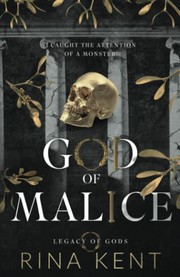
God of Malice
2,849-word summary 13 min read 468 pages in the book
- First published
- 2022
- Publisher
- Blackthorn Books
- Pages
- 468
- ISBN
- 9781685450977
- Series
- Legacy of Gods (#1)
Reading options
What's inside (8 sections)
I did not expect to finish God of Malice in two sittings. A friend sent me the first chapter with a warning that it gets dark fast, and she was right. Published in 2022 by Blackthorn Books, this is book one in the Legacy of Gods series, and it follows Glyndon King and Killian Carson through a college feud that keeps sliding into crime family business. I went in thinking it would be a standard campus romance with jealous exes and parties. It is not that. It opens on a cliff edge and it stays uneasy from there.
Glyndon is an art student who feels like the least talented person in a family of famous artists. Killian is a teenage medical student with a polite face and a frightening private life. Their schools hate each other. Their families have history. Around them are secret clubs, older brothers with tempers, and one supposed suicide that does not sit right. This is a full retelling, so every major turn is below, kept non-graphic. The book itself is very explicit and meant for adults, which I will come back to at the end.
What stuck with me is how the story uses obsession as fuel. Killian decides Glyndon is his. Glyndon tells herself she wants nothing to do with him. Then she keeps noticing that the fear and the pull get tangled up. I found that dynamic hard to read in places, which is the point, and also the reason I would not hand this to just anyone.
The cliff where Glyndon meets him
Glyndon goes back to the cliffs where her friend Devlin died a few weeks earlier. She is not there to be dramatic about it. She is grieving and she is thinking about how thin the line feels between wanting to remember someone and wanting to join them. The wind is up. The rock is slick. She slips near the edge.
A man she had not noticed catches her wrist. For a second she thinks she is saved. Then he does not pull her up right away. He lets her hang there while he talks to her, calm in a way that makes my stomach drop even now. He wants her to agree to give him whatever he asks for in return for her life. She is terrified and dangling and she says yes because what else can she say.
What he demands is sexual, and coerced, and I am going to leave the physical detail out. It matters for the plot that it happens, and it matters that Glyndon experiences it as a violation she cannot sort out. She gets back up the cliff shaking. She does not go to the police. I kept pausing here. Part of me wanted her to tell someone immediately. Another part understood why she did not, because shame and shock do strange things, and because she does not even know his name yet.
She goes home and tries to paint it out. Glyndon paints a lot in this book, and her private work is darker than what she shows her family. Her mother and her brothers are the recognized talents. Landon, her older brother, is confident in a way that fills a room. Brandon is there too in the family mix. Glyndon feels ordinary next to them, which is a painful place to make art from. She keeps the bleakest canvases turned to the wall.
Two schools on an island and a feeling of being watched
Back at school, Glyndon tries to get back to normal and cannot. She attends Royal Elite University, usually called REU, which sits on a secluded island. Right there on the same island is King's University, the rival school. Students from the two places feud constantly. Pranks turn into fights. Parties turn into territory marking. Under that campus rivalry sits something heavier. Both schools have underground societies with ties to organized crime, and the Russian mafia money behind certain families keeps showing up in whispers.
Glyndon starts feeling watched on paths and in hallways. At first she tells herself she is still rattled from the cliffs. Then small things pile up. A glimpse of someone where he should not be. A text that knows too much. A friend mentioning a guy asking about her. I have felt that prickly neck feeling in real life after a scare, where every shadow seems personal, and Kent writes that stretch well. You are never quite sure how much is fear and how much is fact, until it becomes fact.
Through a friend connected to one of the clubs, Glyndon hears about the Heathens. They are a King's U secret society, violent and closed, with initiation rites people talk about in low voices. The leader's sister drops details without meaning to, the way people do when they assume you already know. That is how the name Killian Carson first lands for Glyndon with weight. Nineteen. Med student. Way ahead of his age. Founding member of the Heathens. Polite in public. People warn her about him in the specific way people warn you when they are actually scared for you.
Then she sees him again and understands. He is the man from the cliff.
Killian Carson and the warnings that do not work
Killian is strange on purpose. In class and at social events he can be charming. Teachers like him. Other students admire him. At home his family watches him with a tired kind of fear. His mother Reina once defended him in a way that taught him to hide parts of himself from her to keep her peace. His father Asher and his brother have a colder read on him. The book suggests through Glyndon, who reads a lot into behavior, that he might fit a pattern people call antisocial personality disorder. I am not a clinician and the book is not a diagnosis, but the shape is clear. He has had urges to hurt since childhood. He started with rats. He moved toward fantasies about people. He picked medicine partly because it lets him look inside bodies in a sanctioned way.
He has not killed anyone when we meet him, and he tells himself control is enough. To keep the pressure down he does smaller cruel things. He picks fights. He scares people who cross him. He smokes. He quits things for Glyndon later in a way that feels both sweet and alarming, like kindness expressed through restraint rather than warmth.
Why Glyndon. He does not fully know, which is one of the more honest notes in the book. Being near her quiets the noise in his head. That scares him, so he handles it the only way he knows. He stalks her. He corners her alone. He forces sexual contact and calls it claiming. Glyndon fights him and freezes and fights again. She also notices, with guilt that eats at her, that part of her responds to being overpowered. She has had private fantasies about losing control. She tries to label what she feels as fear getting misread by her body. Labels do not help much when he keeps showing up.
He learns she is a virgin and fixates on that. When he coerces her into first intercourse, he treats it as taking something that proves she is his. She assumes he will get bored after. He does not. If anything he gets more possessive. He brings her food when she forgets to eat. He notices she runs on coffee and spite during studio deadlines. He kills a man who beats her later in the story, which the book frames as protection and which I read as both protection and a threat. If he will do that for her, what would he do to her.
People warn her constantly. Friends say stay away. Family would say worse if they knew everything. Warnings do not work because Killian does not accept no, and because Glyndon is starting to admit she feels something for him alongside the fear. That admission does not come all at once. It leaks out between arguments.
Messages about Devlin and a relationship dragged into the open
While all this is happening, Glyndon gets strange texts from an unknown number. They circle Devlin. They hint that his death was not simple. Devlin was her friend. His supposed suicide gutted her. Now someone is suggesting there is more to know, and the hints point toward the Heathens.
She starts asking questions. Devlin was close to being initiated into the Heathens right before he died. Who sponsored him. Who was in the room. What does initiation actually require. The answers shift depending on who she asks, which tells her plenty. Secret clubs protect themselves first.
Killian, meanwhile, decides to stop hiding. He starts marking Glyndon as his in public. He shows up where she is. He touches her where people can see. He dares anyone to comment. This blows up fast because of Landon. Landon King heads the Elites, the REU secret society. He is older, connected, and used to being obeyed. He already dislikes King's U guys on principle. He dislikes Killian specifically once he sees how Killian looks at his little sister.
The feud between the Heathens and the Elites gets personal. Landon and Killian circle each other at parties and in back rooms. Insults turn into shoves. At one point Landon nearly kills Killian, and Glyndon physically gets between them. I believed that scene, not because it is realistic that students would get that far, but because sibling panic is realistic. She loves her brother even though their relationship is strained. She is falling for Killian even though she does not trust him. Standing in the middle is the only move she has.
Around this time Glyndon starts to accept the shape of her own feelings. She loves him, or something close enough to love that she cannot talk herself out of it. She doubts he can love back in any normal sense. She wonders if what he feels is ownership wearing love's clothes. Just as she starts to settle into that painful acceptance, she learns something that breaks it open. Killian was directly involved in the initiation night tied to Devlin's death.
She runs. She threatens to hurt herself to get away from him when he tries to stop her, which tells you how trapped she feels. She heads for the cliffs to mourn Devlin properly, or to say goodbye to the version of herself that thought love might steady Killian.
The friend who was not dead
Then Devlin speaks behind her.
He is alive. That reveal rearranged everything I thought the book was doing. Devlin faked his death. He had been lying to Glyndon for a long time and using her grief as cover. He was secretly a leader of a third King's U society called the Serpents, who hate both the Heathens and the Elites. His plan was ugly and clever. He fed Glyndon to Killian's attention on purpose, planting information that would snag a predator's interest. He wanted Glyndon to die with him in a staged double death, or to be killed in a way that looked like fallout from the club war. Either outcome would make the Heathens and the Elites blame each other, with Landon and Killian at the center. Chaos would follow. The Serpents would gain power in the larger mafia structure while the other two clubs bled each other.
He tells her this almost proudly. Then he beats her badly and leaves her bloodied where Killian and Landon will find her, with a Serpent message attached to the act. It is meant to trigger war.
It does not work the way Devlin hoped. Instead of turning on each other, Landon and the Heathens compare notes. For once the rival leaders believe the bleeding girl over their own grudges. They team up and raid the Serpents' headquarters. Killian wants Devlin dead. Anyone would. He holds back from killing him, not from mercy, but because he knows Glyndon would carry guilt over it. So they keep Devlin alive to torture him, which is a grim kind of restraint. The book does not ask you to feel good about it. It asks you to notice that Killian made a choice with Glyndon's feelings in mind, and that for him this counts as growth.
There is a larger fight between the clubs. People get hurt. Deals shift. Families call in favors. The Carson and King parents hover at the edges, powerful and flawed and unable to fully shield their kids from the world they built. After the dust settles, Glyndon does something she refused to do earlier. She tells Killian she belongs to him. Early in the book she withheld those words because saying them felt like giving up her last piece of self. Saying them now feels different to her, like a choice made after seeing the worst. I had mixed feelings about that. Part of me read it as surrender dressed as consent. Part of me read it as her deciding she wants the life she wants, even if I would not want it. The epilogue jumps about two years ahead. They get engaged. The war is quieter but not gone. Other couples in the wider group are already lining up for their own books.
What held me and what wore me down
The campus and crime mix held me. An island with two rival schools is a clean setup, and Kent layers the adult criminal world over it without slowing the college scenes too much. Art school details felt lived in. Glyndon stretching canvas late, hating her own work, comparing herself to her mother and brothers, hiding the dark stuff. Med school details for Killian felt colder, all labs and late nights and a mind that likes systems. The secret societies could have been silly. At times they are. Mostly they give the obsession plot somewhere to go outside a dorm room.
Glyndon as a narrator held me too, even when I wanted to shake her. She is insecure without being passive the whole time. She asks questions about Devlin when it would be easier to stop. She stands between Landon and Killian. She runs when she needs to run. Her confusion about fear and desire is written without winking. I did not always like her choices, but I understood the pressure behind them.
Killian is harder. He is written to be magnetic and appalling at once. His small acts of care, like making sure Glyndon eats or quitting smoking for her, sit right next to coercion and stalking. The book wants you to feel both. I did. That does not mean I excuse him. It means the character works as designed, which is uncomfortable by intent.
What wore me down. The middle repeats. Killian corners Glyndon. She says no and means it and also feels pulled. He pushes. She gives in partly and hates herself. They fight. He does something oddly tender. Repeat. After the third or fourth loop I started skimming dialogue, because I knew the beats. The side cast blurs too. Heathens and Elites and Serpents each have guys with similar haircuts and similar smirks, at least on the page, and I kept flipping back to remember who belonged where. Remi, Creighton, Nikolai, and others get setup for later books, which is fine for series readers and distracting if you only care about this pair.
The Devlin twist lifts the last third a lot, but it also leans on a lot of hidden planning. He planted this. He faked that. He knew they would react thus. I bought it in the moment because the pace is fast. After I closed the book I had questions about how many moving parts had to line up perfectly. If you need airtight plotting, this will bother you.
A note on content, plainly. This is an adult dark romance with coercion, stalking, violence, blood, talk of suicide and self harm, animal cruelty in backstory, substance use, and a lot of sexual content. My summary stays non-graphic on purpose. The book does not. The author herself flags that it is unconventional and not for everyone, and suggests checking her note before reading. I agree with that. Take the warning seriously. If coercion as a love story engine will upset you, skip this, even with the epilogue engagement. If power games in fiction bother you less and you want the start of a long interconnected series about elite crime families, this sets the table clearly.
I finished it thinking about Glyndon's paintings. Early on she hides them. By the end she is still painting dark things, but she lets Killian see more. That image stayed with me more than the cliffhanger fights. Someone showing the worst inside her head to the scariest person she knows, and him staying, and both of them calling that love. I am not sure they are right. I am sure Kent meant me to sit with the doubt.
FAQ
Is God of Malice appropriate for teens or is it 18+?
It is 18+ and meant for adults, with explicit sexual content, coercion, stalking, violence, and talk of suicide. My summary stays non-graphic, but the book does not.
Is God of Malice really Legacy of Gods #1?
Yes. God of Malice from 2022 is book one in the Legacy of Gods series, followed by God of Pain, and it sets up the wider Carson and King family conflict.
Who are Killian Carson and Glyndon King?
Killian is a young Heathens medical student with violent urges, and Glyndon is an REU art student from a famous family who gets pulled into his fixation and the club war.
Similar books
More from Legacy of Gods first, then related titles.
Savage Bonds
Oli's deadly gift is out in the open, her Bond runs the show, and the Resistance is closer than ever in the second Bonds that Tie novel.
2,431-word summary · 11 min read

Deviant King
A scholarship student at an elite boarding school is targeted by the king of the Four Horsemen, who seems to know her forgotten past.
2,384-word summary · 11 min read

Her Soul to Take
A paranormal vlogger in a cult-run town summons a bound demon, and the only way to survive the god beneath the mine is to give him her soul.
2,089-word summary · 9 min read

Blood Bonds
Oleander is chained in a Resistance camp, and her five Bonds have to find her before Silas Davies finishes what he started in this third Bonds that Tie book.
2,018-word summary · 9 min read
My Dark Romeo
A debutante ball kiss traps Dallas Townsend in a marriage to Romeo Costa, a man who wants her as leverage in a war against his father and her fiance.
2,530-word summary · 11 min read
Nightfall
Emory Scott wakes in Blackchurch, a remote house for the sons of the powerful, where the boy she once loved is imprisoned and the story she told about him…
2,339-word summary · 10 min read

Beneath This Man
Ava returns to Jesse after five days apart and finds his drinking, jealousy, and a hidden deception that changes what she can forgive.
2,341-word summary · 10 min read
There Are No Saints
Two rival artists circle a struggling San Francisco painter. Cole Blackwell wants her, Alastor Shaw wants her dead. Book one of the Sinners duet.
2,190-word summary · 10 min read
The Predator
Coder Morana Vitalio and mob enforcer Tristan Caine chase stolen software while a case of missing girls from twenty years back catches up with them both.
2,296-word summary · 10 min read
The Casanova
Kate Landon's boss is also the pen pal she falls for online, hiding behind fake names, until family secrets and a trip to Paris get in the way.
2,274-word summary · 10 min read

Rule
A tattoo artist still grieving his twin and the polished girl who has loved him since she was thirteen finally collide one drunken night in Denver.
2,014-word summary · 9 min read
Wretched
The Wicked Witch of the West becomes a heroin chemist, and the DEA agent sent to destroy her family falls for the very woman he was assigned to ruin.
2,117-word summary · 9 min read

The Sinner
Sin, a Lord at Barrington, rigs his secret society's rules to claim Elli, the girl he has protected since killing her abuser, while the conspiracy around her…
2,059-word summary · 9 min read
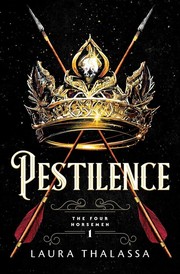
Pestilence
Firefighter Sara Burns shoots the Horseman Pestilence and discovers he cannot die. Taken captive, she rides with him as his plague sweeps the world.
2,508-word summary · 11 min read

The Kiss Thief
Promised to one man, taken by another, Francesca must choose in Chicago.
2,545-word summary · 11 min read
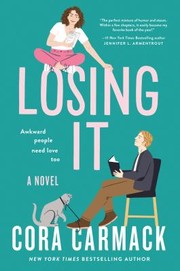
Losing It
Bliss plans a one-night stand, then finds her hookup is her professor.
2,195-word summary · 10 min read

Broken Prince
Reed loses Ella and ruins his name while rivals circle him.
2,356-word summary · 10 min read
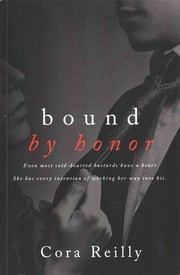
Bound by Honor
An arranged mafia marriage between a Chicago girl and a New York heir turns to love.
2,586-word summary · 11 min read

The Coincidence of Callie & Kayden
Callie saved Kayden in an alley and meets him again in college, where both must face assault and abuse to learn trust.
2,578-word summary · 11 min read
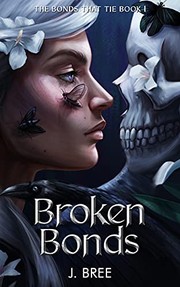
Broken Bonds
Oleander returns after five years on the run to face the five men she is bonded to, in J. Bree's 2021 opener of resentment, training, and slow trust.
2,582-word summary · 11 min read

The Takeover
An arrogant CEO and the sharp employee forced to staff his deal trade insults, trips and late nights across a long push-pull, until pride and jealousy force…
2,580-word summary · 11 min read

The Play
Briar U hockey star Hunter coaches quiet junior Demi in confidence and fake dating until real feelings break the plan.
3,080-word summary · 14 min read
Kill Switch
Out of prison, Damon moves into Winter's house with keys and a plan, and old lies about that night crack open.
2,732-word summary · 12 min read
Good Girl Complex
A people-pleasing college girl moves to beach town Avalon Bay and falls for a local boy who distrusts her whole world.
2,225-word summary · 10 min read
Thoughtless
Kiera follows her boyfriend to Seattle and falls for her roommate, rock singer Kellan Kyle, in a messy love triangle about loyalty and desire.
2,997-word summary · 13 min read

The Legacy
Four Briar hockey couples face weddings, proposals, and parenthood three years after graduation.
2,172-word summary · 10 min read
Hideaway
Ex-con Kai hunts a hotel secret while Banks hides who she really is.
2,481-word summary · 11 min read
After Ever Happy
Tessa and Hardin face family truths and tragedy before wedding.
2,373-word summary · 11 min read
The Graham Effect
A hockey legacy and a sharp newcomer trade lessons, banter, and slow trust at Briar.
2,377-word summary · 11 min read
Scarred
A spy bride sent to ruin a scarred king learns his scars first.
2,074-word summary · 9 min read