
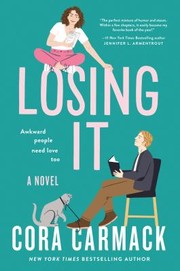
Losing It
2,195-word summary 10 min read 288 pages in the book
- First published
- 2012
- Publisher
- HarperCollins
- Pages
- 288
- ISBN
- 9780062273253
- Series
- Losing It (#1)
Reading options
What's inside (8 sections)
I grabbed Losing It because I wanted something short after a run of long thrillers and a friend said this was the book that helped start New Adult. Cora Carmack published it in 2012 with HarperCollins. The edition I am citing runs 288 pages. It is Losing It book one. I expected pure fluff. I got fluff with sharper teeth than I expected, plus a heroine whose brain never shuts off.
Bliss Edwards is twenty two, a theatre major in her last semester of college. She has good friends, decent grades, a life that looks fine from outside. She is also still a virgin, and it has grown into this private weight. Not because she thinks virginity is sacred. More because everyone around her assumes she sorted that out years ago. She is tired of lying by omission.
Her best friend Kelsey finds out and locks on like a stage manager with a headset. Kelsey is loud, loyal, pushy in the way college friends can be. Her plan is simple to the point of reckless. Go to a bar, find a decent guy, have a one night stand, get it over with before graduation. No feelings. No follow up. Just cross it off.
Bliss says no. Then she says maybe. Then she is sitting at the Stumble Inn with tequila burning her throat and Jack and Coke after, scanning the room and hating herself for scanning.
That bar scene is where Carmack wins me over. Bliss notices a guy alone reading Shakespeare. British accent. Blond hair. His name is Garrick Taylor. He teases her about her drink order. He listens when she rambles about theatre.
They flirt. It works. She decides he is the one. Safe enough, kind enough, leaving town soon enough that it will not get messy. She brings him back to her apartment.
Then her body and brain split.
Midway through, with clothes half off and nerves firing, Bliss panics. Instead of saying I am not ready, she blurts out something about a cat. A cat she does not own. A vet trip. She leaves Garrick naked in her bed and locks herself in the bathroom until she hears him leave.
I laughed out loud. I also winced. Carmack nails that specific college shame where you would rather invent an animal than admit fear.
Bliss sleeps badly. She wakes up telling herself she will never see him again. Big campus, big city, what are the odds.
The odds are one hundred percent. That is the book.
Eight hours later, in class
Bliss walks into her first theatre class of her last semester. New professor for a required course. Young temp filling in. She looks up and it is him. Garrick. In a button down. With a syllabus.
Her stomach drops through the floor. His face does whatever his face does when he recognizes the girl from last night. He keeps teaching. She keeps breathing, barely.
Garrick Taylor is not some forty year old tenured menace. He is a couple years older than Bliss, fresh out of grad school, British, hired short term to teach theatre. He did not know she was a student last night. She did not know he taught. That does not fix the problem. He now grades her work.
Carmack sets the rules fast. They cannot date while she is in his class. His job would be at risk. Her reputation would take the hit. So they try professionalism. It lasts about a day and a half.
I liked how awkward Carmack keeps this. Bliss raises her hand too much, then too little. Garrick calls on her and regrets it. He asks about her nonexistent cat in front of everyone. She answers with more cat lore. Other students stare. You can feel the room thinking these two are weird around each other.
The class itself studies plays about forbidden attachment, including Phaedra. That choice is on the nose and Carmack knows it. Characters in class debate age gaps and power and desire while Bliss sinks lower in her seat. It is a neat trick. The coursework mirrors her life without the book stopping to wink too hard.
My complaint starts here too. The ethics get smoothed over fast. The book admits the teacher student issue, then moves past it because they met before and because he is young and temporary. Carmack keeps it consensual and adult. I just wanted one adult outside the romance to say this could cost you both more than blushes. No one really does.
Kelsey, Cade and the apartment politics
Bliss lives in that tangled senior year web where friends are almost siblings. Kelsey is the engine. She means well and steamrolls. When Bliss tries to tell the full Garrick story, Kelsey hears romance novel setup and squeals.
Kelsey annoyed me by page eighty. Then she grew on me a little. She shows up with food after bad rehearsals. She is the friend who gives terrible advice with total confidence.
Cade is the other pole. Longtime best friend. Sweet guy. Arm around the shoulder. Forehead kisses that Bliss reads as friendly until she cannot. He has loved her for a while and never said it plain. He watches Garrick watching Bliss and goes quiet.
The triangle never turns into a full triangle, which I appreciated. Bliss does not string Cade along for two hundred pages. They play spin the bottle at a drunk apartment hang. Bliss and Cade land on each other. The kiss is warm and wrong. Cade admits more than friendship. Bliss freezes.
She does the decent thing after a wobble. She first says maybe because she feels guilty. Then she tells Cade she loves him as a friend and cannot fake more. He is crushed. Some friends take his side. That part felt true.
Cade deserved a bit more page time for my taste. We get his kindness, his hurt. We do not get much of his life outside Bliss. Here he reads as lovely furniture.
Bliss mother calls often to ask about boys and graduation plans. Every call ends with Bliss promising a future she has not mapped. It explains why losing virginity felt urgent. Not lust. Fear of arriving late to adult life.
Rehearsals and almosts
Much of the middle happens in classrooms, hallways, auditions. Bliss prepares monologues. Garrick gives notes that are professional and a little too perceptive. He notices when she rushes a beat. He notices when she holds back to avoid looking foolish. That attention rattles her more than any flirting in a bar did.
They develop a pattern. Near touch in class. Avoidance for two days. Accidental meeting at a coffee cart. Carmack writes tension well without needing explicit scenes every chapter. I believed they were trying to behave. I also believed they were bad at it, which is the point.
There is one almost scene and later one full love scene. Both are consensual, a little clumsy, sweet rather than graphic. I liked the restraint. It fits Bliss. Carmack lets Bliss think about elbow placement instead of turning her into an instant expert.
Theatre detail helps. Audition nerves. Rivalry for parts. Bliss loves the work even when she doubts her talent. Garrick is good at teaching when he forgets to stare. One classroom debate about Phaedra runs long and gets heated in a good way. Students argue about choice and blame. Bliss stays quiet and takes notes she will use later.
Pacing sags around the two thirds mark. Bliss circles the same worry for chapters. Am I ready. Is this allowed. Will I ruin his job. The circling is realistic for anxiety. It still repeats. One trimmed chapter of second guessing would have tightened it. I kept reading because the dialogue snaps back fast after each spiral.
Garrick has his own loop. He keeps deciding to keep distance, then finding reasons to break it. He walks her partway home after a late rehearsal. Each time he says this is the last time. It never is. His restraint slips most during notes on love scenes, when professional language wears thin.
A strong scene breaks the loop. Bliss nails an audition piece she had been overthinking. Not because Garrick rescues her, but because she stops performing for him. Garrick gives a short note and leaves the room first.
The secret gets heavy
Secrets in small departments do not stay secret. Classmates notice Garrick remembers details about Bliss he should not know. Kelsey almost outs them twice by teasing too loud. Even the quiet kids in the back row trade looks when Bliss walks in late and Garrick pauses mid sentence.
Bliss tries to manage it by avoidance. She sits in the back. She turns in work early to limit contact. It fails because theatre is contact. You read scenes face to face. You breathe together before cues. Distance reads as acting.
The fallout, when it comes, is not expulsion. It is quieter. A classmate makes a crack about favorites. A staffer asks Garrick to keep boundaries crisp. Bliss realizes she might lose respect she earned on stage because people assume casting favors.
This is where the book is smarter than its premise. It shows how even a consensual thing between adults carries costs when grades and jobs mix in. Carmack does not solve that with a speech. She lets Bliss feel sick about it for a night.
I appreciated that Bliss tells Cade the truth before she tells almost anyone else. She owns the bar night, the panic, the cat lie. That honesty costs her comfort and gains her self respect. Cade does not hug it out right away. He needs days. That delay felt honest to me.
Kelsey finally listens instead of directing. She apologizes for pushing the one night plan. In a late night kitchen talk with chipped mugs. No jokes to break it. Just sorry and tea going cold.
If I have a structural gripe, it is that the third act leans on miscommunication. Garrick pulls away to protect her. He does not explain fully. Bliss reads it as rejection. Then she confronts him, he explains. It works, but I have read that beat many times.
What losing it actually means
The title is a pun and Carmack earns it by the end. Bliss starts thinking losing it means losing virginity on a deadline before graduation. She ends thinking it means losing control, losing the script, losing the need for permission.
Her arc is not from prude to siren. It stays grounded. She learns to say no to Cade without cruelty. She learns to say yes when she means yes, after they talk through consequences like adults.
Garrick arc is slimmer. He starts as charming outsider, ends as man willing to risk comfort for clarity. I wanted more of his life in England, his family, why teaching matters to him. We get hints. He remains a little fantasy boyfriend. The epilogue months later shows them together, steadier, teasing about that first night.
That is fine for this kind of romance. But Bliss feels lived in while Garrick feels cast. Her awkwardness has texture. His charm is smoother and less specific.
The steam question will matter to some readers. This is sexy without being explicit for long stretches. No traumatic past used to force intimacy. After a lot of romances where everyone has a dark secret, the lack of tragedy felt fresh.
Content notes help set expectations. College drinking. Consensual teacher student dynamic that starts by accident. Some readers will want to skip that trope entirely, and I get it.
I finished in two sittings. The voice carries it. Bliss narrates in first person, funny and anxious. Even when the plot circled, her sentences kept me moving.
Would I recommend it. Yes, with caveats. If you like college romance with humor, slow burn, British hero, loyal messy friends, you will have fun. If teacher student setups bother you even when consensual and accidental, skip this one.
For me the lasting bit is not the hookup. It is Bliss deciding she will not let a calendar decide her first time. She stops counting weeks to graduation. She rehearses badly some days and better on others. She picks Garrick after she learns how to pick herself first.
Where it fits
Losing It helped define New Adult in 2012 and 2013. At 288 pages it reads fast. Short chapters. Lots of dialogue.
As Losing It book one, it sets up the friend group for later books. Cade clearly has more story. Kelsey has growth left.
New readers can start here with no background.
I would place it early in a New Adult reading order, before heavier books in the genre. It is low angst except for the secret relationship stress. No cliffhanger.
My rating in my head is four stars minus a half for repetition and ethics gloss. The humor and heart carry the rest.
If you pick it up, give it fifty pages past the cat excuse. That gag is the doorway, not the house. Stick around for the showcase nerves and the quiet apology scenes. Those are where Carmack is best.
FAQ
When was Losing It published?
HarperCollins published Losing It in 2012. The edition cited runs 288 pages and opens the Losing It series as book one.
Is Losing It the first book in the series?
Yes. Losing It is book one in the Losing It series by Cora Carmack. It follows Bliss Edwards in her last college semester with professor Garrick Taylor.
Did Bliss know Garrick was her professor when they met?
No. They meet at the Stumble Inn bar before classes start, with neither knowing the other role. Bliss only learns he will teach her theatre class the next morning.
Similar books
More from Losing It first, then related titles.

Rule
A tattoo artist still grieving his twin and the polished girl who has loved him since she was thirteen finally collide one drunken night in Denver.
2,014-word summary · 9 min read

The Coincidence of Callie & Kayden
Callie saved Kayden in an alley and meets him again in college, where both must face assault and abuse to learn trust.
2,578-word summary · 11 min read
Good Girl Complex
A people-pleasing college girl moves to beach town Avalon Bay and falls for a local boy who distrusts her whole world.
2,225-word summary · 10 min read

Lick
Evelyn wakes up married to the lead guitarist of Stage Dive after a Las Vegas birthday she cannot remember, and the annulment gets complicated.
1,989-word summary · 9 min read

Ricochet
Lily Calloway tries to stay celibate for ninety days while Loren is in rehab, leaning on Rose, Connor, and Ryke as therapy forces her to face her childhood.
2,575-word summary · 11 min read
Under Locke
Iris Taylor moves to Austin broke and wary, takes a front-desk job at a tattoo shop, and spends the book learning that Dex Locke’s blunt cruelty and unexpected…
2,591-word summary · 12 min read

Beneath This Man
Ava returns to Jesse after five days apart and finds his drinking, jealousy, and a hidden deception that changes what she can forgive.
2,341-word summary · 10 min read

The Casanova
Kate Landon's boss is also the pen pal she falls for online, hiding behind fake names, until family secrets and a trip to Paris get in the way.
2,274-word summary · 10 min read
One to Watch
A plus-size fashion blogger takes the lead role on a reality dating show to prove she belongs on television, and finds she might want what the cameras offer.
2,478-word summary · 11 min read

The Dare
Dared to seduce Conor, Taylor fakes dating him and feels it turn real.
2,371-word summary · 11 min read

Broken Prince
Reed loses Ella and ruins his name while rivals circle him.
2,356-word summary · 10 min read

The Play
Briar U hockey star Hunter coaches quiet junior Demi in confidence and fake dating until real feelings break the plan.
3,080-word summary · 14 min read
God of Malice
Rina Kent's God of Malice fully retold: Glyndon King, Killian Carson's fixation, secret societies, and the Devlin twist that resets everything.
2,849-word summary · 13 min read

Before We Were Strangers
Matt waits fifteen years to ask Grace why she left after one college night that shaped them both.
2,386-word summary · 11 min read
Thoughtless
Kiera follows her boyfriend to Seattle and falls for her roommate, rock singer Kellan Kyle, in a messy love triangle about loyalty and desire.
2,997-word summary · 13 min read
The Legacy
Four Briar hockey couples face weddings, proposals, and parenthood three years after graduation.
2,172-word summary · 10 min read

After Ever Happy
Tessa and Hardin face family truths and tragedy before wedding.
2,373-word summary · 11 min read
The Graham Effect
A hockey legacy and a sharp newcomer trade lessons, banter, and slow trust at Briar.
2,377-word summary · 11 min read
Wait for You
Avery flees Texas for college to bury her past, but patient Cam Hamilton refuses to stay a stranger.
2,866-word summary · 13 min read

The Risk
Brenna needs a fake boyfriend for an internship interview and picks rival star Jake, who wants real dates in return.
2,911-word summary · 13 min read
Say You Swear
Arianna Johnson heads to Avix University hung up on her brother's best friend, until steady quarterback Noah Riley forces her to rethink first love.
2,397-word summary · 11 min read

After We Fell
With Tessa's father back and a Seattle move looming, she and Hardin face family secrets that push their love to its edge.
2,121-word summary · 9 min read
Walking Disaster
Travis Maddox retells his bet with Abby from his side, from dorm fights to a Vegas wedding.
3,270-word summary · 15 min read

The Chase
Summer needs housing and gets stuck with hockey player Fitzy, who flirts while she grieves and grows.
1,920-word summary · 9 min read

Easy
A college freshman rebuilding after a breakup finds an unexpected bond with a tattooed classmate while facing a stalker.
2,364-word summary · 11 min read

After We Collided
After Hardin's bet is exposed, Tessa leans on her Vance internship, but a drunken night in Seattle drags them back into jealous fights and fragile repair.
2,711-word summary · 12 min read
The Sweetest Oblivion
Sheltered Elena Abelli catches the eye of feared made man Nicolas Russo after her sister flees an arranged match.
3,342-word summary · 15 min read

The Goal
Sabrina plans for Harvard Law until an unexpected pregnancy ties her to steady hockey player Tucker.
3,201-word summary · 14 min read

Corrupt
College student Rika Fane faces Michael Crist and his friends three years after Devil's Night put them in prison.
2,870-word summary · 13 min read