
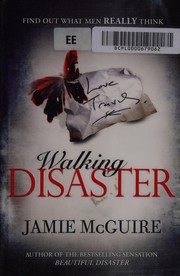
Reading options
What's inside (8 sections)
I read Walking Disaster because Beautiful Disaster had left me curious about the other half of the shouting. I had just finished Abby side of the bet, the cardigans and the Vegas elopement, all 432 pages of the Atria Books edition from 2012. I kept wondering what Travis heard in those same rooms. This book answers that. It is the second novel in the Beautiful series, told by Travis Maddox himself. Jamie McGuire published it with Atria Books on April 2, 2013. The trade paperback runs 448 pages and carries ISBN 9781476712987. It went to number one on the New York Times, USA Today, and Wall Street Journal lists. I went in expecting a simple retell. I got that, plus a clearer view of why these two nearly destroy each other.
The setup is the same, on purpose. Eastern University. Freshman year. Abby Abernathy arrives with her best friend America, determined to stay out of trouble. Travis Maddox, junior, tattooed underground fighter known as Mad Dog, holds court in a dorm lounge with his cousin and best friend Shepley. He fights for cash in a basement ring run by a man named Adam. He drinks, swears, and cycles through women. His brothers send texts and warnings. His father Jim calls with rough affection. His mother Diane died years ago, and her two rules hang over every chapter. Love hard. Fight harder. Travis took both as orders.
The bet starts almost as a joke. Travis mocks Abby for being prim. Abby mocks him for being predictable. A crowd gathers. The terms get set. If Travis loses an upcoming fight, he gives up sex for a month. If Abby loses, she lives in his apartment for a month. She agrees because she is sure he will lose, and because America pushes her. He agrees because he wants her close and assumes proximity will end in his bed. Shepley, who shares the apartment, groans and rearranges his life around the stunt. America finds the whole thing hilarious until it stops being funny.
From here the book follows the same road as volume one, but the pavement feels different under Travis feet. Where Abby heard flirting, Travis hears alarm bells he ignores. Where Abby saw a scary fighter, Travis sees rent money and pride. McGuire does not hide the overlap. Scenes repeat almost line for line. Dorm talks. Kitchen breakfasts. The drive to Vegas. If you read the books back to back, you will get deja vu. That is the point and also the problem. Fans get the missing half. New readers get spoilers for book one on every page.
Travis voice is blunt, funny in a barbed way, and far more anxious than his swagger suggests. He narrates in first person, present and past mixed, with a lot of interior static. He counts Abby cardigans. He notices her hands shaking when she lies. He pretends not to care while tracking her schedule like a second major. He tells himself she is a challenge. He tells Shepley she is trouble. He tells the reader, in asides that sound honest, that he was lost from the first night she refused him. I liked those asides best. They strip the alpha pose and show a grieving kid who learned love from a mother who died too soon and from older brothers who express care through threats.
Brothers, fathers, and the rules that raised him
The Maddox family gets more room here, which helps. Travis is the youngest of five brothers. Thomas, Taylor, Tyler, and Trenton each check in by phone or in person, usually to insult him and then to offer backup in the same breath. Jim Maddox, their father, looms large. He drinks. He gambles on fights. He loves his boys loudly and badly. He keeps Diane memory alive with stories that sound polished from retelling. Travis measures himself against all of them and finds himself short, then swings to arrogance to cover it.
Shepley is the steady center. He shares the apartment, dates America, and plays referee. In Abby version he looked like comic relief. In Travis version he looks tired. He cleans up after fights. He lends money. He tells Travis when he crosses lines. He also enables plenty, driving them to the ring, covering for absences, holding Abby purse while the couple screams at each other. Their friendship feels real because it has wear in it. Shepley loves Travis and is sometimes sick of him. That mix rang true to me.
America gets sharper edges too. Through Travis eyes she is loud, loyal, and protective to the point of rudeness. She sees through him early and says so. She warns Abby. She also pushes Abby toward him when drama appeals to her. The two couples eat together, study together, and fight in pairs. The apartment becomes crowded with wet towels, cheap food, and other people feelings. McGuire writes that clutter well. College housing as pressure cooker.
Diane Maddox never appears alive, only in memory and in a few stories Travis replays. She told her sons to love hard and fight harder. Travis treats that as permission to do both at full volume. He loves Abby with surveillance and grand gestures. He fights opponents, rivals, and his own temper with the same fists. The book suggests, without quite saying it, that he misunderstood his mother. She meant devotion and courage. He heard obsession and violence. That gap drives much of the pain. I wished McGuire had pressed it harder. A scene where Jim admits he taught the lesson wrong would have added depth. Instead the motto stays on the wall, half helpful, half harmful.
What I appreciated is that Travis knows his home is chaotic. He is not proud of every part. He describes his father kitchen with love and embarrassment. He admits his brothers scare people. He knows girls hear Maddox and think trouble. He wants Abby to see past the name while trading on it everywhere else. That contradiction makes him more than a poster. He is a kid from a loud family trying to keep a quiet girl, using loud methods.
Fights, jealousy, and the month in the apartment
The month of forced living supplies the middle of the book, just as in volume one. Abby sleeps in Travis bed. Travis takes the couch or the floor. They set rules about showers, guests, and noise. They break small rules nightly and pretend the big rule holds. They cook spaghetti. They watch fights on a laptop. They meet each other friends between classes. The slow burn runs on denial, now with Travis internal commentary turned up.
The fights give Travis income and identity. The basement ring smells of sweat and beer. Adam takes a cut. Crowds chant Mad Dog. Travis describes wrapping his hands, bouncing on his toes, and letting anger narrow the world to one opponent. He wins most bouts, loses badly when distracted, and spends winnings fast. Abby attends reluctantly, then regularly. She hates the blood and loves the win. Travis loves that she watches and hates that she worries. He tells himself fighting proves he can protect her. He never asks if she wants that kind of protection. That blind spot defines him.
Jealousy arrives early and stays late. Parker Hayes, the clean cut preppy who courts Abby with dinners and polite texts, drives Travis wild. Through Abby eyes Parker looked safe. Through Travis eyes he looks false and hungry. Travis picks fights, literal and verbal. He shows up where he was not invited. He insults Parker to his face. He grabs Abby wrist once and immediately hates himself, then does versions of the same thing again. McGuire does not soften this. Travis calls himself crazy in narration and keeps acting crazy. Readers will divide here. Some will read passion. Others will read warning signs. I read both. The book wants you to swoon and worry at once. That tension is uncomfortable by design, though I think the text forgives Travis too quickly after each blowup.
The breakup and reunion cycle spins, familiar from book one. They fight about lies. They fight about exes. They fight about Vegas past and Maddox pride. They split for days, suffer loudly, and collide again at parties or in parking lots. Shepley and America take sides and switch sides. Classes blur. Exams approach and pass like weather. If you just read Beautiful Disaster, this stretch will feel long. I checked page numbers more than once. Same argument, new room. McGuire tries to freshen it with Travis inner panic, his calls to his brothers, his late night drives. It helps only partly. Retelling the same plot means retelling the same stalls.
Still, small new scenes land. Travis alone in the apartment after Abby leaves for a weekend, folding her blanket and hating the quiet. Travis in the gym hitting a bag until his knuckles bleed because Parker texted her. Travis asking Shepley, in a rare sober minute, if he is like his father. Those beats were absent or thin in Abby version. They make Travis less of a prop and more of a person. I underlined none of it, since this was a library copy, but I remembered those rooms.
Vegas, Mick, and the elopement from his side
The Vegas trip remains the wildest swing. Abby father Mick, a professional gambler who used Abby as a lucky charm when she was small, resurfaces with debts and dangerous friends. He sees his daughter as an asset. He sees Travis as a wallet with fists. He pulls them toward tables and private games. Travis, who understands gamblers because he lives among them, sees the trap and walks in anyway. Pride. Love. The belief he can punch his way out of debt.
Through Travis eyes the casinos look brighter and meaner. He notices dealers hands, pit bosses glances, the way Mick smiles when losing. He notices Abby go still and young around her father, performing calm while calculating exits. He wants to save her by winning. He ends up needing saving himself. The fight that pays for trouble, the cash passed in envelopes, the men who do not joke, all of it reads tenser here because Travis admits fear. In Abby version he postured. Here his hands shake after.
Then the wedding. Drunk on adrenaline and relief, barely adult, they marry with an Elvis style witness and cheap rings. In book one the scene felt impulsive and romantic. Here it feels impulsive and scared. Travis narrates the vows with disbelief and hunger. He thinks marrying Abby will lock her in place, stop the cycle, prove he is not his father. He knows, even as he smiles for photos, that a certificate fixes nothing. They return to campus married and secretive, dodging questions, forging calm. Family reactions, when they come, mix fury and laughter. The Maddox clan claims Abby instantly. Her father uses the news as pressure. The secret strains every room.
I found this section the strongest in the retell because stakes rise beyond will they. Now it is what did they just do. Travis, who fights for a living, understands consequences in the ring. Outside it he is a novice. He calls his father. He lies to his brothers, then confesses. He watches Abby sleep with her ring twisted sideways and wonders if he stole her future. That guilt humanizes him more than any fight win. McGuire lets him sit in it without rushing to a joke. I wished the whole book had that patience.
The fallout also clarifies Mick. Through Abby eyes he was a sad monster. Through Travis eyes he is a rival male, charming and rotten. Travis wants to hit him and knows hitting solves nothing with men like Mick, who absorb violence as business cost. Their scenes crackle with male posturing that masks real danger. Money owed. Threats implied. Abby caught between blood and vow. Travis finally pays what he can and draws a line he cannot enforce. It is messy and believable. Gamblers do not reform because a son in law glares.
What the retell adds and what it repeats
Readers often ask if this book is just book one with pronouns changed. The fair answer is mostly, but not entirely.
It adds Travis past in fragments. Early fights before Abby. Girls whose names he forgets mid story. Nights in the apartment with Shepley playing games while rain hits windows. Calls with Trenton about money. A visit home where Jim drinks and talks about Diane. These scenes fill perhaps a third of the book. They give Travis texture. He is not only Abby boyfriend. He is a son, brother, cousin, fighter, student who rarely studies. Seeing that life before Abby explains why her refusal hooked him. Everyone else said yes. She said no, then maybe, then no again.
It adds interior motive to familiar lines. When Travis says cruel things in book one, here we hear the fear behind them. When he shows up uninvited, here we hear the hours of pacing that led there. That does not excuse the behavior, but it explains the engine. He fears abandonment. His mother died. His brothers left for their own lives. Abby threatens to leave from the first week. He grips tighter. Grip scares her. She pulls away. He grips tighter. McGuire maps the loop from inside. Anyone who has lived that loop will recognize it, uncomfortably.
It repeats set pieces almost whole. The dorm dare. The apartment rules talk. The Halloween party. The birthday dinner. The hospital scare. The Vegas drive. If you loved book one, repeats feel like favorite songs replayed louder. If you struggled with book one, repeats feel like detention. I landed in the middle. I skimmed two party scenes I remembered beat for beat, then slowed for Travis alone chapters I had never seen.
The prose stays serviceable. Short sentences. A lot of banter. Some similes about fire and storms that recur. Travis swears more than Abby, which fits and also tires. Sex scenes run explicit and frequent, written for heat rather than tenderness. They reveal character in one way. Travis uses sex to reset fights, to claim closeness, to quiet fear. Abby uses it to test trust. Neither talks about that pattern. The book does not either, though it shows it clearly enough for readers to notice.
Heat, humor, and the problem of charm
Travis is funnier than Abby, or at least louder. His insults fly. His self mockery lands. His descriptions of his brothers could carry a sitcom. Shepley gets the best straight man lines. America gets the best entrances. The dorm and apartment banter kept me turning pages when plot stalled. McGuire knows how to write a room of twenty year olds talking over each other.
The charm is also the problem. Travis can be cruel and then cute within a paragraph. He apologizes with grand gestures, big drives, expensive fixes, public declarations. The book treats those gestures as proof of love. In life they often signal control. I kept thinking of friends who dated men like Travis at twenty and now tell those stories with shivers. Fiction allows a safe place to enjoy the thrill. It also risks teaching that jealousy equals care. McGuire never pauses to mark the line. She leaves that work to readers. Older readers will manage. Younger readers may need a guide. I would hand this to a teen only with conversation attached.
Abby looks different from here, and that is interesting. In her own narration she seemed guarded and witty. Through Travis she seems braver and sadder. He sees her Vegas reflexes, the way she scans rooms for exits, the way she counts money without thinking. He sees her lie to America about small things to keep peace. He loves her competence and fears it. He wants a girl who needs him and chose a girl who can leave him. That mismatch fuels every fight. I came away respecting Abby more. She holds boundaries longer than I remembered. She forgives less easily than Travis claims. Her choices drive as much plot as his fists.
Parker, by contrast, flattens. In book one he had a little polish. Here he is mostly a target. Travis cannot see him clearly, and McGuire does not correct the lens. That is honest to point of view but thin as characterization. A stronger retell would let us glimpse Parker humanity despite Travis contempt. We get little. He exists to be beaten, socially and nearly physically. Readers who like love triangles may miss the tension. This triangle has no real third side. It is Travis against his own fear, with Parker as prop.
What works and what drags
What works is voice and world. Travis sounds distinct from Abby, coarser, funnier, more frantic. The Maddox home life adds weight. The Vegas chapters gain dread. As a companion, the book delivers what it promises. The other side of the story, with receipts. Fans who adored Travis in book one will adore more of him here. His devotion, however flawed, is absolute. He chooses Abby daily, loudly, expensively. That fantasy still sells.
What drags is repetition and refusal to judge. The middle third repeats arguments from book one without enough new insight to justify the pages. At 448 pages, this retell runs longer than the original 432 page story it mirrors, and you feel those extra miles in the breakup cycle. Travis possessiveness, possessive texts, showing up unannounced, threatening rivals, reads harsher from inside his head because we hear calculation behind the impulse. The book rarely names that pattern as a problem. Shepley scolds, America scolds, brothers joke. Then the plot rewards Travis with Abby return. Readers sensitive to controlling heroes should proceed carefully or skip. The dynamics that thrilled in 2013 read rougher now, and the book has not aged into that awareness.
Still, I understand the success. This is New Adult in its classic form. College setting. Explicit heat. First love with adult consequences. Damaged boy. Guarded girl. Bet forcing closeness. Elopement testing it. McGuire helped define that template with Beautiful Disaster in 2011, self published then reissued by Atria, and she cemented it here. Walking Disaster shows the machine from the boiler room. Same fire, more noise, more sweat. Read as history or pleasure, it explains a publishing moment when indie romance stormed the lists and proved a market the gatekeepers had missed.
How to read it? After book one, with a break. Do not read them in the same weekend unless you love repeats. Give Abby story a month to fade. Then return for Travis version as an alternate angle rather than a sequel. You will catch echoes without counting them. You will notice what changed in you, too. I liked Travis less on these pages than I expected and sympathized with him more. Both can be true. He loves hard and fights harder, as his mother taught. The tragedy is that he never learned when to stop fighting the girl he loves.
If you want the short version before committing to 448 pages, borrow the logic of the series box on this site. Book one, Beautiful Disaster, is Abby telling. Book two, this one, is Travis telling. Book two point five, A Beautiful Wedding, closes the Vegas loop. Start at the start. Come here for the thunder. Stay only if the thunder thrills more than it worries. I finished tired, entertained, and glad to leave Eastern University for quieter streets. Then I missed the noise a little, which may be the most honest review I can give.
FAQ
When was Walking Disaster published?
On April 2, 2013 by Atria Books. The trade paperback runs 448 pages and its ISBN is 9781476712987. It debuted at number one on the New York Times, USA Today, and Wall Street Journal lists.
Is Walking Disaster part of a series?
Yes. It is book two of the Beautiful series. It retells the same events as Beautiful Disaster, book one, from Travis Maddox point of view.
Should I read Beautiful Disaster first?
Start with Beautiful Disaster for Abby side, then read this for Travis side. The plot overlaps heavily, so reading them back to back makes the repeats easier to take.
Similar books
More from Beautiful first, then related titles.

Beautiful Disaster
Good girl Abby makes a bet with bad boy Travis and ends up living in his apartment for a month.
1,963-word summary · 9 min read

Rule
A tattoo artist still grieving his twin and the polished girl who has loved him since she was thirteen finally collide one drunken night in Denver.
2,014-word summary · 9 min read
Losing It
Bliss plans a one-night stand, then finds her hookup is her professor.
2,195-word summary · 10 min read

The Coincidence of Callie & Kayden
Callie saved Kayden in an alley and meets him again in college, where both must face assault and abuse to learn trust.
2,578-word summary · 11 min read

The Play
Briar U hockey star Hunter coaches quiet junior Demi in confidence and fake dating until real feelings break the plan.
3,080-word summary · 14 min read
Good Girl Complex
A people-pleasing college girl moves to beach town Avalon Bay and falls for a local boy who distrusts her whole world.
2,225-word summary · 10 min read
God of Malice
Rina Kent's God of Malice fully retold: Glyndon King, Killian Carson's fixation, secret societies, and the Devlin twist that resets everything.
2,849-word summary · 13 min read

Thoughtless
Kiera follows her boyfriend to Seattle and falls for her roommate, rock singer Kellan Kyle, in a messy love triangle about loyalty and desire.
2,997-word summary · 13 min read

The Legacy
Four Briar hockey couples face weddings, proposals, and parenthood three years after graduation.
2,172-word summary · 10 min read

After Ever Happy
Tessa and Hardin face family truths and tragedy before wedding.
2,373-word summary · 11 min read
The Graham Effect
A hockey legacy and a sharp newcomer trade lessons, banter, and slow trust at Briar.
2,377-word summary · 11 min read

Wait for You
Avery flees Texas for college to bury her past, but patient Cam Hamilton refuses to stay a stranger.
2,866-word summary · 13 min read

The Risk
Brenna needs a fake boyfriend for an internship interview and picks rival star Jake, who wants real dates in return.
2,911-word summary · 13 min read
Say You Swear
Arianna Johnson heads to Avix University hung up on her brother's best friend, until steady quarterback Noah Riley forces her to rethink first love.
2,397-word summary · 11 min read

After We Fell
With Tessa's father back and a Seattle move looming, she and Hardin face family secrets that push their love to its edge.
2,121-word summary · 9 min read

The Chase
Summer needs housing and gets stuck with hockey player Fitzy, who flirts while she grieves and grows.
1,920-word summary · 9 min read

Easy
A college freshman rebuilding after a breakup finds an unexpected bond with a tattooed classmate while facing a stalker.
2,364-word summary · 11 min read

After We Collided
After Hardin's bet is exposed, Tessa leans on her Vance internship, but a drunken night in Seattle drags them back into jealous fights and fragile repair.
2,711-word summary · 12 min read

The Goal
Sabrina plans for Harvard Law until an unexpected pregnancy ties her to steady hockey player Tucker.
3,201-word summary · 14 min read

The Score
Playboy Dean chases Allie, who wants a fresh start after a bad breakup.
2,700-word summary · 12 min read


The Mistake
Logan chases Grace for a second chance after one thoughtless night while graduation pressure builds.
2,363-word summary · 11 min read

The Deal
Hannah tutors hockey star Garrett in exchange for help getting another guy.
1,906-word summary · 8 min read

Her Soul to Take
A paranormal vlogger in a cult-run town summons a bound demon, and the only way to survive the god beneath the mine is to give him her soul.
2,089-word summary · 9 min read

Lick
Evelyn wakes up married to the lead guitarist of Stage Dive after a Las Vegas birthday she cannot remember, and the annulment gets complicated.
1,989-word summary · 9 min read
Blood Bonds
Oleander is chained in a Resistance camp, and her five Bonds have to find her before Silas Davies finishes what he started in this third Bonds that Tie book.
2,018-word summary · 9 min read

Ricochet
Lily Calloway tries to stay celibate for ninety days while Loren is in rehab, leaning on Rose, Connor, and Ryke as therapy forces her to face her childhood.
2,575-word summary · 11 min read
Under Locke
Iris Taylor moves to Austin broke and wary, takes a front-desk job at a tattoo shop, and spends the book learning that Dex Locke’s blunt cruelty and unexpected…
2,591-word summary · 12 min read

Reason to Breathe
Emma Thomas is a star student with a careful, invisible life at home. Evan Mathews notices the cracks, and the novel follows what happens when kindness gets…
2,197-word summary · 10 min read
Nightfall
Emory Scott wakes in Blackchurch, a remote house for the sons of the powerful, where the boy she once loved is imprisoned and the story she told about him…
2,339-word summary · 10 min read