
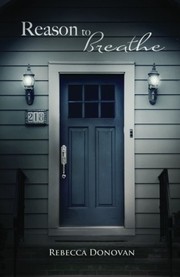
Reason to Breathe
2,197-word summary 10 min read 386 pages in the book
- First published
- 2012
- Publisher
- Wood Street Publishing
- Pages
- 386
- ISBN
- 9780615581927
- Series
- The Breathing Series (#1)
Reading options
What's inside (8 sections)
I picked this up because a friend called it a romance and I wanted something I could finish in two nights. Two chapters in, I understood that the romance was the least interesting thing in it. What got me was the sleeves. Emma Thomas talks about sleeves the way people talk about the weather when they are avoiding the actual subject. Long sleeves in September. A hoodie at a party where everyone else is in something thin. A cardigan buttoned to the wrist. Donovan never underlines it. She just lets the clothing keep showing up until you understand that getting dressed is the most dangerous part of Emma's morning.
That is the kind of detail the book does well, and there are enough of them that I kept reading through the parts that frustrated me. It is a first novel with first-novel problems, and it is also a book that understands something specific about shame, which is that shame is not a feeling you can be argued out of. It is a set of habits. It is a wardrobe and a schedule and a way of answering questions with the minimum amount of information.
The girl who is doing everything right
Emma is seventeen and lives in Weslyn, Connecticut, one of those affluent towns where a certain kind of competence is simply expected and nobody asks what it costs. She is a straight-A student and a three-sport varsity athlete. On paper she is the girl the school puts in the brochure. She lives with her aunt Carol, her uncle George, and their children, including Sara, who is her cousin and her closest friend. Emma's father is dead. Her mother is an alcoholic who is not in her life.
The house looks normal from the street, and that is the point. Carol abuses Emma. Not once, in a moment of losing control, but as a pattern, physical and verbal, that the household has organized itself around. George knows enough. He does not intervene. What he wants is quiet, and Emma learns to give it to him, because quiet is the price of staying in a house that shelters her. This is the arrangement the whole novel turns on: an adult who hurts her, an adult who looks away, and a teenager who has decided that managing both is her job.
Her response is a set of procedures. She gets the grades. She plays the sports. She keeps her face pleasant and her answers short. She counts down to college, because college is the exit, and the exit is the only future she can picture without flinching. I liked that Donovan makes the countdown concrete. Emma is not dreaming vaguely about escape. She has a date in mind, and the date is what keeps her functioning.
The narration stays very close to Emma, with almost no distance between what happens to her and how she reports it. That closeness is the book's biggest asset and one of its limitations. You feel the tightness of her attention, the way a normal conversation is mostly a series of threats she is calculating her way through. You also lose the wider view, because Emma cannot see her own situation clearly and the book rarely steps outside her to help. I did not mind that. A novel about a girl who cannot afford to understand her own life is not improved by a narrator who understands it for her.
Being seen is the threat, not the solution
Evan Mathews is the new student, and he is the kind of new student who would be a problem in a lesser book: popular, good at everything, easy with people. Donovan gives him a little more than that. He is kind without making a project of it, and he notices Emma in a way that the rest of the school does not. He catches the small flinches. He asks the second question.
Emma is drawn to him and pushes him away, and the reasons she gives herself are worth paying attention to. The first is obvious: if he gets close, he will find out what happens at home. The second is subtler and, I think, the real one. Being known as a victim would reorganize her entire identity. She has spent years building a person who is fine. Evan threatens to replace that person with someone pitied, and pity, in her calculation, is worse than pain. That is not a rational calculation, but it is a believable one, and the book is honest about how much of Emma's behavior runs on it.
Sara is the other person who comes closest to the truth, and she is also the most complicated. Sara's family is Emma's family. Her mother is the woman who hurts Emma. Telling Sara would not be a private confession between friends. It would set off something inside the household that Emma depends on, and it would force Sara to choose between her mother and her cousin. Emma protects Sara from that choice, and Donovan lets you see how much of Emma's silence is really a form of care, however misplaced.
The machinery of staying quiet
This is where the book is at its best. Donovan is not interested in the question of why Emma does not simply tell someone. She is interested in the mechanics of not telling, the daily labor of it, and she gets those mechanics right. There is the physical work of covering bruises, which is a skill Emma has developed to a depressing level of competence. There is the social work of deflecting questions without seeming to deflect them. There is the exhausting arithmetic of which teacher might notice, which friend might push, which adult might decide to make a phone call.
Shame is the lock, not fear. Emma is not primarily afraid of Carol, although she has reason to be. She is ashamed, and shame tells her that the abuse is evidence about her rather than about her aunt. If she were easier, quieter, better, it would stop. That belief is the thing that keeps her from speaking, and it is also the thing that makes her furious at herself in ways she cannot express. Donovan writes that self-directed anger well. Emma is hard on herself in a voice that sounds like a much older person, and the effect is sad rather than precocious.
The abuse escalates as the year goes on, and the escalation is tied to the thing Emma wants most. Carol's rages are triggered by small things: a tone, a delay, a piece of information that suggests Emma has a life Carol does not control. Emma's attempts at a normal adolescence, especially her relationship with Evan, make Carol more controlling rather than less, because a girl with somewhere else to go is a girl who might talk. Her grades and her sports are her escape, but they also draw attention. Every achievement is a small exposure. The book is good at that contradiction, even when it repeats it.
There are scenes at school, at a party, and at Evan's house where Emma almost tells someone and then retreats. I will not pretend I can quote them. What I remember is the pattern: the moment opens, Emma feels the possibility of being known, and then she closes it with a joke or a change of subject or a lie that is technically true. Each retreat costs her something, and the accumulation is what makes the middle of the book feel heavy in the right way.
Where it starts to strain
My main complaint is that the abuse beats begin to repeat. Carol rages, Emma absorbs it, Emma hides it, Emma goes to school and performs normalcy. That cycle is true to the subject, and it is also, after a while, a device that keeps the plot moving between romantic scenes. There were stretches where I could feel the author reaching for the next incident rather than following the character into it, and those stretches made me impatient in a way I do not think the book intended.
Evan is idealized. He is patient past the point of plausibility, perceptive in ways that serve the plot, and almost never wrong about Emma in a way that would cost him anything. I understand why. He is the counterweight to the house, and the book needs him to be safe. But safe is not the same as real, and a version of Evan with a temper or a blind spot or a bad night would have made Emma's decision to trust him mean more.
The adults outside the home are also slow in a way that strained my patience. Teachers, coaches, and parents orbit Emma without quite seeing her, and while that is often true of real life, the book leans on it so heavily that it starts to feel like the author is clearing a path for the plot. The prose is uneven, too. Some passages are sharp and controlled, and others explain a feeling that the scene had already earned. The book tells you Emma is terrified more often than it lets you feel it.
The pacing has a similar problem. The middle third keeps finding new ways to postpone the crisis, and because the crisis is the thing the whole book is built toward, the postponement reads as stalling. I would have traded one of the near-confessions for a longer look at what Emma's life is like when nothing dramatic is happening, because the ordinary maintenance of the secret is more interesting than another escalate-and-hide sequence. That is a strange complaint about a thriller, but this book is at its best when it slows down.
None of that ruined it for me. It did make me read faster in some sections and skim in others, which is a fair description of a first novel with a strong central character and a shaky hand on the wheel.
The night it goes too far
The breaking point comes after Emma defies Carol, or stays out in a way that Carol decides to punish. The distinction matters less than the result. Carol beats her severely and leaves her unconscious and badly injured. Evan, unable to reach her, comes to the house with help and finds her. She is taken to the hospital with injuries that are described as life-threatening. The authorities are notified. Carol is arrested, and the abuse that Emma spent the whole book hiding becomes public in the most abrupt way possible.
I want to be careful here, because a lot of summaries of this book get the ending wrong. Emma is not murdered. She survives. There is no trial in these pages, and no full recovery, and no neat scene where the family sits around a table and understands itself. The book ends in the hospital and the first stage of aftermath, with Emma facing what has happened and what comes next. The legal process is not resolved. That is deliberate, I think, because the series continues in Barely Breathing, and because the aftermath of abuse is not a courthouse scene with a verdict at the end.
The rescue itself is where the book's two modes finally meet. Evan has been the person who notices, and his noticing becomes action. But the book is smart enough to complicate the rescue. Being found is not the same as being believed, and the hospital does not instantly repair the years before it. Emma's survival is not a resolution. It is the beginning of a different set of problems, and Donovan does not pretend otherwise.
What the title is doing
The title sounds like a romance promise, and the book is darker than that promise suggests. Breathing, for Emma, is something she has to remember to do. There are moments where she holds it, where she counts, where the physical act of staying calm is the only thing she can control. The title is not about a boy who takes her breath away. It is about the narrow, deliberate practice of staying alive in a house that has taught her to be small.
That is why the book has stayed with me longer than its flaws deserve. The romance is the part I will forget. The portrait of a girl who is excellent at everything except asking for help is the part I keep thinking about. Donovan understands that high achievement and profound helplessness can live in the same person, and that the achievement is often the camouflage.
I would recommend this to readers who want a fast, tense, first-person account of a subject that is usually handled either exploitatively or sentimentally. I would warn them that it is the first of a series and ends on a cliffhanger, that the abuse is graphic in places, and that the adults are not going to save anyone in time. It is not a comfort read. It is a book about the cost of being seen, and about how long a person can keep a door closed when the alternative is losing the only home she has.
FAQ
Does Emma die in Reason to Breathe?
No. She is badly injured and hospitalized, but she survives. The novel ends in the first stage of the aftermath, and the story continues in Barely Breathing.
Is Reason to Breathe a romance?
It has a central romance between Emma and Evan, but the abuse she suffers at home is the book's main subject. Readers looking for a light romance should expect graphic violence.
Is Reason to Breathe part of a series?
Yes. It is the first book in The Breathing Series, followed by Barely Breathing and Out of Breath.
Similar books
More from The Breathing Series first, then related titles.

Collided
Sophie bets she can resist playboy Liam, then pit walls fall.
2,219-word summary · 10 min read
Captivated by You
Eva and Gideon hide a secret Caribbean marriage while planning a Monterey wedding as Gideon arrest, press threats, and Corinne strain test them in Crossfire…
3,016-word summary · 13 min read

American Royals
Beatrice must marry well as first queen while Sam and Jefferson tangle hearts.
2,284-word summary · 10 min read
After Ever Happy
Tessa and Hardin face family truths and tragedy before wedding.
2,373-word summary · 11 min read

Keeping 13
Injured Johnny and hiding Shannon test first love against rehab pain and family secrets in Tommen.
2,052-word summary · 9 min read
Addicted to You
Lily hides sex addiction and Lo hides drinking while faking love to fool their rich families.
2,064-word summary · 9 min read
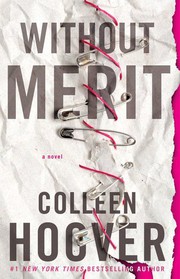
Without Merit
Merit Voss feels invisible in a crowded converted church home until Sagan, Luck, and a painful night force the truth out.
3,300-word summary · 15 min read
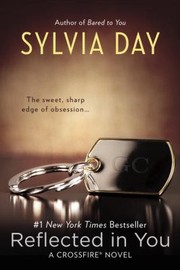
Reflected in You
Eva and Gideon deepen their obsessive love while facing past abuse and public exposure.
2,587-word summary · 11 min read

Birthday Girl
Homeless Jordan moves in with boyfriend Cole and his father Pike sparking tension.
2,383-word summary · 11 min read
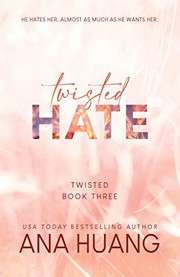
Twisted Hate
Jules Ambrose and Josh Chen turn years of hate into a risky arrangement that forces both to face old wounds.
2,557-word summary · 11 min read
Ugly Love
Colleen Hoover's Ugly Love retold: Tate and Miles, the rules, the past with Rachel, and the lake letter.
2,339-word summary · 10 min read

What Happened to Goodbye
Mclean has reinvented herself in four towns since her parents divorced. In Lakeview she uses her real name, and for the first time staying put becomes a choice.
2,796-word summary · 12 min read

Her Soul to Take
A paranormal vlogger in a cult-run town summons a bound demon, and the only way to survive the god beneath the mine is to give him her soul.
2,089-word summary · 9 min read

Anatomy: A Love Story
In 1817 Edinburgh, a noblewoman who wants to be a surgeon disguises herself to study anatomy and falls for the grave robber who supplies her with bodies.
2,031-word summary · 9 min read

Vow of Thieves
Kazi and Jase return to Tor's Watch to find it occupied, and their marriage is tested by captivity, betrayal, and a war for the town of Hell's Mouth.
2,059-word summary · 9 min read

The Lost Sisters
Taryn Duarte writes a letter to her twin, Jude, explaining how she fell for Locke and why she stayed silent while he used them both.
1,914-word summary · 9 min read

Dumplin'
Willowdean Dickson enters her town's beauty pageant as a protest and discovers that confidence is harder to keep once she lets someone close.
1,922-word summary · 9 min read

Masquerade
After Cordelia's death, Schuyler flies to Venice to find her exiled grandfather, then returns to the Blue Bloods as they prepare for a masked ball and a hidden…
2,543-word summary · 11 min read

Lick
Evelyn wakes up married to the lead guitarist of Stage Dive after a Las Vegas birthday she cannot remember, and the annulment gets complicated.
1,989-word summary · 9 min read

Blood Bonds
Oleander is chained in a Resistance camp, and her five Bonds have to find her before Silas Davies finishes what he started in this third Bonds that Tie book.
2,018-word summary · 9 min read

Archenemies
Nova steals for the Anarchists while Adrian hides his Sentinel identity, and a serum that erases prodigy powers puts them both at risk.
2,485-word summary · 11 min read

The Siren
Saved from a shipwreck in 1930, Kahlen becomes a siren who sings men to their deaths for the Ocean, until a boy in a college library makes her want a life she…
2,369-word summary · 11 min read

The Awakening / The Struggle
A popular high school girl falls for a vampire, then discovers that his dangerous brother wants her too, in the first two books of the Vampire Diaries series.
2,660-word summary · 12 min read

Ricochet
Lily Calloway tries to stay celibate for ninety days while Loren is in rehab, leaning on Rose, Connor, and Ryke as therapy forces her to face her childhood.
2,575-word summary · 11 min read

Cruel Beauty
A girl raised to kill the demon prince who rules her cursed land instead falls in love with him, in a retelling that mixes Beauty and the Beast with Bluebeard…
2,669-word summary · 12 min read
Cross My Heart and Hope to Spy
Cammie Morgan returns to Gallagher Academy for a second year of spy training, only to fall for a boy from a rival spy school and hunt a mole in her own school.
2,567-word summary · 11 min read

Carve the Mark
On a planet divided between conquered and conqueror, the tyrant's sister and a kidnapped oracle's son discover that their gifts make them useful to everyone…
2,340-word summary · 10 min read
Under Locke
Iris Taylor moves to Austin broke and wary, takes a front-desk job at a tattoo shop, and spends the book learning that Dex Locke’s blunt cruelty and unexpected…
2,591-word summary · 12 min read
Nightfall
Emory Scott wakes in Blackchurch, a remote house for the sons of the powerful, where the boy she once loved is imprisoned and the story she told about him…
2,339-word summary · 10 min read