
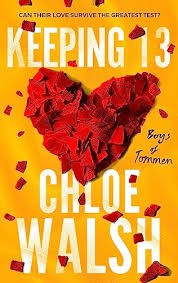
Keeping 13
2,052-word summary 9 min read 672 pages in the book
- First published
- 2018
- Publisher
- Bloom Books
- Pages
- 672
- ISBN
- 9781728299976
- Series
- Boys of Tommen (#2)
Reading options
What's inside (12 sections)
I finally read Keeping 13 because Binding 13 left Johnny and Shannon mid storm. Chloe Walsh first published it in 2018, with my reading following the 672 page Bloom Books paperback from 2023. Johnny's injury sidelines him while Shannon's Dublin trauma resurfaces, testing whether first love survives secrets. It is long, intense new adult romance for mature readers that commits fully to feelings.
Johnny Kavanagh has never known life without rugby's number 13 jersey. Sidelined by injury that threatens everything he planned, he drifts through rehab with temper fraying. Physiotherapy hurts. Scouts wait. His body, always reliable, betrays daily. Into that void comes Shannon Lynch, mysterious girl taking up most of his thoughts, carrying secrets that make his injury look simple. Their love, begun in Binding 13, faces its real test here. Falling was easy. Staying demands everything.
Tommen College as pressure cooker
The private school setting does structural work beyond backdrop by concentrating class, sport, and gossip in corridors. Tommen College runs on rugby hierarchy, uniform codes, and money that Shannon lacks. Johnny rules its fields while Shannon hides in its libraries. Their collision across those zones drives early chapters with fish out of water energy that never fully fades. Even as they couple, school watches. Teammates tease. Teachers monitor. Bullies circle Shannon with particular cruelty about her body and poverty. Those hallways feel lived in across two volumes now, with their rooms mapped by fans online. Place as pressure explains why private moments matter so desperately. Nowhere else is unwatched.
Rugby itself functions as identity, economy, and metaphor without requiring reader fandom. Johnny's number 13 jersey means future contracts, family pride, and selfhood stitched together. Injury threatens all three at once, which is why rehab chapters carry existential weight sports skeptics can still feel. Replace rugby with ballet or violin and the structure holds. Practice defines days. Body IS resume. Remove either and grief follows regardless of sport. Walsh knows non fans need translation and provides it through Johnny's plain explanations to Shannon, who learns rules out of love. Teaching becomes intimacy. Listen while he explains offside. That patience is romance.
Injury and Dublin aftermath
Johnny's chapters show athletic identity collapse with rare patience for romance. He mourns routine more than glory. Morning runs. Team banter. Coach's nod. Without those his days shapelessly pool. He pushes rehab too hard, hides pain from family, and snaps at Gibsie, his loyal best friend who absorbs it with jokes that barely cover worry. Those details will resonate with anyone sidelined from defining work. Who are you without the thing. Johnny asks badly and often. Answers come slowly through Shannon's steadier suffering. She knows identity loss too. Different field. Same fog.
Shannon's Dublin trip aftermath drives the darker half. After a traumatizing visit involving her abusive father and revelations that rearrange her family map, she retreats into old hiding patterns. Silence at school. Locked doors. Protecting little brothers above herself. Johnny, used to fixing with action, learns helplessness beside wounds he can not tackle. Those chapters hurt to read in the way Walsh intends. Love can not outrun consequence. It can only accompany through. His accompaniment, showing up without solutions, marks growth from boy who saves to man who stays.
Gibsie and friends supply humor that never trivializes. Gibsie's banter with Johnny, teasing that covers terror of losing his friend to pain and pills, gives the book its funniest and most moving passages. Claire and other Tommen faces orbit with subplots that feed the series engine. Rugby tours. School dances. Hospital corridors. Those ensemble beats keep 672 pages moving despite intensity. Found family at an Irish private school, with all its class friction and uniformed rituals, feels lived in across two volumes now. Ballylaggin breathes.
Gibsie's loyal comedy
Gibsie deserves standalone praise as the series' beating comic heart with hidden depths. Best friend to Johnny through rugby wars, he jokes through hospital vigils, covers absences with alibis, and absorbs temper that would end lesser friendships. His humor functions as triage, keeping despair from hardening into self pity. Behind quips sits fierce intelligence about people. He reads Shannon's fear accurately. He names Johnny's avoidance plainly. Those insights, delivered as jokes, land harder than lectures. Clowns see clearly because no one guards against laughter. Gibsie exploits that blind spot lovingly.
His own subplot hints at depths the book wisely leaves for later volumes. Family pressures. Unspoken fears. Loyalty that costs sleep. Readers sense unsaid weight behind his brightest lines. That restraint shows Walsh's series planning. Not every heart opens per volume. Gibsie stays sunshine with shadows readers glimpse but can not yet name. Fans who continue learn more. Here he serves as friend supreme, the boy who stays when stars fall. Every epic needs one. Cherish him loudly. He hears.
Secrets that change lives
The back half detonates secrets about Shannon's family that reframe everything from Binding 13. Her father's violence, her mother complicity and damage, her older brother Joey's protective rage. I will keep specifics general here beyond saying revelations arrive through confrontations that mix physical danger with emotional truth, and that younger brothers' safety becomes the urgent stake. Walsh writes abuse with unflinching care that never titillates. Bruises described plainly. Fear shown through routine. A girl who flinches at raised voices and tracks exits in every room. Those details do more work than speeches about trauma. Body keeps score. So does page.
Johnny's response to the truths tests the book's thesis about love under weight. He rages, plans vengeance, and must be talked down by Gibsie and his own better knowledge that Shannon needs steadiness more than saviors. His restraint, learned painfully across chapters, mirrors Shannon's own move from hiding to telling. Both grow toward each other through parallel disciplines. He rehabbed body. She voices truth. Those twin recoveries pace the novel's long middle with purpose that justifies length. Healing takes pages because it takes time. The book refuses montage. Good.
Content guidance matters here more than usual. For mature audiences, as publisher states, with explicit scenes, abuse depictions, and language throughout. The age range lists sixteen to eighteen with grade levels attached, but emotional weight suits older teens and adults best. Walsh handles intimacy with care that centers Shannon's agency after violation. Slow. Asked. Stopped when needed. Those mechanics matter for readers sensitive to coercion tropes in sports romance. Desire here heals rather than harms because consent leads every scene. Still, check in with yourself. Long books about hurt demand stamina.
What holds across 672 pages
What holds is emotional commitment without irony. Walsh writes feelings at full volume across dual perspectives that alternate Johnny and Shannon with cliffhanger cuts. First love rendered as life event rather than phase. Rugby rendered as identity rather than backdrop. Trauma rendered as ongoing weather rather than single storm. Those intensities explain TikTok devotion and 600k plus ratings. Readers who surrender get swept. The chemistry, the ache, everything fans quote in reviews lives on these pages in abundance. Bring tissues and time.
What strains is length and loop for unconverted readers. At 672 pages the novel revisits injuries, secrets, and reassurances in cycles that feel true to recovery and repetitive to plot hunger. Side characters blur into first names with similar voices. Rugby logistics confuse non fans. Shannon's brothers need a chart. Those are costs of immersion the converted gladly pay and skeptics will resent. Know which reader you are before starting. This is ocean, not pool. Wade in knowingly.
The prose is accessible, dialogue heavy, and emotionally direct. Short chapters. Text exchanges. Internal spirals. Spice with aftercare. Fights with apologies that stick. Walsh writes twins' intuition into teammates who finish tackles. That closeness comforts while adult failures isolate. Both truths sit together across Tommen's halls. The book knows its audience intimately and serves them generously. Outsiders may feel the heat without catching flame. Fans will burn happily.
Shannon's brothers as stakes
Shannon's younger brothers function as the book's most vulnerable hostages to fortune and deserve emphasis beyond plot devices. Small boys who love their sister fiercely and fear their home openly, they anchor her every decision about telling. Speak and risk their safety. Stay silent and model submission. That dilemma has no clean answer, which the book honors by refusing easy rescue. Social workers circle with forms. Teachers notice bruises with limited power. Real systems move slowly where fiction wants swoops. Walsh keeps procedures realistic enough to frustrate readers craving intervention. Frustration is the point about underfunded protection. Feel it. Then understand Shannon's impossible math.
Joey, older brother with protective rage of his own, complicates rescue fantasies usefully. He fights, threatens, and absorbs damage meant for siblings while making choices that worsen situations adults could solve better. His love is real and his methods are adolescent. Those combinations create messes Johnny and Shannon must navigate around as much as against their father. Families under violence produce multiple survival strategies that clash even when goals align. The book respects that clash without ranking suffering. Everyone copes. Some coping collides. Forgive the collisions while addressing causes.
Rugby as language of love
The sport's emotional vocabulary deserves decoding for non fans because Walsh writes it fluently. Training ground banter translates to affection. Match-day rituals stand in for vows. Injuries speak fears bodies can not voice. Johnny and Shannon learn each other's dialects across that divide. She attends games she barely understands to witness him whole. He skips sessions to sit through her silences. Those exchanges show love as bilingual effort. Learn the other's first language. Speak it badly with heart. Fluency follows care, not the reverse. The book models that pedagogy through every practice scene doubling as courtship.
What rugby costs bodies gets unflinching treatment that balances glory with damage. Concussions. Ligaments. Pills for pain that become problems. Johnny's medicine cabinet mirrors Shannon's hidden bruises in uncomfortable parallel. Both medicate worlds that hurt. His is celebrated. Hers is shamed. That asymmetry angers usefully without preaching. Cheer the tries. Count the tablets. The novel asks readers to hold both tallies at once. Sport gives and takes in same motion. Love must account for limp that remains after final whistle. It does here, tenderly and without illusion.
For mature readers only, clearly
The book's intensity ratings deserve plain guidance for buyers and librarians navigating TikTok hype. Explicit scenes between older teens arrive with care but frequency that suits adult shelves better than school ones. Abuse depictions hit hard without gratuitous detail, showing bruises and fear through routine rather than spectacle. Language runs salty in locker rooms and kitchens alike. None of this disqualifies thoughtful sixteen plus readers with support, but adults should know before gifting. Read reviews. Check content notes. The publisher's mature audiences label means it. Respect teenager readiness individually rather than by age alone.
What the duology teaches about staying
Binding plus Keeping together argue that love is maintenance scheduled daily rather than lightning struck once. Taping ankles. Attending funerals. Apologizing specifically. Those unglamorous verbs outnumber grand gestures across both volumes deliberately. Walsh trusts readers to find sweeping romance inside routine care. The gamble pays in reviews quoting small moments over big twists. A hand held during physio. Soup delivered without asking. Presence as poetry. That aesthetic suits long books that live in days rather than montages. Stay for dishes. Swoon at sinks. The epic hides in ordinary hours kept jointly.
Who should keep going
Give Keeping 13 to Binding 13 finishers who need Johnny and Shannon's continuation, to new adult romance readers who want Irish rugby with feelings at full volume, to TikTok readers ready for 672 committed pages. Do not start here. Read Binding first or drown in history. Do not give it to young or sensitive readers without content awareness. Pair it with Saving 6 next for the wider Tommen universe.
At 672 pages I read it across a week, marking Gibsie pages. Johnny starts lost without jersey and ends loving through injury, while Shannon starts hiding and ends telling with costly courage. That pair, rehabbed and revealed together, is why the duology anchors its universe. Falling was easy. Keeping takes thirteen and more. Stay for it, then follow Joey and the younger Lynches into later volumes where Tommen's story widens beyond first love into family survival at full stretch.
FAQ
When was Keeping 13 published?
First published in 2018. The Bloom Books paperback runs 672 pages and the ISBN is 9781728299976.
Is it part of a series?
Yes. It continues Binding 13's duology inside the Boys of Tommen universe.
Is it suitable for young teens?
No. It is new adult romance for mature audiences with explicit scenes and abuse depictions.
Similar books
More from Boys of Tommen first, then related titles.

Binding 13
Shy Shannon Lynch transfers to Tommen College for a fresh start and crosses paths with rugby star Johnny Kavanagh, sparking a slow friendship tested by injury,…
2,950-word summary · 13 min read

Collided
Sophie bets she can resist playboy Liam, then pit walls fall.
2,219-word summary · 10 min read

Reason to Breathe
Emma Thomas is a star student with a careful, invisible life at home. Evan Mathews notices the cracks, and the novel follows what happens when kindness gets…
2,197-word summary · 10 min read


The Play
Briar U hockey star Hunter coaches quiet junior Demi in confidence and fake dating until real feelings break the plan.
3,080-word summary · 14 min read
Captivated by You
Eva and Gideon hide a secret Caribbean marriage while planning a Monterey wedding as Gideon arrest, press threats, and Corinne strain test them in Crossfire…
3,016-word summary · 13 min read
The Legacy
Four Briar hockey couples face weddings, proposals, and parenthood three years after graduation.
2,172-word summary · 10 min read
After Ever Happy
Tessa and Hardin face family truths and tragedy before wedding.
2,373-word summary · 11 min read
The Graham Effect
A hockey legacy and a sharp newcomer trade lessons, banter, and slow trust at Briar.
2,377-word summary · 11 min read
Addicted to You
Lily hides sex addiction and Lo hides drinking while faking love to fool their rich families.
2,064-word summary · 9 min read
The Risk
Brenna needs a fake boyfriend for an internship interview and picks rival star Jake, who wants real dates in return.
2,911-word summary · 13 min read
Say You Swear
Arianna Johnson heads to Avix University hung up on her brother's best friend, until steady quarterback Noah Riley forces her to rethink first love.
2,397-word summary · 11 min read
Throttled
F1 driver Noah hates his teammate son Maya, then hires her to fix his image and falls for her.
1,942-word summary · 9 min read
The Chase
Summer needs housing and gets stuck with hockey player Fitzy, who flirts while she grieves and grows.
1,920-word summary · 9 min read

Wildfire
Hockey goalie Russ Callaghan and bold Aurora Roberts reunite as camp counselors after a one-night stand in this Maple Hills summer romance.
2,931-word summary · 13 min read

The Goal
Sabrina plans for Harvard Law until an unexpected pregnancy ties her to steady hockey player Tucker.
3,201-word summary · 14 min read
The Score
Playboy Dean chases Allie, who wants a fresh start after a bad breakup.
2,700-word summary · 12 min read
Reflected in You
Eva and Gideon deepen their obsessive love while facing past abuse and public exposure.
2,587-word summary · 11 min read

Birthday Girl
Homeless Jordan moves in with boyfriend Cole and his father Pike sparking tension.
2,383-word summary · 11 min read
The Mistake
Logan chases Grace for a second chance after one thoughtless night while graduation pressure builds.
2,363-word summary · 11 min read
Twisted Hate
Jules Ambrose and Josh Chen turn years of hate into a risky arrangement that forces both to face old wounds.
2,557-word summary · 11 min read

The Deal
Hannah tutors hockey star Garrett in exchange for help getting another guy.
1,906-word summary · 8 min read
Icebreaker
Figure skater Anastasia Allen shares a rink with hockey captain Nate Hawkins and sparks fly at UC Maple Hills.
2,176-word summary · 10 min read
Ugly Love
Colleen Hoover's Ugly Love retold: Tate and Miles, the rules, the past with Rachel, and the lake letter.
2,339-word summary · 10 min read

Her Soul to Take
A paranormal vlogger in a cult-run town summons a bound demon, and the only way to survive the god beneath the mine is to give him her soul.
2,089-word summary · 9 min read

Lick
Evelyn wakes up married to the lead guitarist of Stage Dive after a Las Vegas birthday she cannot remember, and the annulment gets complicated.
1,989-word summary · 9 min read
Blood Bonds
Oleander is chained in a Resistance camp, and her five Bonds have to find her before Silas Davies finishes what he started in this third Bonds that Tie book.
2,018-word summary · 9 min read
Ricochet
Lily Calloway tries to stay celibate for ninety days while Loren is in rehab, leaning on Rose, Connor, and Ryke as therapy forces her to face her childhood.
2,575-word summary · 11 min read
Under Locke
Iris Taylor moves to Austin broke and wary, takes a front-desk job at a tattoo shop, and spends the book learning that Dex Locke’s blunt cruelty and unexpected…
2,591-word summary · 12 min read