
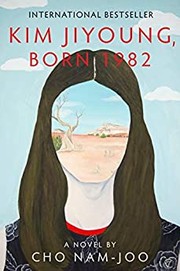
Kim Jiyoung, Born 1982
2,181-word summary 10 min read 176 pages in the book
- First published
- 2016
- Publisher
- Liveright
- Pages
- 176
- ISBN
- 9781631496707
- Original title
- 82년생 김지영
Reading options
What's inside (7 sections)
Why This Short Book Felt So Heavy to Carry Home
I picked up this slim book expecting a quick read and finished it in two sittings, then sat quietly for a long time. The edition I read is the Liveright 2020 English translation by Jamie Chang, 176 pages, ISBN 9781631496707. The Korean original came out from Minumsa in 2016. It is not long, but it is dense with lived detail. Cho Nam-Joo, who worked in television before turning to fiction, writes in a calm, almost report like voice that makes the anger underneath hit harder.
The premise is simple and clever. Kim Jiyoung, born in 1982 in South Korea, is thirty three, married, recently quit her job to raise her infant daughter, living in a small apartment outside Seoul. Her husband Jung Daehyun is decent, tired, mostly kind. One day Jiyoung starts speaking in other voices, as if possessed. She speaks as her mother, as her best friend, as women both living and dead. Her husband is frightened and takes her to a psychiatrist. The novel is framed as the psychiatrist's case notes, with Jiyoung's life story told in order, plus footnotes with statistics about pay gaps, hiring, childcare, and safety.
That frame matters. At first I thought the clinical distance would cool the story. It does the opposite. Hearing Jiyoung's life summarized the way a doctor would, flat and factual, shows how normal each small unfairness looks alone and how crushing they are together. My fair criticism is that if you want lush prose, you will not find it here. Sentences are plain. Scenes are short. But plain is the point. This is not one dramatic tragedy. It is a thousand paper cuts.
She did nothing wrong, and still the world kept asking her to make herself smaller.
I wrote that after the first chapter. Jiyoung as a girl, as a student, as a worker, as a wife, as a mother keeps adjusting while men around her barely notice the adjustments.
A Daughter in a Family That Loves Her But Counts Sons First
Jiyoung is the second of three children, with an older sister Kim Eunyoung and a younger brother Kim Jisu. Her parents work hard. Her father Oh Hyuk is a civil servant, traditional, not cruel but fixed in old ideas. Her mother Oh Misook, formerly Kim Misook before marriage, is smart, exhausted, and the quiet hero of the early pages. They live with Jiyoung's paternal grandmother, who openly favors her son and grandson. Food, money, attention all tilt toward the boy.
Little scenes pile up and I recognized every one from stories friends have told me. The grandmother gives the grandson extra meat while the girls get rice and soup. When Jiyoung does well in school, praise is mild. When Jisu does okay, celebration is loud. Eunyoung learns to fight for space by being louder, funnier, tougher. Jiyoung learns to keep peace by giving way. Their mother sees it. She sneaks food to her daughters. She saves coins. She apologizes with her eyes when she cannot fix it. Misook gave up her own dreams of teaching to raise kids and help her husband's family, and you feel her grief in how hard she pushes her daughters to study.
School brings new dangers. Jiyoung is followed by a strange man on the way home. When she tells her father, he scolds her for wearing a short skirt and walking a lonely road, as if safety is her homework. A male classmate torments her. Teachers tell girls not to provoke. On buses, men press too close. None of this is described sensationally. It is described the way memory holds it. A hand. A stare. A joke. A warning to be quiet. Jiyoung learns to take longer routes, to carry her bag in front, to laugh off comments to stay safe. Eunyoung learns to shout back and gets called difficult.
What I appreciated is that Cho does not make the family monsters. The father loves his daughters in his limited way. He pays for tutoring when he can. He brags about grades at work. But love does not stop favoritism. The grandmother is the clearest voice of old bias, praying for grandsons, mourning daughters as burdens. Misook argues back in small ways, hiding money for her daughters' education, insisting Jiyoung apply to good schools. Those small rebellions feel huge because the cost is real. A wife who talks back too loudly loses peace at home.
My criticism here is that characters can feel like types, Grandmother as Tradition, Father as Patriarchy. But then a specific detail, like Misook reheating soup at midnight after factory overtime, brings them back to flesh. The book chooses clarity over depth to make a social point, and mostly I accepted the trade.
School, Work, and the Rules Girls Learn by Heart
Jiyoung grows up bright and diligent. She gets into a good university, majors in a practical field, interns, job hunts. This middle section is where many Korean readers in their twenties and thirties said they saw themselves, and I saw my own workplaces too despite living far from Seoul. The discrimination is rarely a shouted slur. It is interview questions about marriage plans. It is a manager who assigns coffee and copies to women. It is team dinners with forced drinking where women pour and men talk. It is a promotion list where a less qualified man edges ahead because he will not take maternity leave.
Jiyoung's first job at a marketing agency shows both kindness and limit. Colleagues like her. She is good with clients. She stays late. She learns to smile through sexist jokes to be a team player. Her boss praises her diligence but gives the big account to a male coworker who needs to provide for his family. When she protests mildly, she is told she is sensitive. When a woman senior quits after having a baby because hours are impossible, everyone says what a shame, what a waste, as if she chose failure rather than being pushed.
Dating and marriage expectations tighten the vise. Jiyoung meets Daehyun through a blind date setup. He is not a bad man. He is considerate by the standards around him. He splits some chores. He likes Jiyoung's humor. But his family expects a daughter in law who serves holidays, remembers ancestors rites, cooks for elders, bears a son if possible. Jiyoung tries. She learns recipes. She endures comments about her hips, her age, her job. When they marry, both work at first. Then pregnancy comes, and the workplace makes continuing feel impossible. No real parental leave for her level. Long hours. A boss who suggests, kindly, that mothers belong home for a few years.
University scenes hit me too. A male professor favors male students for research posts. A campus police post warns women not to walk alone rather than addressing men who attack. Jiyoung's friend, bold and funny, gets secretly photographed in a library bathroom, and the resulting shame and process exhaust her more than the crime. Cho includes footnotes here with real numbers on spy camera crimes, pay gaps, and hiring bias. Some critics call the footnotes clunky. I found them grounding. They say this is not just Jiyoung. This is pattern.
The office did not fire her for being a woman, it just made staying feel like failing every day.
Marriage, Motherhood, and the Apartment That Gets Smaller
Married life in a small rental with a baby is where Jiyoung starts to disappear, and these pages are the quietest and saddest. She quits her job, not with a dramatic scene but with a tired calculation. Childcare costs almost her salary. Her husband earns more. His job is less flexible in practice, though policy says otherwise. Her mother in law helps but also judges. Everyone says rest, enjoy this time, babies grow fast. Jiyoung loves her daughter Ahn, whose full name carries hope, but love does not stop loneliness.
Days blur. Feeding, laundry, cleaning, walks with a stroller where strangers comment on her body, her milk, her parenting. She cannot meet friends who work. She cannot afford a nanny without guilt. She stops reading. She stops meeting people who ask about her ideas. Daehyun tries. He plays with the baby on weekends. He offers to hire help they cannot quite afford. He tells her to sleep. But he also comes home late, drinks with coworkers to keep his job safe, falls asleep while she handles night feeds. He does not see how his freedom to be tired is different from hers. To be fair, the book lets him be tired too. Korea's work culture crushes men as well. But it crushes mothers into invisibility.
The in law holiday scenes are specific and brilliant. Jiyoung and Misook cook for hours while men watch television and discuss ancestor rites as if cooking is not labor. Jiyoung's sister in law, who works, is praised for managing both, which only adds pressure. Jiyoung is scolded gently for seasoning, for holding the baby too much, for looking tired. When Daehyun's mother suggests a second child, preferably a son, Jiyoung smiles and says nothing and later cries in the bathroom with the tap running. I have heard that tap running story from three different friends in three countries. That is why this book traveled.
Small public humiliations accumulate. A man in a cafe calls her a mom충, a cruel slang for mothers who leech off husbands, when her baby cries. Jiyoung freezes. Daehyun wants to confront but also wants to avoid a scene. Later Jiyoung replays it for weeks. Was he wrong. Was she too sensitive. Should she have stayed home. The psychiatrist notes how often Jiyoung speaks as other women after these moments, as if borrowing their voices to say what she cannot say as herself. Her mother working double shifts. Her sister quitting a good job after harassment. Her friend who never married and is called selfish. Through them, Jiyoung finally accuses, mourns, jokes, rages.
My fair pushback is that Daehyun can feel too good to be true, which softens the critique. A kinder husband makes it easier for some readers to say see, men suffer too. But Cho's point is sharper. Even with a good man, the structure wins. That is bleaker and truer than a villain husband would be.
The Doctor's Notes and Why the Ending Angers People
The frame closes with the psychiatrist, a man, writing up Jiyoung's case. He is professional, sympathetic, a little detached. He diagnoses depression and possible delusional episodes tied to stress and identity loss. He recommends rest, medication, therapy, support. He admires Daehyun for seeking help early. Then, in the final pages, the doctor goes home to his own family, where his wife has quit work to raise kids, and he thinks his own life is fine, that Jiyoung's case is sad but not about him. He does not see himself in the notes.
That ending made me gasp, then nod. It is not a cure. It is a mirror. Cho refuses the comforting arc where treatment fixes a social problem. Jiyoung may feel better with help, and I hope she does, but the conditions that made her sick remain. Low pay for women. Spy cameras. Interview bias. Childcare gaps. Elder care falling on daughters in law. Men who mean well but do not change schedules. A language that has a slur for mothers in cafes.
Reception matters to understanding this book's weight. In Korea after 2016, it sold over a million copies, sparked fierce debate, was loved by many women who underlined every page and hated by some men who called it biased. Celebrities who mentioned it were attacked and defended. The film adaptation in 2019 with Jung Yumi brought it to even wider audiences. Reading the Liveright 2020 translation in English, I felt both the Korean specificity, ancestor rites, hagwons, blind dates, and the global echo. Replace Seoul with many cities and the details rhyme.
Is it perfect. No. The prose is flat by design, which some readers experience as dull. The footnotes break immersion. Male characters besides Daehyun can feel thin. The psychiatrist device keeps us at arm's length from Jiyoung's interior joy, not just pain. We rarely see her laugh hard, desire deeply, or dream wildly. I missed that. I wanted one chapter of pure pleasure to mourn what was lost. But maybe absence is the argument. When a person is reduced to roles, daughter, student, worker, wife, mother, patient, pleasure is the first thing to go.
I closed the 176 pages feeling implicated in a useful way. Not guilty for one act, but responsible for noticing. Who pours the tea in my meetings. Who gets interrupted. Who takes the longer road home. Jiyoung, born in 1982, could be my classmate, my coworker, my neighbor. Her speaking in other women's voices stopped sounding strange by the end. It sounded like what happens when one woman finally says out loud what many have whispered for years.
FAQ
Is this a memoir?
No, it is a novel with case like detail, translated by Jamie Chang from Korean.
Is it only for Korean readers?
No, work, hiring, and caregiving pressures translate widely across countries.
Similar books

Dear Girls: Intimate Tales, Untold Secrets & Advice for Living Your Best Life
Ali Wong's debut collects fourteen letters to her daughters, covering sex, money, work, marriage, Vietnam, and being a working Asian American mother.
2,266-word summary · 10 min read

Why I'm No Longer Talking to White People About Race
Reni Eddo-Lodge traces black British history and shows how institutions, culture, and everyday assumptions keep producing racial inequality.
2,071-word summary · 9 min read
All About Love: New Visions
bell hooks borrows a definition of love as an action rather than a feeling, then spends thirteen chapters showing how hard it is to practice.
2,385-word summary · 11 min read
The School for Good Mothers
A mother sent to a reform school fights to keep her daughter under cold surveillance and strict rules.
2,114-word summary · 9 min read
The Awakening
Edna Pontellier summers on Grand Isle and starts to want a life beyond marriage and motherhood.
2,262-word summary · 10 min read
Nudge: Improving Decisions About Health, Wealth, and Happiness
Thaler and Sunstein show how defaults, framing, and social cues steer choices, and argue for choice architecture with an opt-out.
3,146-word summary · 14 min read
Nothing to Envy
Barbara Demick follows six defectors from Chongjin through the North Korean famine, showing how ordinary people lived, believed, and finally left.
2,068-word summary · 9 min read

Little Earthquakes
Four Philadelphia women meet during pregnancy and discover that new motherhood is nothing like the plan, while friendship becomes the thing that holds them…
1,997-word summary · 9 min read

The Once and Future Witches
Three estranged sisters bring witchcraft back to an 1893 city where magic hides in nursery rhymes and the fight for the vote is also a fight for power.
2,132-word summary · 9 min read

Mrs. Everything
Two Jewish sisters in Detroit grow up, apart and together, across seven decades of American life, from the 1950s to the 2016 election.
2,362-word summary · 10 min read

Iron Widow
Wu Zetian enlists to avenge her sister, kills her pilot, and becomes an Iron Widow in a mecha Huaxia where the machines are built to kill women.
2,444-word summary · 11 min read

Infidel
Ayaan Hirsi Ali's memoir of a Somali childhood, a forced marriage, a Dutch asylum claim, and the political fight that followed the murder of Theo van Gogh.
2,041-word summary · 9 min read

One to Watch
A plus-size fashion blogger takes the lead role on a reality dating show to prove she belongs on television, and finds she might want what the cameras offer.
2,478-word summary · 11 min read

Sing You Home
A music therapist, her new wife and an evangelical ex-husband end up in court over three frozen IVF embryos.
2,952-word summary · 13 min read
Her Body and Other Parties: Stories
Eight stories where bodies, medicine and old fairy tales get taken apart, with a green ribbon running through the whole book.
2,997-word summary · 13 min read

Wide Sargasso Sea
Jean Rhys gives the first Mrs. Rochester a Caribbean childhood, a marriage built on money and suspicion, and a voice that Charlotte Bronte left in the attic.
2,021-word summary · 9 min read
The Silence of the Girls
Briseis, queen of Lyrnessus, is captured by Achilles and narrates the Trojan War from inside the Greek camp, where women are prizes and survival is its own…
2,098-word summary · 9 min read
The Overdue Life of Amy Byler
A burned-out school librarian gets a summer to herself when her estranged husband returns, and discovers that being a mother does not have to mean losing…
2,055-word summary · 9 min read

The Birth of Venus
A Florentine merchant's daughter trains as an artist, marries a man who hides a secret, and survives Savonarola's bonfire of the vanities.
2,404-word summary · 11 min read
Ishmael: An Adventure of the Mind and Spirit
A gorilla named Ishmael teaches a disillusioned man that civilization is a story, and that humans may compete but must not wage war on other species.
2,015-word summary · 9 min read
I Who Have Never Known Men
Forty women in a cage, one child who remembers nothing, and a nearly empty world above the bunker. Harpman's quiet, unexplained dystopia.
2,025-word summary · 9 min read

Flight Behavior
Dellarobia Turnbow is stuck in a Tennessee farm marriage until a valley full of monarch butterflies, and the scientist who comes to study them, force her to…
2,051-word summary · 9 min read
We
In a city of glass ruled by the Benefactor, a state engineer building a spaceship falls for a woman who wants to tear the One State down.
2,247-word summary · 10 min read

The House of Mirth
Lily Bart, beautiful and penniless at twenty-nine, navigates New York's marriage market until a Dorset yacht scandal strips her of the only currency she has.
2,468-word summary · 11 min read

The House of Eve
Two Black women in 1950s Philadelphia and Washington, one a pregnant teenager and one a doctor's wife who cannot carry a child, are pulled together by a…
2,270-word summary · 10 min read
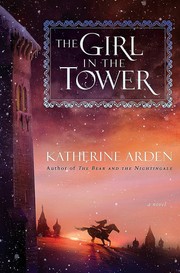
The Girl in the Tower
Vasya rides out disguised as a boy, rescues kidnapped girls, and rejoins her siblings in Moscow, where a hidden sorcerer and the Grand Prince's court close in.
2,801-word summary · 12 min read

Galatea
The statue brought to life narrates her own story: a jealous sculptor, a locked hospital room, a daughter to protect, and one last plan to escape.
1,972-word summary · 9 min read
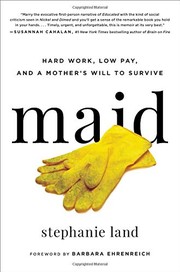
Maid: Hard Work, Low Pay, and a Mother's Will to Survive
Stephanie Land's memoir of cleaning houses as a single mother on the poverty line, and of the paperwork that made every step forward cost something else.
2,039-word summary · 9 min read
Erotic Stories for Punjabi Widows
A London law school dropout teaches a writing class that becomes an erotic storytelling group for Sikh widows, and uncovers the truth about a young wife's…
2,004-word summary · 9 min read
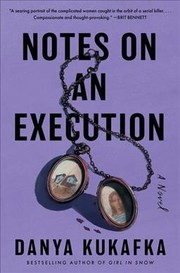
Notes on an Execution
Ansel waits on death row while three women carry what he broke.
2,527-word summary · 11 min read