
Reading options
What's inside (8 sections)
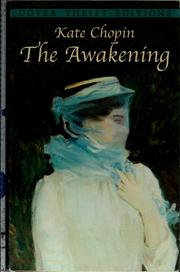
I picked up The Awakening because I kept seeing it described as the American Madame Bovary and I wanted to see if that label was fair. Kate Chopin first published it in 1899 with Herbert S. Stone and Co. in Chicago, and the first edition ran 303 pages. It shocked reviewers at the time, sold poorly, and then sat mostly unread until scholars brought it back in the 1960s. I read it in the Dover Thrift paperback, which is a short sit, and I finished it in two evenings. What stayed with me was not scandal. It was how quiet and physical the book feels, full of heat and water and late meals on porches.
The plot follows Edna Pontellier, who is twenty-eight and married to Leonce Pontellier, a New Orleans businessman. They have two small boys, Etienne and Raoul. They summer with other Creole families on Grand Isle, a barrier island off Louisiana where mothers and children stay for weeks while husbands come down from the city for weekends. Edna is not Creole herself. She grew up in Kentucky with a Presbyterian father and a sister who married young, and she married Leonce partly from accident and fondness rather than passion. At the start she is a dutiful wife who lets a nurse called the quadroon look after the boys, who receives callers on Tuesdays, and who paints a little. By the end she has refused most of that life.
Grand Isle and the summer Edna stops obeying
Grand Isle runs on habit. The Pontelliers rent a cottage near the big house run by Madame Lebrun. Meals are long. Children play. Fathers arrive on the boat, check on business, and leave again. Women sew and visit. Men talk about sugar and cotton. Edna spends her days with Adele Ratignolle, who is the model of what New Orleans then called a mother-woman. Adele is warm and open, always with a child near her. She adores Edna in a fond and slightly bossy way, and she warns Edna more than once to be careful about how she acts with Robert Lebrun.
Robert Lebrun is the younger son of Madame Lebrun. He is twenty-six, idle in the pleasant way of young men with family money, and each summer he attaches himself to one married woman for company. That summer he picks Edna. At first it looks harmless. He sits with her on the porch and walks with her on the beach. Leonce is often away or playing billiards at the hotel, and when he is home he scolds Edna for neglecting the children or for going out in the sun. He means it as care. She hears it as control.
Adele plays a large part in loosening Edna. The two women spend afternoons together while Adele sews and Edna sketches. Edna admits she once had intense crushes on a sad-faced cavalry officer and on a famous tragedian, and that her marriage to Leonce was something she slid into after her father opposed another match. Adele listens with sympathy and also with worry.
The other woman who matters is Mademoiselle Reisz. She is a small, disagreeable, brilliant pianist who stays at Grand Isle and plays for guests. When she plays, Edna reacts with unusual force. One evening a piece on the piano makes Edna cry and shake, and she later says it was the first time she felt her inner life open in that way. Mademoiselle Reisz notices. She tells Edna that to be an artist you must have a brave soul willing to defy custom. Edna holds onto that thought when she starts to paint in earnest.
Learning to swim late at night
Swimming is the hinge of the book. Early on Edna cannot swim. She fears the water and stays near shore while others go out. One hot night after a long evening of talk and music, a group goes down to the beach to bathe by moonlight. On a dare from herself more than from anyone, Edna walks out farther than usual and finds she can swim. She moves through the water alone, exulting, and then fear hits her when she looks back at how far she has come. She makes it back, shaken and proud.
Chopin uses that swim as the start of Edna acting for herself. After that night Edna starts to say no to small things. She stops receiving Tuesday callers just because custom says she must. She goes walking alone. She quarrels with Leonce about household spending. Leonce cannot read her. He asks Doctor Mandelet, the family doctor, whether Edna is sick or overtired. Mandelet sees more. He tells Leonce to leave her alone and let whatever is working in her run its course.
Robert and Edna grow closer without naming it. They spend a day alone together on a boat trip to the Cheniere Caminada, where they eat and rest in a cottage owned by Madame Antoine. On the way back they are tired and sunburned and oddly tender. Robert starts to pull away after that. He knows the code. Adele has already warned him during her own difficult pregnancy that Edna takes things seriously. So Robert makes a sudden plan to go to Mexico for business. He leaves without a clear goodbye. Edna is stunned.
Back on Esplanade Street in New Orleans
The family returns to the city in late summer. The house on Esplanade Street is large and handsome, full of silver and linen. Leonce leaves for business trips, and Edna is left to run the house. She does it badly on purpose. She misses reception day. She gives the cook vague orders. She spends hours in a small studio room at the top of the house, painting from sketches she made on Grand Isle. Leonce writes with concern and sends money and gifts to smooth things over.
Two people fill the gap Robert left. One is Mademoiselle Reisz, who lives in a shabby apartment in town. Edna visits her often and sits while she plays. Mademoiselle Reisz has letters from Robert in Mexico, and she reads chosen bits aloud. The letters are polite and distant, but Edna hangs on every mention of herself. She leaves those visits both lifted and restless.
The other is Alcee Arobin, a New Orleans man known for chasing women. He meets Edna at the horse races and pursues her with notes and calls. At first Edna finds him shallow. Then, lonely and hungry for touch, she lets him kiss her and later begins an affair with him. Chopin is direct about this without being graphic. Edna does not love Arobin. She uses the affair the way she uses painting, as proof that her body belongs to her. He does not ask her to leave her husband. He simply enjoys her company and lets her go when she cools.
The pigeon house around the corner
The famous move comes in late fall. Edna decides to leave the big Esplanade house and rent a small two story house around the corner. She calls it the pigeon house, because it is tiny and snug. It has a porch and room for her painting things. Leonce is away when she plans it, and he is furious when he hears. To save face he lets people think they are remodeling. Edna does not care about the cover story. She pays with money from her sketches and small winnings at the races, and that detail matters to her.
Before she moves she throws a farewell dinner in the old house. It is one of the best set pieces in the novel. She invites about a dozen guests, including Mademoiselle Reisz and Arobin and Doctor Mandelet. She serves too much champagne and rich food, course after course. Mademoiselle Reisz plays late in the evening. Edna feels powerful and sad at once. Readers often point to that dinner as the peak of her freedom.
Life in the pigeon house is quieter and harder. Edna paints, receives few visitors, and walks alone. She sees Arobin less. She waits for letters from Robert. When Robert finally writes that he is coming back, she is thrown into agitation. Mademoiselle Reisz warns her that Robert may want a conventional ending, and that Edna may not want what he wants.
Robert comes back from Mexico
Robert does come back. He is thinner and more serious. He visits Edna in the pigeon house and they talk with long pauses. He admits he went to Mexico to get away from loving her. He says he dreamed of freeing her by marrying her after Leonce gave her up, as if husbands could hand wives over by agreement. Edna tells him she is no longer property to be passed along. She gives herself where she chooses. That claim, in paraphrase, is the core of her position. She wants love without ownership.
They spend a day together in something like happiness. Then Adele goes into hard labor with her fourth child, and a message comes asking Edna to come. Edna leaves Robert waiting and goes to Adele. The childbirth scene is long and painful. Adele begs Edna in her distress to remember her own children. By the time Edna returns to the pigeon house, Robert is gone. He has left a short note saying goodbye because he loves her. He cannot face a love that has no place in the rules he knows.
That departure breaks Edna more than anything Leonce did. She walks the streets. She thinks about her boys, who are staying with their grandmother, and about how she loves them but cannot live as only their mother. She sleeps badly and wakes with a plan to go back to Grand Isle.
The last swim and what to make of it
Edna takes the boat to Grand Isle out of season. The cottages are empty. The beach is cold and deserted. She walks to the shore and swims out alone. Edna swims farther than she ever has, remembering her father and her sister and her boys and Robert. Her strength gives out. She does not turn back. The book ends with her gone in the water and with images of childhood and of a bird with a broken wing that she saw earlier in the summer.
People argue about whether Edna means to die. I read it as intended. She has tested what freedom she can keep on land and found every path blocked. Return to Leonce would mean surrender. Marriage to Robert would mean a new master under softer words. Life alone in the pigeon house would mean gossip and money pressure and slow loneliness. The sea is the one place where she felt capable in her own body, and she chooses it rather than giving that feeling back.
The book earns its place for reasons beyond plot. Chopin writes Creole New Orleans with care, from French phrases dropped at table to Catholic habits to food. She writes motherhood without sentiment. Adele loves her children and is also worn down by constant pregnancy. Edna loves Etienne and Raoul and is also bored by minding them all day. The quadroon nurse, who barely speaks, carries much of the daily care, and Chopin lets you see how much leisure depends on hired help. When Mademoiselle Reisz plays, Edna does not think in abstractions. She sees fields and hears wind and feels lonely and hungry at once.
No book from 1899 escapes its time, and this one has faults worth naming. The middle in New Orleans sags. There are many calls and small slights, and if you are waiting for Robert to return it can feel slow. Some minor figures stay flat. Victor Lebrun is mostly noise. Edna herself can be hard to stay with. She is often passive, letting men arrange her choices and then resenting the arrangement. She treats Arobin as a tool and treats servants as background, which Chopin shows but does not always press.
There is also the matter of race and class, which modern readers will notice fast. The Pontelliers rely on Black servants whose lives stay at the edge of the story. Chopin records their presence with more honesty than many writers of her day, but she does not give them point of view. Grand Isle leisure rests on labor that the novel barely names. That gap stood out to me more on this read than when I first heard about the book in school.
The prose holds up. It is plain and humid and exact about bodies. Heat makes people irritable. Cold water steadies them. A caged parrot and a mockingbird at the start screech at each other while Edna sits nearby, and Chopin does not explain the image to death. Later a crippled bird flutters and falls, and again she leaves it alone. I like that restraint.
If you come to it now, give it room. Do not expect a thriller. The Dover paperback I used has 128 pages, so you can read it in a weekend.
I still do not think Madame Bovary is the right tag. Emma Bovary chases romance through books and lovers. Edna chases self rule through solitude and work. Flaubert watches Emma with irony. Chopin stays close to Edna with sympathy, even when Edna is selfish. The awakening in the title is not a single morning. It is a string of small refusals that add up until Edna cannot fit back into marriage as her world defines it. That is why the ending lands hard.
FAQ
Is this the same book as The Awakening by Caroline Peckham and Susanne Valenti?
No. Chopin published her novel in 1899 with Herbert S. Stone and Co. about Edna Pontellier in Louisiana. The Peckham and Valenti book is a fantasy romance in the Zodiac Academy series with different characters and plot.
How does The Awakening end?
Edna returns to Grand Isle out of season and swims out alone until her strength fails. I read it as a willed death after she finds no workable life between marriage, a conventional match with Robert, and lonely independence.
How long is it and is it hard to read?
The Dover Thrift paperback runs 128 pages, so most readers finish in a weekend. The prose is plain and direct, though the middle in New Orleans moves slowly and the views on servants reflect 1899.
Similar books

A Doll's House
Nora forges a loan to save Torvald, then walks out on doll life at Christmas.
2,468-word summary · 11 min read

The Yellow Wallpaper and Other Stories
A young mother confined for her health fixates on yellow wallpaper, plus 39 other Gilman stories on marriage and work.
2,989-word summary · 13 min read

Revolutionary Road
A Connecticut couple who believe they are too good for the suburbs plan to move to Paris, and the plan slowly exposes everything they cannot say to each other.
2,085-word summary · 9 min read

Howards End
Forster's 1910 novel follows two families, a house in Hertfordshire, and a burned note, asking whether money and feeling can ever be connected.
2,187-word summary · 10 min read

Sing You Home
A music therapist, her new wife and an evangelical ex-husband end up in court over three frozen IVF embryos.
2,952-word summary · 13 min read

Dear Girls: Intimate Tales, Untold Secrets & Advice for Living Your Best Life
Ali Wong's debut collects fourteen letters to her daughters, covering sex, money, work, marriage, Vietnam, and being a working Asian American mother.
2,266-word summary · 10 min read

Wide Sargasso Sea
Jean Rhys gives the first Mrs. Rochester a Caribbean childhood, a marriage built on money and suspicion, and a voice that Charlotte Bronte left in the attic.
2,021-word summary · 9 min read

The Gift of the Magi
A young couple with almost no money each sells the thing they treasure most to buy a Christmas present for the other.
1,978-word summary · 9 min read

The House of Mirth
Lily Bart, beautiful and penniless at twenty-nine, navigates New York's marriage market until a Dorset yacht scandal strips her of the only currency she has.
2,468-word summary · 11 min read
The School for Good Mothers
A mother sent to a reform school fights to keep her daughter under cold surveillance and strict rules.
2,114-word summary · 9 min read
The Tenant of Wildfell Hall
Helen flees a cruel marriage, hides as Helen Graham at Wildfell Hall, and tells her full story through a long diary young Gilbert Markham must read before…
2,838-word summary · 13 min read

The Deep End of the Ocean
A three year old vanishes at a Chicago hotel reunion, and nine years later the Cappadoras must face his return as a teen raised by someone else while grief…
2,951-word summary · 13 min read
Vanity Fair
Becky Sharp schemes her way up Regency society while loyal Amelia waits, in Thackeray's witty novel without a hero.
2,698-word summary · 12 min read

The Book of Longings
In first-century Galilee, Ana marries Jesus of Nazareth and fights to write women's stories in a world set against her voice.
2,368-word summary · 11 min read

Lady Chatterley's Lover
A baronet's wife, starved in a marriage the war broke, takes the gamekeeper as her lover. Lawrence's banned 1928 novel of class and touch.
2,566-word summary · 11 min read
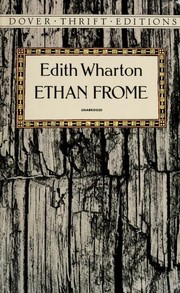
Ethan Frome
In snowy Starkfield, farmer Ethan Frome falls for his wife's young cousin Mattie, and one sled ride ends any hope of escape.
2,558-word summary · 11 min read

Tender Is the Night
Dick Diver marries his patient Nicole, and their Riviera marriage slowly breaks apart in Fitzgerald's 1934 novel of money, care, and drinking.
2,607-word summary · 12 min read
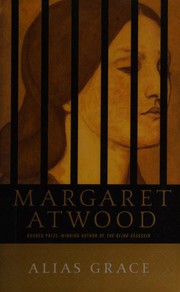
Alias Grace
A teenage maid convicted of a double murder in 1843 tells her story to a young doctor hired to decide whether she deserves a pardon.
2,788-word summary · 12 min read

Kim Jiyoung, Born 1982
An ordinary Korean woman life story shows how small bias piles into exhaustion and rupture.
2,181-word summary · 10 min read

The Taming of the Shrew
Petruchio woos sharp-tongued Kate while suitors scheme for sweet Bianca in Shakespeare's rowdy early comedy of marriage and disguise, first printed in 1623.
3,605-word summary · 16 min read

Middlemarch
Idealistic Dorothea marries dry scholar Casaubon while ambitious doctor Lydgate marries Rosamond, and a Midlands town watches both marriages strain.
2,883-word summary · 13 min read

Stoner
William Stoner trades farm life for literature, then endures a cold marriage and petty campus wars in John Williams's quiet classic.
2,282-word summary · 10 min read
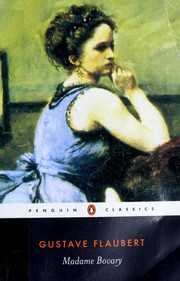
Madame Bovary
Emma Rouault marries Charles Bovary for romance, then seeks lovers and luxury until debts ruin them both.
2,400-word summary · 11 min read

The Color Purple
Celie writes letters to God and to her sister, surviving abuse in the rural South to find her own voice.
2,053-word summary · 9 min read

The Bell Jar
Esther Greenwood wins a New York internship that should feel bright, then sinks into depression at home. Plath's 1963 novel follows her breakdown, treatment,…
2,504-word summary · 11 min read

Anna Karenina
Anna leaves Karenin for Vronsky while Levin seeks faith and farming outside Moscow.
3,942-word summary · 18 min read

The Handmaid's Tale
Atwood's The Handmaid's Tale retold: Offred in Gilead, the Commander, Serena Joy, Mayday, and the van.
2,369-word summary · 11 min read

The Long Winter
Dakota Territory, 1880: seven months of blizzards cut a town off from the railroad, and a family survives on twisted hay, ground wheat, and a dangerous wheat…
2,210-word summary · 10 min read

The Crying of Lot 49
A California woman named executor of her ex-lover's estate follows a muted post horn into a possible centuries-old postal conspiracy, and Pynchon refuses to…
2,003-word summary · 9 min read

Silas Marner
A falsely accused weaver hoards gold in Raveloe until a stolen hoard and an abandoned child remake his narrow life.
2,699-word summary · 12 min read