
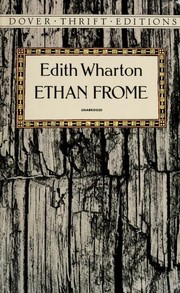
Ethan Frome
2,558-word summary 11 min read 195 pages in the book
- First published
- 1911
- Publisher
- Charles Scribner's Sons
- Pages
- 195
- ISBN
- 9780486266909
Reading options
What's inside (7 sections)
I came to this short novel sideways, through Wharton's big New York books, and I expected something polite and distant. A friend who grew up in western Massachusetts told me it was the coldest book she owned, and she meant the weather and everything else. She was right. I read it in two evenings in October with the heat clicking on, and by the end I felt like I had spent a month in a farmhouse where nobody says what they mean until it is too late. At 195 pages in the first Scribner edition, it does more damage than novels three times its size.
The setup is simple and strange. An unnamed engineer is stuck for the winter in Starkfield, Massachusetts, on a power-plant job, boarding with a local widow and piecing the town together. Everyone knows Ethan Frome by sight. He is fifty-two, tall and bent, with a lame leg and a scarred face, driving a gray horse and hauling lumber. People call the story of his injury the smash-up and change the subject. The narrator gets curious the way outsiders do, asks around, gets fragments from the village storekeeper's wife and others, and then one storm night his own driver fails him and Ethan Frome has to take him in. One evening in the Frome kitchen, looking at the two women inside, gives the narrator the rest. The book you then read is his reconstruction of events from twenty-four years earlier, when Ethan was twenty-eight.
That frame could feel gimmicky, and I will admit I braced for it. Instead it works like a held breath. You know from the start that something bad happened on that farm. Wharton then walks you backward into a winter when everything was still possible, and every small kindness lands harder because you know where it ends. The narrator only appears at the edges. The middle of the book belongs to Ethan, his sick wife, and the girl who ruins them.
Worcester, a sick mother, and Zeena
Ethan started with prospects, which is exactly why his fate stings. He spent time studying engineering in Worcester, Florida, Massachusetts is in his blood but he wanted out through books and machinery. Then his father got hurt and sickened and died, his mother began to fail in mind and body, and Ethan came home to run a failing farm and a sawmill that never paid enough. He nursed his mother through long silences. The book says she went silent in a way that scared him, sitting for hours without speaking, and that detail tells you more about loneliness than any speech could. When a cousin named Zenobia Pierce came to help with the nursing, Ethan was grateful in the way drowning people are grateful for any hand.
Zeena, as everyone calls her, married him after the mother died, and Wharton is brutally clear about why. Ethan feared silence more than he feared the wrong marriage. Zeena was seven years his senior, efficient, severe, already full of complaints about her own health. She ran a tight house at first. Then her real character settled in. By the time the main story starts, they have been married seven years with no children, the farm is failing, the mill barely runs, and Zeena's hypochondria has become the organizing principle of the house. She collects ailments and doctors' opinions the way other people collect recipes. She barely sleeps, or says she does not. She suspects every draft and every meal.
I should say here that Zeena is the book's weakest point as a portrait and also its most argued-about. Wharton gives her almost no softness. She is querulous, miserly with food and warmth, quick to suspect Ethan of laziness or worse. Modern readers sometimes want a fuller Zeena, a woman trapped in poverty with real pain and no options, and the book half invites that reading and half refuses it. Her suffering may be genuine. Her cruelty is certainly real. I found myself disliking her on Ethan's behalf and then catching myself, because Ethan chose this marriage out of fear and then blamed her for being exactly who she was. Wharton knows that. She just does not pause to make you like Zeena first.
Money presses on everything. Ethan owes for lumber, hopes for an advance from the builder Andrew Hale, calculates and recalculates small sums. His hired man, Jotham Powell, is loyal and slow and costs wages the farm cannot spare. The house itself is starved of care. Paint peels. The kitchen is the one warm room. Against this grinding pressure, Ethan still notices weather and light the way his engineering mind always did. He loves the Starkfield winters even as they trap him. That split, a man built for bigger thoughts and pinned to a dying farm, is the whole tragedy in seed form.
Mattie in the kitchen
Mattie Silver is Zeena's young cousin, poor, orphaned, pretty, and sent to help with the housework because Zeena claims she is too sick to manage. Mattie has no training as a servant and no other home if this fails. She is cheerful where Zeena is sour, quick where Zeena is slow, warm with Ethan in exactly the ways his marriage never was. She burns things. She laughs. She wears a red ribbon or a scarf that puts color in the gray kitchen. Ethan, starved for company, falls for her the way a man falls who has not laughed in years. Wharton never makes it sordid. It reads like spring arriving in a house that had sealed its windows.
The middle chapters are domestic and I loved them more than I expected. Ethan and Mattie share small rituals. He walks her home from the village church socials. They linger on the road. At home, with Zeena away or asleep, they have supper alone and talk like equals, and Ethan feels young for an hour. Even the cat is part of it. The Frome cat sleeps on Zeena's chair and knocks about the kitchen, and during one of those stolen suppers it jumps up and shatters Zeena's treasured red glass pickle dish, a wedding gift so special it was never used. Ethan gathers the pieces. Mattie glues them with shaking hands and sets the dish back on the shelf, hoping. Any reader knows hope is useless here. The dish sits there like a clock ticking.
Outside the house there is Denis Eady, the storekeeper's son with a fast horse and a cutter, who wants Mattie and has the money and ease Ethan lacks. Ethan's jealousy over Denis is painful because it carries everything else with it. Denis represents the life Ethan might have had. Town, trade, movement. At a church dance Ethan watches Mattie laugh with others and hates himself for watching. The famous winter pastime of the town is coasting, sledding down the long hill outside the village, and Ethan offers to steer Mattie down himself. Those sledding scenes are written with a rush and brightness that stands out in such a gray book. For a few pages Ethan is fast and skilled and alive, and Mattie holds on and screams with joy. Then they walk home through snow that squeaks underfoot, and the farm waits.
Wharton grew up spending time in the Berkshires and knew this country, its speech and its winters, and it shows in textures. The cold kitchen floor. The smell of the barn. The way snow buries fences until the fields look flat and clean. She first worked some of this material as a French exercise years earlier, which tells you how long the images sat in her. Nothing here feels researched. It feels remembered, down to the gray horse's breath in the air.
Bettsbridge and the sentence
The turn comes through doctors and money, as turns in poor houses do. Zeena announces she is going to Bettsbridge to consult a new doctor, Dr. Buck, about her many troubles. The trip costs money they do not have and takes a full day. Ethan drives her partway, borrows and scrapes, and waits. When Zeena returns, she brings two things. First, a long list of prescriptions and rules that will cost more they do not have. Second, a decision. The doctor has supposedly said she needs hired help in the house, real help, and Mattie must go. A new girl is already arranged. Mattie will leave the next day or the day after.
Wharton handles Zeena's announcement like a hammer wrapped in cloth. Zeena is almost kind about it, which is worse. She speaks of Mattie's future, of a place found for her, of fairness. Ethan understands at once that his wife knows or suspects everything, and that the broken pickle dish, discovered on the shelf, confirmed it. The scene where Zeena sets the glued dish on the table between them is one of the great quiet cruelties in American fiction. She says little. She does not need to. The dish says Mattie sat in her chair, ate off her plates, played house in her kitchen.
Ethan's response is a tangle of plans that go nowhere, and Wharton writes male helplessness with unusual honesty. He thinks of running off with Mattie to the West. He counts cash and finds almost nothing. He considers asking Andrew Hale for an advance on lumber under false pretenses and then cannot bring himself to lie to a decent man. He thinks of borrowing against lies and hates the thought. Every road needs money and he has none. Meanwhile Mattie packs her few things upstairs, crying quietly, trying to be brave. The house fills with the sound of Zeena coughing and directing, already mistress again.
There is a night walk in this section I want to mention because it shows Wharton's control. Ethan and Mattie sit in the kitchen after Zeena has gone to bed, knowing it is their last evening. They barely touch. They talk about small things. The clock ticks. The cold presses at the windows. Nothing happens, and everything ends. If you have ever sat up late with someone you cannot keep, knowing morning takes them, you will find these pages almost too exact. I had to put the book down for a while after them.
The elm at the bottom
Morning comes gray and sharp. Ethan is supposed to drive Mattie to the station so she can catch the train toward her next place, a job or relatives, somewhere that is not Starkfield. On the way they pass the coasting hill. The sled is there or borrowed, accounts vary in my memory, but the shape is fixed. Mattie asks to coast once more. They climb. They talk, or do not need to. Below them the slope runs fast and white toward the village road, and at the bottom stands the great elm that coasters always steer around, the tree everyone knows.
What happens next is the most debated choice in the book, and I will describe it plainly since summaries should not coyly hide the core. They agree, or Ethan agrees for them, to steer into the elm rather than part. He wants one perfect run that ends everything instead of a slow dying apart. He aims the sled at the tree. The crash does not kill them. It shatters them.
Ethan wakes into pain and failure. His leg is ruined and his face cut, injuries that will mark him for life. Mattie is worse. Her spine is injured, her youth and liveliness gone in an instant. The suicide pact becomes a crippling, and the two people who wanted freedom get the opposite. A farmer finds them or help comes, the details blur in the telling, but help comes too late to matter and in time to preserve everything cruel. I read these pages with my hands tight. Wharton does not linger on blood. She gives you speed, cold air, Mattie's voice, and then stillness. It is enough.
People argue about whether to blame Ethan here, and the book gives you room. He chose death for both of them without any right to choose for her, even if she asked. He failed at that too, and his failure made her fate harder than his. You can call it love or selfishness or despair. Wharton, I think, calls it Starkfield winter getting inside a man until he mistakes a tree for a door. I found it unforgivable and completely believable, which is an uncomfortable combination I kept turning over after I finished.
Twenty years later in the same kitchen
Then the frame closes, and it is devastating. The narrator, sheltered from the storm in the Frome house, meets the household as it is. Ethan, old at fifty-two, limping, scarred, still hauling lumber because there is nothing else. Zeena, now gaunt and gray, running the house with grim competence. And Mattie, the bright girl with the ribbon, now a bitter invalid in a chair by the stove, querulous and sour, cared for by the very woman she tried to displace. The three of them are locked together in poverty and resentment, with no exit anyone can picture. The smash-up did not end the triangle. It froze it forever.
Mrs. Hale's verdict on it all, given to the narrator in the village, is that Ethan has been in Starkfield too many winters, and people who stay get buried by the place as surely as if snow covered them. She means it as pity. It lands as judgment on the whole town. Nobody helped. Nobody could have, or nobody tried. The poor in Starkfield endure winters, debts, and sickness with almost no margin, and one soft spring inside Ethan got punished by twenty years of iron cold. I sat with that a long time. It is bleak in a way that feels less like melodrama and more like accounting. This is what happens when every choice costs money you do not have.
Is it perfect. No, and since these summaries should be honest, here are my complaints. The deck is stacked. Wharton gives Ethan beauty and brains and gives Zeena nothing but complaints, so the reader's sympathy has nowhere else to go. The pickle dish is almost too neat a device, broke and glued and found on schedule. The narrator's reconstruction asks you to believe he recovered thoughts no witness could report, whole private scenes rendered from gossip. And at under two hundred pages in the Scribner first edition, some readers will find it spare to the point of thin, a long story stretched over a short frame or the reverse.
Still, I recommend it strongly, with one warning. Do not read it for plot twists. Read it for winter, for the kitchen scenes, for the sled run, for the way Wharton writes poverty without ever looking down at her people. Pair it with her Age of Innocence if you know that book, and watch how the same author who mapped opera boxes and ballrooms maps a barn and a hill. Both are about traps. Starkfield just uses snow instead of manners. First published in 1911 by Charles Scribner's Sons, after appearing in Scribner's Magazine, it grew from Wharton's much earlier French sketch and her Berkshire years into something permanent. Short books rarely haunt me. This one does.
FAQ
What happens at the end of Ethan Frome?
Ethan steers their sled into the big elm instead of parting with Mattie. Both survive crippled, and Zeena takes Mattie in, so all three spend decades together in the same farmhouse.
Was Ethan Frome based on a real accident?
Wharton knew the Berkshires well and drew on local winter life. Accounts link the sledding climax to a 1904 Lenox accident, though she never named it as her source.
Which edition should I buy?
The story first ran about 195 pages from Charles Scribner's Sons in 1911. The Dover Thrift paperback with ISBN 9780486266909 is a cheap 96-page reprint with the full text.
Similar books
The House of Mirth
Lily Bart, beautiful and penniless at twenty-nine, navigates New York's marriage market until a Dorset yacht scandal strips her of the only currency she has.
2,468-word summary · 11 min read

Revolutionary Road
A Connecticut couple who believe they are too good for the suburbs plan to move to Paris, and the plan slowly exposes everything they cannot say to each other.
2,085-word summary · 9 min read
Madame Bovary
Emma Rouault marries Charles Bovary for romance, then seeks lovers and luxury until debts ruin them both.
2,400-word summary · 11 min read

Howards End
Forster's 1910 novel follows two families, a house in Hertfordshire, and a burned note, asking whether money and feeling can ever be connected.
2,187-word summary · 10 min read

Sophie's Choice
A young Southern writer in 1947 Brooklyn befriends a brilliant, unstable couple and slowly learns the story of the Polish Catholic woman at the center of their…
2,798-word summary · 12 min read
The Heart is a Lonely Hunter
A deaf man becomes the quiet center for lonely souls in a small Georgia mill town.
2,000-word summary · 9 min read

Lady Chatterley's Lover
A baronet's wife, starved in a marriage the war broke, takes the gamekeeper as her lover. Lawrence's banned 1928 novel of class and touch.
2,566-word summary · 11 min read

Tender Is the Night
Dick Diver marries his patient Nicole, and their Riviera marriage slowly breaks apart in Fitzgerald's 1934 novel of money, care, and drinking.
2,607-word summary · 12 min read

Middlemarch
Idealistic Dorothea marries dry scholar Casaubon while ambitious doctor Lydgate marries Rosamond, and a Midlands town watches both marriages strain.
2,883-word summary · 13 min read

Stoner
William Stoner trades farm life for literature, then endures a cold marriage and petty campus wars in John Williams's quiet classic.
2,282-word summary · 10 min read

Anna Karenina
Anna leaves Karenin for Vronsky while Levin seeks faith and farming outside Moscow.
3,942-word summary · 18 min read
Wuthering Heights
Emily Bronte's Wuthering Heights retold: Heathcliff and Cathy on the moors, two houses, two generations.
2,056-word summary · 9 min read

The Great Gatsby
The Great Gatsby through Nick Carraway: Gatsby's parties, the green light, Daisy and Tom, and why Fitzgerald's 1925 novel ends as a judgment on the American…
2,501-word summary · 11 min read

The Age of Innocence
Engaged New York lawyer Newland Archer falls for Ellen Olenska, his fiancee's cousin fleeing a bad marriage, and must choose between love and duty in 1870s old…
3,100-word summary · 14 min read

The Long Winter
Dakota Territory, 1880: seven months of blizzards cut a town off from the railroad, and a family survives on twisted hay, ground wheat, and a dangerous wheat…
2,210-word summary · 10 min read
The Crying of Lot 49
A California woman named executor of her ex-lover's estate follows a muted post horn into a possible centuries-old postal conspiracy, and Pynchon refuses to…
2,003-word summary · 9 min read
Silas Marner
A falsely accused weaver hoards gold in Raveloe until a stolen hoard and an abandoned child remake his narrow life.
2,699-word summary · 12 min read
Lisey's Story
Two years after her novelist husband dies, Lisey Landon follows a trail of clues into his childhood and the other world that made him a writer.
1,998-word summary · 9 min read
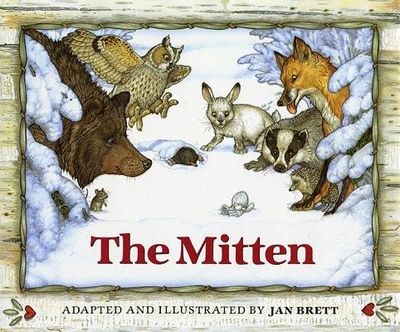
The Mitten
Jan Brett retells a Ukrainian folktale about a boy, a lost white mitten, and the woodland animals that crowd inside until a bear sneezes.
2,609-word summary · 12 min read
Once There Were Wolves
A biologist reintroduces fourteen wolves to the Scottish Highlands while protecting her traumatized twin sister, then finds a body in the snow that could…
2,682-word summary · 12 min read

Fathers and Sons
Arkady brings the nihilist Bazarov home to his father's estate, and a generational argument turns into love, a duel, and an early death.
2,192-word summary · 10 min read
Naked Lunch
Burroughs's banned 1959 collage novel follows Bill Lee through addiction, Tangier, and the nightmare bureaucracy of the Interzone.
2,082-word summary · 9 min read

The Chosen
A shattered pair of glasses in a 1944 Brooklyn softball game starts a friendship between a Hasidic boy and his Orthodox neighbor, and their fathers pull them…
2,443-word summary · 11 min read

The Dharma Bums
Ray Smith rides freight trains, climbs Matterhorn Peak and argues about Zen with the poet Japhy Ryder in Kerouac's 1958 road novel.
2,729-word summary · 12 min read

Stones from the River
Trudi Montag is born a dwarf in a small German river town in 1915 and grows up to keep the town's library and its secrets, from the First World War to the…
2,818-word summary · 13 min read

On Chesil Beach
Two newlyweds spend one terrible night on Chesil Beach in 1962, and the rest of their lives is decided by it.
2,456-word summary · 11 min read

Ivanhoe
A disinherited Saxon knight, a great tournament, a besieged castle and a trial by combat. Scott's most famous novel, set in England in 1194.
2,834-word summary · 13 min read

At First Sight
Jeremy and Lexie are married and expecting a baby when anonymous emails tell him the child may not be his.
2,317-word summary · 10 min read

A Spool of Blue Thread
Four generations of the Whitshank family in Baltimore, and the silences, resentments and quiet love they hand down without ever saying so.
2,408-word summary · 11 min read

Wide Sargasso Sea
Jean Rhys gives the first Mrs. Rochester a Caribbean childhood, a marriage built on money and suspicion, and a voice that Charlotte Bronte left in the attic.
2,021-word summary · 9 min read