

Sophie's Choice
2,798-word summary 12 min read 515 pages in the book
- First published
- 1979
- Publisher
- Random House
- Pages
- 515
- ISBN
- 9780394461090
Reading options
What's inside (9 sections)
The book begins with a man looking for a cheap apartment. "In those days cheap apartments were almost impossible to find in Manhattan, so I had to move to Brooklyn." That is the first line of Sophie's Choice, and it sets the voice: brash, funny, self-pitying, and completely unprepared for what comes next. Stingo is twenty-two, a Virginian, a Duke graduate, a former Marine, and a manuscript reader just fired from McGraw-Hill. It is 1947. He has five hundred dollars from his father and a plan to write the great American novel in a rented room. Instead he lands in Yetta Zimmerman's boarding house in Flatbush, painted pink from basement to eaves, and meets two neighbors who take the next thirty years off him.
For its first hundred pages the novel is about appetite, not Auschwitz. Stingo is hungry for sex, fame, experience, and the book is not shy about it. The pink house is a comedy set: a widow with no illusions, a gossip named Morris Fink, and, every night, bedsprings followed by a quarrel from the apartment above. Sophie and Nathan enter as noise, then as a couple, then as a problem Stingo cannot leave alone.
The Pink House
Nathan Landau takes over a room. He is handsome, fast-talking, generous, and apparently a genius: Harvard, cellular biology, a job at a drug company. He reads poetry, cooks elaborate meals, and tells Stingo his manuscript is the work of the next great American writer. He can also, in the next breath, call Sophie a Polack who must have done something to survive and Stingo a potential lyncher of blacks. The switches are sudden and total. One minute he is buying dinner; the next he is shouting in the street.
Sophie Zawistowska is quieter. She is Polish, Catholic, blond, beautiful in a way the novel never lets you forget, and she has a number tattooed on her forearm. Stingo assumes she is Jewish. She corrects him, and that correction is the first crack in the story he thinks he is living in. She works as a receptionist for two chiropractors, Blackstock and Katz. She met Nathan at the Brooklyn College library, where she asked for "Emil Dickens" instead of Emily Dickinson, then fainted from embarrassment and something worse. Nathan caught her, took her home, cooked for her, and became, for a while, the person who made her feel human.
The three become a unit. They go to Coney Island, Nathan and Sophie dressed in 1930s clothes, and for a few hours the book is a screwball comedy. Nathan praises Stingo's pages. Sophie laughs. Stingo falls in love with her in the way a twenty-two-year-old falls for a woman who is kind to him and out of reach: completely, and without much dignity. He also wants to sleep with her, and the novel is candid about the gap between his tenderness and his horniness. That gap is one of the things the book is about, whether it knows it or not.
The Southern Boy
Stingo's own story runs alongside the Brooklyn one. He is from Virginia; his mother died when he was a boy; his father is a decent, affectionate gentleman. The five hundred dollars that pays for the pink room comes from his great-grandfather's sale of a slave named Artiste. That detail is planted early and never quite paid off. It is meant to link the South to Auschwitz, to make Stingo complicit in a history he is only beginning to understand. Sometimes it works. Sometimes it feels like a young writer's notebook, a big theme he has not earned.
There is also Maria Hunt, a girl from back home who killed herself in New York and gives Stingo the idea for his first novel. There is Leslie Lapidus, a rich, nervous, aggressively flirtatious Jewish girl who talks about sex constantly and will not have it, a comic episode that runs, by one count, about a fifth of the book. These episodes are funny in places and long in others. A reader who comes for the Holocaust must get through a lot of 1947 sexual frustration and publishing satire first. The Leslie section, a long joke about a young man who cannot get anyone to sleep with him, is where the book nearly lost me. The proportion is strange, and the joke is not good enough to justify its length.
Sophie's Versions
Sophie's past arrives in pieces that do not fit. First she tells Stingo a gentle story: her father was a cultured Kraków professor who defended Jews; her husband, Casimir, was his assistant; they were happy enough. Later she tells him the truth, or a truth. Her father, Zbigniew Biegański, was a fierce antisemite who dictated pamphlets to her and made her type them. In one he changed a word, from "abolishment" to "extermination," and had her type that too. Casimir was weak, cold, and in love with her father's ideas. When the Germans took both men away in 1939 and killed them, she felt nothing. That admission costs her something to say.
The novel is careful about the order of these revelations. Sophie tells Stingo what she can bear, then more when she needs him. We want the whole story, and we do not ask whether wanting it is a form of pressure. That is one of the book's smarter moves: it makes the reader complicit in the extraction.
In Warsaw, after the men are gone, Sophie lives with her children, Jan and Eva, and meets Wanda, a resistance organizer, and Wanda's brother Józef, who becomes her lover. Józef is brave in a way that frightens her. Their affair is brief and tender, and it is the last ordinary happiness she has before the camp. Wanda wants Sophie to translate stolen German documents. Sophie refuses because she has children and is afraid. She is right to be afraid, and the refusal does not save her. Józef is killed by the Gestapo. Wanda is arrested. Sophie, smuggling food, is caught with a ham on a train in March 1943. The ham is the hinge of her life. A small, human attempt to feed her mother puts her and her children on a transport.
They arrive at Auschwitz on April 1, 1943. The date is stated, and the precision is part of the horror. The Jews are sent one way; the others are sorted. Sophie, Wanda, and Jan go into the camp. Eva, not quite eight, is sent to the gas chamber. That is the fact the novel withholds until almost the end, and when it arrives it reorganizes everything before it.
The Commandant's House
The Auschwitz section is the strongest writing in the book and the most contested. Sophie's languages and typing save her. She is put to work in the household of Rudolf Höss, the commandant, a real historical figure who oversaw the machinery of the camp. The novel shows him at home: a bureaucrat at his own table, fond of his children, polite to the prisoner who types his letters. There is a governess who has taught herself to believe the Jews deserve it, a housekeeper who is casually cruel, and a Polish handyman who plays the clown and is smarter than he lets on. The horror is not in the basement; it is in the upholstery.
Sophie's plan is to make Höss want her. Not because she wants him, but because she thinks she can trade her body, or the promise of it, for Jan's life. She tells Höss she shares his views and has suffered from the Jews too. She tries to get Jan into the Lebensborn program, where a blond, German-speaking Polish boy might be reclassified as German and sent to a family instead of a gas chamber. Höss is attracted but holds back, makes vague promises, and does not keep them. Sophie never learns what happened to Jan. The not knowing is the point. The camp kills people, and it also kills the possibility of knowing what happened to them.
The section has been attacked from several directions. Polish authorities banned the novel for its portrait of Polish antisemitism, and the Soviet Union banned it too. Jewish critics, Cynthia Ozick chief among them, objected to something else: Styron makes his central victim a Catholic Pole, gives her a story documented in its Jewish parts but invented in its Christian parts, and uses her to say Auschwitz was a crime against mankind rather than a crime against the Jews. Why is the representative victim a gentile? What does that do to the specificity of the Jewish dead?
Styron had answers: the camps were a warning to everyone, and the Nazis' racial machine also consumed Slavs, Christians, and political prisoners. He visited Auschwitz to research it. But the answers do not dissolve the objection. There is a difference between saying many kinds of people suffered and saying the Holocaust was about everyone, and the novel sometimes slides from the first to the second. The Southern material makes the slide worse.
The Choice
The title promises a dilemma, and the novel saves it for the end. On the night they arrive, Sophie is pulled out of line with her children and brought to a doctor. She begs. They are Polish, not Jewish, Catholic, and the children speak German. The doctor listens, then offers her a privilege. She can keep one child. The other will be taken away. If she refuses, both will go. She has seconds, maybe less. She chooses Eva, her daughter, to be taken, and Jan, her son, to live. A mother is made to hand one child to the gas chamber to keep the other.
The scene is short. That is its power. Styron gives you the doctor's flat voice, the child's confusion, the mother's animal panic, and then moves on. The detail that stays is the doll. Eva is holding a doll when she is taken, and afterward Sophie cannot speak the word in any language. That detail makes the rest of the novel feel like an attempt to explain a wound that cannot be explained.
But the choice is also a literary device. It comes from a story Hannah Arendt tells about a mother forced to choose among her children, and Styron builds the whole novel toward it. The Holocaust is, in a sense, arranged around a philosophical thought experiment, and the reader is invited to feel the horror as a reveal. Some critics find this manipulative. I think it is the most honest thing in the book and also the most dangerous: honest because it refuses to make Sophie heroic, dangerous because it turns a mother's impossible decision into a plot twist. The novel half knows this. That is why it withholds the story and why Stingo's desire for it looks like a violation.
The Diagnosis
Nathan's illness is the other delayed revelation. His brother Larry, a doctor, tells Stingo the truth. Nathan is a paranoid schizophrenic. He never went to Harvard. He has no research job; he works in a company library and has built a life out of a story. He takes stimulants. He has been hospitalized. Larry asks Stingo to watch him, a strange request to make of a twenty-two-year-old in love with the woman in question, and Stingo agrees because he wants to be inside the couple's life.
The violence escalates. Nathan beats Sophie. He accuses her of sleeping with Stingo. He calls the house and fires a pistol into the phone. Sophie and Stingo run. They take a train to Washington and a hotel room, and for a night the novel becomes a different book. Stingo proposes. He wants to take her to his father's farm in Virginia, marry her, and keep her safe. Sophie is kind and says no. Then she tells him about Eva and the doll. Then they have sex. In the morning she is gone, with a note saying she must go back to Nathan.
The sex after the confession is the scene that bothers me most. Stingo describes it later as an "orgiastic attempt to beat back death," which is the novel being self-aware about what it is doing. Self-awareness is not justification. A woman has just told the worst thing that ever happened to her, and the narrative's response is to put her in bed with the man who has wanted her for three hundred pages. Styron frames it as mutual, as her choice, and maybe it is. But the timing is ugly, and the ugliness is not fully examined. Here the book's sympathy for Sophie and its sympathy for Stingo pull apart, and Styron does not always choose her.
Cyanide in Brooklyn
Stingo goes back to New York. He arrives at the pink house to find Morris Fink in the hall with the story. Sophie and Nathan are dead in her bed. They have taken cyanide. They are still in the old-fashioned clothes from Coney Island. A book of Emily Dickinson's poems is open beside them, at "Ample make this bed."
The funeral is a comedy of the wrong kind. A Universalist minister who never knew them delivers a sermon full of Lincoln, Emerson, and self-reliance. Stingo, half drunk, mutters an obscenity loud enough to be heard. Larry arranges the burial. Stingo reads the Dickinson poem at the grave, and its instruction to "make this bed with awe" lands on the bed where he found them. Then he goes to Coney Island, to the same beach, and falls asleep. Children bury him in the sand. He wakes, sits up out of the shallow grave, and sees the morning star.
That ending is either a genuine image of survival or a young writer reaching for one. The morning star is too neat for the mess the novel has made, and yet the mess is the point: Stingo is alive, Sophie is not, and the book he will write is the one we are reading. The final pages admit he has been telling this story for thirty years, that he became a successful novelist, and that Sophie and Nathan are still the people he measures his life against. The frame does not console. It keeps the wound open.
What is the novel doing? It braids three stories: a Southern boy's apprenticeship, a Brooklyn love affair, and a Polish woman's trip through the twentieth century's worst machinery. Nathan's life is a fabrication. Sophie's past comes in versions. Stingo reconstructs everything from memory and tells us so. The reader keeps revising: the kind father becomes the antisemite, the childless woman a mother, the scientist a paranoid. That structure is the book's real achievement. It makes the reader feel how a life is put together after the fact, by someone who needs it to mean something.
The cost is that Sophie is often a screen for other people's needs: Nathan's, Stingo's, Styron's, the reader's. She is given a great deal of pain and not enough ordinary life. Her voice is vivid in the flashbacks, but the novel is always translating her, and the translator is a man. Styron dramatizes this rather than solving it, which is not the same thing as escaping it.
It is also, frankly, a long book, and it has been oversold as the great American Holocaust novel. The Leslie affair, the McGraw-Hill office, the Southern family history: all of it tries to make a whole world, and some is a young writer showing off. The prose can be windy. The 1947 sexual politics are embarrassing in ways the novel does not always intend. Readers who want a tight, documentary account of Auschwitz should go elsewhere. Readers who cannot take graphic antisemitism, sexual coercion, or suicide should be warned. Readers who want a novel centered on Jewish experience of the Holocaust will find the Catholic heroine a real obstacle, not a footnote.
And yet. The commandant's house, the ham, the doll, the cyanide: those scenes stay. Sophie's story is not the only story of the camps, and it is not a substitute for the ones she cannot tell. But as a portrait of a woman trying to live after an impossible decision, and of a young man who wanted her story more than he wanted to understand it, it still has a hold. Sophie's Choice came out from Random House in 1979, won the National Book Award the following year, and has been argued about ever since. I would not call it the great American novel. I would call it a great, flawed, sometimes infuriating attempt to write one, and I would hand it to a friend with a warning about the length and the politics.
FAQ
Is Sophie's Choice based on a true story?
No. Sophie and Nathan are fictional, though Styron researched Auschwitz and based Rudolf Höss on the real commandant. The central choice was inspired by an anecdote Hannah Arendt told.
What is the choice in Sophie's Choice?
Sophie is forced at Auschwitz to choose which of her two children will be sent to the gas chamber. She chooses to save her son Jan and loses her daughter Eva.
Why do some critics object to Sophie's Choice?
Critics such as Cynthia Ozick argued that making a Catholic Pole the central victim blurs the specifically Jewish nature of the Holocaust. Others defend the novel as a study of one woman's survival.
Similar books
A Farewell to Arms
Frederic loves Catherine in Italy until desertion leads to Switzerland and stillbirth.
2,502-word summary · 11 min read
All Quiet on the Western Front
Paul Bäumer enlists at nineteen and faces the trenches of World War I in Remarque's 1929 classic, told from the German side of the wire.
2,543-word summary · 11 min read
The Orphan's Tale
A Dutch teenager rescues a Jewish baby from a death train and joins a German circus, where a Jewish aerialist teaches her to fly.
2,943-word summary · 13 min read

Revolutionary Road
A Connecticut couple who believe they are too good for the suburbs plan to move to Paris, and the plan slowly exposes everything they cannot say to each other.
2,085-word summary · 9 min read

Ivanhoe
A disinherited Saxon knight, a great tournament, a besieged castle and a trial by combat. Scott's most famous novel, set in England in 1194.
2,834-word summary · 13 min read
Wide Sargasso Sea
Jean Rhys gives the first Mrs. Rochester a Caribbean childhood, a marriage built on money and suspicion, and a voice that Charlotte Bronte left in the attic.
2,021-word summary · 9 min read
The Silence of the Girls
Briseis, queen of Lyrnessus, is captured by Achilles and narrates the Trojan War from inside the Greek camp, where women are prizes and survival is its own…
2,098-word summary · 9 min read
The Last of the Mohicans
During the French and Indian War, Hawkeye and two Mohican warriors try to save two British sisters from a Huron chief whose revenge will end the Mohican line.
2,017-word summary · 9 min read
Mother Night
Howard W. Campbell Jr., a Nazi propagandist and American spy, tells the story of his double life from an Israeli prison cell while waiting to be tried for war…
1,988-word summary · 9 min read
Doctor Zhivago
A doctor and poet lives through revolution, war, and love in Pasternak's novel of private life under the pressure of Russian history.
2,213-word summary · 10 min read
The House of Mirth
Lily Bart, beautiful and penniless at twenty-nine, navigates New York's marriage market until a Dorset yacht scandal strips her of the only currency she has.
2,468-word summary · 11 min read
Exodus
Leon Uris's sweeping 1958 novel follows Jewish refugees, Haganah fighters, and Holocaust survivors from Cyprus to the founding of Israel and the 1948 war.
2,529-word summary · 11 min read
The Red Badge of Courage
Henry Fleming runs at Chancellorsville, then returns to stand.
2,486-word summary · 11 min read
Let the Great World Spin
A wire walker crosses the towers as Bronx lives collide below.
2,338-word summary · 10 min read
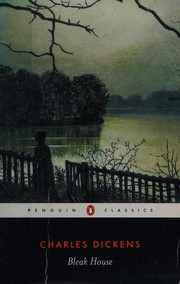
Bleak House
Jarndyce and Jarndyce grinds through Chancery while Esther finds her family.
2,480-word summary · 11 min read
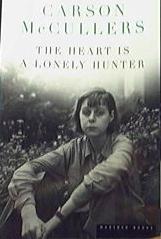
The Heart is a Lonely Hunter
A deaf man becomes the quiet center for lonely souls in a small Georgia mill town.
2,000-word summary · 9 min read
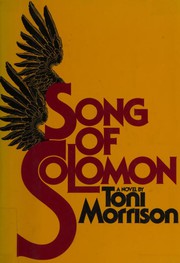
Song of Solomon
Milkman Dead leaves Michigan to hunt for family gold and finds instead the old song of his ancestor Solomon.
2,465-word summary · 11 min read
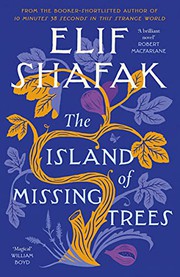
The Island of Missing Trees
A talking fig links 1970s Cyprus lovers Kostas and Defne with their grieving London daughter Ada years later.
3,172-word summary · 14 min read
The Sympathizer
Double agent captain spies in Saigon fall and LA exile while confessing to commandant.
2,169-word summary · 10 min read
The English Patient
In a ruined Italian villa in 1945, a burned man, a nurse, a thief, and a sapper trade pasts shaped by desert love and war.
2,006-word summary · 9 min read
Ethan Frome
In snowy Starkfield, farmer Ethan Frome falls for his wife's young cousin Mattie, and one sled ride ends any hope of escape.
2,558-word summary · 11 min read
All the Pretty Horses
John Grady and Rawlins ride to Mexico for ranch work, finding love, prison, and a code that costs all.
2,677-word summary · 12 min read
Schindler's List
Womanizing profiteer Schindler spends a fortune typing over a thousand Jews onto factory lists.
2,048-word summary · 9 min read
Middlemarch
Idealistic Dorothea marries dry scholar Casaubon while ambitious doctor Lydgate marries Rosamond, and a Midlands town watches both marriages strain.
2,883-word summary · 13 min read
Half of a Yellow Sun
Ugwu, Olanna and Richard are pulled from Nsukka comfort into the Biafran war, where love and hunger test every loyalty.
2,973-word summary · 13 min read

Snow Falling on Cedars
A Japanese American fisherman stands trial for murder on a snowy island, while a reporter faces lost love and wartime prejudice.
2,224-word summary · 10 min read
Shogun
An English pilot wrecked in 1600 Japan becomes a pawn in Lord Toranaga's patient bid for power, and slowly becomes Japanese himself.
2,251-word summary · 10 min read
Life After Life
Ursula Todd dies and restarts through wars, flus, and bad marriages.
2,060-word summary · 9 min read
For Whom the Bell Tolls
An American dynamiter joins Spanish guerrillas for three days to blow a mountain bridge, finding love and doomed courage.
2,286-word summary · 10 min read
War and Peace
Pierre, Natasha, and Andrei search for meaning amid the Napoleonic wars.
2,536-word summary · 11 min read