
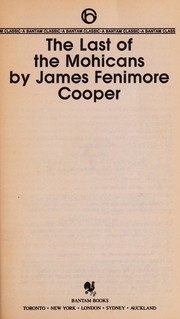
The Last of the Mohicans
2,017-word summary 9 min read 410 pages in the book
- First published
- 1826
- Publisher
- Bantam Classics
- Pages
- 410
- ISBN
- 9780553213294
- Series
- The Leatherstocking Tales (#2)
Reading options
What's inside (8 sections)
I came to The Last of the Mohicans expecting a museum piece, the kind of novel you read in school because it is important rather than because it is alive. What surprised me is how much of it still moves. The chase sequences are genuinely tense, the wilderness has a physical presence, and the central friendship between Hawkeye and Chingachgook carries real weight. It is also a messy, dated, occasionally overwrought book, and the mess is part of what makes it interesting. Cooper is trying to write about the birth of America while the country is still busy taking land from the people who were already there, and that contradiction sits on every page.
The novel was published in 1826, during the French and Indian War, and it follows a small group of characters through the forests and forts of upstate New York. The war is the backdrop, but the story is a pursuit. Magua, a Huron warrior, wants revenge on Colonel Munro, the British commander at Fort William Henry. Munro's daughters, Cora and Alice, are traveling to the fort with Major Duncan Heyward, a young officer who loves Alice. Their guide is Magua, who leads them into an ambush. Hawkeye, a white scout who has spent most of his life in the woods, and his two Mohican companions, Chingachgook and his son Uncas, rescue them. From that point on, the novel becomes a series of captures, escapes, and forced marches, with Magua always one step ahead.
Cooper is very good at geography. You can feel the distance between Fort Edward and Fort William Henry, the thickness of the forest, the difficulty of moving a small group through country that belongs to nobody and everybody. The characters are constantly hungry, wet, and tired. They hide in caves behind waterfalls, crawl through brush, and climb rocks. The novel does not romanticize the wilderness in a simple way. It is beautiful, but it is also indifferent. People die in it because they make mistakes, and the land does not care. That sense of indifference gives the action a seriousness that a lot of adventure fiction lacks.
The three men at the center
Hawkeye is the character most readers remember, and for good reason. He talks too much, he is proud of his skills, and he has a habit of explaining his own moral code at length. But he is also competent, loyal, and surprisingly tender with the people he protects. He is a white man who has chosen to live among the Mohicans, and he is constantly negotiating his place between two worlds. He speaks with respect about Chingachgook and Uncas, but he also speaks for them when it suits him. Cooper does not seem fully aware of that contradiction, and the novel is more interesting because of it. Hawkeye is a bridge between cultures who sometimes acts like he owns both sides of the bridge.
Chingachgook is quieter and, in some ways, more moving. He is the father of Uncas, the last of the Mohican line, and he knows that his people are disappearing. He does not spend much time complaining about it. He hunts, fights, and mourns. His grief is controlled, which makes it land harder. The scene at the end, when he stands over his son's body, is one of the few moments in the novel where Cooper stops explaining and lets the image do the work. Chingachgook's dignity is not a speech. It is the way he carries himself when he has nothing left to carry.
Uncas is the novel's ideal. He is brave, beautiful, skilled, and noble, and Cooper gives him almost no interior life. That is a problem. Uncas exists to be admired and then to die, and his death is meant to symbolize the end of a people. The symbolism is clear, but it also turns him into an idea rather than a person. Cora gets a little more depth, but not much. She is brave and principled, and she refuses Magua's offer of marriage even when it might save her life. Her refusal is the moral center of the final act, but Cooper does not give her enough space to be anything other than a martyr.
Magua and the logic of revenge
Magua is the best character in the book. He is the villain, but his grievance is specific and understandable. Munro had him flogged for being drunk, and the humiliation stuck. Magua was a scout for the British, and the punishment destroyed his standing. He wants to hurt Munro in the way that will hurt most, which means taking his daughters. He does not want Cora because he is in love with her. He wants her because possessing her is a way of possessing Munro's power. That is a more interesting motive than simple lust, and Cooper gives Magua some of his sharpest lines.
Magua is also the character who names the injustice at the heart of the story. He points out that the British and the Americans talk about civilization while taking land and breaking promises. He is not wrong about that. He is still a killer, and the novel does not excuse him, but it lets him speak. That is more than most adventure novels of the period would allow. The result is a villain who is both frightening and pitiable. When he dies, the book does not celebrate. It just moves on to the funerals.
Fort William Henry and the massacre
The middle section at Fort William Henry is the strongest part of the novel. The fort is surrounded by the French, and the British are running out of food and time. Munro refuses to surrender until he sees the size of the French force. The negotiations are tense, and the eventual surrender is supposed to be honorable. Then the Huron allies of the French attack the retreating column. The massacre is chaotic and ugly. Cooper does not spare the reader. Men, women, and children are killed. The scene is based on a real event, and the novel treats it as a moment when the rules of war collapse.
What makes the massacre effective is the way it happens after the formal surrender. The British think they have a deal. They are marching out with their weapons and their dignity. Then the deal falls apart. Cooper is interested in the gap between ceremony and violence. The French commander, Montcalm, is not shown as a monster, but he cannot control his allies. The British are not innocent either. The whole thing is a reminder that the war is being fought by people who do not fully control the forces they have invited into the country.
Cora and Alice are separated during the massacre. Magua takes them, and the second half of the novel becomes a rescue mission. Heyward, Hawkeye, Uncas, and Chingachgook follow. They find Alice in a Huron village and rescue her with a disguise and a lot of luck. Cora is held by the Delawares, who are not sure what to do with her. Magua claims her as his wife, and the Delaware council has to decide whether to honor his claim. Uncas reveals his lineage, and the council is stunned. He is the last of a great line, and the Delawares recognize him as a chief. That moment should be triumphant, but it is also sad. Uncas's nobility is only visible when he is about to lose everything.
The final chase
The ending is fast and brutal. Magua escapes with Cora, and the others pursue him up a mountain. At the edge of a cliff, Cora refuses to go any farther. One of Magua's men stabs her. Uncas leaps to save her, and Magua stabs him in the back. Uncas kills Cora's murderer before Magua finishes him. Hawkeye shoots Magua as he tries to jump across a ravine. The last of the Mohicans is dead, and the woman he might have loved is dead too. The novel does not give us a romantic union or a clean victory. It gives us a funeral.
The funeral scene is the best writing in the book. The Delawares chant over the bodies, and Chingachgook mourns his son. Munro asks Hawkeye to say something about a heaven where race does not matter, and Hawkeye refuses. He says that is not his place. The refusal is honest, and it is also a limitation. Hawkeye cannot imagine a world beyond the one he knows. The novel ends with Tamenund, the ancient Delaware sage, saying that the pale faces are masters of the earth and that the time of the red men has not come again. It is a bleak ending, and it is meant to be.
What the book gets wrong
The Last of the Mohicans is a white man's fantasy about Native Americans. That is the first criticism and it is not a small one. Cooper's Mohicans are noble, stoic, and doomed. They speak in formal, biblical cadences. They exist to teach Hawkeye about honor and to die so that the frontier can be mourned. The Hurons are mostly portrayed as treacherous and cruel. There are individual exceptions, but the pattern is clear. Cooper is not writing ethnography. He is writing myth, and the myth serves the settlers.
The prose can also be exhausting. Cooper loves long sentences, rhetorical questions, and formal dialogue. The action is clear, but the pacing sags whenever the characters stop to explain themselves. The female characters are thin. Cora is brave, but she is mostly a symbol. Alice is even less. The romance between Heyward and Alice is obligatory and never convincing. The novel is also repetitive. Capture, escape, capture, escape. By the fourth rescue, the pattern starts to feel mechanical.
None of that makes the book worthless. It makes it a product of its time, and it makes it useful as a record of how Americans wanted to see themselves in the 1820s. Cooper was writing about a war that had ended sixty years earlier, but he was also writing about the country he lived in. The novel's obsession with vanishing Indians is not innocent. It is a way of making the dispossession of Native people feel like tragedy rather than policy. That is the uncomfortable truth under the adventure.
Why it still matters
I would not recommend The Last of the Mohicans to someone who wants a clean, modern read. The dialogue is stiff, the symbolism is heavy, and the racial politics are hard to ignore. But I would recommend it to someone who wants to understand how American adventure fiction was built. The novel set the template for the lone frontiersman, the noble savage, the wilderness chase, and the doomed romance between cultures. A lot of later books and films borrow from it, often without knowing it. Reading it is a bit like looking at the foundation of a building you have lived in for years.
The best way to read it is to treat it as a story about people who are trapped by history. Hawkeye can move between worlds, but he cannot save either one. Uncas is the last of his line, and his death is inevitable from the first page. Cora is punished for her courage. Magua is destroyed by a humiliation that should never have happened. The novel's tragedy is not that the wrong people die. It is that the whole arrangement is designed to produce death. The frontier is a place where everyone is losing something, and the only question is how quickly.
That is why the book still has power. It is not a celebration of conquest. It is a lament for the people who were crushed by it, written by a man who was part of the culture doing the crushing. The contradiction does not resolve. It just sits there, like the forest, waiting for the next group of travelers to walk into it. Cooper may not have understood everything he was writing, but he understood enough to make the ending hurt. That counts for something.
FAQ
Who are the last of the Mohicans in the novel?
Chingachgook and his son Uncas are the last surviving members of the Mohican chiefly line, and Uncas dies at the end of the novel.
Why does Magua hate Colonel Munro?
Munro had Magua flogged for appearing drunk while serving as a British scout, and Magua wants revenge for the public humiliation.
Does The Last of the Mohicans have a happy ending?
No. Cora and Uncas both die, Magua is killed, and the novel ends with their funerals and a speech about the coming dominance of white settlers.
Similar books
More from The Leatherstocking Tales first, then related titles.
Shogun
An English pilot wrecked in 1600 Japan becomes a pawn in Lord Toranaga's patient bid for power, and slowly becomes Japanese himself.
2,251-word summary · 10 min read
The Adventures of Huckleberry Finn
Huck Finn fakes his death, floats the Mississippi with the runaway Jim, and tears up the letter that would betray him. Twain's river classic, its cons and…
2,605-word summary · 12 min read

Sophie's Choice
A young Southern writer in 1947 Brooklyn befriends a brilliant, unstable couple and slowly learns the story of the Polish Catholic woman at the center of their…
2,798-word summary · 12 min read

Ivanhoe
A disinherited Saxon knight, a great tournament, a besieged castle and a trial by combat. Scott's most famous novel, set in England in 1194.
2,834-word summary · 13 min read
Doctor Zhivago
A doctor and poet lives through revolution, war, and love in Pasternak's novel of private life under the pressure of Russian history.
2,213-word summary · 10 min read
The Last Kingdom
Kidnapped by Danish raiders as a boy and raised in their halls, Uhtred of Bebbanburg must choose what he is when the fight for England begins.
1,997-word summary · 9 min read
The Red Badge of Courage
Henry Fleming runs at Chancellorsville, then returns to stand.
2,486-word summary · 11 min read

Cryptonomicon
Codebreakers in World War II and hackers in the 1990s chase gold, ciphers, and a secret data haven.
2,280-word summary · 10 min read
The Scarlet Pimpernel
A foppish baronet rescues aristocrats from the guillotine while his French wife hunts the hero she scorns.
2,980-word summary · 13 min read
Lonesome Dove
Two retired Texas Rangers drive cattle from Texas to Montana in a harsh and tender western epic.
2,410-word summary · 11 min read
Robinson Crusoe
Shipwrecked near South America, Crusoe spends 28 years farming, building, praying, and facing who he becomes alone.
2,520-word summary · 11 min read
For Whom the Bell Tolls
An American dynamiter joins Spanish guerrillas for three days to blow a mountain bridge, finding love and doomed courage.
2,286-word summary · 10 min read
War and Peace
Pierre, Natasha, and Andrei search for meaning amid the Napoleonic wars.
2,536-word summary · 11 min read
The Three Musketeers
Young dArtagnan joins Athos, Porthos and Aramis to recover the queens diamonds and face Milady.
2,569-word summary · 11 min read
A Farewell to Arms
Frederic loves Catherine in Italy until desertion leads to Switzerland and stillbirth.
2,502-word summary · 11 min read
All Quiet on the Western Front
Paul Bäumer enlists at nineteen and faces the trenches of World War I in Remarque's 1929 classic, told from the German side of the wire.
2,543-word summary · 11 min read
Slaughterhouse-Five
Billy Pilgrim slips through time from Dresden to Tralfamadore in Vonnegut's short antiwar classic.
2,722-word summary · 12 min read
The Orphan's Tale
A Dutch teenager rescues a Jewish baby from a death train and joins a German circus, where a Jewish aerialist teaches her to fly.
2,943-word summary · 13 min read
The Long Winter
Dakota Territory, 1880: seven months of blizzards cut a town off from the railroad, and a family survives on twisted hay, ground wheat, and a dangerous wheat…
2,210-word summary · 10 min read

The Blinding Knife
Kip trains to join the Blackguard while the Prism hides his true identity, loses his colors, and fights a war against a rogue drafter who wants to birth a god.
2,049-word summary · 9 min read

Revolutionary Road
A Connecticut couple who believe they are too good for the suburbs plan to move to Paris, and the plan slowly exposes everything they cannot say to each other.
2,085-word summary · 9 min read

Little Town on the Prairie
In the spring after the Long Winter, fifteen-year-old Laura sews shirts, studies for a teaching certificate, and helps send her blind sister Mary to college.
2,071-word summary · 9 min read
The Valley of Horses
Exiled from the Clan, Ayla survives alone in a hidden valley, tames a horse and a cave lion, and nurses a wounded stranger back to life.
2,311-word summary · 10 min read
The Agony and the Ecstasy
Irving Stone turns Michelangelo's seventy years of carving, painting, and arguing with popes into a novel about the cost of making something that outlives you.
2,260-word summary · 10 min read
James
Percival Everett retells Huckleberry Finn from Jim's side, giving him a library, a hidden school, and a voice the novel lets loose.
2,211-word summary · 10 min read
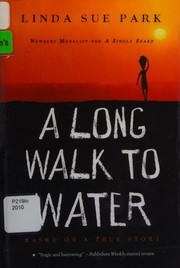
A Long Walk to Water
Two eleven-year-olds in southern Sudan, twenty-three years apart: a Dinka boy fleeing war and a Nuer girl walking hours for water, until their stories meet at…
2,217-word summary · 10 min read
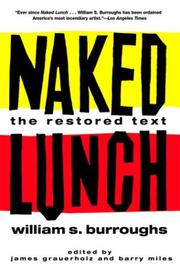
Naked Lunch
Burroughs's banned 1959 collage novel follows Bill Lee through addiction, Tangier, and the nightmare bureaucracy of the Interzone.
2,082-word summary · 9 min read
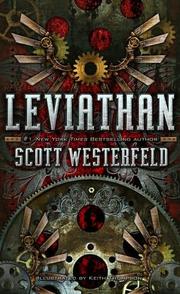
Leviathan
In an alternate 1914, a prince on the run and a girl disguised as a soldier meet aboard a living airship.
2,406-word summary · 11 min read
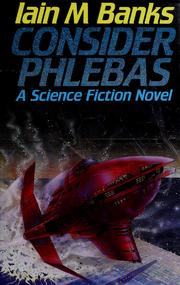
Consider Phlebas
The first Culture novel follows a spy for the opposing side, a man hired to hunt a fugitive through a war between an anarchist post-scarcity utopia and a…
2,350-word summary · 10 min read
The Lottery
In Jackson's 1948 story, a village draws lots to keep the corn heavy, and the chosen person is stoned by her neighbors.
3,080-word summary · 14 min read