
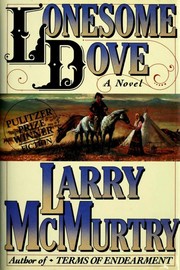
Lonesome Dove
2,410-word summary 11 min read 843 pages in the book
- First published
- 1985
- Publisher
- Simon and Schuster
- Pages
- 843
- ISBN
- 9780671504205
- Series
- Lonesome Dove (#1)
Reading options
What's inside (7 sections)
I came to this book late because the size scared me, and a friend who loves westerns kept saying the length is the point. Lonesome Dove by Larry McMurtry was first published in 1985 by Simon and Schuster, an 843 page first edition hardcover with ISBN 9780671504205. It is book one of Lonesome Dove in publication order. It won the 1986 Pulitzer Prize for Fiction. I read it across two weeks, a little each night, and the slow pace started to feel like travel itself.
The setup is simple and tired in the best way. In the late 1870s, in the small Texas border town of Lonesome Dove, two retired Texas Rangers run the Hat Creek Cattle Company and Livery Emporium. Captain Woodrow Call is stern, quiet, and bound to work. Captain Augustus McCrae is talkative, funny, lazy about chores, and sharp about people. They share a house, a history, and a herd of scrub cattle that barely pays. Around them orbit Pea Eye Parker, steady and dull in the kindest sense, Joshua Deets, a Black tracker and guide with unmatched skill, Bolivar, a Mexican cook who dreams of home, and Newt Dobbs, a boy near seventeen whose mother died young and who works as a hand while wondering who his father might be.
Jake Spoon arrives and tilts everything. Jake served with Call and Gus long ago and now drifts through towns with charm and debt. He talks about Montana, where grass is tall and water runs cold and land waits for men bold enough to take cattle north. Gus catches fire at the idea. Call sees the logic of fresh range. The plan grows from bar talk to a full drive before fear can stop it.
Two old rangers in a dry town
Hat Creek in the opening pages feels baked and bored. Call drills men, mends fences, and patrols the river at night from habit rather than need. Gus drinks coffee on the porch, reads, argues for fun, and visits Lorena Wood in town. Lorena, called Lorie by friends, works in the saloon run by Xavier and dreams of San Francisco. Dish Boggett, a top hand, loves her from afar and loses sleep over her laugh. Jake stays with Lorie and spends Gus money while spinning stories.
The town scenes build character before cattle move. Call barely speaks to Newt beyond orders, though he watches the boy with care he will not name. Gus teases everyone and tells the truth sideways through jokes. Deets reads ground better than maps, finding lost horses and reading storms in clouds. Pea Eye follows orders with calm loyalty. Bolivar cooks beans and talks about leaving. Roscoe Brown, a deputy from far north, and July Johnson, a sheriff hunting a runaway wife, enter from another thread that will braid in later.
Jake Montana talk will not die. He describes valleys where cattle can fatten without ticks and thieves, and Gus starts to picture one last adventure with meaning. Call agrees for practical reasons. Texas range is thin, markets are south, thieves press close. A drive north could turn scrub stock into money and give restless men a task. They gather horses, hire hands, buy wagons, and take on debt. Bolivar decides to stay behind and return to Mexico rather than ride north into cold he does not trust. Po Campo, a small cook with odd habits, joins to feed the crew.
Lorena plans to go with Jake, who promises a new start and means it in the moment. Newt feels thrilled to ride as a real hand at last, though Call still treats him as a boy. Gus says goodbye to the porch and the pigs and the river road without ceremony. Call rides out front because that is where he always rides.
The herd gathers and moves north
The early drive feels hopeful and clumsy at once, which I liked. The outfit pushes more than two thousand cattle plus spare horses and two pigs north from the Rio Grande toward the Red River and beyond. Newt learns to ride drag, eating dust at the back of the herd, scared of river crossings and proud to be trusted. Call sets harsh pace and strict rules. Gus rides up and down the line with jokes that keep tempers cool. Deets scouts ahead and finds water. Pea Eye holds steady. Dish shows off on good horses to impress Lorie from a distance.
Trouble arrives in normal clothes first. A storm spooks the herd into a run, men ride blind in rain, and work turns dangerous in minutes. River crossings take horses and near take men. Sean, one of two Irish brothers in the crew, dies after a crossing when water snakes strike in shallow current. The burial is quick, the grief short in words and long in faces. Call pushes on because stopping costs money and nerve. Gus grieves with talk, Call grieves with work, and Newt watches both and learns.
Jake tires of duty fast. He leaves Lorie in camp and rides to towns to gamble, promising return. Lorie waits with little money and much pride, cooking over a small fire. Gus checks on her and brings supplies. Deets warns about Blue Duck, a renegade killer and thief with a mixed band of followers, who rides near the Canadian River and holds old hate for rangers. Gus tells Lorie to stay close to camp. Newt is posted to watch her. Then Blue Duck creates a stampede as cover and takes Lorie across the plains.
July Johnson thread runs beside the drive for many pages. July is a decent sheriff in a small town, married to Elmira, who leaves with a freight hauler and takes young Joe with her. July follows with deputy Roscoe and orphan Janey, riding south and east while the Hat Creek herd rides north. Elmira proves restless and hard, unwilling to settle. Roscoe is kind and fearful. Janey is quiet and loyal. Their search feels sad from the start because love has already left the house they chase.
Gus goes after Lorie alone at first, refusing Jake help because Jake failed her. He rides hard, reads sign with Deets lessons in mind, and meets July group on the trail. Together Gus and July find the camp where Lorie is held. Gus kills several captors with fast rifle work while July covers. They rescue Lorie, who has been beaten and hurt badly. Blue Duck himself slips away before the fight, which fits his name in ranger stories. When July returns to his own camp, he finds Blue Duck has passed through and killed Roscoe and Joe and Janey. The loss breaks July in a way hunger never could.
Love, debt, and bad company
Back with the herd, Call faces a different rot. Jake has fallen in with the Suggs gang, led by Dan Suggs, a brutal killer who robs and murders across the plains. Jake drifts along at first for whiskey and company, then watches the gang kill settlers and steal horses. He does not stop them, which marks him. Call and Gus and Deets track the gang after thefts hit the drive. Newt rides along and sees law as the older men practice it. They catch the gang, hold a quick trial under open sky, and hang the Suggs brothers and Jake together from a tree.
The hanging scene is grim and argued about by readers, and I found it painful rather than thrilling. Jake begs Gus for mercy by old friendship, and Gus refuses with sorrow rather than anger. Call ties the knots with duty rather than hate. Newt watches a man he liked die for weakness as much as for crime. Friendship does not save a man who rides with killers. The crew rides back to the herd quieter, with one less story to tell at night.
Clara Allen enters as the one person who can still Gus down. Clara runs a horse ranch in Nebraska with daughters and a husband hurt by a horse and lost to waking life. She loved Gus years ago and chose another path. Gus brings Call and Newt and Lorie to her place, hoping for rest and maybe for a late chance. Clara greets Lorie with warmth, gives Newt a fine horse, and tells Gus plain truths about age and choices. She also sees what no one says aloud, that Newt is almost surely the son of Call. Call will not speak the words. Gus tells Newt later in plain terms, and Newt carries the news without comfort.
Lorie heals slowly at Clara ranch. She stops dreaming of San Francisco as rescue and starts dreaming of steadiness. Dish, who followed her north with silent devotion, waits nearby. Clara daughters tease and nurse. July stays on at Clara place after Elmira fate becomes clear, helping with work and holding his infant son whom Clara names Martin. Elmira and the hauler die at the hands of raiders on the plains, a bleak end to a bleak flight. July learns to live with loss by doing chores.
Montana miles and what they cost
The push from Nebraska to Montana is where the book earns its epic tag. Grass thins, rivers run fast and cold, hail strips tents, dust fills mouths. The herd moves through Ogallala and beyond, past Army posts and trading camps, into country where winter arrives early and stays late. Newt grows visibly here. He holds the herd in a storm, tracks strays with Deets patience in mind, and earns respect from older hands who once treated him as a boy. Call notes the change and still says little. Gus praises him loudly to balance the silence.
Loss sharpens near the end. In Wyoming, half starved raiders steal horses in the night. Call and Gus and Deets chase. In the fight that follows, Deets is killed by the last brave in the group. The death hits hard because Deets felt most capable of all. The crew buries him on the plains with plain words. Call, who rarely shows feeling, rides with jaw set and eyes wet. Gus, who always talks, says little for a day. Newt feels the gap in every scout that follows.
Gus wound comes soon after, during a fight tied to Blue Duck movements and horse theft. Arrows and bullets leave him hurt in the legs, and infection spreads fast far from doctors. The men carry him in a wagon over rough ground while he jokes through fever. By the time they reach Miles City, poison has moved through blood and the leg must come off to save life. Surgery in a frontier room with whiskey and knives fails to turn the tide. Gus knows death is near and talks with Call about burial.
He asks Call to carry him back to Texas and bury him in an orchard by the Guadalupe River where he once picnicked with Clara. Call resists. Three thousand miles with a body in summer heat sounds mad. Gus insists, and Call gives his word because old promises bind him more than sense. Gus writes letters to Clara and to Lorie, urges Call to accept Newt as son, and dies with humor intact. The talkative one leaves quiet, and the quiet one must speak to grief.
Call keeps the promise in the hardest pages of the book. He stores the body through winter in Montana, builds the new ranch between the Missouri and Milk rivers, puts Newt in charge of stock and men, and then rides south with the corpse in a wagon. Newt leads well despite youth, trading cattle, hiring hands, holding ground. Dish leaves Montana and returns to Nebraska to be near Lorie. Lorie stays with Clara through winter, healing and working, choosing care over dreams of far cities.
On the road south, Call stops where Blue Duck waits in jail for hanging after capture in Santa Rosa. Blue Duck taunts rangers with a life of raids and escapes, claiming triumph even in chains. On the day set for hanging, he dives from a third story courthouse window with the deputy who caught him, killing them both and cheating the rope. Call watches the aftermath with cold disgust and rides on. He reaches the Guadalupe, digs the grave in the orchard, marks it with part of the Hat Creek sign, and sits a while with loss.
He rides back to Lonesome Dove at the close, a near empty town where Bolivar remains. The porch sags, the pigs root, the river moves. Nothing waits except memory. Newt stays north to run the ranch, still unclaimed by name though claimed by trust. Lorie stays with Clara, alive and altered. Clara keeps her ranch and her scorn for Call pride. The drive made money and made graves.
Long miles, slow middle, fair criticism
A fair note first. This is a long book and it reads long in places. The July and Elmira search takes many pages away from the herd, and some readers will skim those miles. The middle drive repeats river, storm, dust, night guard, with small changes that can blur together if you read fast. I set the book down twice in week two and needed a day to return. If you want tight plotting, the size will test you.
Other limits show with age. Women get fewer inner lives than men, even strong figures like Clara and Lorie, who are seen more than heard. Native fighters appear mostly as threat rather than as people with homes and reasons, which fits ranger view but feels narrow now. Some jokes at Pea Eye expense repeat past need. Readers who want modern balance may wince.
What lasts outweighs the drag for me. Gus and Call stand as one of the great pairs in western fiction, talk against silence, humor against duty, mercy against law. Deets, Clara, Lorie, Newt, even Bolivar and Po Campo with fried grasshopper meals, feel lived in rather than placed. The trail detail rings true, from horse care to cook fires to night watches. The ending avoids triumph and stays with cost, which gives the epic weight.
Read it if you like big books that move like weather, or westerns with heart under dust. Give it evening hours and a map nearby. Follow the rivers north and track who rides where. By the final orchard scene you may, like me, sit quiet for a while before closing the cover.
FAQ
When was Lonesome Dove published?
It was first published in 1985 by Simon and Schuster. The first edition hardcover runs 843 pages with ISBN 9780671504205.
Is Lonesome Dove part of a series?
Yes. It is book one of Lonesome Dove in publication order, followed by Streets of Laredo. It won the 1986 Pulitzer Prize for Fiction.
Is Lonesome Dove based on a true story?
No. It is fiction set in the late 1870s about a cattle drive from Texas to Montana. McMurtry drew on frontier history but the characters are invented.
Similar books
More from Lonesome Dove first, then related titles.

Ivanhoe
A disinherited Saxon knight, a great tournament, a besieged castle and a trial by combat. Scott's most famous novel, set in England in 1194.
2,834-word summary · 13 min read
The Sisters Brothers
Two hired killers ride from Oregon to Gold Rush California to murder a prospector, and find their trade, their brotherhood, and the frontier myth coming apart.
2,095-word summary · 9 min read
The Last of the Mohicans
During the French and Indian War, Hawkeye and two Mohican warriors try to save two British sisters from a Huron chief whose revenge will end the Mohican line.
2,017-word summary · 9 min read

News of the World
Captain Kidd carries captive Johanna home across 1870 Texas.
2,571-word summary · 11 min read
One Thousand White Women: The Journals of May Dodd
May Dodd journals joining Cheyenne as a bride in an 1875 government swap, learning prairie life and loss.
2,036-word summary · 9 min read
All the Pretty Horses
John Grady and Rawlins ride to Mexico for ranch work, finding love, prison, and a code that costs all.
2,677-word summary · 12 min read
The Scarlet Pimpernel
A foppish baronet rescues aristocrats from the guillotine while his French wife hunts the hero she scorns.
2,980-word summary · 13 min read
Shogun
An English pilot wrecked in 1600 Japan becomes a pawn in Lord Toranaga's patient bid for power, and slowly becomes Japanese himself.
2,251-word summary · 10 min read
Robinson Crusoe
Shipwrecked near South America, Crusoe spends 28 years farming, building, praying, and facing who he becomes alone.
2,520-word summary · 11 min read
The Three Musketeers
Young dArtagnan joins Athos, Porthos and Aramis to recover the queens diamonds and face Milady.
2,569-word summary · 11 min read
The Adventures of Huckleberry Finn
Huck Finn fakes his death, floats the Mississippi with the runaway Jim, and tears up the letter that would betray him. Twain's river classic, its cons and…
2,605-word summary · 12 min read
The Long Winter
Dakota Territory, 1880: seven months of blizzards cut a town off from the railroad, and a family survives on twisted hay, ground wheat, and a dangerous wheat…
2,210-word summary · 10 min read

Little Town on the Prairie
In the spring after the Long Winter, fifteen-year-old Laura sews shirts, studies for a teaching certificate, and helps send her blind sister Mary to college.
2,071-word summary · 9 min read
The Valley of Horses
Exiled from the Clan, Ayla survives alone in a hidden valley, tames a horse and a cave lion, and nurses a wounded stranger back to life.
2,311-word summary · 10 min read

The Agony and the Ecstasy
Irving Stone turns Michelangelo's seventy years of carving, painting, and arguing with popes into a novel about the cost of making something that outlives you.
2,260-word summary · 10 min read

Sophie's Choice
A young Southern writer in 1947 Brooklyn befriends a brilliant, unstable couple and slowly learns the story of the Polish Catholic woman at the center of their…
2,798-word summary · 12 min read

Wide Sargasso Sea
Jean Rhys gives the first Mrs. Rochester a Caribbean childhood, a marriage built on money and suspicion, and a voice that Charlotte Bronte left in the attic.
2,021-word summary · 9 min read

The Sword of Shannara
A young half-Elf and a company of companions set out to recover a magic sword before the Warlock Lord destroys the Four Lands.
2,474-word summary · 11 min read
The Borrowers
A family of tiny people live under the floorboards of an English house, borrowing what they need until a lonely boy and a suspicious housekeeper change…
2,164-word summary · 10 min read

Out of the Silent Planet
A Cambridge philologist is kidnapped and taken to Mars, where the natives are civilized and the humans are the dangerous invaders.
2,612-word summary · 12 min read
Mother Night
Howard W. Campbell Jr., a Nazi propagandist and American spy, tells the story of his double life from an Israeli prison cell while waiting to be tried for war…
1,988-word summary · 9 min read

Doctor Zhivago
A doctor and poet lives through revolution, war, and love in Pasternak's novel of private life under the pressure of Russian history.
2,213-word summary · 10 min read

The Last Kingdom
Kidnapped by Danish raiders as a boy and raised in their halls, Uhtred of Bebbanburg must choose what he is when the fight for England begins.
1,997-word summary · 9 min read
On the Banks of Plum Creek
The Ingalls family trades their horses for a dugout on Plum Creek and bets a single wheat harvest on a house above ground, in Wilder's fourth Little House book.
2,090-word summary · 9 min read
A Connecticut Yankee in King Arthur's Court
Hank Morgan, a Connecticut factory man, wakes in King Arthur's England, rises to chief adviser, and rebuilds the kingdom until his own inventions turn on him.
2,193-word summary · 10 min read

The Swiss Family Robinson
Shipwrecked Robinsons build treehouses and tame island beasts.
2,400-word summary · 11 min read
The Red Badge of Courage
Henry Fleming runs at Chancellorsville, then returns to stand.
2,486-word summary · 11 min read
Bleak House
Jarndyce and Jarndyce grinds through Chancery while Esther finds her family.
2,480-word summary · 11 min read
Anne's House of Dreams
Newlyweds Anne and Gilbert start in a seaside house with kind neighbors.
2,465-word summary · 11 min read
The Once and Future King
T.H. White retells Arthur from boyhood with Merlyn to Camelot's fall, mixing comedy, myth, and a hard look at war and power.
2,200-word summary · 10 min read