
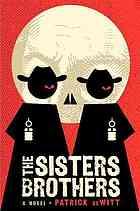
The Sisters Brothers
2,095-word summary 9 min read 328 pages in the book
- First published
- 2011
- Publisher
- Ecco
- Pages
- 328
- ISBN
- 9780062041265
Reading options
What's inside (10 sections)
I do not read many westerns, which might be why The Sisters Brothers surprised me. I expected gunfights and sunsets and a hero with a code. What I got was a narrator with a toothache, a horse with one eye, and a running argument about whether it is worth riding all the way to California to kill a man you have never met. Patrick deWitt published the novel in 2011, and it was shortlisted for the Booker Prize, which tells you something about how far it travels beyond its genre. It is a western in setting and a comedy of manners in tone. It is also, quietly, a book about two brothers who love each other in the only way they know how.
Eli Sisters narrates. He is the younger brother, the more thoughtful one, the one who notices the food, the horses, the clothes, and the way people look at him. Charlie is the older brother, the lead man on the job, a drinker and a killer who treats violence as ordinary work. They are hired by a wealthy businessman known only as the Commodore to travel from Oregon City to California and murder a prospector named Hermann Kermit Warm. The Commodore says Warm is a thief. The brothers do not ask many questions. They have been doing this for years, and the pay is good.
The relationship between Eli and Charlie is the engine of the book. Eli admires Charlie. He also fears him. Charlie can be charming when he wants something and cruel when he does not. He makes Eli feel like a junior partner in a business that Eli is not sure he wants to be in. Eli wants to leave the life. He wants to buy a store, or a farm, or a house with a woman who loves him. He wants to stop killing people. Charlie wants to keep going, partly because he is good at it and partly because he does not know who he would be without it.
The novel is also a study of how violence becomes ordinary. The brothers do not agonize over every killing. They make jokes, eat breakfast, and argue about horses. The banality is the point. DeWitt shows how a person can become accustomed to terrible things and still notice a toothache or a beautiful sunset. Eli's sensitivity does not make him innocent. It makes him complicit and aware of his complicity, which is a different kind of pain.
The road south
The plot is episodic, and that is deliberate. The brothers ride south and meet a series of strange people. Eli is bitten by a spider and develops a fever. He visits a dentist and has a tooth removed with the help of morphine. His horse is attacked by a grizzly bear and survives with a serious eye injury. Charlie gets drunk and is too sick to ride the next morning. They argue about money, horses, and each other. The arguments are funny, but they are also revealing. Eli is constantly trying to manage Charlie's moods, and Charlie is constantly testing Eli's loyalty.
The most memorable early episode is the weeping man. They meet a man on the road who is crying, and Charlie treats him with contempt. Eli is disturbed. The scene does not have a big payoff. It just sits there, a reminder that the brothers are moving through a world full of people whose suffering they are trained to ignore. That is one of deWitt's strategies. He gives you a grotesque or a joke, then lets it turn into something sad.
Mayfield and the red bear
In California, the brothers hear about a female bear with a rare red pelt. A man named Mayfield has offered a reward for it. They spot the bear, and Charlie kills it. They bring the pelt to Mayfield, who runs an inn in a town named after himself. Mayfield pays them, and Charlie insists they stay the night. Eli sleeps with the hotel's bookkeeper. In the morning, the pelt is missing. The brothers suspect Mayfield will accuse them of stealing it, so they try to sneak out. A group of fur trappers who work for Mayfield stops them and demands the money back. Charlie and Eli shoot the trappers. Then Charlie kills an innocent stable boy to eliminate witnesses. The killing is casual, almost administrative. Eli does not stop him. That is the moment where the novel's comedy curdles.
They return to the hotel and make a deal with Mayfield. He has a cache of gold and wants to leave town to hunt an old enemy. The brothers let him go, take most of the gold, and hide a large amount behind the hotel's stove for safekeeping. It is a fortune, and it is the first time the book allows Eli to imagine a different life. The gold represents the possibility of walking away.
Morris's journal
In San Francisco, the brothers look for a man named Morris, who was supposed to keep track of Warm until they arrived. Morris has disappeared. The hotel proprietor gives them Morris's journal. The journal reveals that Warm approached Morris with a chemical formula that makes gold glow in riverbeds. Warm demonstrated the formula and offered Morris a partnership. They are now traveling to a place called the River of Light to test it on a large scale. The journal also reveals that Warm is not a thief. He refused to share the formula with the Commodore, and the Commodore sent the brothers to kill him.
Eli hesitates. He does not want to murder an innocent man. Charlie wants to finish the job. They argue, and Eli says this will be his last job for the Commodore. The decision to continue is not a moral choice. It is a habit, and a loyalty to Charlie that Eli cannot quite name.
The river of light
They find Warm and Morris at a camp along a remote river. Warm knows they were sent to kill him, but he does not retaliate. The brothers defend the camp from a gang of bandits, and the four men decide to join forces. It is an uneasy alliance, but it works. Warm is smart, funny, and generous. Morris is quieter, but he clearly loves Warm. The novel does not make a spectacle of their relationship. It presents it as a fact, which is more moving than a speech would be.
They wait for nightfall to pour the formula into the river. The chemical is caustic. Warm and Morris have already burned their legs wading in contaminated water. Charlie spills some on his shooting hand. The men collect a fortune in gold as the river glows. Then Morris falls into the water, and Warm dives in to save him. Both men are severely burned. They die the following day. The gold is stolen by a party of Native warriors who stumble onto the camp. Eli realizes that no one but Warm knew how to make the formula. The fortune is gone, and so is the man who made it.
The scene is the heart of the book. It is absurd and tragic at the same time. The gold glows, the men burn, and the river keeps running. deWitt does not underline the symbolism. He lets it sit. The dream of wealth turns out to be a chemical that destroys the people who touch it.
The return
The brothers make their way back to Oregon City. They stop at Mayfield and discover that the town has burned down and the gold they hid behind the stove is gone. Mayfield's prostitutes rob them of their remaining money and their pistols. Charlie's burned hand becomes infected and is amputated in Jacksonville. The operation saves his life, but it takes away the thing that made him formidable. After the amputation, Charlie's confidence disappears. He is quiet, dependent, and a little frightened. Eli nurses him back to health.
The change in Charlie is the novel's most affecting turn. He was never a good man, but he was a strong one. Now he is neither. Eli does not gloat. He does not say I told you so. He takes care of his brother because that is what he does. The relationship that seemed so unequal at the start becomes a partnership of a different kind. Eli is the one who is strong now, and he is not sure he wants the job.
The Commodore in the bath
Before they go home, Eli visits the Commodore. He finds him drunk in a bathtub, talking to himself. Eli drowns him. It is not a heroic killing. It is a tired man ending a relationship that has used him for years. The Commodore is not a grand villain. He is a rich man who treats people as tools. Eli kills him because he wants to be free, and because he has learned that the only way to leave the life is to cut the head off the thing that keeps hiring him.
The brothers return to their mother's house. She welcomes them. Charlie asks for a bath. Eli sits in his childhood bedroom and feels something he has not felt in a long time: peace. The ending is not a triumph. The gold is gone, the brother is maimed, and the future is uncertain. But they are alive, and they are home. For Eli, that is enough.
What the novel is doing
The Sisters Brothers is often called a revisionist western, and that is accurate. It takes the genre's myths, the lone gunman, the frontier fortune, the violent code, and shows the damage they do. The west of the novel is not a place of freedom. It is a place of extraction. Everyone is trying to take something from someone else: gold, land, dignity, a life. The brothers are part of that economy, and they are also its victims. Their childhood was violent, and they have reproduced it.
The prose is deadpan and precise. Eli notices the material world in a way that makes the book feel grounded: the taste of bad coffee, the weight of a pistol, the way a horse favors an injured eye. The humor comes from the gap between what Eli sees and what he is willing to admit. He is a killer who wants to be a shopkeeper. He is a sentimental man who works for a man who has no sentiment at all. That contradiction is the book's comic engine and its moral center.
The weaknesses are related to the strengths. The episodic structure can feel meandering. Some encounters exist mainly for atmosphere. The novel's treatment of Native people is thin, and the one scene where Native warriors steal the gold uses them as a plot device rather than as characters. The female characters are mostly seen through Eli's desire or Charlie's contempt. The book is aware of its own limitations, but awareness is not the same as correction.
I think the novel earns its reputation. It is funny, sad, and strange. It takes a familiar story and makes it feel new. It is also a fast read, which is not a small thing. I finished it in three days, and I kept thinking about the river, the glowing gold, and the two brothers riding home with less than they started with. That is the mark of a book that will stay with me.
Who should read it
This is for readers who like westerns but are tired of the usual heroes. It is for readers who like dark comedy and do not need to like the characters. It is for anyone who has a sibling they love and do not fully understand. It is not for readers who want a traditional adventure story or a clear moral. The book is ambiguous, and it is comfortable with that. It is also not for readers who are sensitive to violence against animals or casual murder. The violence is not graphic, but it is constant.
I picked it up because of the Booker nomination and the cover. I kept reading because of Eli's voice. He is not a good man, but he is a trying one, and that is more interesting. The Sisters Brothers is a western about the end of the west, and about two men who are trying to figure out what comes next. It does not give them an answer. It gives them a bath, a bedroom, and a mother who is glad to see them. Sometimes that is enough.
FAQ
Is The Sisters Brothers a traditional western?
No. It uses the western setting but undercuts the genre's heroic myths with dark comedy, mundane violence, and two brothers who are tired of their work.
What happens to the gold in The Sisters Brothers?
The gold collected at the river is stolen by Native warriors, and the cache hidden in Mayfield is lost when the town burns down.
Does Charlie Sisters die?
No. His burned hand is amputated, and he survives, but the loss of his hand and his confidence changes him profoundly.
Similar books
James
Percival Everett retells Huckleberry Finn from Jim's side, giving him a library, a hidden school, and a voice the novel lets loose.
2,211-word summary · 10 min read
Infinite Jest
A film that kills its viewers, a tennis academy, a halfway house for addicts, and a future America where corporations name the years, all tangled together.
2,084-word summary · 9 min read

Ivanhoe
A disinherited Saxon knight, a great tournament, a besieged castle and a trial by combat. Scott's most famous novel, set in England in 1194.
2,834-word summary · 13 min read
News of the World
Captain Kidd carries captive Johanna home across 1870 Texas.
2,571-word summary · 11 min read
White Noise
Jack Gladney teaches Hitler studies, flees a chemical cloud with his family, and chases a drug for dread in DeLillo's funny and bleak 1985 novel of…
2,768-word summary · 12 min read
The Signature of All Things
Botanist Alma Whittaker grows up in Philadelphia trade wealth, studies mosses, marries distant Ambrose Pike, and sails to Tahiti seeking how species change.
2,535-word summary · 11 min read
One Thousand White Women: The Journals of May Dodd
May Dodd journals joining Cheyenne as a bride in an 1875 government swap, learning prairie life and loss.
2,036-word summary · 9 min read
Daughter of Fortune
Eliza Sommers flees Chile for California gold rush San Francisco, disguised and searching for her lover, finding freedom with Tao Chi'en.
2,009-word summary · 9 min read
All the Pretty Horses
John Grady and Rawlins ride to Mexico for ranch work, finding love, prison, and a code that costs all.
2,677-word summary · 12 min read
Lonesome Dove
Two retired Texas Rangers drive cattle from Texas to Montana in a harsh and tender western epic.
2,410-word summary · 11 min read
The Lincoln Highway
Emmett and Billy plan California in 1954, but two escapees steal their car and drag them east to New York.
2,954-word summary · 13 min read

Violeta
A woman born in 1920 writes her life story to her grandson, from one pandemic to another, through wealth, ruin, passion, and dictatorship in South America.
2,555-word summary · 11 min read

The Crying of Lot 49
A California woman named executor of her ex-lover's estate follows a muted post horn into a possible centuries-old postal conspiracy, and Pynchon refuses to…
2,003-word summary · 9 min read

The Beach
A young backpacker follows a dead man's map to a hidden island community, then discovers what the people there are willing to do to keep it secret.
2,067-word summary · 9 min read
Witches Abroad
Three Lancre witches fly to Genua to stop a fairy godmother from forcing a servant girl into a storybook marriage, and find a city arranged around a happy…
2,651-word summary · 12 min read
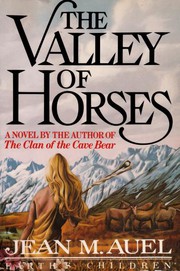
The Valley of Horses
Exiled from the Clan, Ayla survives alone in a hidden valley, tames a horse and a cave lion, and nurses a wounded stranger back to life.
2,311-word summary · 10 min read

Sophie's Choice
A young Southern writer in 1947 Brooklyn befriends a brilliant, unstable couple and slowly learns the story of the Polish Catholic woman at the center of their…
2,798-word summary · 12 min read
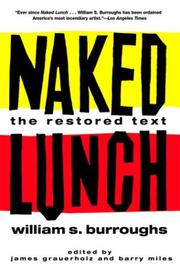
Naked Lunch
Burroughs's banned 1959 collage novel follows Bill Lee through addiction, Tangier, and the nightmare bureaucracy of the Interzone.
2,082-word summary · 9 min read
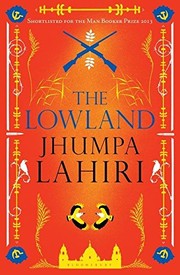
The Lowland
Two brothers grow up beside a marshy lowland in Calcutta, and the choices of the younger one draw the older into a life of duty, distance, and quiet grief that…
2,213-word summary · 10 min read
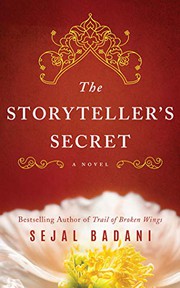
The Storyteller's Secret
A New York journalist goes to India to learn why her grandmother loved a British officer, and why a family servant kept the truth for forty years.
2,270-word summary · 10 min read
Stones from the River
Trudi Montag is born a dwarf in a small German river town in 1915 and grows up to keep the town's library and its secrets, from the First World War to the…
2,818-word summary · 13 min read
Euphoria
Three anthropologists in 1930s New Guinea turn fieldwork into a love triangle, and a real history breathes behind them.
2,048-word summary · 9 min read

Wide Sargasso Sea
Jean Rhys gives the first Mrs. Rochester a Caribbean childhood, a marriage built on money and suspicion, and a voice that Charlotte Bronte left in the attic.
2,021-word summary · 9 min read
The Silence of the Girls
Briseis, queen of Lyrnessus, is captured by Achilles and narrates the Trojan War from inside the Greek camp, where women are prizes and survival is its own…
2,098-word summary · 9 min read
The Last of the Mohicans
During the French and Indian War, Hawkeye and two Mohican warriors try to save two British sisters from a Huron chief whose revenge will end the Mohican line.
2,017-word summary · 9 min read
The Birth of Venus
A Florentine merchant's daughter trains as an artist, marries a man who hides a secret, and survives Savonarola's bonfire of the vanities.
2,404-word summary · 11 min read
Mother Night
Howard W. Campbell Jr., a Nazi propagandist and American spy, tells the story of his double life from an Israeli prison cell while waiting to be tried for war…
1,988-word summary · 9 min read
Bring Up the Bodies
Thomas Cromwell sets out to destroy Anne Boleyn, building a case from rumor and revenge while Henry VIII waits to marry Jane Seymour.
2,066-word summary · 9 min read
The Orphan Master's Son
Adam Johnson's Pulitzer-winning novel follows Pak Jun Do from a North Korean orphanage to a deadly identity swap, under a state whose loudspeakers never stop…
2,219-word summary · 10 min read
Lullaby
A reporter discovers that a poem in a children's book kills anyone who hears it, and his attempt to destroy every copy turns into a road trip through grief,…
2,147-word summary · 10 min read