
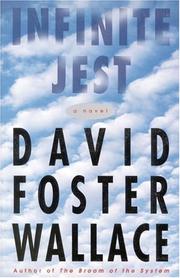
Infinite Jest
2,084-word summary 9 min read 1079 pages in the book
- First published
- 1996
- Publisher
- Little, Brown and Company
- Pages
- 1079
- ISBN
- 9780316920049
Reading options
What's inside (9 sections)
The first page is a recording. A young man is answering questions from two officials of the University of Arizona, and the questions are so reasonable and so administrative that it takes you a minute to notice that he cannot finish his sentences.
He is Hal Incandenza, and by the end of the novel he will not be able to make a comprehensible expression at all. Between those two points sit 1,079 pages of people whose attention is being eaten alive by their own appetites.
Infinite Jest was published by Little, Brown in 1996, 1,079 pages, under the ISBN 9780316920049. It carries 388 endnotes, some of which have footnotes of their own. The title comes from Hamlet, where Hamlet holds the skull of the court jester and says he was a fellow of infinite jest, and Wallace's working title for the novel was A Failed Entertainment. He said the notes and the plotting were built on the fractal geometry of a Sierpinski triangle, which is either a joke about the book's shape or an accurate description of it.
The world it invents
The United States, Canada and Mexico have been welded into a single state, the Organization of North American Nations, abbreviated O.N.A.N.
Years are named for the corporations that sponsor them, so the story takes place in the Year of the Depend Adult Undergarment. Much of the old Northeast has been turned into a toxic dump given to Canada, and Americans have renamed the wound the Great Concavity. The president is a germaphobic singer named Johnny Gentle, who campaigned on cleaning up the country without causing anybody discomfort.
None of this is explained, and no crisis arrives to blow it open. The tone stays flatly domestic. You read about dial-up internet, twelve-step meetings and a tennis camp inside a world where the calendar belongs to sponsors, and the strangeness sits in the background while people worry about their fathers.
The film nobody survives
The object everybody is hunting is a movie. James Incandenza, an optics expert and filmmaker who founded the Enfield Tennis Academy, made a film so absorbing that viewers stop eating, stop washing and eventually die.
There is no master copy of it. That is the plot in miniature: the hunt for a master copy of a movie, pursued by the dead man's estranged son, by a federal agent working through a contact posing as a Swiss drug addict in a Boston halfway house, and by the legless separatists of southwestern Quebec who want the film distributed as a weapon against the United States.
James Incandenza is dead before the novel starts. He killed himself by putting his head in a microwave oven. He shows up in flashback and in the visions of people who loved him, drinking Wild Turkey and muttering about lens flares.
The film's star is Joelle van Dyne, who does a radio show as Madame Psychosis and who was once so beautiful that people could not manage to talk to her. Later she wears a veil. The stories about why are contradictory, one about acid thrown at her face by her mother, one about a beauty that isolated her, and Wallace never settles it.
Enfield Tennis Academy
The Incandenza household is a comic and slightly monstrous set of arrangements.
The father made films. The mother, Avril, called the Moms, runs the family and meddles in the school after his death, with phobias about dirt, closed doors and overhead lights, and her own accounts of the household are not to be trusted. The headmaster is Charles Tavis, who may be her brother, her half-brother or no relation at all.
There are three sons. Orin punts for a professional football team and cannot stop talking. Mario was born with a deformed body and a cheerful mind, and works in his father's film lab, listening to Madame Psychosis on the radio because the voice sounds familiar to him.
And then there is Hal.
He is eighteen, ranked near the top of his age group in tennis, and he has a memory like a machine, good enough that people joke about it. He also smokes marijuana in the tunnels under the school, worries constantly that he is disappointing his father, and cannot stop correcting other people's grammar.
The coaches are a nightmare of his own making. Schtitt preaches tennis as a religion, deLint preaches the schedule, and the boys are worked until something in them gives. Michael Pemulis, his best friend, is the school dealer and its best mathematician, and the game the two of them invented, Eschaton, is a computer-assisted nuclear war game played by lobbing tennis balls at pictures of cities.
Around them is a school where the food is scheduled, the dorms get inspected, and a boy's medical file is part of the furniture. Ortho Stice wears all black from head to toe and has never been seen in another color. Lyle sits on top of the towel dispenser and licks sweat off the players. John Wayne, the top-ranked junior in the country, barely speaks at all.
What happens to Hal over the course of the book is a slow unraveling that the novel never fully explains. Cannabis withdrawal, a drug he was given, a patch of mold he ate as a child, and the psychic cost of years of training are all offered as candidates. By his final appearance his attempts at speech and his facial expressions make no sense to the people around him.
There is also the thing Hal cannot say out loud. His father knew about it before he died, and the appointment with a professional conversationalist, a hired stranger paid to do nothing but talk, is one of the book's strangest and saddest episodes. Hal treats his own sexuality as a defect to be managed, a defect that has cost him the ordinary future that tennis was supposed to buy him.
Ennet House
Down the hill from the academy sits Ennet House, a halfway house for drug and alcohol recovery, and its staff counselor in residence is Don Gately, a very large man who used to burglar apartments and accidentally strangled a Quebec separatist leader by taping the man's mouth shut while he had a head cold.
Gately is also the only character in the book who climbs out of his own hole, and he does it by doing what recovery programs ask: attending meetings, calling his sponsor every morning, and being bored on purpose.
Joelle van Dyne arrives at Ennet House after trying to kill herself with freebase cocaine in a bathroom at a party for film students. The house manager is Pat Montesian, whose stroke took the use of her right arm, so it sits atrophied in a semi-claw inside a black plastic brace, and who walks with a lurch on a thin right leg.
Kate Gompert is another resident, hugely intelligent and clinically depressed, and the book spends real time inside her condition: the way happiness becomes a word with no content attached, the way she cannot say she is any of the things she is. She tries to kill herself more than once.
The residents are all in the same condition of being scooped out. Geoffrey Day drives his car through a store window. Poor Tony Krause steals a woman's heart and dies for it. Tiny Ewell cannot stop thinking about tattoos. Randy Lenz deals and paws at his own pulse.
And Lenz kills the big dog belonging to a house of Quebecois separatists on Brainerd Road, which brings those men to Ennet House a few nights later looking for blood. Gately steps in front of Lenz, takes a knife in the calf and a bullet in the shoulder, and much of the last third of the novel is his interior monologue in a Boston hospital bed, visited by ghosts of the dead and by the small terrors of a man trying not to pick up a drink.
The recovery meetings are the warmest writing in the book. Gately sits in a room where a fifty-year-old immigrant describes his first solid bowel movement in years and the whole hall laughs, and he is struck by how much better people speak when they have stopped trying to be clever.
The rule there is that the meeting has to be free of irony, which the book states as if it were law, and the effect is the opposite of Wallace's usual posture.
The agent, the separatists, and the film
The plot strands tighten around the missing master copy. The federal agency that wants it is the Office of Unspecified Services, a comic invention that combines most of what the government does to people who are hard to classify.
The agent is Hugh Steeply, who works under the female cover name Helen and conducts long taped interviews with Orin Incandenza about his dead father while Orin, who cannot stop talking, gives her far more than he means to. His counterpart is Rémy Marathe, a member of the Wheelchair Assassins who is playing four sides at once so that his badly deformed wife can get medical care from the same government that wants him dead.
On the Quebec side are men who lost their legs as children in a game of jumping trains, whose organization has a reputation for hearing a squeak before a killing. The film itself gets a chapter of technical description: a copy-capable master cartridge needs a viewer that runs at 585 revolutions a minute, and if the sons of the neighborhood video store ever got hold of one and made copies, the whole structure of the country would come apart.
The beach
Gately's last scene is the strangest page in the book. In the hospital, hallucinating the film he watched once with the others, he comes back to himself flat on his back on a beach, in freezing sand, with rain coming out of a low sky and the tide way out.
Nobody explains how he got there, and the novel does not go on long enough to explain it.
The film is never found. The politics are never resolved. Hal's condition is never diagnosed. Wallace said the answers all exist, but just past the last page, and he also told a friend that the story cannot fully be made sense of. The book stops with its hands up.
Is it worth the fight
There is no consensus about this, which is the honest thing to say.
The endnotes can look like showing off, and a reader who does not enjoy the digressions will find whole stretches of tennis instruction, of tax law, of how recovery meetings work, and of what a disc jockey in a Boston bar said to the people around him. The early sections in particular belong to a documentary voice, and some readers have never forgiven them for it.
The book's jokes are dated now, built on a 1990s sense of who is allowed to say what, and the indifference to everything outside the frame of the story can read as arrogance or as a set of blinders the characters wear with enormous skill. Critics have also pointed at the recovery scenes, where the sincerity of the white male characters is granted a moral authority that the book's women and Black characters are not given. That charge has been made against the book for thirty years and is not entirely wrong.
The other side of the ledger is long. Wallace got the interior experience of addiction right down to the small humiliations, got grief right, and got the specific misery of being the smartest person in a room where nobody wants to hear it.
His characters are not saints and are not much fun, and that is the point of them. He also invented a mode nobody had quite managed before, a fiction that can hold a telephone book of facts and still hurt you. The hostility the book met on publication has aged better than most of its own jokes.
Read it if you are willing to be dropped in without a map and to trust the writer for a while. Bring patience and a pencil, because you will want to mark the pages where the real thing happens, and they are scattered. Skip it if you need a plot that closes on the page, because it does not, and if footnotes make you itchy, because there are hundreds.
FAQ
Is Infinite Jest based on a movie of the same name?
There is no such movie. The title is the name of a film inside the novel, made by James Incandenza, so absorbing that viewers stop eating and die. Wallace took the phrase from Hamlet, where Hamlet speaks of a fellow of infinite jest.
Do you have to read the endnotes?
No, but they carry a lot of the comedy and several of the best jokes in the book. There are 388 of them and some have footnotes of their own, so read them when a stretch of the story has stalled you.
How does Infinite Jest end?
Don Gately wakes on a beach in freezing sand with the tide out and rain coming down, and the story stops without resolving the film, the politics, or Hal's condition. Wallace said the answers lie just past the last page.
Similar books
The Sisters Brothers
Two hired killers ride from Oregon to Gold Rush California to murder a prospector, and find their trade, their brotherhood, and the frontier myth coming apart.
2,095-word summary · 9 min read
An Object of Beauty
Lacey climbs the art world from Sotheby to fraud and fall.
2,629-word summary · 12 min read
White Noise
Jack Gladney teaches Hitler studies, flees a chemical cloud with his family, and chases a drug for dread in DeLillo's funny and bleak 1985 novel of…
2,768-word summary · 12 min read
Post Office
Chinaski drifts through postal shifts, cheap rooms, horse tracks and rough love in Bukowski's 1971 debut about work, drink and survival.
2,444-word summary · 11 min read
My Year of Rest and Relaxation
A young art graduate tries to sleep for a year with pills and Reva while the city drifts toward 2001.
3,146-word summary · 14 min read
A Little Life
Four friends in New York orbit Jude, whose hidden past of abuse shapes every page of this 720-page epic.
1,972-word summary · 9 min read
The Idiot
A Turkish-American freshman at Harvard falls in love through email with a Hungarian math student and spends a summer in Hungary trying to turn correspondence…
2,019-word summary · 9 min read

The Crying of Lot 49
A California woman named executor of her ex-lover's estate follows a muted post horn into a possible centuries-old postal conspiracy, and Pynchon refuses to…
2,003-word summary · 9 min read
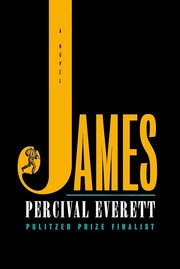
James
Percival Everett retells Huckleberry Finn from Jim's side, giving him a library, a hidden school, and a voice the novel lets loose.
2,211-word summary · 10 min read
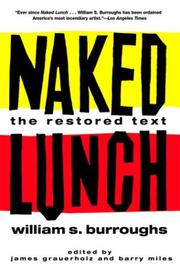
Naked Lunch
Burroughs's banned 1959 collage novel follows Bill Lee through addiction, Tangier, and the nightmare bureaucracy of the Interzone.
2,082-word summary · 9 min read

We Are Okay
Marin fled San Francisco after her grandfather vanished and stopped answering anyone. When Mabel visits her college dorm, she has to say what happened.
2,253-word summary · 10 min read

The Chosen
A shattered pair of glasses in a 1944 Brooklyn softball game starts a friendship between a Hasidic boy and his Orthodox neighbor, and their fathers pull them…
2,443-word summary · 11 min read
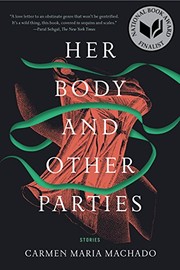
Her Body and Other Parties: Stories
Eight stories where bodies, medicine and old fairy tales get taken apart, with a green ribbon running through the whole book.
2,997-word summary · 13 min read
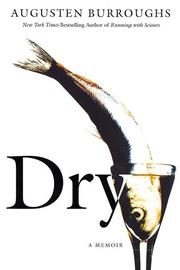
Dry
A memoir of drinking, rehab and relapse, and the strange business of getting sober one morning at a time.
2,643-word summary · 12 min read

Big Swiss
A transcriptionist for a sex coach falls for one of his clients, the tall Swiss gynecologist she calls Big Swiss, in a funny novel about work and secrets.
2,523-word summary · 11 min read
The Gambler
Dostoevsky's roulette novella: Alexei loses Polina, wins a fortune, loses everything, and promises himself one more bet tomorrow.
2,022-word summary · 9 min read
Orlando
A young Elizabethan nobleman becomes a woman and lives for centuries, moving through English history while writing a single poem about an oak tree.
2,030-word summary · 9 min read
Lullaby
A reporter discovers that a poem in a children's book kills anyone who hears it, and his attempt to destroy every copy turns into a road trip through grief,…
2,147-word summary · 10 min read
If on a Winter's Night a Traveler
You, the Reader, chase a defective novel through bookshops and translators while ten other novels keep interrupting. Calvino's famous puzzle about the act of…
2,173-word summary · 10 min read
Severance
Candace keeps office routine as fever empties New York, then joins survivors.
2,340-word summary · 10 min read
Let the Great World Spin
A wire walker crosses the towers as Bronx lives collide below.
2,338-word summary · 10 min read
Haunted
Writers lock in for three months and trade worse stories as food runs out.
2,576-word summary · 11 min read
The Marriage Plot
At Brown in 1982, Madeleine loves Austen while torn between brilliant Leonard and steady Mitchell.
2,804-word summary · 12 min read
Survivor
Tender Branson, last Creedish survivor, confesses into a flight recorder as his plane dives, from servant to agent-made celebrity messiah in Palahniuk's 1999…
2,683-word summary · 12 min read
Brideshead Revisited
At Oxford Charles Ryder befriends Sebastian Flyte and falls into the Catholic Marchmain family, from Brideshead summers to Julia's affair and Lord Marchmain's…
2,353-word summary · 10 min read
The Sirens of Titan
A ruined playboy is herded from Mars to Titan while a stranded robot waits for a spare part.
2,663-word summary · 12 min read
The Hours
Michael Cunningham's 1998 novel braids three lives around Virginia Woolf's Mrs. Dalloway: the author in 1923, a reader in 1949, and an editor in 1990s New York.
2,989-word summary · 13 min read
Lost Lambs
A coastal family fractures as an open marriage fails and three sisters spiral while the youngest traces a shipping magnate's plot.
2,471-word summary · 11 min read
Invisible Monsters Remix
A veiled model, a bold friend, and a scam-filled road trip remake Palahniuk's 1999 satire of beauty in shuffled Remix order.
2,665-word summary · 12 min read