
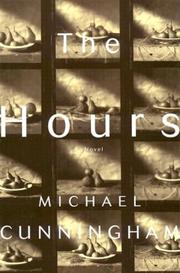
The Hours
2,989-word summary 13 min read 230 pages in the book
- First published
- 1998
- Publisher
- Farrar, Straus and Giroux
- Pages
- 230
- ISBN
- 9780374172893
Reading options
What's inside (7 sections)
A friend pressed this book into my hands years ago with a warning that sounded like a dare. Three women, three eras, one day each, all of it wrapped around Virginia Woolf's Mrs. Dalloway, a novel I had never finished. I nodded politely and put it on the shelf where books go to wait out my skepticism. Books about books make me nervous. They can feel like homework assigned by someone who already admires themselves for the assignment.
What finally pulled it down was the prologue. It is short, only a few pages, and it describes Virginia Woolf walking into the River Ouse in 1941 with stones in her coat pockets. Cunningham writes it plainly, without melodrama, and the plainness is what makes it hard to look away. A woman who wrote some of the most interior fiction in English ends her life with a practical errand, and the contrast sits in your chest. I read on, and within fifty pages I stopped worrying about whether I knew Woolf well enough. Cunningham takes care of that. He feeds you what you need exactly when you need it.
The setup is simple to describe and difficult to pull off. On a June day in 1923, Virginia Woolf wakes in Richmond and starts writing Mrs. Dalloway. On a day in 1949, a pregnant housewife named Laura Brown reads Mrs. Dalloway in Los Angeles while baking a birthday cake for her husband. On a day in the late 1990s, a New York book editor named Clarissa Vaughan, nicknamed Mrs. Dalloway by an old friend, prepares a party for a dying poet. Three mornings, three sets of errands, three evenings. Cunningham cuts between them the way Woolf's own prose slips between minds, and the effect is closer to music than to puzzle solving. You are not supposed to decode it. You are supposed to let the three days rhyme.
Published by Farrar, Straus and Giroux in 1998, at 230 pages in its first edition, the novel won the Pulitzer Prize for Fiction and the PEN/Faulkner Award. It later became a film with Nicole Kidman, Meryl Streep, and Julianne Moore. That sounds like prestige baggage, and I suppose it is, but the book itself is stranger and more tender than its reputation suggests.
Virginia in Richmond, 1923: a sentence arrives
Virginia wakes with a sentence already formed, the way some people wake with a tune. She lies in bed in the Richmond house she shares with her husband Leonard and turns the words over, testing their weight. The heroine will be called Clarissa Dalloway. She will be middle aged, married to a decent dull man, and she will give a party. That is nearly all Virginia knows at first, and Cunningham makes the not knowing feel electric. Whole afternoons of the novel hang on small decisions: what the housekeeper Nelly says in the kitchen, whether the day will allow writing before the headache comes.
Leonard hovers the way loving spouses of fragile people hover, watchful and a little afraid to name what he is watching for. He has moved her to the suburbs for her health, away from London's noise, and she resents the exile even as she understands the reason. There are scenes of genuine domestic comedy here. Nelly Boxall, the cook, rules the kitchen with cheerful tyranny. Virginia, a genius of English prose, is slightly helpless before her, and slightly afraid of her, and Cunningham lets that absurdity breathe. Then Vanessa Bell arrives with her children, Julian and Quentin and little Angelica, and the day tilts.
Vanessa is everything Virginia is not at that moment: fertile, abundant, at ease in her body, surrounded by noise she seems to generate by existing. Virginia watches her sister's children the way you watch a life you will never have, with hunger and tenderness braided together. There is a kiss between the sisters before Vanessa leaves, sudden and certain, and it lands like a dropped glass. Nothing in the scene explains itself. Cunningham trusts you to feel the size of it without a caption.
Underneath the day runs the question of the book Virginia is writing. At first she thinks Clarissa should die. A party, a shock, an ending. Then a better idea surfaces, crueler and truer: let Clarissa live, and give the death to someone else, a young veteran shattered by the war, a man whose mind never came home. Readers of Mrs. Dalloway will recognize Septimus Warren Smith taking shape on the page. Watching Virginia hand the death sentence from one character to another is quietly chilling, because we already know, from the prologue, how her own story ends. She is arranging fictional deaths while living inside a real illness, and she seems half aware of the exchange.
Cunningham handles her illness with unusual restraint. The headaches come. Certain sounds arrive wrong. She hears things that may not be there, or may be there differently. He never turns her into a case study or a saint. She is sharp, funny, difficult, sometimes unkind to Leonard in the way sick people can be unkind to the well person keeping watch. When the writing goes well, her relief is physical. When it does not, the house feels smaller. By evening, the day has given her the architecture of a masterpiece and cost her nearly everything she had.
Laura in Los Angeles, 1949: the cake and the hotel room
If Virginia's section is about making a book, Laura Brown's is about being saved by one, almost too late. Laura is pregnant with her second child, married to Dan, a kind man back from the war, and mother to a small boy named Richie who loves her with an intensity that frightens her. It is Dan's birthday. Laura has decided to bake him a cake, and the cake matters far out of proportion to cake, because it is the proof she keeps trying to offer that she is the wife and mother the postwar world ordered for her. She reads Mrs. Dalloway in bed while the house sleeps. She reads it while Richie plays. She reads it the way drowning people hold rope.
Richie is one of the most keenly drawn children I have met in fiction. He is four or five, verbal beyond his years, anxious, always making small objects for his mother, always checking that she is still in the room. His devotion should be flattering. Instead it exposes her. Laura loves him, and she also feels looked at by him in a way she cannot bear, as if he alone in the house has noticed she is performing a part. Their scenes together are gentle and awful. She helps him with some small project. She smiles. All the while some separate part of her is calculating distances, exits, the number of hours until she can be alone with the book again.
The neighbor Kitty comes over in the middle of the morning, glamorous and brittle, and confesses that she is frightened about a medical problem that may put her in the hospital. Laura comforts her, and does it well, and the ease of the performance depresses her further. Here is the thing she is good at: sounding like a woman for whom everything is fine. Kitty leaves, grateful, and Laura stands in her kitchen understanding that she has just given away the last of whatever she had stored for herself.
What happens next is the section's dark center, and Cunningham writes it without sensationalism. Laura leaves the house, checks into a nearby hotel room, and sits on the bed with her borrowed novel and a bottle of pills. She is not sure she will do it. She is sure she wants the option to exist, wants one room in the world where nobody needs a cake from her. She reads. Woolf's sentences about a woman buying flowers and giving a party, written by a sad genius in Richmond a quarter century earlier, reach across time and talk this stranger out of dying. Laura returns home. She bakes, or finishes baking. The birthday evening proceeds. Nobody knows how close the day came to ending differently, and that secrecy becomes part of her punishment and part of her survival.
There is a temptation to read Laura as ungrateful. She has a kind husband, a healthy child, a comfortable house, everything her era told women to want. Cunningham refuses that reading without ever speechifying about it. Laura's despair is not ingratitude. It is the recognition that a life can be comfortable and still be the wrong size, and that wanting something else, something with books and solitude and air in it, does not make her wicked. It makes her mismatched, which in 1949 amounts to nearly the same thing.
Clarissa in New York: flowers, then the fall
The third thread is the most contemporary and, for long stretches, the most pleasurable to read. Clarissa Vaughan is a successful editor in her fifties living in Manhattan with her partner Sally. Her nickname is Mrs. Dalloway, bestowed decades ago by her oldest friend Richard, a poet now dying of AIDS in a squalid apartment downtown. The nickname stuck because it fits: Clarissa arranges things, keeps people, gives parties. On this particular morning she goes out to buy flowers, and the echo of Woolf's famous opening is deliberate and openly delighted. Cunningham is not hiding the scaffolding. He wants you to hear the rhyme.
The day's project is a party for Richard, who has just won a major literary prize. Clarissa plans the food, the guest list, the small ceremony of it, with the competence of someone who has spent a lifetime converting love into logistics. Her daughter Julia comes and goes, fond and slightly detached in the way of grown children who love their parents without needing them hourly. Sally leaves for work. Louis, Richard's former lover, drifts through, bringing old weather with him. Between errands Clarissa keeps remembering a summer decades past, a house, a kiss with Richard that seemed at the time to contain her whole future. She chose otherwise. She built a good life. The question the day keeps pressing, gently and then not gently, is whether the good life was also the true one.
Richard's scenes are the novel's hardest and best. He is skeletal, furious, intermittently lucid, capable of cruelty that Clarissa absorbs because she understands its source. He performs for her, mocks her party, calls himself her creation, and underneath the performance he is terrified. Cunningham, who lived through the plague years of the AIDS crisis as a young gay man in New York, writes these rooms with authority that cannot be faked. The apartment smells. The light is wrong. The healthy visitor keeps noticing her own health and hating herself for noticing. When Clarissa leaves Richard to finish her errands, promising to return, the reader feels the old narrative machinery engage: the party is coming, the guests are coming, and something is going to break.
It breaks at Richard's window. With Clarissa present, Richard, talking about the hours of the day and the impossibility of continuing, falls or throws himself from the window to the street. Cunningham stages it sparely. There is no slow motion, no speech. One moment a dying man is talking, the next the day has a hole in it. Clarissa's party curdles instantly into something else. The guests will still gather, but the gathering has changed its meaning, exactly as a party in Mrs. Dalloway changes its meaning when news of a stranger's suicide reaches it. The parallel is structural, not decorative. Cunningham rebuilt Woolf's engine and set it running on new fuel.
Then comes the revelation that reorders everything before it. An older woman arrives at Clarissa's apartment, composed and apologetic, and introduces herself as Richard's mother. It is Laura Brown, seventy years older than the pregnant reader we left in Los Angeles, alive and lucid and carrying the rest of the story: she left her family not long after that birthday, walked away from Dan and the children, and never came back. Richie grew up into Richard. The boy who made small gifts for his mother became the poet who called his best friend Mrs. Dalloway. Laura speaks about her choice without pleading for forgiveness and without performing remorse, and the scene's power comes from its refusal to judge her. Clarissa, who has spent the day arranging other people's happiness, sits and listens, and her own certainties quietly shift.
How the three days answer Woolf
It helps to know a little about Mrs. Dalloway, so here is the short version. Woolf's 1925 novel follows Clarissa Dalloway through a single June day in London as she prepares for a party. A young veteran named Septimus, broken by the war, kills himself the same day. Clarissa hears about his death at her party and retreats to a small room to think about what it means. Late in the book she remembers a youthful kiss with her friend Sally Seton, a moment of private joy that has outlasted marriages and decades. That is nearly the whole plot, and it is enough, because the novel's real subject is consciousness itself: how a mind moves through hours, gathering and discarding.
Cunningham maps each element onto his three stories with care that rewards attention. The single day structure repeats three times over. Flowers open two of the three threads. The party anchors Virginia's invention, Laura's dread of performance, and Clarissa's actual evening. The kiss recurs: Sally Seton becomes Sally the partner, and the remembered kiss with Richard takes the structural place of Clarissa Dalloway's memory of Sally. Most importantly, the suicide passes from hand to hand like a dark token. Virginia considers killing Clarissa, then assigns death to Septimus. Laura contemplates it in the hotel room and survives. Richard, the descendant of both lines, completes it. The pattern suggests that despair migrates through generations and across books, looking for a place to land.
The title itself is a piece of literary history. The Hours was Woolf's working title for the novel she eventually called Mrs. Dalloway. Cunningham reclaims it, and the reclaiming does double duty. It honors the earlier book while announcing that time is this novel's true subject: how hours feel from inside, how a morning of errands can contain a lifetime, how three separate days, decades apart, can turn out to be the same day wearing different clothes. There are moments when a sentence in one thread seems to answer a sentence in another. The book trains you to read across time.
This is also a novel about reading as an action with consequences. Laura's copy of Mrs. Dalloway is not set dressing. It intervenes. It keeps her alive on the specific afternoon when nothing else could, and then it disappears into her history the way books do, becoming part of the furniture of a choice she spends decades defending to herself. Virginia's reading of her own life into Clarissa, and Clarissa Vaughan's half conscious performance of a character she may never have read about, complete the circuit. Books make people here, and then people have to live inside what the books made.
What drags, and who should read it
Honesty requires the complaints first. Laura's middle chapters can feel airless. That is partly the point, since her life is airless, but intention does not always rescue experience, and some readers will find the cake baking and the bed reading slow going. The novel's sentences are dense and patterned, beautiful but demanding, and Cunningham occasionally polishes a paragraph past the point where it feels lived in. The final revelation about Laura, for all its emotional force, ties the three threads together almost too neatly. A reader who distrusts coincidence may feel the author's hand on the scale. And anyone who needs propulsive plot should stay away. Nothing explodes. Nobody is chased. The biggest action sequence is a woman buying flowers.
There is also the matter of pain. Richard's dying occupies relatively few pages and dominates the memory of the book. Readers who lived through the AIDS years, or who love someone who did not survive them, may find those scenes difficult in a way that has nothing to do with literary merit. Cunningham does not look away from the body's decay or from the particular cruelty of a disease that took the young and the gifted in large numbers. The party preparations going on simultaneously, all that fuss over food and guests, can feel obscene until you realize the obscenity is the point. Life keeps arranging itself around the dying. The flowers still need water.
So who is this for. Anyone curious about Woolf but intimidated by modernism could start here and then read Mrs. Dalloway with the lights already on. Book groups will find no shortage to argue about, especially Laura's choice to leave, which divides readers sharply and productively. Readers interested in how queer lives were lived across the twentieth century will find three eras set side by side: criminalized and coded in Woolf's England, unspeakable in suburban 1949, grieving and defiant in 1990s New York. And anyone who has ever been kept alive by a book will recognize Laura's hotel afternoon and feel known by it.
I finished it late at night and sat for a while without starting anything else, which is my most reliable signal. The next morning I ordered Mrs. Dalloway, the book I had failed to finish in college, and read it straight through with Cunningham's three women sitting invisibly beside me. That seems like the right direction for influence to flow: backward from the student to the teacher, from 1998 to 1923, across the hours that separate every reader from every writer. Pick it up on a day with nothing scheduled. Let the three mornings braid. See which of the three women follows you into your own evening.
FAQ
Do I need to read Mrs. Dalloway before The Hours?
No. Cunningham gives you everything you need as he goes, and the three stories stand on their own. Knowing Woolf's novel adds pleasure, especially the echoes of the party, the flowers, and Septimus, but this book was written to be read cold.
Did The Hours win the Pulitzer Prize?
Yes. Published by Farrar, Straus and Giroux in 1998, it won the Pulitzer Prize for Fiction in 1999, along with the PEN/Faulkner Award. It was later adapted into a film starring Nicole Kidman, Meryl Streep, and Julianne Moore.
Is The Hours based on a true story?
Virginia Woolf was real, and the 1923 chapters draw on her life in Richmond while she wrote Mrs. Dalloway. Laura Brown and Clarissa Vaughan are invented characters, built to mirror Woolf's people rather than to portray anyone living.
Similar books
The Song of Achilles
Song of Achilles retold: Patroclus and Achilles from boys to Troy, love and war in Miller prose.
1,925-word summary · 9 min read
Violeta
A woman born in 1920 writes her life story to her grandson, from one pandemic to another, through wealth, ruin, passion, and dictatorship in South America.
2,555-word summary · 11 min read

Mrs. Everything
Two Jewish sisters in Detroit grow up, apart and together, across seven decades of American life, from the 1950s to the 2016 election.
2,362-word summary · 10 min read

Sophie's Choice
A young Southern writer in 1947 Brooklyn befriends a brilliant, unstable couple and slowly learns the story of the Polish Catholic woman at the center of their…
2,798-word summary · 12 min read
The Lowland
Two brothers grow up beside a marshy lowland in Calcutta, and the choices of the younger one draw the older into a life of duty, distance, and quiet grief that…
2,213-word summary · 10 min read

We Are Okay
Marin fled San Francisco after her grandfather vanished and stopped answering anyone. When Mabel visits her college dorm, she has to say what happened.
2,253-word summary · 10 min read
Infinite Jest
A film that kills its viewers, a tennis academy, a halfway house for addicts, and a future America where corporations name the years, all tangled together.
2,084-word summary · 9 min read
The Storyteller's Secret
A New York journalist goes to India to learn why her grandmother loved a British officer, and why a family servant kept the truth for forty years.
2,270-word summary · 10 min read
Stones from the River
Trudi Montag is born a dwarf in a small German river town in 1915 and grows up to keep the town's library and its secrets, from the First World War to the…
2,818-word summary · 13 min read
Last Night at the Telegraph Club
The 2021 National Book Award winner follows Lily Hu, a Chinese American teenager in 1954 San Francisco, as she falls for Kath and learns what it costs to be…
2,336-word summary · 10 min read

Ivanhoe
A disinherited Saxon knight, a great tournament, a besieged castle and a trial by combat. Scott's most famous novel, set in England in 1194.
2,834-word summary · 13 min read
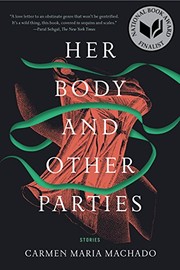
Her Body and Other Parties: Stories
Eight stories where bodies, medicine and old fairy tales get taken apart, with a green ribbon running through the whole book.
2,997-word summary · 13 min read
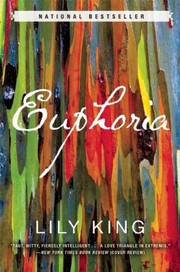
Euphoria
Three anthropologists in 1930s New Guinea turn fieldwork into a love triangle, and a real history breathes behind them.
2,048-word summary · 9 min read

Big Swiss
A transcriptionist for a sex coach falls for one of his clients, the tall Swiss gynecologist she calls Big Swiss, in a funny novel about work and secrets.
2,523-word summary · 11 min read

Wide Sargasso Sea
Jean Rhys gives the first Mrs. Rochester a Caribbean childhood, a marriage built on money and suspicion, and a voice that Charlotte Bronte left in the attic.
2,021-word summary · 9 min read
The Sisters Brothers
Two hired killers ride from Oregon to Gold Rush California to murder a prospector, and find their trade, their brotherhood, and the frontier myth coming apart.
2,095-word summary · 9 min read
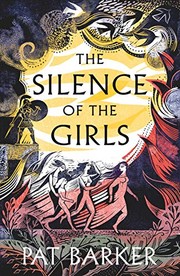
The Silence of the Girls
Briseis, queen of Lyrnessus, is captured by Achilles and narrates the Trojan War from inside the Greek camp, where women are prizes and survival is its own…
2,098-word summary · 9 min read
The Birth of Venus
A Florentine merchant's daughter trains as an artist, marries a man who hides a secret, and survives Savonarola's bonfire of the vanities.
2,404-word summary · 11 min read
Orlando
A young Elizabethan nobleman becomes a woman and lives for centuries, moving through English history while writing a single poem about an oak tree.
2,030-word summary · 9 min read
Mother Night
Howard W. Campbell Jr., a Nazi propagandist and American spy, tells the story of his double life from an Israeli prison cell while waiting to be tried for war…
1,988-word summary · 9 min read
Bring Up the Bodies
Thomas Cromwell sets out to destroy Anne Boleyn, building a case from rumor and revenge while Henry VIII waits to marry Jane Seymour.
2,066-word summary · 9 min read
The Prisoner of Heaven
Fermin Christmas past returns with a stranger and a prison debt.
2,388-word summary · 11 min read
The Buried Giant
An old couple crosses a misty post Arthur Britain searching for a son.
2,593-word summary · 12 min read
Let the Great World Spin
A wire walker crosses the towers as Bronx lives collide below.
2,338-word summary · 10 min read
Fingersmith
A thief plots to cheat an heiress, then the scheme flips twice in Victorian London.
2,532-word summary · 11 min read
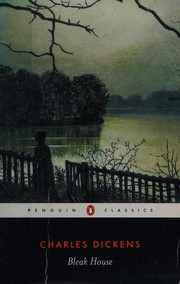
Bleak House
Jarndyce and Jarndyce grinds through Chancery while Esther finds her family.
2,480-word summary · 11 min read
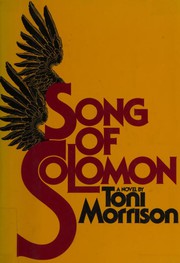
Song of Solomon
Milkman Dead leaves Michigan to hunt for family gold and finds instead the old song of his ancestor Solomon.
2,465-word summary · 11 min read
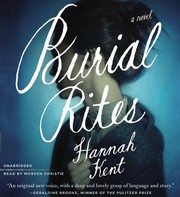
Burial Rites
Condemned for murder in 1829 Iceland, Agnes Magnusdottir spends her final winter on a crowded farm while a young priest listens to her story.
2,976-word summary · 13 min read
The Signature of All Things
Botanist Alma Whittaker grows up in Philadelphia trade wealth, studies mosses, marries distant Ambrose Pike, and sails to Tahiti seeking how species change.
2,535-word summary · 11 min read
The Island of Missing Trees
A talking fig links 1970s Cyprus lovers Kostas and Defne with their grieving London daughter Ada years later.
3,172-word summary · 14 min read