Reading options
What's inside (8 sections)
I came to this book sideways. A friend kept pressing it on me after my father died, saying it was about grief but also funny, which sounded impossible. I left it on the shelf for months. When I finally opened it on a train, I read forty pages without looking up. This is Nicole Krauss's second novel, published by W. W. Norton and Company in 2005 at 252 pages in the first hardcover, and it is built like a puzzle box that turns out to hold something plain and human.
The setup sounds complicated and it is, at first. Two narrators alternate. One is Leo Gursky, an old locksmith living alone in New York. The other is Alma Singer, a fourteen year old girl in New York trying to hold her family together after her father died of cancer. Between them sits a book, also called The History of Love, written in Yiddish long ago in Poland, lost in the war, published in Spanish in Chile under another man's name, loved by Alma's parents, and now being translated back into English for a lot of money by Alma's mother. You need a few chapters to see how the threads connect. Once you do, the book moves fast.
What kept me reading was not the mechanics. It was the voices. Leo is cranky and scared of disappearing. Alma is earnest and trying so hard to be grown up that she breaks your heart. Krauss lets both of them be wrong about things for a long time. That patience pays off in the last fifty pages, which I found genuinely moving in a way I did not expect from such a constructed plot.
The old man who makes sure he is still visible
Leo Gursky is in his eighties when we meet him. He lives by himself in an apartment on the Lower East Side. His best friend Bruno is gone. His son Isaac, a famous writer, has just died at sixty. Leo spends his days trying to be noticed.
He tells us this straight out. He drops coins in the street so strangers have to bend and look at him. He orders coffee in a loud voice. He lets himself be knocked over a little at the store so someone has to help him up. At one point he poses nude for an art class, which is played for laughs and also not a joke at all. He is terrified of dying alone and unrecorded, of what he calls becoming transparent. The comedy lands because Krauss writes Leo as a man who knows exactly how absurd he sounds and does it anyway.
Then the past comes in, in short bursts. Leo grew up in Slonim in Poland. At ten he fell for his neighbor Alma Mereminski. She was sharp and unafraid and liked his words. He started writing for her. Over ten years he wrote her three books, the last of them called The History of Love. He promised he would never love anyone else. He meant it in the total way only a teenager can mean anything.
War split them. Alma's father sent her to America in the late 1930s as the news from Europe turned dark. Leo did not know she was pregnant with his child. He hid in the woods for three and a half years after the invasion, eating roots and stealing potatoes from farm cellars, sleeping in holes he dug himself. When he finally got to America he found Alma living with another man, the son of the factory manager where she worked. She had married him after being told Leo was dead. She had a second child with her husband. She told Leo about his son, a boy of five named Isaac, and she told him she could not leave.
That scene is quiet and it wrecked me. No shouting. Alma is kind. Leo asks and she says no. He walks away and becomes a locksmith through help from a cousin. He watches Isaac from a distance for decades. He stands across the street from schools and parks. He reads every review when Isaac grows up to publish novels. He writes a memoirish book called Words for Everything and mails it to his son, then breaks into Isaac's house one night to see if the copy has been opened. It is stalking, in literal terms. Krauss does not excuse it. She shows it as love twisted by shame and by the sense that he missed his one chance to be a father.
Present day Leo is waiting to die and also fighting it. He remembers his friend Bruno, another Polish Jew who survived and ended up in New York. He keeps a manuscript of his obituary that he wrote years ago when he was sick in Poland, writing his own ending so someone else does not have to. His body fails in small humiliating ways. He keeps making jokes anyway.
Leo's chapters include excerpts from his lost book. Short fables and definitions. The age of glass. The birth of feeling. Angels too full of longing to fly. I adored most and skimmed one. They slow the plot but they tell you who young Leo was.
The girl who was named for a character
Alma Singer is fourteen, almost fifteen. She lives in New York with her mother Charlotte, a translator, and her little brother Bird, real name Emanuel, who jumped off a second story landing as a kid trying to fly and got the nickname that stuck. Their father David died of cancer a few years back. The family has stalled since.
Alma narrates with lists and plans. How to Survive in the Wild, a book her father gave her, has become her manual. She keeps a diary where she logs clues. She has a Russian pen pal named Misha who moved to New York and becomes her first boyfriend, sweet and awkward. They break up because Alma is too busy with her mission to be present for him.
The mission starts with money. Charlotte gets a letter from a man calling himself Jacob Marcus. He offers her one hundred thousand dollars, paid in chunks of twenty five thousand, to translate a Spanish novel called The History of Love into English. He says his mother used to read it to him as a child and it has great sentimental worth to him. Charlotte is suspicious of the sum but takes the work. She is lonely and broke and good at Spanish. The book on her desk is the same book David once gave her, the book Alma was named after. Alma's full name comes from the Alma character inside that novel.
Alma decides Jacob Marcus would make a good husband for her mother. She starts steaming open the letters, or rather reading the drafts, and rewriting her mother's plain replies into warmer, stranger notes. This is played as comedy and as grief. Alma is matchmaking from the kitchen table because she cannot stand watching her mother go quiet. When the letters suddenly stop before the translation is done, Alma panics. The checks stop too. She decides to find Jacob Marcus herself.
Her detective work carries the middle of the book. She notices that every character in the Spanish History of Love has a Spanish surname except one, Alma Mereminsky. She decides Alma must have been a real person. She learns that a Chilean writer named Zvi Litvinoff published the book. She finds that Alma Mereminski married and became Alma Moritz and died five years ago. She reads Isaac Moritz, Alma's elder son and a celebrated novelist, and discovers his books feature a character named Jacob Marcus. So Jacob Marcus was Isaac. And Isaac is now dead, which explains the silence.
This sounds neat in summary. On the page it is messy in a good way. Alma hits dead ends and lies to her mother about where she goes after school. She fights with Bird, who finds her diary and misreads it badly. I believed her as a teenager because Krauss lets her be smart about books and dumb about people.
Bird deserves his own note. He has turned to religion since David died. He believes he may be one of the lamed vovniks, the thirty six hidden righteous people who hold the world together. For Bird, ritual is a way to keep his father close. His chapters are short and strange and some of my favorites.
The friend who put his own name on the cover
Zvi Litvinoff is the third thread, and his sections read like a confession. He grew up with Leo in Poland. After the war he ended up in Chile. He had in his bag a Yiddish manuscript Leo gave him for safekeeping before they parted, the History of Love. He assumed Leo was killed. He copied the book in Spanish, in his own hand at first, then typed, changing names to Spanish ones, keeping the Alma name because he could not bring himself to change it, adding small scenes of his own.
Then he published it under his name.
It came out in a small run of two thousand copies and went nowhere, until years later when a review after his supposed death revived it and it became a beloved book in Spanish. By then Zvi was sick with guilt and also stuck. His wife Rosa knew. Friends suspected. He told himself Leo was gone and the book would have vanished otherwise. That excuse wore thin but he never corrected the record in public. When he prepared the book for reissue he insisted the publisher keep the last chapter, a strange obituary for a man named Leopold Gursky. The publisher thought it did not fit. Zvi said it stays or no book. They kept it.
That obituary is Leo's, written by Leo himself when he was ill in Poland and carried by Zvi in his pocket for years like a charm against death. He thought if he kept Leo's death on paper close, Leo might stay alive somewhere. Krauss does not paint Zvi as a villain. He is a minor writer who got handed a major book by chance and chose to keep it.
There are a couple of great Rosa chapters. She is a writer too, sharper than Zvi, less lucky. She remembers the flood that supposedly destroyed the Yiddish original, and whether it did or not hardly matters now. What matters is that two thousand copies in Spanish landed on Charlotte and David Singer's shelf in New York, where they underlined passages and named a daughter after a girl in its pages.
I want to flag the Bruno Schulz thread here because readers sometimes miss it. Leo's friend Bruno in New York shares a first name with the Polish writer Bruno Schulz, author of Street of Crocodiles. Alma reads Schulz because Jacob Marcus mentions rereading him. These are not puzzles you must solve.
How a locksmith and a schoolgirl end up on the same bench
The last third is all convergence, and Krauss handles it with more restraint than I expected. Alma leaves a note at Isaac Moritz's door asking who really wrote the History of Love. Isaac's brother calls back and says the name Leopold Gursky. Bird, who answered that call and already believes from the diary that Alma Mereminski and Alma Moritz are code for his sister having different fathers, gets even more confused and decides Leopold Gursky must be Alma's real father. To fix what he sees as his own sin of pride, he arranges a secret meeting between Alma and Leo without telling either who the other is, thinking a hidden good deed will restore him.
So an old man and a young girl get letters pointing them to a park bench in Central Park. Leo thinks, impossibly, that Alma might have come back. Alma thinks she is meeting some scholar who can explain Jacob Marcus.
Krauss stretches this waiting scene beautifully. Leo sits a long time. He thinks about Alma, about Isaac, about Bruno. He imagines dying there and is almost calm about it. Time slows in a way that reminded me of sitting with my own father in a hospital waiting room.
When Alma arrives, Leo first thinks she is a vision. She does not look like his Alma. A passerby confirms she is real. They talk, awkwardly at first. He mentions Bruno and Isaac. She starts to add things up. She asks if he ever loved a girl named Alma Mereminski.
He cannot answer with words. He taps her arm twice with his fingers.
She puts her head on his shoulder. He says her name three times.
Readers argue about whether Leo dies in that moment. Krauss leaves it open and then gives us the final chapter, called The Death of Leopold Gursky, which repeats Leo's self written obituary word for word, the same text Zvi tacked onto the Spanish edition. Words keep people visible after they go. Zvi kept Leo alive by carrying that page. Charlotte and David kept Alma Mereminski alive by naming a child for her.
I cried at the finger taps. I do not cry much at books. The gesture had been set up chapters earlier without fanfare, Leo's private signal for I am still here. After a whole novel about invisibility, that lands.
All the books inside the book
It helps to step back and see the layers, because there are a lot. Krauss wrote a novel called The History of Love. Inside it, Leo wrote a novel called The History of Love. Inside that, Zvi published a version called The History of Love in Spanish. Inside that, Isaac Moritz wrote novels featuring a man called Jacob Marcus, who then hires Charlotte to translate Zvi's version back into English. Charlotte's translation will be, in a sense, Leo's book coming home.
Characters keep writing to survive. Leo writes to keep Alma. Zvi writes to cover theft and then to confess sideways. Rosa writes to tell the truth about her marriage. Alma writes lists to manage fear. Charlotte translates, which is its own kind of writing, carrying meaning across a gap.
The theme could feel heavy. Mostly it does not, because Krauss keeps the sentences light. The point is simple and I found it consoling after my own loss. People vanish. Pages stay. A father who dies of cancer stays in the survival manual he gave his daughter. A friend presumed dead stays in an obituary carried in a coat pocket for forty years.
There is a New Yorker history worth knowing. An excerpt appeared in 2004 as The Last Words on Earth. If you want strict realism, the coincidences will bother you. A daughter named for a character translates the very book she was named for, written by a man living three subway stops away. I chose to read it as fable logic, the way New York can feel when grief narrows your map.
Where it wobbles for me, and why I still press it on people
I should be honest about the parts that dragged. The middle sags a little. Alma's search involves a lot of library visits and unanswered emails, which is true to life but repetitive on the page. I also wanted more of Charlotte. She is the hinge of the whole plot, the translator and widow, and yet she stays at the edge. I finished wanting one full Charlotte chapter to sit beside the Leo and Alma sections.
Leo's voice, much as I love it, sometimes tips into cute. Two or three jokes could have been cut. And if you have read Jonathan Safran Foer's Extremely Loud and Incredibly Close, which came out the same year and also follows a precocious kid in New York hunting through the city after a father dies, you will feel the overlap. The books were written side by side by writers who were married at the time. Krauss's book is warmer, but the comparison is fair and worth naming.
None of that undid the whole for me. The final bench scene earns its feeling because Krauss waited so long for it. Alma and Bird feel like real siblings, irritating and loyal in the same hour. I finished it in two days and then sat quiet for a while, thinking about my father.
Who should read it. If you like novels about families after a death, you will likely love this. If you want a straight Holocaust novel, this is not that, though the war shapes everything. If you dislike books that hinge on coincidence, borrow it first. For me it worked as my friend promised, sad and funny at once, with an ending that felt like being recognized after a long time of feeling invisible.
FAQ
When was The History of Love published and by whom?
W. W. Norton and Company published Nicole Krauss's novel in 2005. The first hardcover runs 252 pages with ISBN 9780393060348.
Who actually wrote the History of Love inside the novel?
Leo Gursky wrote the Yiddish original for Alma Mereminski. His friend Zvi Litvinoff translated it into Spanish and published it under his own name.
What happens at the end between Leo and Alma?
Krauss leaves Leo's fate open on the bench with young Alma Singer. The closing obituary repeats his own death notice, framing remembrance as survival.
Similar books

We Are Okay
Marin fled San Francisco after her grandfather vanished and stopped answering anyone. When Mabel visits her college dorm, she has to say what happened.
2,253-word summary · 10 min read
Prodigal Summer
Three lives in one Virginia mountain valley summer: a ranger watching coyotes, a widow learning moths and goats, and feuding elders guarding chestnuts, retold…
2,308-word summary · 10 min read

The Japanese Lover
A Polish refugee and the son of a Japanese gardener fall in love in San Francisco in 1939, then keep the affair secret for nearly seventy years.
2,286-word summary · 10 min read

Alone With You in the Ether
Two people in Chicago agree to six conversations, and the experiment becomes a love affair that is also a study of bipolar disorder, obsession, and the shape…
2,713-word summary · 12 min read

Memories of My Melancholy Whores
A ninety-year-old journalist pays for a night with a teenage girl, cannot go through with it, and discovers love for the first time in García Márquez's late…
2,101-word summary · 9 min read

Howards End
Forster's 1910 novel follows two families, a house in Hertfordshire, and a burned note, asking whether money and feeling can ever be connected.
2,187-word summary · 10 min read

Sophie's Choice
A young Southern writer in 1947 Brooklyn befriends a brilliant, unstable couple and slowly learns the story of the Polish Catholic woman at the center of their…
2,798-word summary · 12 min read

Fathers and Sons
Arkady brings the nihilist Bazarov home to his father's estate, and a generational argument turns into love, a duel, and an early death.
2,192-word summary · 10 min read
Unaccustomed Earth
Lahiri’s second story collection follows Bengali families in America and abroad, tracing the quiet distances between parents and children, spouses, and the…
2,333-word summary · 10 min read

The Age of Miracles
A California girl grows up while the Earth's rotation slows, and ordinary adolescence continues alongside slow catastrophe.
2,417-word summary · 11 min read
Peace Like a River
An asthmatic boy in the early 1960s narrates his family's search for his older brother, who is accused of two killings and has escaped custody.
1,969-word summary · 9 min read

The Chosen
A shattered pair of glasses in a 1944 Brooklyn softball game starts a friendship between a Hasidic boy and his Orthodox neighbor, and their fathers pull them…
2,443-word summary · 11 min read

A Spool of Blue Thread
Four generations of the Whitshank family in Baltimore, and the silences, resentments and quiet love they hand down without ever saying so.
2,408-word summary · 11 min read

This Is How You Lose Her
Yunior cycles through love affairs and betrayals in nine linked stories, tracing the damage he does and the family history behind it.
2,195-word summary · 10 min read
Flight Behavior
Dellarobia Turnbow is stuck in a Tennessee farm marriage until a valley full of monarch butterflies, and the scientist who comes to study them, force her to…
2,051-word summary · 9 min read

And Every Morning the Way Home Gets Longer and Longer
An elderly grandfather, his son, and his grandson share memories and fears as the old man's mind begins to fade, in a short novel about grief and love.
2,078-word summary · 9 min read
The Tiger's Wife
A young doctor in a war-scarred Balkan country chases the stories her grandfather left behind, including a deathless man and a deaf girl who loved an escaped…
2,232-word summary · 10 min read

The Story of Edgar Sawtelle
A mute boy on a Wisconsin dog-breeding farm relives Hamlet as his uncle returns, his father dies in the barn, and the dogs inherit what is left.
2,392-word summary · 11 min read
Olive, Again
Elizabeth Strout returns to Crosby, Maine, as Olive Kitteridge marries Jack Kennison, confronts her son, and faces old age, grief, and small-town judgment.
2,333-word summary · 10 min read
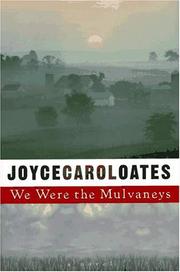
We Were the Mulvaneys
After a rape following a school dance, the Mulvaneys, a family that believed it was blessed, comes apart over fifteen years. Narrated by the youngest son.
2,094-word summary · 9 min read
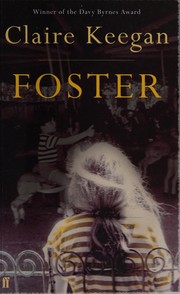
Foster
A girl spends a summer with relatives on a Wexford farm and is cared for properly for the first time. A spare novella about family and what children notice…
2,043-word summary · 9 min read
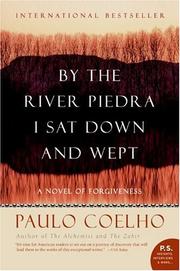
By the River Piedra I Sat Down and Wept
Pilar, 29, meets her childhood friend again in Madrid and finds a rumored miracle worker. One winter week through the Pyrenees to the river Piedra, and the…
2,845-word summary · 13 min read
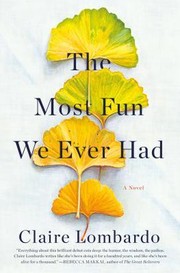
The Most Fun We Ever Had
Four Sorenson sisters orbit perfect parents hiding old cracks.
2,590-word summary · 12 min read
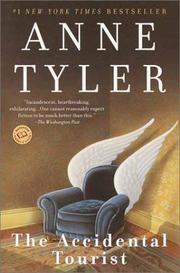
The Accidental Tourist
Grieving Macon writes travel guides for haters of travel, then Muriel intrudes.
2,252-word summary · 10 min read

Kitchen
Orphan Mikage finds home in a kitchen with Yuichi and Eriko after loss.
2,597-word summary · 12 min read
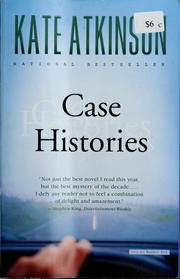
Case Histories
A Cambridge PI takes three cold cases that tangle with his own loss.
2,465-word summary · 11 min read
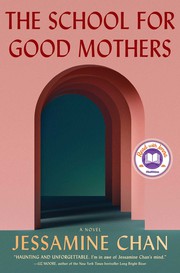
The School for Good Mothers
A mother sent to a reform school fights to keep her daughter under cold surveillance and strict rules.
2,114-word summary · 9 min read
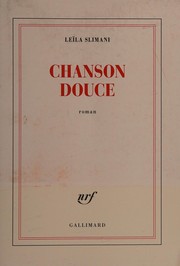
The Perfect Nanny
A trusted nanny kills two children, and the book traces how love and class hid warning signs.
2,200-word summary · 10 min read
Song of Solomon
Milkman Dead leaves Michigan to hunt for family gold and finds instead the old song of his ancestor Solomon.
2,465-word summary · 11 min read