
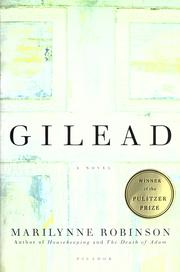
Gilead
2,387-word summary 11 min read 247 pages in the book
- First published
- 2004
- Publisher
- Picador
- Pages
- 247
- ISBN
- 9780312424404
- Series
- Gilead (#1)
Reading options
What's inside (8 sections)
I picked up Gilead because a friend kept pressing it on me with unusual insistence. She said it was quiet and it would stay with me. I was skeptical. A 247 page novel published in 2004 by Picador, written as a letter from an old minister to his small son, winner of the Pulitzer in 2005, first in the Gilead series. It sounded worthy in the dull sense, the kind of book you admire from a distance. I read it slowly over a week, mostly late at night, and found myself thinking about it during the day in a way faster books rarely manage.
The shape of the book is simple. Reverend John Ames is seventy six years old. His heart is failing. He knows he will not live to see his son grow up. So he writes. Page after page, memory after memory, theology mixed with household detail, advice mixed with apology. There is very little plot in the conventional sense. A man sits at his desk in Iowa and remembers. Someone returns to town. A kind word is hard to give and then finally given. That is almost all that happens. And yet I finished it feeling I had been inside a whole life.
If you need a fast story with twists, this is not your book. I will say that plainly. Parts of it move at the pace of an afternoon spent watching light cross a wall. Ames will spend pages on forgiveness or predestination or baptism, and if you have no patience for that kind of reflection, you will feel the drag. I did in places. Then something small would pull me back. A cat in the sunlight. The sound of rain on a church roof.
A Letter Meant to Be Read Later
John Ames is writing for a boy who cannot yet understand him. His son is seven. Ames married late, to a much younger woman named Lila, and fatherhood came to him when most men are grandfathers. He knows the boy will read this letter at perhaps twice or three times his present age, when Ames himself is gone. That knowledge colors every page.
He writes about practical things. Where the family money is. Who to trust in town. How his mother liked her house kept. He also writes about what he believes and where he doubts. He tries to explain what it felt like to be called to preach, what it feels like to pray for people he finds difficult, what it means to bless someone.
The letter form allows Ames to wander. He repeats himself. He corrects himself. He starts a story, breaks off to describe the weather, then returns to the story twenty pages later with a new detail. At first I found this frustrating. I wanted him to get on with it. After a while I began to hear it as a real voice, an old man thinking aloud, aware that time is short and trying to leave behind what matters.
He is honest about his limits. He admits jealousy. He admits fear. He worries that his son will remember him only as a pale old man who smelled of medicine. That desire to leave something warmer gives the book its tenderness. You feel a father reaching past death, trying to parent through sentences.
Ames will sometimes give you two lines that land harder than a chapter. He notices the way his son laughs. He notices the way Lila folds his shirts. He holds those details up carefully, as if to say, look, this was holy too.
Gilead, Iowa in 1956
The year in the book is 1956. The place is Gilead, Iowa, a small prairie town that has seen better days. Stores are closing on Main Street. Young people are leaving for cities and jobs elsewhere. The Congregational church Ames serves is shrinking. The Presbyterian church across the way, served by his lifelong friend Robert Boughton, is shrinking too.
Robinson renders this fading town with great patience. She gives you heat and dust and summer storms. She gives you baseball on the radio, shared suppers, visits between parsonages, long empty afternoons when Ames walks and looks at trees. Nothing spectacular happens in Gilead in 1956. Life here is made of repetition. Sermons. Visits to the sick. Funerals. Baptisms that come less often than they used to.
I liked how physical the town felt. Ames describes water, light, wind, the smell of grass after rain. A splash of sun on a floorboard can occupy him for a paragraph. Some readers will find that slow. I sometimes did. There were stretches where I wanted more forward motion. Robinson refuses to supply it.
The friendship between Ames and Boughton anchors this part of the book. They are both old. Both failing. Boughton is mostly housebound. Ames visits him, they talk about scripture and about their children, they tease each other gently. When Boughton declines, Ames feels his own solitude sharpen.
What surprised me was how much tension Robinson builds from almost nothing. The return of one person, which I will come to later, changes the air in Gilead completely. A letter, a visit, a conversation on a porch. In a larger novel those would be minor beats. Here they feel large because the town is so still.
The Grandfather Who Preached Abolition
Much of the letter looks backward to Ames family history, especially to his grandfather, also named John Ames. The grandfather was a preacher of the old fire eating kind, an abolitionist who saw visions and spoke of them openly. He gave his life to the cause of ending slavery. He left Iowa for Kansas during the violent years before the Civil War, preached to soldiers, carried a pistol, lost the sight in one eye. To the young Ames he seemed immense, strange, lit from within.
Ames remembers his grandfather with awe and confusion. As a boy he admired him without reserve. As an old man he sees the cost. The grandfather quarreled bitterly with his own son over pacifism and over how to serve God. He could be harsh at home. He could frighten people. His certainty gave him power in the pulpit and made him hard to live with at the table.
One of the strongest passages concerns a journey Ames took with his father as a boy to find the grave of the grandfather in Kansas. They traveled with little money, slept rough, asked directions in small towns, walked through dry country. When they finally found the neglected burial place, they cleared it and prayed. Ames describes the heat, the thirst, the awkward kindness of strangers.
I found this the most vivid historical writing in the novel. Robinson does not give a lecture on abolition or Bleeding Kansas. She gives you a boy watching his father and grandfather collide across generations. The grandfather believed God required action, even violent action, against slavery.
This is where the theology starts to thicken. Ames reflects on visions, on whether his grandfather truly saw what he claimed to see, on what it means to trust an inner light. If you enjoy that kind of wrestling, you will be absorbed. If you want the story to keep moving, you may feel it stall.
A Father Who Could Not Stay
Ames writes at length about his own father, also a minister, also named John Ames. Where the grandfather burned hot, the father was gentle, dutiful, inclined toward peace. He served the Gilead church for years. He baptized, married, buried. He tried to honor his own father while disagreeing with him about war and force. The disagreement never healed cleanly.
The father eventually left Gilead. He moved south to Florida to serve a small church there, partly from weariness, partly from a sense that Iowa held too many ghosts. Young Ames stayed behind to take the Gilead pulpit. That separation marked him. He describes letters exchanged, visits that felt strained, affection that could not quite bridge different views of ministry.
Ames also writes about his brother Edward. Edward was bright, skeptical, drawn to books and ideas outside the church. He left faith behind and became a professor. Their conversations, remembered decades later, still sting. Edward could puncture Ames with a clever question. Ames loved him and felt judged by him.
I appreciated how Robinson refuses to make any of these men villains. The grandfather is formidable and flawed. The father is kind and evasive. Edward is sharp and lonely. Ames sees their virtues clearly and their failures without flinching. He does not excuse himself either. He admits times he preached past people, times he avoided conflict, times he chose comfort.
There are pages here about Ames first family that are quietly devastating. Before Lila, he was married briefly in his youth. His first wife died giving birth to their child, and the infant died soon after. He lived alone for decades after that loss, cooking for himself, tending the church, growing used to silence.
Jack Boughton Comes Home
The living drama of the book arrives with Jack Boughton, the wayward son of Ames old friend. Jack is in his forties, charming, restless, damaged. He has spent years drifting, stealing, drinking, serving time, fathering a child outside marriage and then losing contact. He returns to Gilead in 1956 while his father is dying, and his presence unsettles Ames deeply.
Ames distrusts Jack from the start. Part of it is evidence. Jack has lied before. He stole money as a boy. He behaved cruelly more than once. Part of it is fear. Ames has a young wife and small son. He imagines Jack as a threat to that fragile happiness. He watches Jack closely, interprets every visit, every offer to help, in the worst light.
What makes this section so strong is that Robinson lets Ames be unfair. He knows the Bible commands forgiveness. He preaches it. He prays for the ability to feel it. And still he resents Jack. He admits petty thoughts. He avoids him. He is ashamed of his suspicion and continues to feel it. That honesty felt rare to me.
Jack himself is drawn with care. He is intelligent, well read, funny in a tired way. He asks Ames hard questions about predestination and damnation, questions Ames cannot swat away. He sits with his dying father. He reveals, gradually, that he has loved a woman and fathered a son elsewhere, and that the law and custom of the time made a stable life with them nearly impossible.
The heart of the book, for me, was Ames struggle to bless Jack. A blessing in this tradition is formal and weighty, a laying on of hands, a naming of worth. Ames wants to offer it. He also withholds it. The pacing here will test some readers. Robinson stretches the moral deadlock over many small encounters. Porch talks. Walks. Shared meals. I found it slow in the middle and then suddenly moving.
I will not spoil the final meeting in detail. I will say it satisfied me without feeling tidy. Ames does not solve Jack. Jack does not become a new man on command. Something passes between them that feels like grace precisely because it is incomplete and costly.
Lila, La Rue, and a Late Marriage
Late in life, Ames found unexpected happiness. Lila arrived in Gilead with almost nothing. She had lived hard, worked where she could, learned to keep herself guarded. She began attending his church, sitting at the back, leaving early. He noticed her. He visited her lodgings. He taught her the Bible and the catechism. Slowly, awkwardly, they married.
Robinson writes their courtship with lovely restraint. Ames is shy and formal. Lila is blunt and wary. She asks questions about faith that are fresh because she comes to them without training. Ames tries to answer without condescension and often fails, then tries again.
Their son changed everything for Ames. He describes fatherhood in his seventies with wonder and comedy. He is too tired to play as he wishes. He worries he embarrasses the boy at school events. He delights in small rituals, bedtime, walks to the river, explaining plants and weather. He fears the boy will grow up without him and hopes Lila will keep his memory kind but honest.
La Rue enters Ames memories as part of that wider landscape of loss and care. It is a small place beyond Gilead proper, tied in his mind to earlier ministries, to families he visited, to funerals held in hot chapels and meals eaten at crowded tables. He recalls riding out toward La Rue in his younger years to preach or to sit with the sick, and how those visits taught him the limits of words. When he thinks of Lila early days in Gilead, he thinks of the women he met near La Rue who survived on little and asked for less.
That connection matters because Ames often measures himself against his grandfather and father and finds himself small. The trips toward La Rue remind him that ministry was never grand for him. It was kettles boiled, floors swept after a meeting, a child watched while a mother rested. He wonders whether that counts.
I want to be candid about weaknesses. The book can feel airless. Almost everyone in it is decent, thoughtful, patient. Gilead in 1956 surely contained pettiness and cruelty that Robinson mostly sets aside to focus on interior struggle. The theology, rich as it is, can overwhelm the story. There are passages on baptism and on forgiveness of debts that read like essays slipped into a letter.
Still, I closed the book with affection. Gilead is a novel about attention. Attention to a child, to a wife, to an enemy, to light on water. Ames learns, very late, to bless a man he feared. That movement felt earned to me, not imposed. I thought about my own grudges while reading, the small ones I polish.
If you read it, read it slowly. A chapter a night. Let the repetitions work on you. Keep a pencil nearby for the lines about fathers and sons that will catch you off guard. You may find, as I did, that a book with almost no action leaves more behind than louder books that race to impress.
FAQ
When was Gilead published and is it part of a series?
Yes. It was published in 2004 by Picador, runs 247 pages, and is the first book in the Gilead series. It won the Pulitzer Prize in 2005.
What is the central conflict and who is it for?
Much of the book follows the return of Jack Boughton, the wayward son of Ames friend, and Ames long struggle to forgive him and offer a blessing. The slow pace and dense theology passages put off some readers.
Who narrates Gilead and what does the letter cover?
The novel is narrated by Reverend John Ames, seventy six, who is writing in 1956 to his seven year old son about his abolitionist grandfather, his gentle father, his late marriage to Lila, and life in Gilead, Iowa.
Similar books
More from Gilead first, then related titles.

The Chosen
A shattered pair of glasses in a 1944 Brooklyn softball game starts a friendship between a Hasidic boy and his Orthodox neighbor, and their fathers pull them…
2,443-word summary · 11 min read

Olive, Again
Elizabeth Strout returns to Crosby, Maine, as Olive Kitteridge marries Jack Kennison, confronts her son, and faces old age, grief, and small-town judgment.
2,333-word summary · 10 min read
The Most Fun We Ever Had
Four Sorenson sisters orbit perfect parents hiding old cracks.
2,590-word summary · 12 min read
The Accidental Tourist
Grieving Macon writes travel guides for haters of travel, then Muriel intrudes.
2,252-word summary · 10 min read

Kitchen
Orphan Mikage finds home in a kitchen with Yuichi and Eriko after loss.
2,597-word summary · 12 min read

Purple Hibiscus
Kambili, fifteen, watches her devout factory-owner father rule the Enugu house through fear until a Nsukka visit teaches her speech and freedom.
2,595-word summary · 12 min read
Freedom
A St. Paul couple and their grown children strain marriage, loyalty, and ideals in 2000s America.
2,678-word summary · 12 min read
The Corrections
An aging Midwestern couple tries to gather three troubled adult children for one last Christmas at home.
2,094-word summary · 9 min read

Little Earthquakes
Four Philadelphia women meet during pregnancy and discover that new motherhood is nothing like the plan, while friendship becomes the thing that holds them…
1,997-word summary · 9 min read

Howards End
Forster's 1910 novel follows two families, a house in Hertfordshire, and a burned note, asking whether money and feeling can ever be connected.
2,187-word summary · 10 min read

Fathers and Sons
Arkady brings the nihilist Bazarov home to his father's estate, and a generational argument turns into love, a duel, and an early death.
2,192-word summary · 10 min read

Unaccustomed Earth
Lahiri’s second story collection follows Bengali families in America and abroad, tracing the quiet distances between parents and children, spouses, and the…
2,333-word summary · 10 min read

The Age of Miracles
A California girl grows up while the Earth's rotation slows, and ordinary adolescence continues alongside slow catastrophe.
2,417-word summary · 11 min read

Summer Island
A radio advice host hides a scandal, and the estranged daughter hired to write about it agrees to care for her at the family's island house.
2,325-word summary · 10 min read

Peace Like a River
An asthmatic boy in the early 1960s narrates his family's search for his older brother, who is accused of two killings and has escaped custody.
1,969-word summary · 9 min read

We Are Okay
Marin fled San Francisco after her grandfather vanished and stopped answering anyone. When Mabel visits her college dorm, she has to say what happened.
2,253-word summary · 10 min read

A Spool of Blue Thread
Four generations of the Whitshank family in Baltimore, and the silences, resentments and quiet love they hand down without ever saying so.
2,408-word summary · 11 min read

This Is How You Lose Her
Yunior cycles through love affairs and betrayals in nine linked stories, tracing the damage he does and the family history behind it.
2,195-word summary · 10 min read

The Birth of Venus
A Florentine merchant's daughter trains as an artist, marries a man who hides a secret, and survives Savonarola's bonfire of the vanities.
2,404-word summary · 11 min read
In an Instant
After a family camper crashes down a snowy mountain, sixteen-year-old Finn watches from the afterlife as survivors make impossible choices and try to live with…
2,130-word summary · 9 min read

Flight Behavior
Dellarobia Turnbow is stuck in a Tennessee farm marriage until a valley full of monarch butterflies, and the scientist who comes to study them, force her to…
2,051-word summary · 9 min read

Days at the Morisaki Bookshop
Heartbroken Takako moves into her uncle's tiny secondhand bookshop in Jimbocho, and the shop and its regulars slowly give her back her life.
2,011-word summary · 9 min read

And Every Morning the Way Home Gets Longer and Longer
An elderly grandfather, his son, and his grandson share memories and fears as the old man's mind begins to fade, in a short novel about grief and love.
2,078-word summary · 9 min read

The Tiger's Wife
A young doctor in a war-scarred Balkan country chases the stories her grandfather left behind, including a deathless man and a deaf girl who loved an escaped…
2,232-word summary · 10 min read

The Story of Edgar Sawtelle
A mute boy on a Wisconsin dog-breeding farm relives Hamlet as his uncle returns, his father dies in the barn, and the dogs inherit what is left.
2,392-word summary · 11 min read
The Orphan Master's Son
Adam Johnson's Pulitzer-winning novel follows Pak Jun Do from a North Korean orphanage to a deadly identity swap, under a state whose loudspeakers never stop…
2,219-word summary · 10 min read
We Were the Mulvaneys
After a rape following a school dance, the Mulvaneys, a family that believed it was blessed, comes apart over fifteen years. Narrated by the youngest son.
2,094-word summary · 9 min read
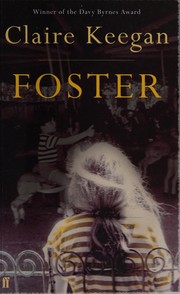
Foster
A girl spends a summer with relatives on a Wexford farm and is cared for properly for the first time. A spare novella about family and what children notice…
2,043-word summary · 9 min read
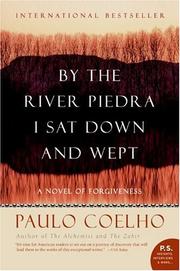
By the River Piedra I Sat Down and Wept
Pilar, 29, meets her childhood friend again in Madrid and finds a rumored miracle worker. One winter week through the Pyrenees to the river Piedra, and the…
2,845-word summary · 13 min read
Vanishing Acts
A search-and-rescue worker's perfect life cracks when her past and her father catch up.
2,799-word summary · 12 min read