
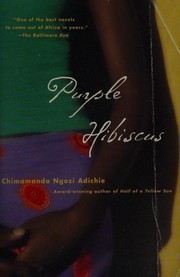
Purple Hibiscus
2,595-word summary 12 min read 336 pages in the book
- First published
- 2003
- Publisher
- Algonquin Books
- Pages
- 336
- ISBN
- 9781616202415
Reading options
What's inside (8 sections)
- Sundays in Enugu: mass, lunch, and the timetable
- The visit that changes the air: Nsukka and Aunty Ifeoma
- Papa-Nnukwu and the question of who God listens to
- Coups, the Standard, and Ade Coker's end
- Palm Sunday, the figurines, and Mama's slow resolve
- Purple hibiscus in the garden and what grows after
- Key takeaways
- FAQ
I came to this one after Half of a Yellow Sun and Americanah, and it surprised me by feeling closer to the bone than either. First published in 2003 by Algonquin Books of Chapel Hill in the United States, it runs 336 pages in the Algonquin paperback I read, ISBN 9781616202415. Adichie was around twenty six when it came out. It is her debut, set mostly in Enugu and Nsukka in Nigeria during a time of coups and strikes, and it is told by Kambili Achike, fifteen, who watches everything and says little. I read it over a long weekend and kept hearing the quiet in the house she describes. Meals with a schedule on the wall. Prayers with a stopwatch feel. A father who counts hospitality and holiness the way other men count money.
The setup is simple and hard to shake. Eugene Achike, called Papa, owns factories and a newspaper called the Standard that tells the truth when other papers stay silent. He gives huge donations to the church, pays school fees for half the parish, and keeps a spotless compound in Enugu with figurines and order and imported food. At home he beats his wife Beatrice until she miscarries, burns his children's feet with hot water for small faults, and pours boiling water on their hands for lying. His daughter narrates this without big words. She states what happened, what broke, who cleaned it. That flat tone makes the violence land harder than any speech could.
Sundays in Enugu: mass, lunch, and the timetable
The Enugu house runs on Papa's order. Church on Sunday morning with the family seated where everyone can see them. Lunch at a set hour. Study hours posted. Rosary in the evening with each person taking a turn. Kambili and her older brother Jaja, seventeen, compete for his approval by being first in class and by never answering back. Their mother Beatrice, called Mama, keeps the peace by smoothing and serving and absorbing. The driver Kevin waits by the car. The servants move softly.
Adichie fills these pages with small physical facts that tell you more than adjectives would. The missal with the frayed edge that Papa uses to mark infractions. The painting of Papa-Nnukwu, Eugene's own father, kept out of sight because the old man keeps to traditional Igbo worship and Papa calls that heathen. The tea that must be drunk before it cools because waste offends him. Kambili's menstrual blood arriving and her fear of staining and punishment mixing in her head. Jaja's finger, crooked after a beating for missing two questions on a test, left to heal without complaint.
What I found most painful here is how public goodness and private terror share one body. At church Papa is the man who pays for the new altar and kneels longest. The priest praises him. Poor families bless his name. At home that same hand throws a heavy prayer book across the room at Jaja and breaks the small tables holding Mama's ceramic figurines, which she loves and polishes. Adichie does not explain this split with a backstory about his own childhood until much later, and even then she keeps it brief. She lets you sit with the contradiction the way the children do.
A note on pace. These Enugu chapters move slowly on purpose. If you want plot every five pages, the first third may test you. I stopped minding once I saw that the slowness is the point. Fear makes time thick. Kambili counts sips and minutes because counting is the only control she has.
The visit that changes the air: Nsukka and Aunty Ifeoma
The turn comes when the children are allowed to visit their aunt in Nsukka. Ifeoma is Papa's widowed sister, a lecturer at the University of Nigeria, raising three children on a thin salary during university strikes when pay stops coming. Her flat is crowded and loud. Cousins Amaka, Obiora, and little Chima argue about music and priests and football. The fridge is often near empty. The water stops. The fuel runs out. And people laugh every day.
Kambili has never seen a home where questions are welcome. Ifeoma asks what she thinks and waits for an answer. Obiora, younger than Jaja but sure of himself, debates his mother about school and church without fear. Amaka, Kambili's age, paints and speaks her mind and resents Kambili at first for having money and soft hands. Father Amadi, a young Nigerian priest who coaches the boys in football and sings with a guitar, shows Kambili a Catholic faith that sits easily with Igbo songs and jokes. He runs with the children in the stadium field until their shirts stick to their backs. He prays in Igbo when English will not carry the feeling.
Two scenes carry this whole middle for me. In one, Kambili helps peel yams in Ifeoma's kitchen while the radio gives news of another coup, and nobody turns it off or lowers their voice the way her father would. Talk is free even when food is short. In another, she watches Amaka refuse to take an English confirmation name and insist on a meaningful Igbo name instead, and sees the priest accept it after argument. At home a confirmation name would be assigned and memorized. Here faith is argued into shape.
I should add a mild complaint. Ifeoma's flat can feel a touch idealized next to Enugu. The cousins are witty under pressure in a way that sometimes sounds like Adichie speaking through them. Obiora's speeches about the university strike, sharp as they are, read like editorials in a couple of spots. I forgave it because the warmth is specific. Who cooks what when the gas runs out. Who fetches water from where. The love is in chores, not declarations.
Papa-Nnukwu and the question of who God listens to
Papa-Nnukwu, Eugene's father, lives in Abba village in a small house with a thatch roof. He is old, nearly blind, and keeps the old rites. He prays at dawn to his chi and his ancestors. He drinks and offers kola with care. Papa pays for his upkeep but forbids his children to visit him closely, and forbids them to eat in his house. When Kambili and Jaja finally spend time with him, they find a gentle man who blesses them slowly and asks after their mother.
Adichie uses him to open the book's central religious tension without turning it into a debate club. Papa sees Catholic truth as single and punishing. Ifeoma and Father Amadi see room for Igbo language and custom inside the church. Amaka pushes further and asks why African names need English replacements. Papa-Nnukwu himself does not argue doctrine. He lives it. He thanks his gods for his grandchildren and dies mid novel after a short illness, with Jaja and Kambili near him against their father's orders.
The funeral aftermath is one of the coldest passages. Papa, learning they shared a roof and food with a heathen, punishes them with boiling water on hands and feet. The description is clinical. Kambili counts the blisters. Mama wraps the burns. Jaja shields his sister where he can. Readers new to Adichie sometimes ask if Eugene is overdrawn here. I asked it too. A man who funds a free press and then scalds his children strains belief until you remember the book keeps showing you the logic he lives by. Purity at any cost. Pain as cleansing. Obedience as love. It is not realism of averages. It is realism of a certain kind of household where shame and holiness have fused.
Father Amadi gives the counterweight. He is celibate and kind, athletic and musical, fully priest and fully Igbo in speech. Kambili develops a crush that confuses her because she has no practice naming tender feelings. He does not exploit it. He talks with her about voice and prayer and guilt, and he leaves space when she goes silent. If Ifeoma teaches her to speak, Amadi teaches her that gentleness from a man is possible. That lesson will matter when she has to judge her father at the end.
Coups, the Standard, and Ade Coker's end
While the family story tightens, Nigeria tightens too. Soldiers take power, then lose it. The Standard, Papa's paper, keeps printing what others will not. Its editor Ade Coker, brave and funny and fond of the Achike children, writes front pages that mock the generals. Soldiers raid the office. They beat workers. They detain Coker. Papa buys new presses and pays medical bills and keeps going. At home he still demands perfect scores and perfect piety, as if ordering the house can hold the country.
Adichie threads these public events through a teenager's view. Kambili hears radio bulletins while shelling egusi. She sees soldiers at roadblocks wave or threaten depending on mood. She watches Mama fold and refold a wrapper while the news plays. The coup that traps the children in Nsukka for longer than planned matters because strikes close Ifeoma's university and salaries stop, which forces choices about food and school fees. Politics here is not background color. It decides who eats and who can travel.
Ade Coker's death by letter bomb, opened at his breakfast table, is based on the real killing of journalist Dele Giwa in 1986, and Adichie handles it without sensationalism. The children hear it from adults who lower their voices too late. Papa weeps openly, which shocks Kambili because she has never seen him cry for Mama's bruises. That contrast is deliberate and devastating. Public grief flows. Private harm stays hidden behind compound walls. From here the book accelerates. Papa's money cannot buy safety for his friend, and his control at home grows more frantic as his control outside shrinks.
Ifeoma pays a price of her own. She is queried and harassed at work for her frankness, denied promotion, and finally offered a job in America. Her decision to leave, with three children and two suitcases and a scholarship of sorts, splits the cousins' world open. Amaka rages. Obiora plans. Chima asks simple questions that make the adults cry. Migration here is not a dream. It is a forced move when home institutions rot.
Palm Sunday, the figurines, and Mama's slow resolve
Back in Enugu, Jaja changes first. He refuses to go to communion on Palm Sunday, walks out of the line, and takes the punishment without apology. Papa throws the missal at him across the church pews and later beats him at home until his hand swells. Jaja, who once tried to protect Kambili by taking blame, now protects himself by refusing the script. His defiance gives Kambili room to breathe and to notice her mother more clearly.
Mama has been the quietest person in the book, and Adichie now lets you see what that quiet costs. Beatrice has lost more than one pregnancy to beatings. She polishes her ceramic figurines after each storm in the house, gluing what can be glued. When Papa breaks them again during the Palm Sunday beating, Kambili and Jaja pick up shards with bleeding fingers. Mama wraps the pieces in cloth and puts them away. From here she starts putting something else in Papa's tea, a poison sourced slowly with the help of her trusted help. Adichie does not stage this as triumph. Mama's hands shake. She prays. She keeps serving meals. When Papa dies at his desk after morning prayers, the house goes still in a way that feels both like relief and like a new prison.
I found this stretch the strongest writing in the novel because nobody speeches. Jaja claims the killing to shield Mama when the police circle, though he was in Nsukka at the time and everyone who knows the timetable knows it. He goes to prison at seventeen. Kambili visits with food and news and sits across from him in a room that smells of disinfectant. Mama, freed from blows, loses her voice in a different way. She sits among visitors who praise her late husband's charity and says little. Freedom, when it comes, is not clean. That refusal to tidy up impressed me more than any single image.
A criticism belongs here. The poisoning plot turns on knowledge Mama could plausibly have and timing the police could plausibly miss, but Adichie hurries the legal aftermath. The investigation, the trial delay, the prison conditions, all get a few pages where a longer book might have given a chapter. Jaja's prison suffering is mostly reported rather than shown. I wanted one full visit scene with duration and texture instead of several short ones. The choice keeps focus on Kambili's inner change, but it softens the book's hardest moral turn.
Purple hibiscus in the garden and what grows after
The title flower comes from Nsukka. Ifeoma grows a rare purple hibiscus in her garden alongside the common red ones. It is bred, not wild, and it needs care. Jaja takes cuttings back to Enugu and plants them. They root. For Kambili the flower becomes a private measure of possibility. Something odd and beautiful can live in poor soil if someone tends it. She does not make a speech about it. She waters and watches.
The last movement follows Kambili finding a voice in small steps. She sings once in church with the youth group and does not faint from shame. She runs in the rain with Amaka and laughs with her mouth open. She holds Father Amadi's hand briefly and lets the feeling be what it is without calling it sin. She writes to Ifeoma in America with news of school and garden and Jaja's case. She learns to cook plantains the Nsukka way, with pepper that makes her eyes water, and to eat among people without waiting for permission.
Amaka deserves a line of her own. She starts as Kambili's judge, mocking her English accent and rich girl silence, and ends as something like a sister. Their quarrel over who is more African could have been crude. Adichie keeps it grounded in tasks. Who can pound fufu smooth. Who knows the words of which song. By the end Amaka packs for America angry and tender at once, and Kambili finally talks back without cruelty. Obiora too grows past the clever boy role into a young man who reads his mother's fatigue and steps up. These are not perfect people. They forget, sulk, show off. That is why the flat feels alive.
Where does it sit next to Adichie's later books. Half of a Yellow Sun, which follows these characters' country into war, is larger and more crowded. Americanah is sharper on race and migration. Purple Hibiscus is smaller and, to me, braver about the home. It says a man can fund truth in print and crush truth at his table. It says faith can be a rod or a shelter depending on whose hand holds it. It says children learn silence the way they learn language, by daily use, and can unlearn it the same way.
Pick it up if you want a debut that already sounds like its author. Give the Enugu chapters time. Notice food, schedules, and hands. Hands that bless, strike, bandage, plant. By the last pages, when Kambili tends Jaja's purple cuttings and waits for his release and writes plain sentences that would have been impossible for her at fifteen, you may feel what I felt. That quiet, once a cage, has become a room she can leave and enter as she chooses.
FAQ
When was Purple Hibiscus published?
On October 30, 2003 in the US by Algonquin Books of Chapel Hill, with Fourth Estate publishing the UK edition in 2004. The Algonquin paperback cited here runs 336 pages with ISBN 9781616202415.
What does the purple hibiscus mean?
It is a rare bred flower in Ifeoma's Nsukka garden, and Jaja plants cuttings in Enugu. For Kambili it marks the idea that beauty can root in poor soil with care.
Is Purple Hibiscus part of a series?
No. It is a standalone debut, followed by Half of a Yellow Sun in 2006 and Americanah in 2013, which share Nigerian settings but not characters.
Similar books

The Chosen
A shattered pair of glasses in a 1944 Brooklyn softball game starts a friendship between a Hasidic boy and his Orthodox neighbor, and their fathers pull them…
2,443-word summary · 11 min read

The Age of Miracles
A California girl grows up while the Earth's rotation slows, and ordinary adolescence continues alongside slow catastrophe.
2,417-word summary · 11 min read

Peace Like a River
An asthmatic boy in the early 1960s narrates his family's search for his older brother, who is accused of two killings and has escaped custody.
1,969-word summary · 9 min read

The Story of Edgar Sawtelle
A mute boy on a Wisconsin dog-breeding farm relives Hamlet as his uncle returns, his father dies in the barn, and the dogs inherit what is left.
2,392-word summary · 11 min read
Foster
A girl spends a summer with relatives on a Wexford farm and is cared for properly for the first time. A spare novella about family and what children notice…
2,043-word summary · 9 min read
Summer Sisters
Vix and Caitlin share Martha's Vineyard summers from age twelve into adulthood, through first love, grief, marriage, and a disappearance that still haunts Vix.
3,633-word summary · 16 min read
The Elegance of the Hedgehog
A Paris concierge hides her brilliant mind while a gifted girl plans her death, until a new tenant sees through them both.
2,248-word summary · 10 min read
The Cider House Rules
Homer Wells grows up in a Maine orphanage under Dr. Larch, who delivers babies and performs illegal abortions.
2,985-word summary · 13 min read

Dear Edward
Twelve-year-old Edward Adler survives a plane crash that kills his family, then learns how to live with grief, letters, and love.
2,903-word summary · 13 min read
Are You There God? It's Me, Margaret
Twelve-year-old Margaret navigates puberty in New Jersey while trying to choose a religion on her own.
2,178-word summary · 10 min read
The Namesake
Jhumpa Lahiri follows Gogol Ganguli from a hated namesake to adult loss, marriage, and family reckoning between Calcutta and Boston.
2,878-word summary · 13 min read
The God of Small Things
Twins Rahel and Estha grow up in Kerala in 1969, where family rules and caste lines shape a loss that follows them into adulthood.
2,646-word summary · 12 min read
On Earth We're Briefly Gorgeous
A son writes to the mother who cannot read him: war, migration, first love, and loss in one Vietnamese American family in Hartford.
3,113-word summary · 14 min read
Go Set a Watchman
Jean Louise Finch returns to Maycomb and finds her father changed: Lee's contested 2015 draft about family loyalty and race in Alabama.
3,478-word summary · 15 min read
She's Come Undone
Abused as a girl, divorced and struggling with weight, Dolores Price slowly finds healing after years of trauma.
2,550-word summary · 11 min read

My Dark Vanessa
Vanessa recalls teacher Strane abuse as adult reckoning looms.
2,600-word summary · 12 min read

Extremely Loud and Incredibly Close
Nine year old Oskar searches New York for a lock matching his father's key after 9/11.
2,999-word summary · 13 min read

The Curious Incident of the Dog in the Night-Time
Curious Incident retold: Christopher finds Wellington dead, maps primes, seeks truth in Swindon.
2,146-word summary · 10 min read
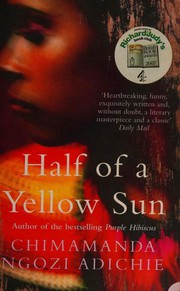
Half of a Yellow Sun
Ugwu, Olanna and Richard are pulled from Nsukka comfort into the Biafran war, where love and hunger test every loyalty.
2,973-word summary · 13 min read
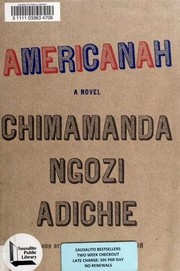
Americanah
Ifemelu leaves Nigeria for America on a scholarship, blogs about race and hair, while Obinze endures undocumented London until they reunite years later in…
2,527-word summary · 11 min read

What Happened to Goodbye
Mclean has reinvented herself in four towns since her parents divorced. In Lakeview she uses her real name, and for the first time staying put becomes a choice.
2,796-word summary · 12 min read
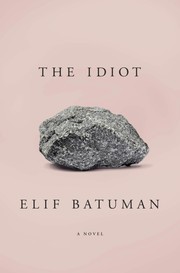
The Idiot
A Turkish-American freshman at Harvard falls in love through email with a Hungarian math student and spends a summer in Hungary trying to turn correspondence…
2,019-word summary · 9 min read
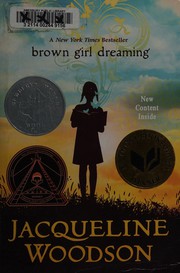
Brown Girl Dreaming
Jacqueline Woodson retells her childhood in verse, moving from Ohio to South Carolina to Brooklyn while the civil rights movement reshapes the world around her.
2,727-word summary · 12 min read

Little Town on the Prairie
In the spring after the Long Winter, fifteen-year-old Laura sews shirts, studies for a teaching certificate, and helps send her blind sister Mary to college.
2,071-word summary · 9 min read

Less Than Zero
Clay returns to Los Angeles for Christmas and drifts through parties, drugs, and old friends, including one who is selling himself to survive.
1,926-word summary · 9 min read

Howards End
Forster's 1910 novel follows two families, a house in Hertfordshire, and a burned note, asking whether money and feeling can ever be connected.
2,187-word summary · 10 min read

Fathers and Sons
Arkady brings the nihilist Bazarov home to his father's estate, and a generational argument turns into love, a duel, and an early death.
2,192-word summary · 10 min read
Unaccustomed Earth
Lahiri’s second story collection follows Bengali families in America and abroad, tracing the quiet distances between parents and children, spouses, and the…
2,333-word summary · 10 min read

We Are Okay
Marin fled San Francisco after her grandfather vanished and stopped answering anyone. When Mabel visits her college dorm, she has to say what happened.
2,253-word summary · 10 min read