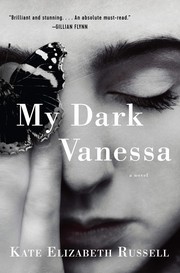
My Dark Vanessa
2,600-word summary 12 min read 373 pages in the book
- First published
- 2020
- Publisher
- William Morrow
- Pages
- 373
- ISBN
- 9780062941527
Reading options
What's inside (9 sections)
I did not pick up My Dark Vanessa for fun. I picked it up because people argue about it differently from usual book talk. Some call it brave and necessary. Others say they could not finish it. A friend read it in two sittings and then sat quiet in her kitchen for an hour. I wanted to understand that split, so I read it slowly, with breaks.
A warning first, plainly stated. This novel is about the sexual abuse of a fifteen year old girl by her teacher. Russell writes about abuse to show control and harm rather than to excite, but it is upsetting even in general terms. I will keep this summary non graphic. I will talk about grooming, secrecy, threats, and lasting effects, without describing sexual acts in detail. If you are a survivor, or if reading about abuse involving a minor will hurt you right now, skip this book and skip a full summary like this one. You would miss a widely discussed novel and lose nothing more important than that.
The facts help to place it. Kate Elizabeth Russell published My Dark Vanessa in 2020 with William Morrow. The standard hardcover runs 373 pages and the ISBN is 9780062941527. The story moves between 2000 to 2002, when Vanessa Wye is a student at a Maine boarding school called Browick, and 2017, when Vanessa is thirty two and working at a hotel, as public accusations against powerful men fill the news. Russell has said parts of the book draw on experiences from her own teens, though the novel is fiction. The title points to Lolita, the book that hangs over everything here, and to the way Vanessa sees herself as dark and marked.
Browick in 2000: a lonely girl who wants to be seen
Vanessa arrives at Browick as a sophomore, a scholarship student who already feels outside. She is fifteen. Her parents are coming apart at home, fighting and then going cold, and she feels both invisible and too watched. She writes poetry. She wants to be thought of as mature, as someone with taste, not as a kid.
Her English teacher notices. Jacob Strane is forty two, slight, odd, intense in class in a way that makes students lean forward. He runs the creative writing club. He tells Vanessa she has talent. He lends her books. He asks her opinion. For a lonely teenager hungry to be taken seriously, that attention lands hard.
Small things build. He keeps her after class to talk about a poem. He tells her she seems older than her age. He gives her a copy of Lolita. When she reads it, she does not read it as a warning about a girl harmed by an older man. She reads it as proof of his deep feeling for her, and as proof that she has power over him.
That misreading sits at the center of the book. Vanessa believes she is in a rare love story. From outside, a reader sees a teacher singling out a student, testing boundaries, making private time, building a private language of books and jokes. From inside, Vanessa feels chosen. She lingers in his classroom. She writes poems to impress him. She feels sick when break comes and she will not see him.
Russell handles this early stretch well. She does not make Vanessa foolish. Many teens want one adult to say, you are different, you are special. Strane offers exactly that, with books and praise rather than open pressure. That is why it works.
How control can feel like romance
The relationship turns sexual after months of buildup, and Russell frames it as coercion dressed as tenderness. Strane arranges to be alone with Vanessa. He says he loves her. He says she is mature enough to decide. When she freezes or cries or goes quiet, he continues and later calls what happened consensual, something she wanted. He apologizes and repeats the pattern.
I stay general here on purpose. The book is more direct than this summary, but its focus is power rather than physical detail. What matters for the plot is the structure around the abuse.
Secrecy becomes the main rule. Strane says no one would understand, that she will be expelled, that her parents will be destroyed, that she could end up in foster care. At fifteen, those threats sound true. She believes silence protects them both. She also starts to believe silence proves the relationship is serious.
He swings between worship and coldness. Some days he calls her his soulmate, his dark Vanessa, the only person who understands him. Other days he withdraws, criticizes her writing, ignores her in the hall, makes her work to win back warmth. That swing keeps her anxious. She learns to watch his face. She learns to apologize first.
He never has to forbid friendships. She pulls from classmates because a secret makes normal gossip feel distant. She pulls from her parents because she fears they will see through her. Her poems start circling him, which he praises, which pulls her closer.
The most painful thread is how she calls herself willing. She remembers writing a bold poem or sitting close to him and uses those memories as proof she was in charge. An adult reader can see a child responding to cues an adult planted, but Vanessa cannot afford to see that yet. To see it would mean giving up the one story where she felt powerful.
When Browick starts to notice
Rumors start because schools are small. Another student, Jenny, sees Strane handle Vanessa roughly on a field trip and tells the head of school. Others whisper. Vanessa is called in. Strane is called in.
Here the book shows how institutions fail. The school holds meetings. Vanessa parents are brought to campus. Vanessa, scared of expulsion and of losing Strane, denies everything. Strane, protecting his job, says Vanessa has a crush and invented it. Faced with a frightened girl who will not confirm and a respected teacher who denies, the school takes the easier path. Vanessa is made to leave. She must tell classmates she lied.
Picture it from her side. She is sixteen, humiliated, saying she made it up while the man who abused her watches. While packing her dorm, her mother sees a photo of the two of them and understands in a flash. She offers to go back and tell the truth. Vanessa refuses. She is still loyal to Strane. She sees leaving as a sacrifice that proves love.
She finishes high school locally. Those years feel flat in her memory. She drinks. She drifts from old friends. She sees Strane again after she turns eighteen. She tells herself that now the past is fixed, that an adult choice erases what was wrong before. That logic lets her keep seeing him on and off for years.
Russell does not rush this stretch. She wants you to feel how long harm lasts when it is never named. Vanessa is not rescued. She graduates. She moves. She carries the story with her.
The years in between: college, work, staying in touch
At college Vanessa tries for a different life. She studies literature, though books feel tangled with Strane. She develops a crush on a younger professor, Henry, who is kind in a normal way. She misreads his kindness, confesses more than he can hold, and feels exposed when he does not return her intensity. She pulls back from writing for a long time.
After college she takes office work and later lands at the front desk of a hotel in Maine. Coworkers like her. She lives alone. She drinks more than she should. She has a boyfriend for a while, a decent man who cannot grasp why she flinches at control or why she defends a former teacher. That relationship ends.
Through it all, Strane hums in the background. They email and call. He says she is the only one who understood him. When she is lonely, that feels like proof she is lovable. When she is clearer, it feels like weight. She never fully cuts him off, because that would force a new name for what happened.
Her parents divorce. Her mother holds guilt she cannot voice. Vanessa tells them little. For years she holds one steady story: I was fifteen, I was precocious, I wanted it, he loved me, it was complicated but mine.
That story holds until 2017, when someone else starts telling a different story in public.
Taylor Birch and 2017
In 2017 Vanessa is thirty two. On a break at the hotel she sees a post by Taylor Birch, a younger Browick alumna, describing sexual abuse by Strane. The post spreads. A journalist starts calling Vanessa. Classmates message. Strane calls, anxious, saying the school is reopening an inquiry, saying Taylor lies, asking Vanessa to stay quiet.
Taylor reaches out directly. She knows Vanessa was close to Strane. She asks her to speak, to help hold the school to account. This sits inside the wider wave of women posting about assault that readers will know as MeToo, though Russell keeps focus tight on Browick rather than headlines.
Vanessa answers with denial. She tells Strane she will say nothing. She tells herself Taylor exaggerates. She tells a friend her case was different. She meets Taylor for coffee and startles her by saying she was never abused, that she and Strane were in love. Taylor, who hoped for an ally, leaves stunned.
Russell does not write Taylor as a symbol. She is young, angry, frightened, coping with harassment after going public. Strangers threaten her. A podcast mocks her. Classmates pick sides. After Strane dies by suicide late in the novel, opinion swings cruelly and people blame Taylor for his death. Russell shows how fast public sympathy flips, and how heavy that is for someone already carrying harm.
For Vanessa, Taylor is threat and mirror at once. If Taylor tells truth about Strane, Vanessa must ask whether the same man harmed her the same way. That question feels like ruin. It would mean her first love was a crime, her specialness was a tactic he used with others, her adult identity rests on a false story. No wonder she fights it.
Four more former students come forward. The school says it found no evidence, which crushes Taylor and confuses Vanessa. Vanessa starts therapy with Ruby, partly for stress and sleeplessness. She tells Ruby the full history while insisting it was consensual. Ruby listens, asks careful questions, does not rush labels. Those sessions turn into the quiet engine of the last third.
What denial protects, and what starts to crack
Denial here is not stupidity. It is protection. Vanessa built a self around being chosen. She told herself for seventeen years that she was mature, that she had agency, that Strane worshipped her. That belief let her finish school and hold jobs. To revise it feels like saying those years of coping were wasted, or that she is broken beyond fix.
Russell shows denial in small moments. Vanessa keeps gifts and rereads old emails where Strane calls her extraordinary. When Taylor describes pressure, Vanessa thinks, he never did that exact thing to me, and takes comfort in difference.
Shifts come slowly. Ruby asks what Vanessa did to cause Strane suffering, when Vanessa says she feels responsible for his pain, and Vanessa cannot answer. That pause matters. A friend asks why she still takes his calls if it was so great. Her mother apologizes, saying she should have done more back then, that she froze because she did not know what to do. That apology opens something. It tells Vanessa that adults around her also failed, which means the failure was lack of protection, not proof she was unlovable.
The ending offers no clean rescue. Strane dies. The school inquiry goes nowhere. The press piece focuses elsewhere. Vanessa gets a dog, keeps going to work, keeps showing up to therapy. She starts to use the word abuse, at first tentatively, then more steadily. She runs into Taylor and says she let her down, and Taylor, tired, says there is nothing to forgive yet. Healing does not sync neatly between two people harmed by the same man. Vanessa begins to picture an adult self not defined by him. It is a start, not a win.
I found this stretch moving because it refuses easy release. No courtroom triumph fixes it. No letter explains all. There is slow rewording. She stops calling herself his Lolita. She starts calling herself a student who was harmed. Small on the page, huge in a life.
Why it disturbs, and where it falters
This book disturbs on purpose, and readers should know that. It stays inside Vanessa point of view for long stretches, so you feel the pull of Strane attention before you see the trap. Some readers find that illuminating. It shows how grooming works from inside, how praise and books and secrecy can feel like love to a teen. Others find it sickening to spend so much time with his voice in her head, even filtered through her adult narration. Both responses make sense.
What works best is memory psychology. Russell captures how a teen can want attention and still be unable to consent to what follows, how an adult can know something was wrong and still defend it. The dual timeline helps. The 2000 sections feel breathless. The 2017 sections feel tired and crowded with phones and alerts.
Russell writes plainly and well. She is strong on female friendship, especially the awkward coffee with Taylor, where two harmed people fail each other for clear reasons. She is strong on Vanessa parents, loving and failing in ordinary ways. She is strong on process as shield. Browick investigates, issues statements, finds no evidence, protects its name.
Fair criticism belongs here. The middle repeats. Vanessa circles the same thoughts, returns to Strane, leaves, returns again. That loop feels true to life, but it tires a reader. Some secondary figures feel thin and appear mainly to reflect Vanessa. The journalist thread promises more reckoning than it gives.
More seriously, the book gives much room to Strane view through Vanessa devotion, and little relief. There are few scenes of safety or joy to balance the weight. If you need a novel about healing with clear support and distance, this is not that. It is a novel about being stuck, and it stays stuck for a long time before it loosens. That choice is defensible as art and still hard to read.
Read it if you want to grasp grooming, power, and why victims at times defend abusers, and if you can handle sustained but non graphic material about abuse of a minor. It pairs painfully with Lolita, which Vanessa and Strane both misread. Skip it if you want a thriller, a romance, or a courtroom drama. Skip it if accounts of manipulation and self blame will set you back now. A careful summary or a later time may serve better.
I closed the book thinking about words. For years Vanessa calls what happened an affair, a relationship, a love story. By the end she tries other terms: abuse, grooming, victim. None sit easily, and she does not wear them easily. But the shift lets her picture a future where she is not his dark Vanessa, named by him, but Vanessa Wye, a woman in her thirties learning to tell a truer story about her teens. Modest and honest, after so many pages of denial, that lands.
FAQ
Is My Dark Vanessa based on a true story?
No, it is fiction, though Russell has said parts draw on her teen experiences. The novel uses invented Browick, Vanessa, Strane, and Taylor to explore grooming and memory.
Who is Taylor Birch?
Taylor is a younger Browick alumna whose 2017 post accusing Strane goes viral. She asks Vanessa to speak publicly, and her treatment online shows how accusers face threats and blame.
Is My Dark Vanessa explicit or safe to read?
The book contains sustained accounts of sexual abuse of a minor and can be deeply upsetting, though this summary stays non graphic. Survivors or younger teens should skip it or choose a careful summary instead.
Similar books
More like My Dark Vanessa →
She's Come Undone
Abused as a girl, divorced and struggling with weight, Dolores Price slowly finds healing after years of trauma.
2,550-word summary · 11 min read

White Oleander
Astrid cycles foster homes after mother Ingrid murders boyfriend.
2,569-word summary · 11 min read

Their Eyes Were Watching God
Janie Crawford tells Pheoby about Eatonville life with Logan Killicks, Joe Starks called Jody, and Tea Cake.
2,230-word summary · 10 min read

The Virgin Suicides
Five Lisbon sisters die in 1970s Grosse Pointe as boys watch.
2,559-word summary · 11 min read

The Paper Palace
Elle faces Jonas choice at Cape Cod while assault memory returns.
2,588-word summary · 12 min read

Kafka on the Shore
Fifteen year old Kafka Tamura flees Tokyo while old Nakata, who talks to cats, drifts toward the same library town in Shikoku in parallel.
2,496-word summary · 11 min read