
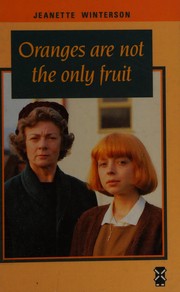
Oranges Are Not the Only Fruit
2,384-word summary 11 min read 176 pages in the book
- First published
- 1985
- Publisher
- Pandora Press
- Pages
- 176
- ISBN
- 9780863580420
Reading options
What's inside (10 sections)
I came to this book knowing it as the one about the oranges, and assuming, apparently, that the title was a quirky pun with no weight behind it. It is a much stranger and angrier book than that assumption allowed. It was published in 1985 by Pandora Press, a first novel from a writer in her mid twenties, and it won the Whitbread Award for a first novel that same year. The first edition was a paperback of 176 pages, and the narrator, who is also called Jeanette, tells the story of her childhood and young adulthood in a voice that is cool, funny and at times openly furious. She never stops sounding like someone settling a score with the world that made her.
An adopted girl and a mother who wanted a servant for God
Jeanette is an only child, adopted as a baby, growing up in Accrington in Lancashire. The woman who raises her is a devout evangelist in the Elim Pentecostal Church, and the book is very clear about what this mother wanted. She wanted a child she could acquire without the mess of sex, someone she could train up to be a servant to God. That is a hard opening fact, and Winterson does nothing to soften it. The father is a largely absent presence, so the whole emotional weight of the early chapters falls on the relationship between mother and daughter.
The house runs on prayer and preparation for a future mission. Every Sunday the two of them sit by the radiogram listening to the World Service Missionary Report, and Jeanette keeps a careful record of the number of converts. It is presented as a small domestic ritual, the kind of thing a child grows up thinking is normal, and the narration lets you feel both the cosiness and the strangeness of it. Until she is seven, Jeanette is schooled at home by her mother, mostly by being made to read the Bible. The mother idolises a missionary named Pastor Spratt, a charismatic figure whose crusades she talks about constantly, and it was meeting him that converted her in the first place.
Morbid samplers and a girl named Elsie
When the mother is finally ordered to send Jeanette to school, the girl is an immediate outsider. The other children do not know what to make of her, and the teachers disapprove of her art projects, which quote biblical scenes. She makes a sampler of the verse from Jeremiah about the harvest being past and the summer ended, a gift for an elderly church member named Elsie, and the teachers find it needlessly morbid and disturbing. One teacher, Mrs Vole, tells Jeanette outright that she is obsessed with God and has been frightening the other pupils with stories about Hell. Mrs Vole writes to the mother, expecting trouble. Instead the mother is delighted, because she reads the complaint as proof that her daughter is being a proper witness.
Her art keeps getting her into trouble in small ways. For an Easter egg painting competition she paints the eggs as characters from Wagner's Ring cycle, including Brunnhilda, and she makes other works based on the film Now, Voyager and on A Streetcar Named Desire. This is the child's real education happening off the page: the Bible on one side, and a growing appetite for opera, film and poetry on the other. Winterson is quietly showing you which side is going to win.
Elsie is one of the warmest figures in the early going. When Jeanette loses her hearing for three months, the mother and the congregation read it as a state of rapture rather than an illness. It is Miss Jewsbury, another church member, who works out what is actually wrong, and Jeanette is taken to hospital and treated. In the recovery period she spends a great deal of time with Elsie, who introduces her to poetry and to Wagner, and Elsie reads Christina Rossetti's Goblin Market and Yeats's Lapis Lazuli to her. These are the book's first real acts of rescue: not prayer, not exorcism, but an older woman handing a child a way into art.
Melanie at the fish stall
The romantic thread arrives in the person of Melanie, a girl Jeanette and her mother notice working at a fish stall when they go downtown. The two become friends, Jeanette invites Melanie to her church, and Melanie agrees to be saved by Jesus Christ. Soon Jeanette is visiting Melanie's house regularly for Bible study. It is through that ordinary, repeated contact that the friendship turns into a love affair, and Winterson writes the awakening without much fuss, which is part of the book's tact.
Jeanette's mother is the first person she tells. She does it out of a wish to share her new happiness, not out of defiance, and that detail matters because so much of the novel is about how a person's honesty gets used against them. The following Sunday at church, the pastor publicly confronts the two of them about their fallen state. Melanie repents immediately. Jeanette argues, and then flees. She takes refuge with Miss Jewsbury, the lesbian church member from the hospital episode, and the two of them sleep together.
The orange demon in the parlour
The response from the church is swift. The elders try to exorcise the demons from Jeanette. When she still refuses to repent, her mother locks her in the parlour for thirty-six hours with no food. It is in that room, in a hallucination, that the orange demon appears. The figure stands for her homosexuality, and the whole confrontation is about whether she will drive it out. She decides to keep it, even after it warns her about the difficulties ahead, and the choice is one of the quiet turning points of the book. She then pretends to repent, while holding to her own view that loving Melanie and loving God are not incompatible.
This is the chapter that gives the book its title, and it is worth sitting with how Winterson handles it. The demon is not played as a joke, and nor is it a straightforward emblem of liberation. It is something a frightened child has been taught to fear, and she chooses it anyway, with her eyes open. The title itself is an imagined quotation from the Restoration courtesan Nell Gwyn, and it is one of two epigraphs, the other being a cooking instruction for marmalade. That pairing tells you a good deal about the book's method, setting the sacred beside the domestic until neither looks quite as solid as it did.
Katy, the goats and the forest
Melanie disappears, and Jeanette throws herself back into church life. Her role grows. She preaches her own sermons and teaches Sunday school. Then she begins a new affair, this time with Katy, a recent convert. When the two are caught one weekend, Jeanette takes all the blame and claims she had been with Melanie. The church decides she has been given far too much responsibility, that she has almost come to think of herself as a man, and insists she give up teaching and preaching. She refuses. She leaves the church, and her mother then forces her out of the home.
At this point the novel does something bold. It breaks off into a parallel story about a girl named Winnet Stonejar, a parable that runs alongside Jeanette's life. Winnet is wandering in a forest when she meets a sorcerer who offers to adopt her and give her tremendous powers. She spends years in his care, then betrays him by falling in love. He tells her she must either leave or stay and be banished to a lifetime of looking after the village goats. A raven warns her that her life will be full of grief if she stays. While she is deciding, the sorcerer, disguised as a mouse, sneaks into her room and ties a thread around her coat button so he can tug her back to him at any time.
The parable retells the choice Jeanette is facing in the language of fairy tale, and it makes the pull of the church feel like what it is to someone leaving it: a power that believes it owns you and keeps a line attached. The detail of the thread is the kind of thing that stays with you long after the plot has faded. It is also the clearest example of the book's structure, which keeps interrupting a realistic account with stories that comment on it.
Ice cream vans and the funeral parlour
With no home, no friends and no money, Jeanette has to live. She takes a run of jobs that the novel lists with a certain dry pride, working in a funeral parlour and driving an ice cream truck. She runs into her mother and members of the congregation from time to time, and they are cold to her, telling her she is possessed by demons. One day, driving the ice cream van through town, she sees a crowd outside Elsie's house. She asks what has happened and is told, without warmth, that Elsie has died. The pastor takes her aside and tells her that Melanie confessed she never loved Jeanette.
That scene is the closest the book comes to a gut punch, and it lands because Winterson has earned it. Melanie's confession may be true or may be another act of self-protection under pressure, and the narration leaves the uncertainty intact. What matters is that Jeanette is handed a story about herself by the people who have spent the whole book trying to define her.
Eventually she moves to the city and takes work in a mental hospital. Much later, in winter, she returns home to see her mother. The mother's behaviour suggests she has become more tolerant, though the two never discuss it directly. She is still a devout believer, still listening to the missionary reports on the radio with her usual fervour, but her Society for the Lost has been shaken by corruption. The ending is deliberately unneat. There is no grand reconciliation and no conversion in the other direction. There is a daughter who has built a life elsewhere, and a mother who has quietly lost some of her certainty.
The books inside the book
One of the real pleasures here is how much other literature is folded into the telling. The novel is split into eight sections, each named after one of the first eight books of the Bible: Genesis, Exodus, Leviticus, Numbers, Deuteronomy, Joshua, Judges and Ruth. The chapters tend to carry references to the book they sit under. Interspersed throughout are short stories that draw on Old Testament tales, on Arthurian legend from Malory's Le Morte d'Arthur, and on fairy tales, with the Grail quest hovering in the background.
The allusions come thick and fast. Jeanette's mother constantly praises the goodness of Jane Eyre, though Jeanette later realises her mother changed the ending when she read it aloud, marrying Jane to St John Rivers instead of Rochester. The mother compares herself to Blake and is a fan of Johnny Cash. The family see The Ten Commandments with Charlton Heston at the cinema. At the library Jeanette reads a version of Beauty and the Beast, and near the end she is shown on a train reading Middlemarch. A dream has young women translating Beowulf, and the strange, short Deuteronomy section gestures at Atlantis, El Dorado, Saint George and the Second World War.
I enjoyed this, though it does make the book a demanding read in places. Winterson assumes you will keep up, and a reader who does not know the references will miss a whole layer of the joke. It also has the effect of making the narrowness of Jeanette's upbringing feel bigger. The world her mother would allow her is small, but the world inside the books is enormous, and she keeps reaching for it.
What works, and what I would argue with
The great strength is the voice. Jeanette is funny, sharp and emotionally honest, and Winterson lets her be all three at once. The scenes in the kitchen and the church are drawn with a specificity that makes the absurdity of the situation feel real rather than staged. Critic John Mullan has argued that this is a Künstlerroman, a novel about an artist finding her voice, and you can feel that formation happening page by page. It is no surprise that it was adapted for television by the BBC in 1990, with Charlotte Coleman and Geraldine McEwan, and that the serial won the Prix Italia.
For all that, I have some reservations. The narrator's coolness, which is a virtue for most of the book, occasionally tips into a knowingness that holds the feeling at a distance. There are moments where the literary games seem to matter more to the author than to the people in the story. The parable of Winnet, for all that I admired its thread and its raven, also pauses the novel at a point where I wanted to stay with Jeanette's actual life. And the ending, with its purposeful lack of resolution, will frustrate anyone looking for a clear verdict on whether the mother ever truly changes.
There is also the matter of the label. The book is often called a lesbian novel, and Winterson has objected to that, asking why straight fiction is supposed to be for everyone while anything with a gay character or gay experience is only for queers. That objection is worth taking seriously. This is a book about a particular life, but it is also about belief, family, education and the way institutions handle a person who does not fit, and those questions reach well beyond the category.
I closed it still unsure what I thought of the Winnet sections, and quite sure about Elsie, the sampler and the orange demon. The marmalade recipe in the epigraph stuck with me more than any of the literary references, that odd instruction sitting beside a claim about who gets to be saved. It is a first novel with the faults of a first novel in places, and a voice that was never going to be mistaken for anyone else's.
FAQ
Is Oranges Are Not the Only Fruit a novel or a memoir?
It is a semi-autobiographical novel, published in 1985 as Winterson's first book. Critic John Mullan has described it as a Künstlerroman rather than an autobiography, and Winterson returned to the same period of her life in her 2011 memoir Why Be Happy When You Could Be Normal?.
Why is the book called Oranges Are Not the Only Fruit?
The title is an imagined quotation attributed to the Restoration courtesan Nell Gwyn and appears as one of the book's two epigraphs. In the story an orange demon visits Jeanette while she is shut in the parlour, standing for the homosexuality her church wants to cast out.
What awards and adaptations did the book have?
It won the Whitbread Award for a First Novel in 1985. Winterson adapted it into a BBC television serial in 1990 starring Charlotte Coleman and Geraldine McEwan, and that version won the Prix Italia in 1991.
Similar books

The Chosen
A shattered pair of glasses in a 1944 Brooklyn softball game starts a friendship between a Hasidic boy and his Orthodox neighbor, and their fathers pull them…
2,443-word summary · 11 min read

The South
A seventeen-year-old moves to his family's failing fruit orchard in 1990s Malaysia, where a summer love affair unfolds as the household and the land around him…
2,903-word summary · 13 min read
Red at the Bone
A girl's coming-of-age ceremony in a Brooklyn brownstone opens a family story shaped by Tulsa, teenage pregnancy, class and a second tragedy on September 11.
2,108-word summary · 9 min read

Good Girl
A nineteen-year-old artist in Berlin, grieving her mother, falls into an unequal romance with an American author who offers escape from the ideal of the good…
2,579-word summary · 11 min read
Brideshead Revisited
At Oxford Charles Ryder befriends Sebastian Flyte and falls into the Catholic Marchmain family, from Brideshead summers to Julia's affair and Lord Marchmain's…
2,353-word summary · 10 min read
Purple Hibiscus
Kambili, fifteen, watches her devout factory-owner father rule the Enugu house through fear until a Nsukka visit teaches her speech and freedom.
2,595-word summary · 12 min read
On Earth We're Briefly Gorgeous
A son writes to the mother who cannot read him: war, migration, first love, and loss in one Vietnamese American family in Hartford.
3,113-word summary · 14 min read
The True True Story of Raja the Gullible (and His Mother)
A gay philosophy teacher in Beirut revisits six decades of Lebanese history, family trauma, and his thorny bond with his mother.
2,274-word summary · 10 min read
Palaver
A mother shows up uninvited at her estranged son's Tokyo apartment, and the two spend the weeks before Christmas talking their way toward something like…
2,465-word summary · 11 min read
Only Son
A brief, funny, melancholy debut about a boy whose father dies in 1982 Florida, and the man he becomes, still trying to read the mystery of that loss.
2,170-word summary · 10 min read
This Is Where the Serpent Lives
Daniyal Mueenuddin's second novel follows an orphan who rises through Lahore and a gardener's son who becomes an outlaw, across a Pakistan of caste and capital.
2,257-word summary · 10 min read
Theft
Gurnah traces three linked lives in Tanzania, where a servant's accusation of theft opens a family history of love, duty and quiet betrayal.
2,454-word summary · 11 min read
The Rachel Incident
A funny, sharp novel about two twenty-somethings in recession-era Cork whose bookshop friendship, tangled romance and a married professor's lie leave a secret…
2,346-word summary · 10 min read

Detransition, Baby
Torrey Peters's debut follows three Brooklyn adults as an unexpected pregnancy pushes them to imagine an unconventional family. Funny, sharp, and unwilling to…
2,925-word summary · 13 min read
By the Shores of Silver Lake
Twelve-year-old Laura leaves Plum Creek for Dakota Territory, rides a pony, mourns old Jack, and learns to be eyes for her blind sister Mary.
2,540-word summary · 11 min read
American Pastoral
Roth's Pulitzer winner follows a Newark glove maker's son whose perfect family life is broken by his daughter's antiwar bombing, retold by a narrator who…
2,660-word summary · 12 min read

All Adults Here
A widow in upstate New York reconsiders the parent she was after a neighbor's death, then gathers her three grown children for a season of uneasy truths.
2,171-word summary · 10 min read
Boy Swallows Universe
In 1983 Brisbane, a boy with a mute brother, a jailed mother and a heroin-dealing stepfather tries to become a good man.
2,397-word summary · 11 min read

Little Town on the Prairie
In the spring after the Long Winter, fifteen-year-old Laura sews shirts, studies for a teaching certificate, and helps send her blind sister Mary to college.
2,071-word summary · 9 min read

Howards End
Forster's 1910 novel follows two families, a house in Hertfordshire, and a burned note, asking whether money and feeling can ever be connected.
2,187-word summary · 10 min read

Fathers and Sons
Arkady brings the nihilist Bazarov home to his father's estate, and a generational argument turns into love, a duel, and an early death.
2,192-word summary · 10 min read

The Age of Miracles
A California girl grows up while the Earth's rotation slows, and ordinary adolescence continues alongside slow catastrophe.
2,417-word summary · 11 min read
Peace Like a River
An asthmatic boy in the early 1960s narrates his family's search for his older brother, who is accused of two killings and has escaped custody.
1,969-word summary · 9 min read

We Are Okay
Marin fled San Francisco after her grandfather vanished and stopped answering anyone. When Mabel visits her college dorm, she has to say what happened.
2,253-word summary · 10 min read
Orlando
A young Elizabethan nobleman becomes a woman and lives for centuries, moving through English history while writing a single poem about an oak tree.
2,030-word summary · 9 min read

Aristotle and Dante Dive into the Waters of the World
Ari and Dante return for senior year in El Paso, navigating first love, AIDS, family grief, and the cost of being openly gay in 1987 Texas.
2,188-word summary · 10 min read

The Story of Edgar Sawtelle
A mute boy on a Wisconsin dog-breeding farm relives Hamlet as his uncle returns, his father dies in the barn, and the dogs inherit what is left.
2,392-word summary · 11 min read
Foster
A girl spends a summer with relatives on a Wexford farm and is cared for properly for the first time. A spare novella about family and what children notice…
2,043-word summary · 9 min read
I Capture the Castle
Cassandra journals six months of love and money trouble in a castle.
2,402-word summary · 11 min read
Ham on Rye
Henry Chinaski grows up rough in Depression Los Angeles and finds writing.
2,244-word summary · 10 min read