
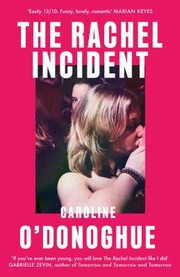
The Rachel Incident
2,346-word summary 10 min read 306 pages in the book
- First published
- 2023
- Publisher
- Virago
- Pages
- 306
- ISBN
- 9780349013558
Reading options
What's inside (9 sections)
I picked this up after reading a review that called it a love story between two unlikely soul mates, and I stayed for something the reviews mostly keep quiet about: the secret that sits under the whole book and gives it its title. The Rachel Incident came out in 2023, published in Britain by Virago in a first edition of about 306 pages, and it is a Cork novel through and through, soaked in the particular miseries and pleasures of being twenty in Ireland just after the financial crash. O'Donoghue tells it as a long look backward. The opening pages drop you into a moment years later when a name from the past arrives like a slap, and everything after that is Rachel Murray explaining how she got to that moment.
A name out of the past
The frame is set in 2021. Rachel lives in London and works as a journalist for an expatriate Irish newspaper, The Hibernian Post. At a work event she meets a man who went to college with her at University College Cork, and in the course of conversation he mentions that their old English literature professor, Dr. Fred Byrne, is in a coma. Rachel hears the name and starts to panic. The reader is given no reason why. That gap is the hook, and O'Donoghue is in no hurry to fill it.
What follows is a long flashback to 2009, Rachel's final year of college. She is twenty, studying English, and working at a struggling independent bookshop in Cork to help pay her way. She is almost six feet tall, has been since she was fourteen, and describes herself as chubby and awkward. She is an avid reader with a weakness for antique things; a cameo brooch once went on her Christmas list. Her father is a dentist and her family belongs to the professional class, but the crash has hit them hard, and her parents' embarrassment and depression run quietly through the book. Rachel is spoiled in small ways and unsteady in larger ones, and the best thing O'Donoghue does early on is let her be both.
Two people at the bookshop
James Devlin arrives at the bookshop as a Christmas temp. He is English, from Manchester, working class, with an addict father, a caring mother, and a childhood episode of sexual abuse that the book treats without sentiment. He and Rachel clash at first, mostly over class. She is from a family of dentists and bankers; he grew up rough and learned to look after himself early, which makes him far more capable with the practical business of living than she is. He is also, in the book's own phrase, insistently heterosexual, which is the first of several things he is not being honest about.
The clash does not last. The two become friends with a speed that feels true to that age, and soon they are sharing a rundown cottage on Shandon Street. The place is mouldy and freezing, and the in-jokes, the nights huddled together to keep warm, and the epic nights out are exactly the stuff of a friendship that temporarily makes everyone else irrelevant. Rachel has a boyfriend named Jonathan, who is not threatened by James because he assumes James is gay. The friendship eclipses the romance anyway, and she and Jonathan break up. There is a line early on in which Rachel says that at twenty she needed two things, to be in love and to be taken seriously, and that admission explains most of what she does next.
The professor and the reading at the bookshop
Rachel wins a place in Dr. Byrne's senior seminar on Victorian literature. She has a crush on him. He is huge and passionate, the only man under fifty in the English department, and he is married to a former student. When Rachel mentions him, James sees an opening. Between them they arrange for Byrne to give a reading and sign copies at their bookshop, with the idea that Rachel might seduce him afterwards.
The plan goes wrong in a way that reveals the book's real design. Byrne's wife, Deenie, turns up for the signing. She is a publisher, well connected and glamorous, and she is deeply involved in her husband's professional life, which puts a damper on Rachel's hopes. Then, after the event, Rachel sees James and Byrne kissing in the stockroom. This is the first turn that the publisher's description of the book carefully skirts. Rachel had imagined herself the object of the professor's attention; the object was James all along.
James comes out to Rachel, but only to Rachel. He refuses to come out to anyone else, and Byrne, who is happy to keep his marriage and his reputation intact, is happy to keep the arrangement hidden. Byrne is given the Shandon Street address and the affair begins in earnest. The book is very good on the strange geometry of this: a young woman standing beside her best friend and her professor, watching two people she cares about build a life she is not allowed to acknowledge. It is also very good on Rachel's particular humiliation, which is that she is in love with a man who is using her as cover.
Carey, and a friendship starting to fray
Around this time Rachel meets the man who will become her husband, James Carey. He is from Northern Ireland, six years older than her, and immediately enthralling. Her description of the pull toward him is blunt, that her attraction came on like food poisoning. The trouble is his fundamental flakiness. As James Devlin puts it, Carey would walk over hot coals for you but will not commit to lunch plans. He disappears for stretches, stops answering texts, and misses Rachel's twenty-first birthday before vanishing altogether.
The disappearance has consequences. Rachel comes up to graduation with almost no essays or assignments turned in. Byrne sends a chastising email, and she confronts him at the Shandon Street flat. To his credit, he admits he has not been kind to her, and he helps her get extensions on her work and an internship with Deenie. That internship becomes its own complication. Rachel finds real camaraderie with Deenie, which makes James jealous, and James begins pressing for the two of them to emigrate to London, where she can work in publishing and he can try to write for television. He tells her to bring Carey along. Rachel agrees but is frightened to tell Carey, because she thinks he will say no and leave her.
James comes out to his mother and then throws himself into a month of wild partying that he calls the Gaynaissance. Byrne, who has been living a careful double life, is jealous of this new freedom and tries to shame him for it, and the affair cools. The partying also eats the money they were trying to save, which creates a rift with Carey, who cannot understand why Rachel says she is too broke to go out and then goes out with James. Rachel is laid off from the bookshop and takes a grim job at a call centre. Carey's mother is diagnosed with cancer and he moves back to Derry to care for her, which leaves their relationship in limbo. When James and Byrne resume the affair, Rachel berates Byrne for his dishonesty, partly out of loyalty to Deenie. Byrne calls it complicated and says he loves them both, describing himself with a word about being ambidextrous that the book deploys without much fuss.
The pregnancy and the lie
Deenie invites Rachel to a party celebrating a book they have both worked on. While getting ready at Deenie's house, Rachel feels sick and realises she might be pregnant. Deenie drives her home, and on the way Rachel notices that Deenie seems to know her address. Rachel tells James about the pregnancy but says nothing to Carey. She decides to end it, and she and James struggle to find the money. This is Ireland in 2010, where abortion is illegal and the only option is to travel to England, which is simply out of reach for a young woman without funds. Later, as a journalist, Rachel will describe the standard journey in hard terms: the airport alone, the protesters outside the clinic, the awkward hostel, the flight home. She calls it a fairy tale at its most savage.
At Deenie's party, Deenie and Byrne finally spot Rachel, and their reaction is shock bordering on horror. In private, Deenie accuses her of having an affair with her husband. Byrne has admitted to everything, or at least to an affair, and has let Deenie assume the other woman is Rachel, because the truth would mean admitting he slept with a man. Rachel is appalled that he would rather let his wife believe a lie about her than admit his own sexuality. But she feels she cannot betray him, so she does something that quietly breaks her: she asks the Byrnes for the money for the abortion and tells them she will never contact them again.
That is the incident of the title, and it costs her dearly. James is heartbroken that his boyfriend let a false story stand in place of his existence. Rachel miscarries and loses the call centre job. Her parents come up for her graduation and Carey turns up as a surprise; she tells him about the pregnancy, and he is hurt that she did not trust him enough to say anything at the time. He leaves, and for a while they do not speak. She and James cannot find their footing either. Eventually James admits he has won an internship with a talk show and is moving to New York. They split their savings, and Rachel emigrates to London.
What Cork leaves behind
The last stretch of the novel covers years in a handful of chapters. Both young people struggle at first and then find their way. Rachel becomes a freelance journalist and ends up covering the campaign to overturn Ireland's abortion ban, which forces her to revisit her own experience. A repetitive strain injury in her wrist from too much typing sends her to physiotherapy, where her therapist turns out to be James Carey. He has qualified as a physiotherapist and moved to London after his parents died. They go for brunch, he tells her he was always obsessed with her, and they kiss. She compares the feeling to finding your favourite pair of boots under the bed just as you are about to move out. He points out that they are too old to keep using last names, and she agrees to call him James. They reconcile and marry.
In April 2022, Rachel and Carey travel to Cork to introduce their baby son, Seamus, to her parents. James Devlin is pleased with the name because it is the Irish form of James, and he likes the idea that she is surrounded by Jameses who love her. She still has not told Carey about Byrne's coma. While they are in Ireland, Deenie emails and asks to meet. They sit down together, and Deenie explains that she and Byrne went to counselling and made their marriage work, although they never once discussed what she calls the Rachel incident. Byrne contracted an amoeba while swimming during an anniversary trip in America and nearly died. He has come out of the coma but may never be fully himself again. Deenie cares for him, they are still married, and she is also in a relationship with a divorced man with two children, a role she loves because it makes her a stepmother. She wants closure and says she has always suspected that Byrne and Rachel never actually had an affair.
Rachel admits that she never slept with him. She also says it is not her story to tell, and she gives Deenie James Devlin's email address so that Deenie can ask him herself. In the final movement of the book, Rachel explains that she began this account as a confession addressed to Deenie and that it turned into a way of coming to terms with her own past. That small act of framing is what makes the title land. The incident was never a single event but the sum of a lie told by a frightened man, a friendship that took the blame, and a young woman who carried the weight of someone else's secret for a decade.
The honest reckoning
For all its warmth, the book has tricks that irritated me. The title is not explained until nearly the last page, which is clever but also a little coy. The plot twists pile up with a confidence that sometimes tips into soap opera, and one character even says as much. Nearly everybody gets a happy ending, and both of the central figures achieve a remarkable degree of success within a few years, which stretches credibility in places. There is a smoothness to the whole thing, a sense that it has been shaped for the screen, and readers who distrust tidy resolutions will feel that.
What keeps it from feeling hollow is the friendship. The real love story here is not the one between Rachel and her professor or the one between Rachel and Carey, but the one between Rachel and James Devlin, with all its codependent glee and its eventual, painful separation. O'Donoghue is also sharp about class, and Rachel's gradual realisation that her accent and manners and literary education are assets in London, exactly as James always said, is handled without a lecture. The abortion material is angry and specific without turning the novel into a tract. It is a funny, loud, big-hearted book about how two people can save each other and still make a mess of the years they share. If you want a quiet, restrained novel, this is not it. If you want to spend time with two people you will miss when the book is over, it is hard to beat.
FAQ
What is the Rachel incident of the title?
It is the lie that Fred Byrne tells his wife, Deenie, after she discovers his affair. Byrne lets her believe the other woman is Rachel so that he will not have to admit he slept with a man, and Rachel carries that secret for years.
When and where is the novel set?
Most of the book takes place in Cork in 2009 and 2010, in the shadow of the financial crash. A frame story is set in 2021, and the epilogue jumps to April 2022.
Does the book end happily?
Largely yes. Rachel and James each build a successful life, Rachel reconciles with Carey and marries him, and the epilogue shows her with a baby son. Her friendship with James Devlin survives, though it changes shape once they stop living together.
Similar books

Big Swiss
A transcriptionist for a sex coach falls for one of his clients, the tall Swiss gynecologist she calls Big Swiss, in a funny novel about work and secrets.
2,523-word summary · 11 min read
The Vacationers
A New York family's two-week stay in Mallorca turns into a comedy of exposed secrets when a magazine editor's affair and a son's debts come to light.
2,324-word summary · 10 min read
The Interestings
Meg Wolitzer follows Jules Jacobson from 1974 arts camp into middle age, as friendship with Ethan and Ash turns into envy, money gaps, marriage strain, and…
2,990-word summary · 13 min read
Summer Sisters
Vix and Caitlin share Martha's Vineyard summers from age twelve into adulthood, through first love, grief, marriage, and a disappearance that still haunts Vix.
3,633-word summary · 16 min read
The Heart's Invisible Furies
John Boyne follows Cyril Avery, adopted in Dublin in 1945, through seventy years of love and secrecy as Ireland changes around him and he learns to live openly.
2,904-word summary · 13 min read
Beautiful World, Where Are You
Two friends Alice and Eileen trade letters while navigating love with Felix and Simon.
2,872-word summary · 13 min read

The Wilderness
Four Black women move through twenty years of friendship in Angela Flournoy's discontinuous, widely praised second novel.
2,141-word summary · 10 min read
The South
A seventeen-year-old moves to his family's failing fruit orchard in 1990s Malaysia, where a summer love affair unfolds as the household and the land around him…
2,903-word summary · 13 min read
The Rest of Our Lives
A law professor drives his daughter to college, then heads west instead of home, testing a private promise he made twelve years ago.
2,238-word summary · 10 min read
Palaver
A mother shows up uninvited at her estranged son's Tokyo apartment, and the two spend the weeks before Christmas talking their way toward something like…
2,465-word summary · 11 min read
Only Son
A brief, funny, melancholy debut about a boy whose father dies in 1982 Florida, and the man he becomes, still trying to read the mystery of that loss.
2,170-word summary · 10 min read
When Life Gives You Lululemons
Emily Charlton leaves Runway for Hollywood and ends up in Greenwich, where a supermodel's DUI and a senator husband's ambitions draw three women into a…
2,028-word summary · 9 min read
The Collected Regrets of Clover
A death doula who writes down the last words of strangers keeps her own heart locked away, until a new neighbor, a dying photojournalist and a road trip to…
3,055-word summary · 14 min read
Tara Road
After her husband admits to an affair, a Dublin woman swaps houses for the summer with a grieving American, and each begins to heal inside the other's life.
2,020-word summary · 9 min read
Red at the Bone
A girl's coming-of-age ceremony in a Brooklyn brownstone opens a family story shaped by Tulsa, teenage pregnancy, class and a second tragedy on September 11.
2,108-word summary · 9 min read
Rachel's Holiday
Rachel Walsh calls her cocaine use recreational until an overdose and a stay at a Wicklow rehab clinic force her to hear what her family and boyfriend have…
2,792-word summary · 12 min read
Oranges Are Not the Only Fruit
An adopted girl in a strict Pentecostal household learns to read the Bible, preach sermons and love women, then faces her church and mother for it.
2,384-word summary · 11 min read

Nick and Norah's Infinite Playlist
Rachel Cohn and David Levithan trade chapters as two music-obsessed teenagers spend one long New York night together, from a five-minute fake date to something…
2,355-word summary · 10 min read
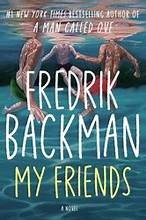
My Friends
A dying artist sends an eighteen-year-old stranger a painting, pulling her into the story of four teenagers and one summer on an abandoned pier.
2,219-word summary · 10 min read
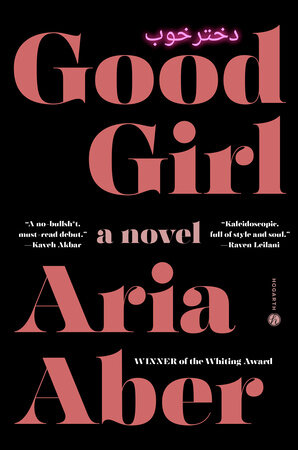
Good Girl
A nineteen-year-old artist in Berlin, grieving her mother, falls into an unequal romance with an American author who offers escape from the ideal of the good…
2,579-word summary · 11 min read
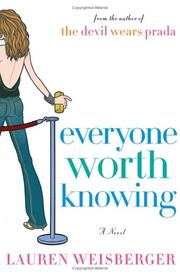
Everyone Worth Knowing
A young woman quits her banking job after a friend's engagement and lands in a New York PR firm where everyone is paid to know everyone.
2,360-word summary · 10 min read
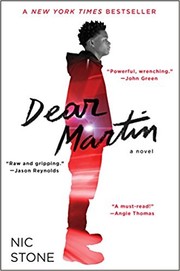
Dear Martin
Nic Stone's debut follows Justyce McAllister, a scholarship student at a mostly white Atlanta prep school, who starts writing letters to Dr. King after a…
2,596-word summary · 12 min read
Chasing Harry Winston
Three friends turn thirty in Manhattan and make a wild pact: Emmy will sleep her way around the world, Adriana will settle down, and Leigh watches from the…
2,185-word summary · 10 min read

American Fantasy
Newly divorced and feeling replaceable at work, Annie takes a Boy Talk reunion cruise alone and finds buried feelings stirring.
2,403-word summary · 11 min read
Watermelon
A woman left by her husband on the day their daughter is born retreats to her chaotic Dublin family, then slowly learns to stop believing his version of the…
2,295-word summary · 10 min read
Today Tonight Tomorrow
On the last day of senior year, academic rivals Rowan Roth and Neil McNair team up for a citywide Seattle scavenger hunt and start seeing each other…
2,233-word summary · 10 min read
Last Night in Brooklyn
A copywriter in 2005 Fort Greene trades a scripted engagement for a bar crowd, a rising designer, and a neighborhood being remade around her.
2,540-word summary · 11 min read
The Idiot
A Turkish-American freshman at Harvard falls in love through email with a Hungarian math student and spends a summer in Hungary trying to turn correspondence…
2,019-word summary · 9 min read

Dumplin'
Willowdean Dickson enters her town's beauty pageant as a protest and discovers that confidence is harder to keep once she lets someone close.
1,922-word summary · 9 min read
Five Point Someone: What Not to Do at IIT
Three friends at IIT drift to a five-point GPA, mock the system, and break into a professor's office for an exam paper.
2,458-word summary · 11 min read