
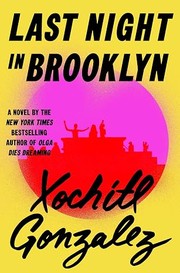
Last Night in Brooklyn
2,540-word summary 11 min read 256 pages in the book
- First published
- 2026
- Publisher
- Flatiron Books
- Pages
- 256
- ISBN
- 9781250372031
Reading options
What's inside (8 sections)
I picked this one up because of its first page. Xochitl Gonzalez opens on a morning when text messages are moving through Fort Greene with the news that Freddy's, the neighborhood bar, is about to be lost to development. The regulars have tried the usual defenses. They petitioned, they rallied, they chained themselves to bulldozers, and at one point somebody tried to gum up a cement mixer. None of it saved the place. So the final answer is a party, an all-night one, and Alicia Canales Forten, the narrator, is going even though she has not stepped inside in three years.
The detail I keep returning to is the saying she carries in with her. Her grandmother used to tell her, "El mono sabe en qué palo trepa." The monkey knows the tree it climbs. Alicia stands at the edge of the farewell night and wonders what happens when a monkey climbs something that is not a tree, the way King Kong did in New York. That question sits under everything that follows. It is a book about knowing where you stand, and about the moment the thing you are standing on gets sold out from under you. She walks into Freddy's half expecting La Garza to appear, and that small hope tells you where the novel's real attachment lies.
From there Gonzalez doubles back to 2005, and the tempo slows down. What follows is a long, patient account of how a young woman arrives at a party she has been avoiding.
A Life Measured in Catering Halls
Alicia is twenty-six, a copywriter with a private ambition to write and direct, and she is engaged to James. He is steady, from a good family, and headed to Syracuse for an MD and a PhD. On paper the plan is clean, and her mother is its loudest booster. Her mother wants the Forten name in the family and a grandson to go with it. Her father, whom she calls el Fantasma, is a lawyer out of a Martha's Vineyard family who saw her two weeks a year. He gave her his surname more readily than he gave her his attention, and that small wound gets quietly nudged more than once.
Alicia went along with the plan the way you go along with a thing everyone has already decided you want. What broke the spell was a tour of Long Island catering halls. She describes feeling compressed, "as if in too-tight Spanx," and that line does more work than a page of explanation might. The rooms were beautiful, the future was arranged, and she could not breathe inside it. She did not call off the engagement. She and James stayed engaged and long-distance, and she took an advertising job because it let her write copy. It is a compromise that flatters no one, least of all her, and I found it the most honest piece of her characterization.
Gonzalez is good at the small arithmetic of a life like this. Alicia's mother calls about the wedding. James calls from Syracuse. Her father is a ghost who occasionally materializes. The phone becomes a kind of tether, and every call is a reminder of a version of herself she has not chosen but has also not refused. She is not a woman waiting to be rescued by a revolution. She is someone with a comfortable job and a ring and a nagging sense that the script has been handed to her rather than written by her.
That is what makes the turn to Fort Greene feel earned rather than sudden. Alicia does not wake up one morning and decide to change her life. She drifts toward a circle of people who make a different kind of life look possible, and she does it one small decision at a time. The move out of her mother's orbit happens in increments, and the lie she tells to cover it is almost affectionate in its smallness.
Lucien Blue and the Shopping Cart Queen
The bar, and really the book, open up when Lorraine pulls her into the Fort Greene crowd. Lorraine is a coworker and a former R&B singer, and she brings Alicia to Lucien Blue, where the regulars include Marcus, Leti, Aaron Francis, and Omar. This is the circle that gives Alicia a new vocabulary for wanting things. They talk, they drink, they argue about the neighborhood, and for the first time she is in a room where her ambitions do not seem like a strange private hobby. She wants to write and direct, and nobody here treats that as a cute thing to say before settling down.
The scene that announces the book's tone is a "Shopping Cart Queen" contest. La Garza, a rising fashion designer, shows up in a hot-pink outfit with enormous calypso ruffles and races a challenger in stolen Pathmark carts down Lafayette Avenue. She stays on her feet while the other woman flips, coasts into a parked Jeep, and jumps up to yell, "Who wants to wheel a bitch home?" Lorraine, watching from the side, says the designer lives across the street and throws the best parties. Alicia is transfixed. I was too. It is a wonderful piece of staging, with the absurdity of the carts, the physical nerve, and that taunt landing like a challenge thrown at everyone watching.
Gonzalez follows it with a quieter scene that has the same shape. The circle grills the community-relations liaison for the new Nets arena about eminent domain. Marcus has three months to find a new apartment because his building was sold. Everyone in the room understands what is happening to the neighborhood. And still, when the liaison hands out discounted season-ticket vouchers, people take them. That gesture, pocketing the coupon while the ground shifts beneath you, is the moral center of the early chapters. Nobody in this book is pure. People resist what is being done to them and also take the discount, and Gonzalez refuses to scold them for it.
A week later Alicia moves in with Lorraine. She tells her mother and James that the commute from South Brooklyn was killing her. It is a small lie and an easy one, and she steps into the life the novel has been building toward. The apartment becomes a kind of headquarters. From there she can be a copywriter by day and someone else by night, and the gap between those two selves is where the story lives.
The Monkey and the Tree
La Garza becomes the figure Alicia orbits. She is glamorous, accomplished, and apparently free in a way Alicia cannot picture being free. The designer is both a role model and a warning, a woman who seems to have climbed out of the very life Alicia is being pushed into. Gonzalez lets Alicia study her the way you study someone you think you might become, noticing how she dresses, how she holds a room, how she treats the people around her. What makes it complicated is that the friendship is not quite what it looks like.
The book draws on the report that La Garza befriended Alicia mainly to get close to Alicia's cousin Devon, a married Wall Streeter who was her first love. That revelation re-colors everything before it. The shopping-cart stunt, the parties, the easy intimacy, all of it picks up a second meaning. Alicia has to work out whether she was a friend or a bridge. Gonzalez handles this without much fuss, which is a real strength. The betrayal lands as a slow reframe rather than a single shock, and I thought that was truer to how these things feel when you are in the middle of them.
The class and race questions are braided through the whole book. Alicia is the daughter of a Puerto Rican mother and an absent father from an old New England family, moving through a Fort Greene that is changing around her. The crowd at Lucien Blue talks about who is being pushed out and who is moving in. Gonzalez is interested in how people talk about a neighborhood they are also helping to change. La Garza's label is part of that wave even as she performs a kind of resistance with her ruffles and her stolen carts. Alicia's copywriting job is part of it in a quieter way. The monkey knows the tree it climbs, but the tree is being replaced, and she is beginning to notice.
There is a stretch in the middle where the political and real-estate background starts to read like an essay laid over the fiction. The roll call of neighborhood landmarks is insider-heavy, and if you do not know Fort Greene of that period, some of the references will pass you by. I did not mind it as much as some readers might, since the specificity is a large part of the charm, but it is a fair complaint. The book sometimes pauses its story to hand you the history of a block, and the pacing suffers a little for it.
Devon, Marla, and the Men Who Offer Escape
The second half is driven by a set of relationships that pull Alicia in different directions. Devon is La Garza's old love and Alicia's cousin, a Wall Streeter whose marriage looks tidy from the outside. His wife, Marla, is buttoned-up and tougher than she first appears. Marla is one of the quieter successes of the book. She sees more than the people around her give her credit for, and Gonzalez does not turn her into a villain for noticing what is going on in her own house.
Then there is Augusts Jankovskis, a shady, mobbed-up figure described as a stockbroker, who backs La Garza's label with motives of his own just as an IPO looms. His money makes the fashion dream possible and also makes it dangerous. The money in this book is never clean, and that is part of its argument about the era. Fortunes are being made on paper while storefronts vanish, and the people at the party are both the beneficiaries and the marks. And there is Matteo Jones, Devon's colleague, who tempts Alicia to forget that she is engaged. Matteo is the least interesting of the principals, as some critics have noted. He reads more like a device than a person, a walking option for a woman who needs to be tempted.
Alicia's actual decision is narrower than all the men around her. She has to decide whether she wants the life of a medical-school wife, with its catering halls and its clear script, or some version of a life she would choose for herself. La Garza hovers over that choice as both a model and a caution, which is what makes Alicia's fascination with her so charged. It would be easy for a novel to make one of those paths obviously right. Gonzalez does not. The medical-school life offers real stability and real affection, and the alternative offers freedom with no floor under it. Alicia's difficulty is that she can see the cost of both, and that she has been taught to want the first one without ever asking whether she wants it at all.
What I liked is that James never becomes a straw man. He is a decent man heading into a demanding career, and the life he offers is not a trap he is setting. The pressure comes from Alicia's mother, from her own history with her father, and from the comfort of following a plan. That is a more interesting problem than a bad fiance would have been.
When the Storefronts Turned to Condos
The clock of the novel runs from 2005 into 2007 and toward the 2008 campaign. The parties continue, but the world outside them is changing. Storefronts become condos and boutiques. The financial collapse hangs over the later chapters, and the people who seemed secure start to look exposed. Jankovskis's money, La Garza's label, Devon's Wall Street certainties, all of it is caught in the same turning. Gonzalez uses the election and the crash as a countdown to the end of a particular moment in the neighborhood, and you can feel the clock ticking in the later chapters.
This is where the King Kong question gets its answer, or a partial one. The monkey climbs a building that is not a tree. Alicia watches people she cares about build lives on surfaces that turn out to be temporary. The bar is the plainest example. Freddy's is a place people fought for and then lost anyway, and the all-night party is both a celebration and a funeral. I appreciated that Gonzalez keeps both feelings in the room at once. The book is not willing to call the party a victory, and it is not willing to call it a defeat either.
The fair criticism here is one of balance. The novel is at its best in scenes of people talking to each other, in the give and take of the bar and the apartment. It is weaker when it stops to deliver the argument about development and displacement directly. Those passages are smart, but they sit a little apart from the story, as if a different book were trying to get in. If you are reading for the people, you may find yourself skimming the parts about zoning.
The Last Night at Freddy's
The closing movement returns to the farewell night, and Alicia looks at La Garza with new eyes. The designer, she realizes, "got lost that summer in unfamiliar terrain," climbing until the air grew too thin. That is the book's gentlest and saddest judgment. La Garza is not a cautionary tale put there to scare Alicia straight. She is a person who climbed, who got lost, and who is paying for it in ways the party cannot undo. The hot-pink ruffles and the stolen carts look different now, less like freedom and more like a costume worn by someone trying to stay upright.
What follows is a set of showdowns and revelations rather than a neat moral. People say things they have been holding back. Alliances shift. If you came for a tidy lesson about which life to choose, you will not get one. Gonzalez gives Alicia a reappraisal, not a conversion. She sees La Garza more clearly, and she sees her own options more clearly, and the book ends with her still standing in a world that is being rebuilt around her.
That refusal to tidy up is the novel's best quality and also the source of some of its frustration. There is no verdict on the neighborhood, no clean account of who was right about James or Devon or La Garza. There is a young woman at a bar on its last night, deciding what she thinks. I closed the book wanting a little more resolution, and at the same time I respected it for not manufacturing any. Gonzalez seems to think that a life in progress does not owe you an ending, and on that terms the party can be both a goodbye and a beginning.
FAQ
Is Last Night in Brooklyn part of a series?
No. It is a standalone novel set in Fort Greene between 2005 and 2007, published by Flatiron Books in 2026.
Who is La Garza and why does she matter to Alicia?
La Garza is a rising fashion designer known for hot-pink ruffles and stolen Pathmark carts. Alicia studies her as a model of freedom, then reconsiders her as someone who climbed until the air grew too thin.
Does the book give a clear verdict on Alicia's choices?
It does not. The ending offers showdowns and a reappraisal rather than a tidy lesson, leaving Alicia deciding what she thinks in a neighborhood being rebuilt.
Similar books
Universality
Natasha Brown's short second novel turns a lockdown fracas over a gold bar into a sharp satire of money, identity and public argument.
2,302-word summary · 10 min read

The Wilderness
Four Black women move through twenty years of friendship in Angela Flournoy's discontinuous, widely praised second novel.
2,141-word summary · 10 min read
Such a Fun Age
A late-night grocery store clash pulls sitter Emira Tucker and her employer Alix Chamberlain into a tense fight over race, money, and good intentions.
2,339-word summary · 10 min read
When Life Gives You Lululemons
Emily Charlton leaves Runway for Hollywood and ends up in Greenwich, where a supermodel's DUI and a senator husband's ambitions draw three women into a…
2,028-word summary · 9 min read
The Vacationers
A New York family's two-week stay in Mallorca turns into a comedy of exposed secrets when a magazine editor's affair and a son's debts come to light.
2,324-word summary · 10 min read

The Rachel Incident
A funny, sharp novel about two twenty-somethings in recession-era Cork whose bookshop friendship, tangled romance and a married professor's lie leave a secret…
2,346-word summary · 10 min read
The Collected Regrets of Clover
A death doula who writes down the last words of strangers keeps her own heart locked away, until a new neighbor, a dying photojournalist and a road trip to…
3,055-word summary · 14 min read
The Bonfire of the Vanities
Tom Wolfe's first novel follows a Wall Street bond trader whose life unravels after a hit-and-run in the Bronx, in a satire of 1980s New York money, race and…
2,268-word summary · 10 min read
My Friends
A dying artist sends an eighteen-year-old stranger a painting, pulling her into the story of four teenagers and one summer on an abandoned pier.
2,219-word summary · 10 min read
Everyone Worth Knowing
A young woman quits her banking job after a friend's engagement and lands in a New York PR firm where everyone is paid to know everyone.
2,360-word summary · 10 min read
Dream Count
Four women narrate the 2020 lockdown in their own voices: a travel writer, a friend in early labor, a banker cousin and a housekeeper assaulted in a hotel room.
2,286-word summary · 10 min read
Dear Martin
Nic Stone's debut follows Justyce McAllister, a scholarship student at a mostly white Atlanta prep school, who starts writing letters to Dr. King after a…
2,596-word summary · 12 min read
Chasing Harry Winston
Three friends turn thirty in Manhattan and make a wild pact: Emmy will sleep her way around the world, Adriana will settle down, and Leigh watches from the…
2,185-word summary · 10 min read
Behold the Dreamers
A Cameroonian chauffeur and his wife chase the American dream while driving a Lehman Brothers executive through the 2008 crash in Mbue's debut novel.
2,578-word summary · 11 min read

Big Swiss
A transcriptionist for a sex coach falls for one of his clients, the tall Swiss gynecologist she calls Big Swiss, in a funny novel about work and secrets.
2,523-word summary · 11 min read
Luster
Edie, twenty-three and adrift in New York, falls into an affair with an older white archivist in an open marriage, and into the orbit of his wife and adopted…
2,049-word summary · 9 min read

The Interestings
Meg Wolitzer follows Jules Jacobson from 1974 arts camp into middle age, as friendship with Ethan and Ash turns into envy, money gaps, marriage strain, and…
2,990-word summary · 13 min read
Summer Sisters
Vix and Caitlin share Martha's Vineyard summers from age twelve into adulthood, through first love, grief, marriage, and a disappearance that still haunts Vix.
3,633-word summary · 16 min read
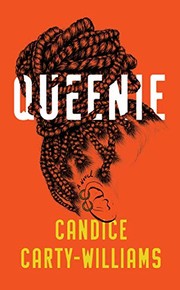
Queenie
Jamaican British Queenie spirals after Tom break while friends hold her.
2,056-word summary · 9 min read

Kin
Two motherless friends from Honeysuckle, Louisiana drift apart and reunite after tragedy in Tayari Jones funny, warm Oprah and Kirkus Prize novel.
2,642-word summary · 12 min read

Cleopatra and Frankenstein
A British painter and an older ad man marry on impulse in New York, then face depression, drinking, and tangled friends.
2,168-word summary · 10 min read

The Bean Trees
Taylor Greer flees Kentucky, inherits Cherokee toddler Turtle, and roots with Tucson strays.
2,082-word summary · 9 min read
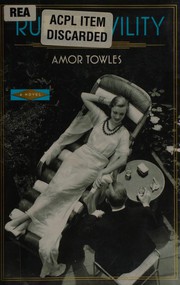
Rules of Civility
In 1938 Manhattan, working girl Katey Kontent meets Tinker Grey and Eve Ross, and one bright year of jobs and parties remakes her life.
2,330-word summary · 10 min read
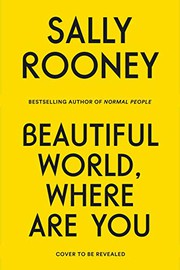
Beautiful World, Where Are You
Two friends Alice and Eileen trade letters while navigating love with Felix and Simon.
2,872-word summary · 13 min read

A Little Life
Four friends in New York orbit Jude, whose hidden past of abuse shapes every page of this 720-page epic.
1,972-word summary · 9 min read
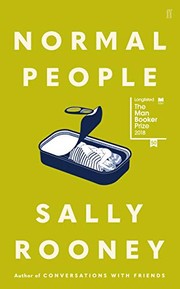
Normal People
Normal People retold: Connell and Marianne from Sligo school to Trinity, class and love.
2,066-word summary · 9 min read
The Rest of Our Lives
A law professor drives his daughter to college, then heads west instead of home, testing a private promise he made twelve years ago.
2,238-word summary · 10 min read

The New York Trilogy
Three linked novels turn a wrong-number call into a puzzle about names, authorship, and the stories people tell to stay sane.
2,259-word summary · 10 min read

The Loneliness of Sonia and Sunny
Two Indian families, a failed arranged match, and years between Allahabad and New York shape a slow, sprawling romance.
2,092-word summary · 9 min read