
Universality
2,302-word summary 10 min read 176 pages in the book
- First published
- 2025
- Publisher
- Faber
- Pages
- 176
- ISBN
- 9780571389018
Reading options
What's inside (10 sections)
A very small book with a very big prop
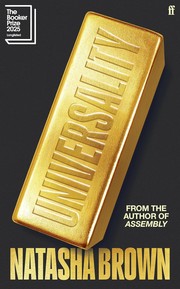
I picked this up because it kept being described as slippery, and because it was short enough to finish in a weekend. Natasha Brown's second novel runs to 176 pages in the Faber edition, published in 2025, and it is easy to mistake that compactness for simplicity. It is not simple. It is a satire about money, identity and the way public arguments get weaponised, and it hides a fairly violent story inside a structure that keeps changing its mind about what kind of book it is. The first hint is the gold bar. Brown's early proof copies were made to look like ingots, which is a cheeky bit of marketing, but it also tells you what the book is circling. Here is an object that stands for wealth, that gets passed between people, and that everyone wants to define on their own terms.
The Booker longlist helped bring it to my attention, and the praise was almost uniformly about how clever it is. Cleverness can be a thin recommendation, so I went in wary. What won me over was the scale of the ambition: a book barely two hundred pages long managing to hold a crime, a media scrum, a family history and an argument about language without ever seeming crowded. Brown writes with the confidence of someone who has decided exactly what to leave out, and that confidence is uncommon in a second novel.
That little prop sets the tone for everything that follows. A novel this short has to choose its images carefully, and Brown clearly decided that if she was going to write about value, she would give the reader something solid to hold onto. The ingot is ridiculous and heavy at the same time, and the book keeps that double quality alive even when the prose turns abstract.
The feature that opens the book
The novel begins as a piece of journalism. Its opening section is presented as a magazine investigative feature written by an aspiring journalist named Hannah, and it carries the title "A Fool's Gold." The setting is a barn in West Yorkshire during the Covid-19 lockdown. A group of anarchist activists and squatters who call themselves the Universalists have gathered there with a plan to build a self-sustaining microsociety, a small commune that might show how people could live outside the usual structures. Brown sets this up with the dry patience of someone who has watched such projects argued about online for years, and then she lets the whole thing curdle.
A party is held. A young man named Jake, described as aimless and without much in the way of goals, picks up a gold bar and bludgeons the group's leader almost to death with it. It is a shocking moment, and Brown places it early enough that you feel the ground shift under the neat premise. The barn and the gold both belong to Richard Spencer, a wealthy London banker with multiple homes, a wife, a younger girlfriend and a spread of investments. In her hands he is less a fully rounded person than an emblem, the excessive fruits of late capitalism given a name and an address.
The article gets published, and the reaction is swift. Richard is vilified, loses his job and loses his home. Jake, meanwhile, flees with the ingot after a police raid on the farm. That is the story as Hannah tells it, and for a moment it reads like a clean account of a scandal with clear villains and a clear moral. Then the book starts taking that account apart, piece by piece.
The barn and the people who filled it
The choice of a West Yorkshire barn during lockdown is doing more than providing a convenient place for a fight. Brown is interested in the gap between what the Universalists want and what they actually have. They plan to build a microsociety from almost nothing, to live communally and outside the usual structures, and they do it in a borrowed barn while the rest of the country is stuck at home. There is something touching and slightly absurd about the ambition, and Brown does not sneer at it. These are people trying to make a different arrangement real, even if the arrangement is fragile and the building belongs to somebody else.
That somebody else is the point. Richard Spencer has multiple homes while the Universalists squat in one of his barns. He has a wife, a younger girlfriend and a spread of investments, while the commune is trying to make do with what it can gather. The gold bar that ends up in Jake's hands is Richard's property before it is anyone else's, which means the instrument of the violence arrives ready made from the banker's world. Brown sets up that imbalance early and never quite lets it go. Even after the article ruins Richard, the terms of the argument stay his. People keep discussing his money, his homes and his life rather than the commune's idea.
Lockdown matters too because the whole affair plays out in a closed space, with nowhere for the participants to go and no ordinary outlets for the tension. Brown understands that a crowd in confinement will turn on itself given the smallest excuse. The party, the argument, the blow with the ingot: each step feels as though it could have been avoided, and each step still happens. That sense of preventability is what makes the later retellings so fraught, because everyone afterward will insist the violence was inevitable, or impossible, or somebody else's doing.
The retellings, and Lenny Leonard
What follows drops the magazine conceit and revisits the same affair from several angles, each one complicating the last. This is where the book earns its reputation as a puzzle box. The most important of the new voices belongs to Jake's mother, Miriam Leonard, who goes by Lenny. She writes a column, appearing in The Telegraph and The Observer, and her subject matter is sex, race, class and social justice. The crucial thing about her writing is its tone. It is deliberately sensational, hostile to diversity, equity and inclusion initiatives, and engineered to go viral rather than to inform. She has even distilled her views into a book called No Mo' Woke.
Lenny could have been drawn as a caricature, a reactionary aunt saying the quiet part loudly. Brown is more interested in the machinery behind her. Lenny's columns turn every detail of the case into ammunition, and the point is that the progressive voices do exactly the same thing from the opposite direction. The novel keeps showing how a fact becomes a talking point, a talking point becomes a position, and a position hardens into an identity before anyone has really thought it through. Reading these sections, I found myself unsure whether I was watching a critique of the right or of the whole appetite for outrage, and I think that uncertainty is the idea.
Hannah does not escape it either. After her feature lands, she enjoys a brief flush of success, the kind that comes from being the person who broke a story, and then the news cycle moves on to the next fad. Her rise and flatlining is one of the quieter jokes in the book, and it works because Brown refuses to give Hannah the last word. Nobody in this novel gets to own the story for long.
The language of money
Brown worked in financial services for a decade before she started publishing fiction, and it shows in the book's central preoccupation. Her debut, Assembly, asked whether language can ever be neutral. Universality takes the position that it cannot. Here, words move the way capital moves. They circulate, they accumulate value, and they get invested and cashed out by people trying to win an argument or protect a reputation. The title is doing heavy work, because the phrase universality sounds generous and inclusive, a claim that something applies to everyone, while the novel keeps showing how a supposed universal gets claimed by whichever group can shout loudest.
This is also why the gold bar matters beyond the joke about the proof copies. An ingot is a thing whose value everyone agrees on in the abstract and fights over in practice. It passes from Richard to Jake to the police to the news cycle, and each stop rewrites what it means. Brown's interest is in that rewrite, the way a single object can be made to stand for greed, for freedom, for evidence, for grievance, depending on who is holding the pen. The satire is sharpest when it stays close to that small mechanical process, and least convincing when it seems to lecture the reader about a point it has already made.
The finance background also explains the coolness of the tone. Brown is not writing a novel that asks you to weep with the characters. She is writing one that asks you to watch a system process them. Bankers, journalists, columnists and activists all end up doing the same job in her account, which is to take a raw event and translate it into something that can be traded. Once you see that pattern, the title stops sounding generous and starts sounding like a question: whose universality is this, and who gets to speak for it?
What the critics noticed
The reception was strong, and the reviews cluster around the same idea: this is a book about the politics of storytelling. Jo Hamya, writing in The Guardian, called Brown one of the most intelligent voices in writing today and described a structure like a matryoshka doll, with each established fact progressively rendered again in a new light. Alex Clark praised it as a fable about the politics of storytelling, and Mia Levitin in the Financial Times called it a nesting doll of satire that leaves readers uncertain where their loyalties lie. The book was longlisted for the 2025 Booker Prize, which is not the same as winning it, but it goes a long way toward explaining the attention.
Those descriptions are fair. If you like a novel that trusts you to hold several versions of an event at once, this will reward you. The matryoshka comparison in particular gets at the pleasure of the thing, which is not that any one telling is true but that the stack of tellings produces a meaning none of them alone could carry. It is a clever book, and it is clever in a way that asks something of the reader rather than simply showing off.
The comparisons to a nesting doll are more than a neat way to describe the structure. They point to the book's real claim, which is that there is no single layer underneath all the others, no final truth waiting once you peel away the last account. Each version of the barn and the gold bar feels complete while you are inside it, and none of them survives the next one. That is a demanding proposition for a short novel, and Brown commits to it all the way to the end.
Where it drags
I should be honest about the limits. This is a short, controlled book, and that control can feel chilly. Readers who want to settle into a character and stay there may find the constant reframing frustrating, because just as you begin to trust one account, another section slides it out from under you. The satire also risks feeling overdetermined. By the time Lenny's columns, Hannah's feature and the various retellings have all had their say, the point about language as a weapon has been made several times. There are moments when the book seems to be arguing with an audience it has already convinced.
There is also the question of who the book is arguing with. Lenny's No Mo' Woke is deliberately broad in its target, and at times the satire feels aimed at a type rather than a person. Readers who have lived through the arguments Brown is skewering may find the precision satisfying. Readers looking for a character with contradictions beyond her politics may find her flattened. I landed somewhere in the middle, admiring the construction while wishing for one moment in which Lenny surprised me.
And yet the compactness is mostly a virtue. At 176 pages, Brown has no room for padded subplots, and the lean build is part of the design rather than an accident. The novel knows what it wants to do and does it without slack. What it lacks in warmth it makes up for in precision, and the ambiguity about where to place your loyalty is less a flaw than the whole argument in miniature. I finished it wanting to argue back, which I suspect is the intended response.
Who should read it
This is not a book for someone looking for a comforting story about community, even though the Universalists start out sounding like one. It is for readers who enjoy watching an argument being assembled and then taken apart, who are interested in how race and class get discussed in public, and who do not mind a novel that refuses to tell them what to think. Brown's years in finance give the book its particular edge, and her earlier novel Assembly is worth reading alongside it if you want to see where the question of neutral language began.
If you go in expecting a tidy mystery about a man with a gold bar, you will probably be disappointed. If you go in expecting a short, sharp book about how a story becomes a weapon and a weapon becomes a story, you will find plenty to push against, which seems to be exactly the response Brown is after.
FAQ
Is Universality a mystery or a satire?
It borrows the apparatus of a mystery, with a crime and a hunt for blame, but it is chiefly a satire about how stories on race, class and money get built and fought over.
Do I need to read Natasha Brown's Assembly first?
No, Universality stands on its own. Readers of the earlier novel will recognise its continuing question about whether language can be neutral, but no prior knowledge is needed.
Why was Universality longlisted for the Booker Prize?
The 2025 longlist recognised its compressed, layered structure and its sharp handling of identity politics, and critics praised it as a fable about the politics of storytelling.
Similar books
Last Night in Brooklyn
A copywriter in 2005 Fort Greene trades a scripted engagement for a bar crowd, a rising designer, and a neighborhood being remade around her.
2,540-word summary · 11 min read
Such a Fun Age
A late-night grocery store clash pulls sitter Emira Tucker and her employer Alix Chamberlain into a tense fight over race, money, and good intentions.
2,339-word summary · 10 min read
The Wilderness
Four Black women move through twenty years of friendship in Angela Flournoy's discontinuous, widely praised second novel.
2,141-word summary · 10 min read
The Reluctant Fundamentalist
In a Lahore cafe, Changez tells a nervous American how Princeton and a New York career gave way to anger after September 11.
2,340-word summary · 10 min read
The Bonfire of the Vanities
Tom Wolfe's first novel follows a Wall Street bond trader whose life unravels after a hit-and-run in the Bronx, in a satire of 1980s New York money, race and…
2,268-word summary · 10 min read
On Beauty
A Rembrandt scholar and his liberal family collide with a conservative rival's household in a Massachusetts college town, in Zadie Smith's comic, argumentative…
2,869-word summary · 13 min read
James
Percival Everett retells Huckleberry Finn from Jim's side, giving him a library, a hidden school, and a voice the novel lets loose.
2,211-word summary · 10 min read
Luster
Edie, twenty-three and adrift in New York, falls into an affair with an older white archivist in an open marriage, and into the orbit of his wife and adopted…
2,049-word summary · 9 min read
The White Tiger
A poor driver writes to the Chinese Premier about rich masters, corruption, and murder.
2,251-word summary · 10 min read
The Corrections
An aging Midwestern couple tries to gather three troubled adult children for one last Christmas at home.
2,094-word summary · 9 min read
Yellowface
Struggling writer June steals her dead friend Athena's manuscript and publishes it as Juniper Song.
2,081-word summary · 9 min read
Normal People
Normal People retold: Connell and Marianne from Sligo school to Trinity, class and love.
2,066-word summary · 9 min read
The Rest of Our Lives
A law professor drives his daughter to college, then heads west instead of home, testing a private promise he made twelve years ago.
2,238-word summary · 10 min read
The Loneliness of Sonia and Sunny
Two Indian families, a failed arranged match, and years between Allahabad and New York shape a slow, sprawling romance.
2,092-word summary · 9 min read
Our Souls at Night
A widow asks her widower neighbor to lie beside her at night, not for sex but for company, and two lonely people in a small Colorado town begin again.
2,582-word summary · 11 min read
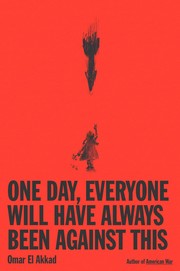
One Day, Everyone Will Have Always Been Against This
From a viral 2023 post, Omar El Akkad builds a furious short argument about Western promises, silence and complicity during the Gaza war.
2,218-word summary · 10 min read
One Boat
A woman returns to a Greek coastal town after her father's death, and the holiday she took nine years earlier after her mother's death keeps breaking through.
2,143-word summary · 10 min read
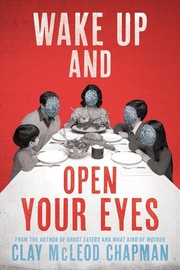
Wake Up and Open Your Eyes
A Brooklyn father drives to Richmond to find his parents lost in a cable news trance, in Chapman's splatterpunk horror about possession spread through…
2,381-word summary · 11 min read
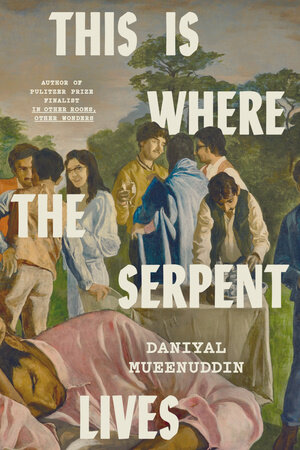
This Is Where the Serpent Lives
Daniyal Mueenuddin's second novel follows an orphan who rises through Lahore and a gardener's son who becomes an outlaw, across a Pakistan of caste and capital.
2,257-word summary · 10 min read
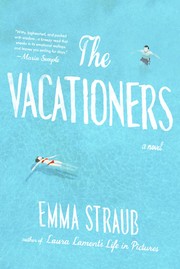
The Vacationers
A New York family's two-week stay in Mallorca turns into a comedy of exposed secrets when a magazine editor's affair and a son's debts come to light.
2,324-word summary · 10 min read
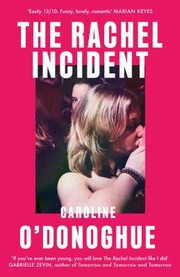
The Rachel Incident
A funny, sharp novel about two twenty-somethings in recession-era Cork whose bookshop friendship, tangled romance and a married professor's lie leave a secret…
2,346-word summary · 10 min read
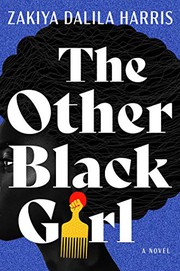
The Other Black Girl
An editorial assistant at a white publishing house hopes for a friend when another Black woman is hired, then starts receiving notes telling her to leave.
2,244-word summary · 10 min read
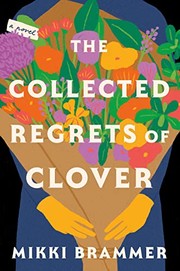
The Collected Regrets of Clover
A death doula who writes down the last words of strangers keeps her own heart locked away, until a new neighbor, a dying photojournalist and a road trip to…
3,055-word summary · 14 min read
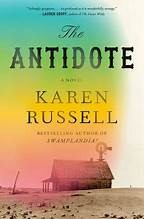
The Antidote
In a Dust Bowl town where a woman stores her neighbors' unwanted memories inside her own body, a storm blows the bank away and leaves a tangle of debts and…
2,707-word summary · 12 min read
Still Life with Woodpecker
An environmentalist princess and an outlaw bomber fall in love, then argue about freedom, sacrifice, and a pack of Camel cigarettes.
2,061-word summary · 9 min read
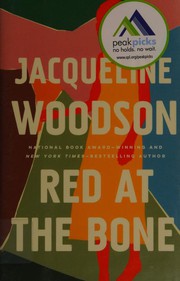
Red at the Bone
A girl's coming-of-age ceremony in a Brooklyn brownstone opens a family story shaped by Tulsa, teenage pregnancy, class and a second tragedy on September 11.
2,108-word summary · 9 min read
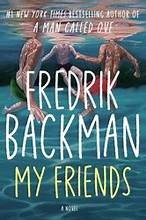
My Friends
A dying artist sends an eighteen-year-old stranger a painting, pulling her into the story of four teenagers and one summer on an abandoned pier.
2,219-word summary · 10 min read
Mountains Beyond Mountains: The Quest of Dr. Paul Farmer, a Man Who Would Cure the World
Tracy Kidder travels with Dr. Paul Farmer from Haiti to Peru, tracing how a Harvard doctor built a health system for the poor and what that work cost him.
3,095-word summary · 14 min read

I Am America (And So Can You!)
Stephen Colbert's 2007 debut extends his Colbert Report pundit into print, a mock-conservative tour of American life with margin notes, stickers and Fun Zones.
2,635-word summary · 12 min read
Hollow Bones
On 11 September 2001, two-month-old Molly Fitzgerald loses her mother at the World Trade Center. She grows up planning for disasters, until a crisis in her new…
2,703-word summary · 12 min read