
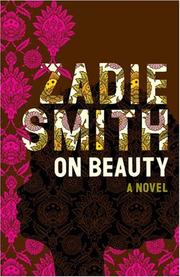
On Beauty
2,869-word summary 13 min read 446 pages in the book
- First published
- 2005
- Publisher
- Hamish Hamilton
- Pages
- 446
- ISBN
- 9780241142936
Reading options
What's inside (10 sections)
I came to this one through White Teeth. I had liked the way Smith could hold a whole street of people in her head at once, and I wanted to see what she did when she moved the action across the Atlantic and swapped north London for a college town in Massachusetts. On Beauty came out in 2005, published by Hamish Hamilton in London, and the first UK edition runs to 446 pages. It is a big, talkative, funny book about two families who cannot stop bumping into each other, and about the things people say when they are trying to sound more certain than they feel. Smith has said it is an homage to E. M. Forster's Howards End, and once you know that the borrowings are everywhere, though the book never stops being its own very American, very twenty-first-century creature.
Two families, one college town
The Belseys live in Wellington, a fictional university town outside Boston that is clearly modelled on Harvard and Cambridge, Massachusetts. Howard Belsey is a white Englishman who has made his career as a Rembrandt scholar. His wife Kiki is African American, and they have three children: Jerome, Zora and Levi. The family thinks of itself as liberal and atheist, and Howard in particular likes to say so. He is the kind of man who believes his politics are a form of good manners, and he assumes everyone else should see it his way.
Howard is in the middle of a book about Rembrandt that has been a long time coming. He keeps promising it to himself and to other people, and he keeps not finishing it. The book is supposed to contain an argument about one particular painting, a claim that will settle some question of attribution and finally make his reputation. Instead it sits there, a source of quiet embarrassment, while more successful people around him publish and get promoted. That failure is the engine of a lot of what follows. Howard's bitterness about his own stalled career is never far from the surface, and it colours almost every judgement he makes about the man he has decided is his enemy.
That enemy is Monty Kipps, a Trinidadian professor who lives in Britain and says what he believes with a confidence Howard cannot manage. Monty is conservative, religious and black, and he teaches at a rival institution until the Kipps family uproot and move to Wellington so he can take a post at the same university where Howard works. Monty's wife is Carlene, and they have two children, Victoria and Michael. Where the Belseys are loud about being liberal, the Kippses are equally loud about tradition, faith and personal responsibility. The two men dislike each other on sight, and neither makes much effort to hide it.
Smith sets the whole thing going with emails from Jerome to his father, a neat echo of the letters that open Howards End. Jerome is the eldest Belsey son and a born-again Christian, which is the last thing Howard expected from a child raised to be a secular intellectual. Worse, Jerome takes a summer internship with the Kipps family, working for the very people his father regards as reactionaries. Howard is furious. The early chapters are full of his sputtering disbelief that his own son could have gone over to the other side, and the family arguments that follow establish the book's rhythm: everybody has a position, everybody defends it at length, and the children mostly wish the adults would stop.
Howard and Monty at war
Once the Kippses move to Wellington, the feud becomes a campus matter. The two professors circle each other at faculty functions and in the corridors, each convinced the other is a fraud. Their arguments are about politics, but they are also about who gets to be taken seriously in an American university. Monty challenges the liberal consensus on affirmative action, and the tension finally breaks at a public debate in front of students and staff. Smith gives both men their best lines. Monty can be sharp about the complacency of white liberals, and Howard can be very funny about the intellectual laziness of the right. Neither man is entirely wrong, which is what makes their scenes so uncomfortable.
The professional resentment is sharpened by something smaller and more pathetic: Howard has not published the book everyone has been waiting for, and Monty has. Monty's success is held up to Howard at every turn, sometimes by Monty himself, sometimes by circumstances. Smith understands that academic feuds are rarely pure ideas. They are also about offices, salaries, who got which grant and whose name is on the door. The debate scene works because you can hear the personal grievance underneath the high-minded language, and because the audience of students is mostly wondering whether any of this will be on the exam.
Howard's private life is unravelling at the same time. He is having an affair with Claire Malcolm, a colleague and a family friend who teaches creative writing. The Belseys' marriage has been fraying for years, and Kiki has known enough to be wary long before she knows the details. When the truth comes out, the domestic fallout is handled without melodrama. There is no big confrontation scene. Instead there is the slow, humiliating business of a wife deciding whether to stay with a man who has been careless with her, and a husband who cannot quite bring himself to be honest even when he is caught. Kiki is the strongest presence in these chapters. She has a steadiness that Howard, for all his theories, completely lacks.
Kiki, Carlene and a painting in the library
The friendship between Kiki and Carlene is the quiet centre of the novel. These are the two women married to the men who cannot stand each other, and they find common ground in the one place the men would never look for it. Carlene has a painting in her library, Maitresse Erzulie by the Haitian artist Hector Hyppolite. She tells Kiki that she bought it in Haiti, before she ever met Monty. The two women sit with the painting and talk about it, and about their lives, and the scenes have a warmth that the academic sparring entirely lacks. Smith lets them be interested in something other than the feud. They talk about beauty, in other words, in a way the men never quite manage.
They see each other only a few more times before Carlene dies of cancer, an illness she kept hidden from her family. The Belseys go to London for the funeral. It is there that the book takes its ugliest turn, because Howard, still vain and still careless, has sex with Victoria Kipps during the visit. Victoria is Carlene's daughter and, by now, one of Howard's own students. There had been a flirtation already, and Howard had done nothing to stop it. The scene is not written to titillate. It is written to show a man using his position and his grief as an excuse, and to set up the damage that comes later.
When the Kipps family goes through Carlene's will, they discover that she meant to leave the Hyppolite painting to Kiki. Monty decides his wife was not of sound mind when she wrote that instruction. He keeps the painting and hangs it in his university office instead. This single act, small and administrative on the surface, is what eventually sets off the theft that closes the novel. It is also Smith's clearest link to Howards End, where a valuable house is left by a dying woman to a friend of the family and the will is quietly ignored. The object matters less than what it represents: a claim about who belongs where, and who has the right to decide.
Jerome, Zora and Levi
The three Belsey children each get a storyline, and they are the best reason to keep reading when the adult quarrels start to repeat themselves. Jerome, the born-again Christian, has a brief and badly ending relationship with Victoria Kipps during his summer with the family. He comes home more certain of his faith and less certain of himself. His storyline is the most low-key of the three, but it does the important work of showing that the Kipps household is not the closed, happy unit its public manner suggests.
Zora, the daughter, is at Wellington itself. She is ambitious, insecure and determined to make a mark, and she is the one who eventually sees clearly what the adults have been doing. She befriends Carl, a young African American man from a poor background who is not a student. Zora wants to use him as a poster child for a campaign to let talented non-students sit in on university classes. It is a generous idea in its way, but it is also a cause that lets Zora feel good about herself while keeping Carl at a careful distance. Smith is sharp about the way well-meaning people turn other people's lives into projects.
Levi is the younger son, and his thread is the most restless. He quits his retail job because of the way the staff are treated, and he struggles with what it means to be mixed race in a place that keeps asking him to pick a side. He is drawn to Carl because Carl seems to him like a member of a more authentic black culture, a phrase the book keeps testing and keeps finding suspect. Levi's search for a purer identity leads him toward a group of Haitian men who sell counterfeit goods on the street corners around Wellington. He admires them from a distance and then from closer up, and he is always aware of how he looks standing beside them in public. The discomfort is the point. Smith refuses to let Levi's politics stay comfortable.
Carl and the performance of authenticity
Carl is one of the most interesting inventions in the book. To Zora he is raw material for a campaign. To Levi he is an ideal. To himself, he is a young man trying to get by, and Smith gives him enough interior life to keep him from becoming either symbol. He moves between the Belsey siblings and never quite belongs to either of their stories, which is exactly his function. He shows up the difference between talking about a person and actually knowing one.
Levi's friendship with the Haitian street sellers, especially a man named Chouchou, pushes this theme harder. Chouchou tells Levi that Monty bought his Haitian artwork from peasants for almost nothing. The claim may or may not be true, and that uncertainty matters. Levi decides it is true because it fits the story he wants to tell about exploitation and authenticity. His decision to steal the Hyppolite painting from Monty's office is presented as an act of political justice, but Smith leaves the reader to notice how much of it is Levi trying on a role that makes him feel whole. The book is at its best here, because it refuses to tell you whether Levi has acted bravely or foolishly. He has, in some measure, done both.
This is also where the title starts to do its work. The novel takes its name from an essay by Elaine Scarry called "On Beauty and Being Just," and the connection is not decorative. The characters keep arguing about what is beautiful and who is entitled to judge, and the argument keeps sliding into questions of fairness, ownership and power. Carlene's painting is beautiful, but it is also a thing that was bought, willed, hidden and stolen. Monty's arguments about tradition are about values, but they are also about a career. Smith never lets the aesthetic and the political separate for long. The book's opening even carries a quotation from the humanist Harold Blackham, which signals how seriously it takes the clash between secular liberal morality and religious tradition.
A funeral, a will and a theft
The plot tightens in the last stretch. Carlene dies, the family travels to London, Howard betrays his wife with Victoria, and the will reveals that the Hyppolite was meant for Kiki. Back in Wellington, Levi and Chouchou break into Monty's office and take the painting as part of their campaign against anti-Haitian injustice. Jerome finds it in Levi's room, along with the note Carlene left saying the painting was Kiki's. That discovery is the novel's tidiest piece of plotting, and it neatly turns a political gesture into a family matter. The stolen object belonged to one of their own all along.
Zora then delivers the information that has been building. She tells her father that she knows about the two affairs: his with Victoria, and Monty's with another student. She also tells her mother what Howard did. The confrontations are not staged as great set pieces. Smith is more interested in the awkward, flat way the truth lands in a room. The Belseys are clearly heading toward separation, and the last chapter shows them at the beginning of that process rather than at any dramatic breaking point. Marriage, the book suggests, often ends in a series of small recognitions rather than a single door slam.
The lecture that never happens
The closing scene is the one people remember. Howard is due to give a lecture that could revive his career, a chance to finally deliver the argument about Rembrandt that has been years in the making. He stands in front of the audience and fails to give it. Instead of the lecture, he smiles at Kiki, who is sitting in the room, and she smiles back. Behind them is a projection of Rembrandt's A Woman Bathing in a Stream, the painting in which the artist depicted his own wife. The moment is quiet and almost wordless, and it is the book's answer to all the loud arguments that came before. Smith has said the scene was loosely based on a notorious job talk given by a Harvard professor about Lolita, which explains its air of public disappointment.
I found that ending moving without finding it tidy. Nothing is resolved. Howard has not suddenly become a good man, Kiki has not forgotten what he did, and the boys are still working out who they are. What has changed is that the couple has, for a moment, stopped performing for everybody else. The Rembrandt image matters because it is a picture of an artist looking at the woman he loved, and because Howard has spent the whole novel talking about art instead of attending to the people in front of him. The smile is the first honest thing he manages in front of an audience.
What the book is arguing about, and where it strains
Smith is writing a comic novel with a serious argument, and the two halves do not always sit comfortably together. The book was shortlisted for the 2005 Man Booker Prize, and it won the Orange Prize for Fiction and the Anisfield-Wolf Book Award in 2006. In 2024 the New York Times placed it at number ninety-four on its list of the hundred best books of the twenty-first century. Those honours make sense, because this is a novel with real ambition. It wants to write about race, class, faith, art, higher education and the state of the family, all at once, and at its best it does all of those things without simplifying any of them.
It also has its strains. The debates can run long, and you occasionally feel that Smith is writing a position paper on behalf of a character who would never speak in such polished paragraphs. The satire of academic life is very knowing, and there are moments when the target seems too easy. Howard's failings are clear from early on, so his later betrayals confirm what the reader already knows rather than surprising anyone. A few of the subplots, particularly Michael Kipps's story, feel thinner than the others, as though they were kept because the family needed a certain shape. And the novel is long. At 446 pages it has room for digressions that a tighter book would have cut, and some of those digressions go on past the point of interest.
I would still recommend it, and I would recommend it especially to readers who liked the way White Teeth refused to keep its many stories in neat order. On Beauty is messier and angrier than that debut, and it is more interested in ideas. It asks whether people can see one another clearly when they are busy defending a position, and whether beauty is anything more than a word people use to win arguments. It does not answer either question. What it does is put two families in a college town, give them a painting to fight over, and let the arguments run until everybody is a little bit exposed. That is a considerable achievement, even when the book is talking too much. I closed it glad I had read it, and not at all sure I agreed with any of the people in it.
FAQ
Is On Beauty based on another book?
Yes. Smith has called it an homage to E. M. Forster's Howards End. The parallels include two families with opposing values, a valuable item left to a friend of the family, and a structure built around letters or emails.
Where is On Beauty set?
Most of the novel takes place in Wellington, a fictional university town outside Boston modelled on Harvard and Cambridge, Massachusetts. The Belseys and Kippses also travel to London for Carlene's funeral.
Did On Beauty win any awards?
It was shortlisted for the 2005 Man Booker Prize and won the Orange Prize for Fiction and the Anisfield-Wolf Book Award in 2006. The New York Times later placed it at number ninety-four on its list of the best books of the twenty-first century.
Similar books
Universality
Natasha Brown's short second novel turns a lockdown fracas over a gold bar into a sharp satire of money, identity and public argument.
2,302-word summary · 10 min read
The Bonfire of the Vanities
Tom Wolfe's first novel follows a Wall Street bond trader whose life unravels after a hit-and-run in the Bronx, in a satire of 1980s New York money, race and…
2,268-word summary · 10 min read
James
Percival Everett retells Huckleberry Finn from Jim's side, giving him a library, a hidden school, and a voice the novel lets loose.
2,211-word summary · 10 min read
Infinite Jest
A film that kills its viewers, a tennis academy, a halfway house for addicts, and a future America where corporations name the years, all tangled together.
2,084-word summary · 9 min read
Yellowface
Struggling writer June steals her dead friend Athena's manuscript and publishes it as Juniper Song.
2,081-word summary · 9 min read
White Teeth
Archie and Samad's wartime bond tangles their London families across generations, genes, and faith.
2,110-word summary · 9 min read
The Wilderness
Four Black women move through twenty years of friendship in Angela Flournoy's discontinuous, widely praised second novel.
2,141-word summary · 10 min read
The Loneliness of Sonia and Sunny
Two Indian families, a failed arranged match, and years between Allahabad and New York shape a slow, sprawling romance.
2,092-word summary · 9 min read
The Reluctant Fundamentalist
In a Lahore cafe, Changez tells a nervous American how Princeton and a New York career gave way to anger after September 11.
2,340-word summary · 10 min read
The Other Black Girl
An editorial assistant at a white publishing house hopes for a friend when another Black woman is hired, then starts receiving notes telling her to leave.
2,244-word summary · 10 min read
The Antidote
In a Dust Bowl town where a woman stores her neighbors' unwanted memories inside her own body, a storm blows the bank away and leaves a tangle of debts and…
2,707-word summary · 12 min read
Still Life with Woodpecker
An environmentalist princess and an outlaw bomber fall in love, then argue about freedom, sacrifice, and a pack of Camel cigarettes.
2,061-word summary · 9 min read
Red at the Bone
A girl's coming-of-age ceremony in a Brooklyn brownstone opens a family story shaped by Tulsa, teenage pregnancy, class and a second tragedy on September 11.
2,108-word summary · 9 min read
Good Dirt
A stoneware jar made by an enslaved potter links a prominent Black New England family across a hundred and fifty years of prosperity, grief and buried history.
2,069-word summary · 9 min read
Flashlight
Susan Choi's Booker-shortlisted novel opens with a father and daughter on a breakwater in 1978, then follows the loss outward through four generations and…
2,849-word summary · 13 min read
Dream Count
Four women narrate the 2020 lockdown in their own voices: a travel writer, a friend in early labor, a banker cousin and a housekeeper assaulted in a hotel room.
2,286-word summary · 10 min read
Birdsong
A love affair in Amiens before the First World War and a granddaughter's search through encoded journals decades later, joined by the tunnels of the Somme.
2,041-word summary · 9 min read
Behold the Dreamers
A Cameroonian chauffeur and his wife chase the American dream while driving a Lehman Brothers executive through the 2008 crash in Mbue's debut novel.
2,578-word summary · 11 min read
A Passage to India
Forster's 1924 novel follows two Englishwomen, an Indian doctor and a schoolmaster whose lives collide at the Marabar Caves, where a moment of panic exposes…
2,332-word summary · 10 min read
The Book of Negroes
Aminata Diallo is kidnapped from West Africa at eleven and spends a life crossing the Atlantic, surviving slavery, and fighting to be recorded as free.
2,442-word summary · 11 min read
Last Night in Brooklyn
A copywriter in 2005 Fort Greene trades a scripted engagement for a bar crowd, a rising designer, and a neighborhood being remade around her.
2,540-word summary · 11 min read
Dead Souls
A charming stranger buys the rights to serfs who have died but remain on the census rolls, and a whole province turns against him.
2,255-word summary · 10 min read
Violeta
A woman born in 1920 writes her life story to her grandson, from one pandemic to another, through wealth, ruin, passion, and dictatorship in South America.
2,555-word summary · 11 min read
The Idiot
A Turkish-American freshman at Harvard falls in love through email with a Hungarian math student and spends a summer in Hungary trying to turn correspondence…
2,019-word summary · 9 min read
The Crying of Lot 49
A California woman named executor of her ex-lover's estate follows a muted post horn into a possible centuries-old postal conspiracy, and Pynchon refuses to…
2,003-word summary · 9 min read
Naked Lunch
Burroughs's banned 1959 collage novel follows Bill Lee through addiction, Tangier, and the nightmare bureaucracy of the Interzone.
2,082-word summary · 9 min read
The Lowland
Two brothers grow up beside a marshy lowland in Calcutta, and the choices of the younger one draw the older into a life of duty, distance, and quiet grief that…
2,213-word summary · 10 min read
Stones from the River
Trudi Montag is born a dwarf in a small German river town in 1915 and grows up to keep the town's library and its secrets, from the First World War to the…
2,818-word summary · 13 min read

A Spool of Blue Thread
Four generations of the Whitshank family in Baltimore, and the silences, resentments and quiet love they hand down without ever saying so.
2,408-word summary · 11 min read

Wide Sargasso Sea
Jean Rhys gives the first Mrs. Rochester a Caribbean childhood, a marriage built on money and suspicion, and a voice that Charlotte Bronte left in the attic.
2,021-word summary · 9 min read