
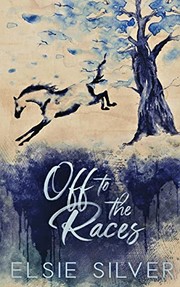
Off to the Races
2,318-word summary 10 min read 480 pages in the book
- First published
- 2021
- Publisher
- Bloom Books
- Pages
- 480
- ISBN
- 9781464220777
- Series
- Gold Rush Ranch (#1)
Reading options
What's inside (8 sections)
I came to this book because it is the one that started everything for Elsie Silver. She first published it herself in 2021, and it found a large audience on BookTok before a traditional publisher picked up the Gold Rush Ranch series. Bloom Books reissued it in 2024, and that is the paperback most readers hold now, a thick book of roughly 470 to 480 pages depending on which catalog you check. The Simon and Schuster UK edition is shorter at 448 pages, and the Bloom paperback carries the ISBN 9781464220777. Knowing all that going in, I expected something slick and quick. What I found was a story that takes its time, spends a surprising number of pages on a difficult horse, and then lands an ending that caught me out.
The book opens with a scene set ten years before the main action. Wilhelmina Black, called Billie by everyone, is a teenager facing a wall of cameras. Her father is a politician whose sex scandal has blown up in public, and the photographers want her reaction. She snaps at them. That short prologue tells you a lot about the woman who will walk into Ruby Creek a decade later: sharp tongue, short patience with people who want something from her, and a history she would rather not discuss.
A poor first impression at Gold Rush Ranch
In the present day, Vaughn Harding has taken leave from his family's mining company and come to Gold Rush Ranch. His beloved grandfather, Dermot Harding, has died, and the ranch is in trouble. Dermot had been accused of fixing races, and the racing authorities have suspended the ranch from entering horses for three months. Vaughn wants to clear his grandfather's name and get the operation back on its feet, and he believes the fastest route is a clean, public win once the suspension lifts. He needs a trainer who can deliver it.
His head groom, Hank Brandt, mentions a young trainer with a reputation for original methods. Hank calls him "some guy named Billy Black," so Vaughn is expecting a man. When Billie walks in, Vaughn assumes she is another one of the dates his mother keeps arranging, and he dismisses her without much courtesy. Billie sets him straight with a teasing retort, and the two get off on the wrong foot in the most durable way. She privately decides he is arrogant in the way of rich, entitled men. He decides she is distracting and far too young for the job. Neither first impression survives the chapter.
What I enjoyed here is that Silver lets them argue well. Billie does not shrink from Vaughn, and she seems to enjoy winding him up. Vaughn, for his part, is used to people going out of their way to please him, so a woman who does the opposite gets under his skin. Their early exchanges have a rhythm that carried me through the slower opening chapters. It is a familiar setup, the grumpy boss and the sunny, sharp-tongued employee, but the dialogue has enough bite to feel alive.
The bargain over Double Diablo
The ranch owns a racehorse called Double Diablo, whom Billie immediately nicknames DD. The horse has a reputation for being difficult, and no trainer has been able to settle him. Vaughn makes Billie a wager: if she can get DD ready to win the first race of the season, three months away, she gets a permanent contract. If she cannot, she leaves. Billie takes it, partly because she wants the job and partly because she sees something in DD that others have missed.
Most of the middle of the book is Billie working with that horse, and this is where the novel is at its best. She does not try to break DD. She offers him a steady, predictable presence, keeps her hands calm, and waits for him to choose her. Slowly he starts to trust her in a way he never trusted any other trainer. I am not a horse person, and I still found these scenes absorbing. Silver clearly knows the daily rhythm of a stable, and she writes about feeding, grooming, and long hours in the paddock with a patience that matches Billie's own. The bond that forms feels earned rather than announced.
Billie gets help from a young groom named Violet Easton, who is eager to ride and hungry for a chance. Violet becomes one of the people who makes the ranch feel like a real place rather than a backdrop. Hank, the head groom who recommended Billie, is another steady presence. Through them, the story builds a small working community around the horses. That community matters later, when the book asks what home means to someone who has never had a stable place to land.
While Billie works with DD, her relationship with Vaughn shifts. They trade sarcasm, agree to be friends, and then immediately break that agreement with a kiss. Both pull back and resolve to keep things professional. It does not work, of course, and the tension is the engine of the book. What gave it weight for me was a conversation in which Vaughn admits he wants to prove Dermot innocent. Billie tells him to separate his good memories of his grandfather from the possibility that the old man actually did fix races. It is good advice, and it plants the idea that loyalty to the dead can make the living do foolish things.
The first race and the whip
DD's first race arrives, and Vaughn's older brother Cole has chosen the jockey, a man named Patrick. Billie gives strict instructions that Patrick is not to whip DD. Patrick ignores her, uses the whip, and DD wins anyway. The horse comes off the track terrified. Billie is furious, yells at Patrick, and strikes him with the whip exactly as he had struck DD. Patrick hits back with a sneering comment about Billie's father, the disgraced former prime minister, and Vaughn learns for the first time who she really is.
This scene is the hinge of the book. Vaughn is shocked, Billie is humiliated, and they kiss again when he goes after her. The kiss feels less like a reward and more like two people grabbing at something solid while their world tilts. The next day DD is sick from the shock and trauma. Billie spends a miserable day walking him, pushing herself to exhaustion because she blames herself for letting it happen. Vaughn eventually finds her and makes her rest, taking over the horse's care himself.
The aftermath brings the secrets out. Vaughn is hurt that Billie hid her family history, and Billie explains that after her father's scandal, he tried to use his family to win back public favour. She also points out something practical: if she is romantically involved with her boss, her credibility as a trainer in a male-dominated sport will take a hit. Vaughn does not like hearing that, but she is right. This is one of the smarter threads in the book. Billie's career is not decoration. It is the thing she is trying to build from scratch, and she knows how easily it can be undermined.
Attraction, secrets, and a private arrangement
Vaughn explains that his playboy reputation comes from the dates his mother keeps arranging for him. He goes along with them to indulge her, even though they do nothing for him. Billie sees a text from his mother setting up another date and is hurt, because trust around sex is difficult for her. Vaughn tells his mother to stop, but Billie avoids him for days. When he asks her out, she spends the evening with Violet instead and lets him believe she was on a date with another man. It is a childish move, and the book does not pretend otherwise, but it grows out of her habit of expecting the worst.
They eventually admit what they want and become a couple. Billie asks to keep the relationship private for a while, and Vaughn agrees, though reluctantly, while promising to support her career. I liked this part more than I expected. The secrecy is not invented for cheap suspense. It comes from a real tension between her professional ambition and her personal life. Silver is good at showing how a romance can complicate a woman's standing at work, and the costs are not waved away when the couple finally sleeps together.
The calm does not last. An owner named Stefan Dalca calls about buying DD. Vaughn refuses, but Dalca implies he has damaging evidence about Dermot's race fixing. Billie draws on her own experience of her father's scandal and tells Vaughn not to try to cover up his grandfather's mistakes. The advice is sound, and Vaughn nods along. Then he does exactly the wrong thing.
The offer that breaks them apart
Violet gets her chance when Billie promotes her to jockey, and she and DD win a major race using Billie's strategy. It is a satisfying payoff for the hours spent watching Billie earn the horse's trust. Soon after, Billie overhears Vaughn agreeing to Dalca's offer: twenty million dollars for DD, plus fabricated proof that Dermot never fixed a race. Dalca confirms in that same conversation that Dermot really was guilty. Billie calls Vaughn a fool and refuses Dalca's offer of a job, even though taking it would have let her keep working with DD. Vaughn loses his temper and reminds her that the horse belongs to him and she has no say in the sale. She ends the relationship on the spot.
The next day she brings him a resignation letter and spends a tearful last day with DD. Vaughn sees her crying over the horse and cannot shake the image. He goes to Cole, who tells him plainly that he is choosing Dermot's dead reputation over Billie, DD, and the future of the ranch, all for a man who really did cheat. This is the third act breakup, and it is the part of the book I found most frustrating in a ordinary way. The misunderstanding rests on Vaughn doing something clearly dishonourable, so the reunion has to work hard to earn itself. Some readers will enjoy the ache. Others will find the stretch tedious.
What resolves it is a letter. Vaughn checks his neglected city mailbox and finds one Dermot wrote before he died. In it, the old man confesses everything. He fixed races to keep a promise to his late wife that their ranch would become a home to champions. He regrets the choice. The letter is convenient, and I noticed the machinery, but it also gives Vaughn a real reason to stop defending a false version of his grandfather. He hurries to Billie and apologises. She tells him that trust, once broken like that, is not something he can simply repair with a sorry.
The derby and what comes after
Billie goes to the big derby reluctantly. She is announced as DD's owner, which stuns her, because Vaughn has given the horse to her rather than sell him. DD and Violet win the race, and Vaughn tells her he loves her and could never sell the horse she loves so much. Billie admits she loves him too, and the book closes with the ranch community around them. In the epilogue, Vaughn proposes and Billie accepts. DD, once a troublesome animal no trainer could handle, has brought them all a kind of happiness.
I wanted to like that ending more than I fully did. The grand gesture is generous and well staged, and giving Billie ownership of DD is the right answer to the conflict. But the letter and the sudden reversal leave the moral argument a little tidy. The book has spent pages telling us that a broken trust cannot be fixed, and then it fixes it in a single race day. That is the genre contract, and most readers will accept it. I accepted it too, though not without a shrug.
There are other things that do not quite work. The opening is slow, and I was a few chapters in before I understood exactly what Billie was running from and what Dermot had done. A reviewer at theDearAuthor made a similar point about the pacing, and I think it is fair. Some of the emotional beats lean on familiar habits, the heroine who has been let down and wants to be someone's first choice, the boss who discovers he cares too much, the brother who says the hard thing. The love scenes are warmer than explicit, which will suit some readers and disappoint others looking for heat.
Even with those reservations, I finished the book in a good mood. The horse training is the strongest material, and DD is a real presence rather than a prop. Billie's loyalty to him gives the romance a foundation: Vaughn falls for her partly because he watches how she treats a creature that cannot ask for anything. Silver writes that kind of devotion well. Her small town is full of people who notice each other, and Ruby Creek feels like a place worth returning to.
This is a debut, and it shows in both directions. Some scenes are overlong, and the central scandal plot takes a while to find its shape. But the dialogue is sharp, the setting has texture, and the ending delivers on the feeling the book has been building toward. If you want a romance with horses, a slow burn between two people who argue well, and a third act breakup that will make you mutter at the page, Off to the Races does the job. It is not a book I will reread soon, but I understand why it found an audience, and I can see why readers followed Billie and Vaughn into the rest of the series.
FAQ
Is Off to the Races part of a series?
Yes. It is book 1 of the Gold Rush Ranch series, set in Ruby Creek, and it introduces several characters who lead the later books.
When was Off to the Races first published?
Elsie Silver first self-published it in 2021. Bloom Books reissued it in 2024 as a paperback of about 480 pages with ISBN 9781464220777.
Do I need to read the other Gold Rush Ranch books first?
No. This is the first book and it introduces the ranch, the Harding family, and the horse Double Diablo from scratch, so it works as an entry point.
Similar books
More from Gold Rush Ranch first, then related titles.
Heartless
Gruff single dad Cade Eaton hires bubbly Willa Grant as summer nanny in Chestnut Springs, and two months together wear down his walls.
2,967-word summary · 13 min read
Flawless
Pro bull rider Rhett Eaton is benched by scandal, and his agent's daughter Summer must keep him in line in Chestnut Springs.
2,528-word summary · 11 min read
Hopeless
Fake engaged to town hero Beau Eaton, outcast bartender Bailey Jansen finds pretend and real blurring in Chestnut Springs.
2,491-word summary · 11 min read

Reckless
Guarded Winter and charming Theo fake date through wedding season.
2,051-word summary · 9 min read
99 Percent Mine
Darcy Barrett has wanted her twin brother's best friend since she was eight. When they inherit their grandmother's cottage, Tom Valeska arrives with power…
2,391-word summary · 11 min read

Indigo Ridge
A new police chief in a Montana town meets the founding family's eldest son in a bar, and one night later a body turns up under their cliff.
2,763-word summary · 12 min read

Juniper Hill
Fleeing New York with her baby, Memphis takes a housekeeping job above Knox Eden's garage, and the grumpy chef becomes the first person she can rely on.
2,021-word summary · 9 min read
The Simple Wild
City Calla flies to Alaska to face dying father and gruff pilot Jonah, learning bush life and love.
2,284-word summary · 10 min read
Secretly Yours
A bubbly Napa gardener sends anonymous love letters to her grumpy professor neighbor in this steamy small-town rom-com.
2,504-word summary · 11 min read
My Killer Vacation
A teacher and a bounty hunter share a Cape Cod rental with a corpse and a growing attraction.
2,625-word summary · 12 min read
Kulti
Pro soccer player Sal Casillas gets childhood idol Reiner Kulti as assistant coach, and a tense season turns into slow friendship.
2,544-word summary · 11 min read
Things We Left Behind
Lucian Rollins returns to Knockemout to bury his father's past and collides with librarian Sloane Walton.
2,777-word summary · 12 min read
Wild Eyes
A country-pop star who does not own her own songs flees to a small Canadian mountain town and finds a horse trainer, his two children and a chance to make…
2,018-word summary · 9 min read
Wild Love
A full retelling of Elsie Silver's Wild Love: a heroine's return to Rose Hill, a grumpy billionaire neighbor, forced proximity, and a slow burn first in a new…
3,067-word summary · 14 min read
Window Shopping
Two weeks before Christmas, an ex-convict with an eye for design insults a department store window and ends up hired by its cheerfully relentless manager.
2,049-word summary · 9 min read

The Fake Out
A guarded hockey physiotherapist agrees to fake date her team's captain to spite her cheating ex, and finds he has been paying attention to her for years.
2,345-word summary · 10 min read
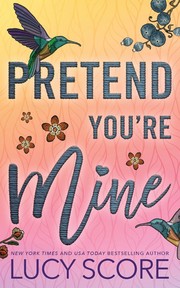
Pretend You're Mine
A broke stranger agrees to pose as a National Guard captain's girlfriend in Benevolence, Maryland, only to find his locked basement holds a grief that could…
2,260-word summary · 10 min read
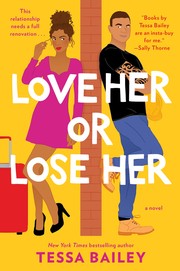
Love Her or Lose Her
Rosie Vega wants more from life than a perfume counter and a silent marriage, so she asks her stoic husband Dominic to try therapy.
2,433-word summary · 11 min read

The Next Always
A widowed architect restores an old hotel in Boonsboro and falls again for the bookseller across the street, in a warm small-town romance.
2,242-word summary · 10 min read
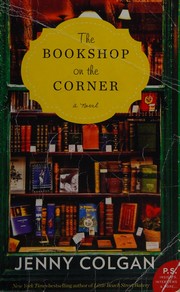
The Bookshop on the Corner
A Birmingham librarian loses her job, buys a van, and moves to the Scottish Highlands to run a mobile bookshop. Warm and bookish, with uneven pacing.
2,557-word summary · 11 min read
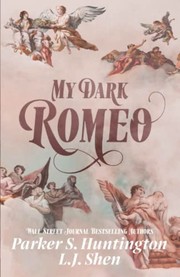
My Dark Romeo
A debutante ball kiss traps Dallas Townsend in a marriage to Romeo Costa, a man who wants her as leverage in a war against his father and her fiance.
2,530-word summary · 11 min read
The Ex Talk
Two rival public radio producers pretend to be exes for a dating show, then fall for each other while the lie grows.
2,389-word summary · 11 min read

Act Your Age, Eve Brown
Eve Brown crashes into a Lake District bed and breakfast, breaks the owner's arm, and talks her way into his kitchen. A grumpy-sunshine romance about work,…
2,474-word summary · 11 min read
There Are No Saints
Two rival artists circle a struggling San Francisco painter. Cole Blackwell wants her, Alastor Shaw wants her dead. Book one of the Sinners duet.
2,190-word summary · 10 min read

The Predator
Coder Morana Vitalio and mob enforcer Tristan Caine chase stolen software while a case of missing girls from twenty years back catches up with them both.
2,296-word summary · 10 min read
The Casanova
Kate Landon's boss is also the pen pal she falls for online, hiding behind fake names, until family secrets and a trip to Paris get in the way.
2,274-word summary · 10 min read

At First Sight
Jeremy and Lexie are married and expecting a baby when anonymous emails tell him the child may not be his.
2,317-word summary · 10 min read
True Believer
Jeremy Marsh, a science journalist who debunks paranormal claims, comes to a small North Carolina town and falls for a librarian who believes in things he…
2,125-word summary · 9 min read
Delilah Green Doesn't Care
Delilah returns to Bright Falls to photograph her stepsister's wedding and falls for Claire, a bookstore owner and single mother, while a cruel bet threatens…
2,315-word summary · 10 min read
The Kiss Thief
Promised to one man, taken by another, Francesca must choose in Chicago.
2,545-word summary · 11 min read