

Pretend You're Mine
2,260-word summary 10 min read 480 pages in the book
- First published
- 2015
- Publisher
- Bloom Books
- Pages
- 480
- ISBN
- 9781728282565
- Series
- Benevolence (#1)
Reading options
What's inside (9 sections)
I picked this up on the strength of a recommendation from a friend who said it was the fake-dating small-town romance that finally made her take Lucy Score seriously. The pitch does sound almost engineered to be ridiculous: a broke woman with nowhere to go agrees to pose as the girlfriend of an Army National Guard captain for one month, until his unit deploys to Afghanistan. What I found was a book much more interested in grief and in the damage people carry quietly than in its own premise. It first appeared in 2015, and the edition I read is the Bloom Books paperback reissue from September 2022, 480 pages long and the opening book of the Benevolence series. By the end I had been made to care about a locked basement room, a rescue dog, and a man who could not say three words to the woman he loved.
A wrong turn and a fight outside a bar
Harper Wilde is having the worst day of her adult life when the book opens. She walks in on her boyfriend and boss, Ted, with a delivery girl, and leaves with nothing but her car keys. She drives for hours convinced she is heading for her college roommate Hannah in Fremont, Maryland, but she goes the wrong way and runs out of gas outside Remo's, a bar in the tiny town of Benevolence. She has no phone, no money, and no idea where she will sleep.
In the parking lot she sees a large drunk man named Glenn Diller choking his girlfriend, Gloria. Harper jumps onto his back to pull him off, and Glenn punches her unconscious. Before things can get worse, Luke Garrison, a captain in the Army National Guard, breaks Glenn's nose and brings him down, and Deputy Ty Adler arrests him. When Harper comes to, she is immediately struck by Luke, and so is she by his sister Sophie, who tends bar at Remo's and is married to Ty. Sophie offers free drinks and then, with deliberate unhelpfulness, suggests every bad option for a place to stay. There is only one sensible offer left, and it comes from Luke: his house, which he bought out of his grandmother's estate and which is large and almost empty. They share the only bed. They behave, though the attraction is obvious, and that restraint sets the tone for a long stretch of the book.
The opening is doing a lot of work in a short space. We learn that Harper has old healed fractures from childhood that she refuses to discuss, that her parents died in a car crash when she was seven, and that she grew up in foster care. Lucy Score gives us a woman who can fight a man twice her size and who also flinches from questions about her own past. That combination is the whole character, and the rest of the novel is built around which half of it will win.
One month, one job, and a family that meddles
The arrangement comes from Sophie the next morning. Harper will pretend to be Luke's girlfriend, which will get his matchmaking relatives off his back, and in return she gets a temporary job at Garrison Construction and a roof over her head. The deal runs for one month, until Luke's unit deploys. It is a tidy premise, and the book is honest that it is a convenience for everyone involved. Luke needs his family to stop pushing women at him. Harper needs time to work out what she does next.
The Garrisons are a loud, warm, intrusive bunch, and Sunday dinner is where Harper wins them over. She also notices a homecoming photograph of Luke with a beautiful brunette and watches his mood change when she asks about it. He will not talk. That photograph is the first breadcrumb in a mystery the book takes its time unwrapping. At the office, meanwhile, Harper organizes years of neglected paperwork and earns the grudging respect of Frank Barry, a gruff longtime employee who has seen every temporary hire come and go. Luke, nudged by her presence, starts reconnecting with the family he had been keeping at arm's length.
I liked this stretch more than I expected. The workplace material gives the romance somewhere to breathe besides the house and the bar, and Frank Barry is a small, well-drawn creation. The family scenes also establish what Harper has never had, which is a table full of people who argue and still make room for you. For a woman who grew up in foster care, that is not background. It is the thing she is secretly asking for while insisting she does not need it.
Angel Eyes, a lake plunge, and a thunderstorm
The slow burn is handled well for a while. On a dinner date Luke and Harper dance to "Angel Eyes" by the Jeff Healey Band and share their first kiss, and then he pulls back and says he is not ready. A near-naked kitchen encounter a few days later costs him what restraint he had left. The town's charity lake plunge puts Harper in the arms of Lincoln Reed, a flirtatious fire chief, and Luke's jealousy finally gives him away. During a thunderstorm that evening, they consummate what has been building.
Afterward the book lets both characters show more of themselves. Harper tells Luke about cigarette burn scars left by an abusive foster father, and she brings home a rescue dog named Lola. Luke claims to be annoyed by the dog and is then seen running with her every morning. He also turns out to hold a lucrative patent he never mentioned, which leads Harper to confront his habit of withholding important things. They reconcile, and Harper says she thinks she loves him. Luke cannot say it back. Instead they agree to enjoy whatever time they have before he leaves.
This is the part of the book that works best on a first read. The physical tension is good, the banter has a snap to it, and small details like the morning runs with Lola do more to persuade me of Luke's feelings than any speech could. It is also where the cracks start to show. Luke's inability to say what he means is treated as attractive brooding for a long time before the story admits it is a genuine problem.
Stay
The week before deployment, Luke tells Harper at a farewell dinner that they will be parting ways. On deployment day she tells him she loves him, he boards the bus, and she drives off sobbing. Then a text arrives from him with a single word: "Stay." He explains that he wants a home to come back to, and Harper cancels her plans and commits to Benevolence.
During his six-month deployment the book shifts to the home front, and this is where it becomes a different, quieter novel. Harper turns the big empty house into something that looks lived in. She takes a waitressing shift at Remo's and grows close to Gloria and to Aldo Moretta, Luke's best friend and fellow guardsman. When Aldo is badly hurt by an IED, Harper sits with his mother through surgery alongside Luke's mother, Claire. Later it is Aldo, not Luke, who tells her that Luke dragged him out of the firefight under fire. That choice of who gets to tell the story matters. Luke does not report his own courage, and Harper has to learn it from someone else.
The threat storyline also starts here. Glenn Diller, out on bail, breaks into the house with a hunting knife during a girls' weekend, and Gloria knocks him out with a cast iron skillet. On the surface it is another attack on Harper. It turns out to be something organized and much uglier, and the book plants the connection carefully enough that the reveal later does not feel cheap.
The locked room in the basement
While clearing groundcover outside, Harper finds a locked basement room and finally opens the part of Luke's life he has kept hidden. Inside are photo albums of a relationship with a woman named Karen, from childhood through their wedding, and a letter saying Karen was pregnant. Newspaper clippings explain that Karen died in a head-on collision while driving to meet Luke's homecoming bus. The pregnancy was never made public.
Harper calls Sophie, who tells her that Karen's mother, Joni, blamed Luke at the funeral. Harper tracks Joni down, shows her the basement, and helps bring her back into the Garrison family's orbit. Luke returns early and is stunned to find Joni sitting with his family, and they have their first real conversation since the funeral. He then tells Harper something close to the cruellest thing in the book: he cannot love her, but he wants her.
On Thanksgiving the grief he has been sitting on erupts. Luke wakes from a nightmare in which Harper dies in the same crash and lashes out, telling her he does not love her and cannot replace Karen, and asking her to leave. Harper tries to warn him about a threatening letter from Clive Perry, the foster father who burned her, who is about to be released from prison. Luke cuts her off. She walks out, retreats to Joni's house, and submits her notice at work.
I found this section hard to read in a way that felt earned and also hard to read in a way that felt manipulative. Luke's pain is real, and a man who loses a wife and an unborn child in one moment would not be fine. But the novel asks Harper to do a great deal of emotional labour for someone who keeps refusing to speak plainly, and it lingers on his suffering long after I had sympathy to spare. This is the book's central gamble, and not every reader will take the bet.
Perry, a pair of sunglasses, and karaoke night
Once Luke finds Perry's letters among Harper's things, the story finally gives him something useful to do. He investigates with Ty and Detective Melissa Rameson, the officer who worked Harper's abuse case years earlier. Glenn confesses from jail that Perry paid his bail and sent him after Harper, which means the break-in was never really about Gloria. Luke then visits Perry in prison wearing sunglasses with a camera, goads him into confessing on video to planning Harper's murder, and secures a conspiracy charge that keeps Perry locked up for good.
The emotional resolution comes from other people. Aldo argues that a human heart can love more than one person. At Karen's grave, Joni tells Luke that Karen sent Harper to him, and warns that Harper is leaving on Saturday. On the eve of that departure, Sophie lures Harper to Remo's for karaoke night, where the whole town has gathered. In a run of musical dedications, Aldo and Gloria announce their engagement and ask Harper to be maid of honor, the Garrison family sings "We Are Family" in matching Christmas sweaters, and then Luke takes the stage and sings "Angel Eyes," the song from their first date, and tells the crowd that he loves Harper. He holds out his hand and she is lifted up to him.
At home he apologizes, reveals that he and Aldo have retired from the Guard, and promises that Perry will never threaten her again. Inside the house Harper sees two framed photographs: Karen laughing in sunshine, and the picture of Harper with her parents that she has carried her whole life, finally hung in a home. Luke gets down on one knee with an eternity band, and Harper says yes. In an epilogue set years later, they are at a Little League game with three adopted children, Robbie, Henry, and Ava, all formerly in foster care, and Harper is pregnant with a fourth. Robbie hits a home run and runs into Luke's arms, and Luke walks to Harper, kisses her, and says, "Let's go home."
What works, and what grates
The strongest material here is the found-family stuff and the slow accumulation of small domestic details. Score understands that a house becomes a home through repetition, through a dog's morning run and a framed photograph and a seat at a loud table. Harper's foster-care history gives the "pretend" arrangement real stakes, because she is not pretending to want a family so much as pretending she does not. The supporting cast, especially Sophie, Gloria, Aldo, and Frank Barry, frequently carries scenes that the central pair cannot.
The weaknesses are the same ones a lot of readers have pointed out. Kirkus called the book an uphill battle and complained of emotional whiplash, poor communication, toxic patterns, and lax boundaries between the leads, and that review is not unfair. There is a great deal of angst piled onto angst, and Luke's long refusal to say what he feels stretches well past the point where it reads as noble. The small town also has its share of misogynistic side characters, and the villains, Glenn and Perry, are blunt instruments rather than subtle ones. The final act pulls several threads together with a convenience that a more skeptical book would not get away with. I would hand this to a reader who enjoys big feelings and a slow burn and who can forgive a hero his worst moments. I would be cautious with a reader who wants two people to talk honestly before they get to the happy ending.
FAQ
Is Pretend You're Mine part of a series?
Yes. It is book 1 of Lucy Score's Benevolence series, first published in 2015 and reissued as a 480-page Bloom Books paperback in September 2022.
Who are the main characters in Pretend You're Mine?
Harper Wilde, a woman who grew up in foster care, and Luke Garrison, an Army National Guard captain about to deploy to Afghanistan. His sister Sophie, her husband Ty and guardsman Aldo Moretta round out the cast.
Does the book have a happy ending?
Yes, after a long detour through Luke's grief over his dead wife Karen and a threat from Harper's abusive foster father. Kirkus argued that the couple's poor communication makes that ending feel unearned.
Similar books
More from Benevolence first, then related titles.

At First Sight
Jeremy and Lexie are married and expecting a baby when anonymous emails tell him the child may not be his.
2,317-word summary · 10 min read

Delilah Green Doesn't Care
Delilah returns to Bright Falls to photograph her stepsister's wedding and falls for Claire, a bookstore owner and single mother, while a cruel bet threatens…
2,315-word summary · 10 min read

Lovelight Farms
Stella fakes dating Luka to save her Christmas tree farm.
2,584-word summary · 11 min read

All Rhodes Lead Here
Grieving Aurora moves to Colorado to fix a farmhouse, finding slow healing with her gruff older neighbor Tobias Rhodes.
2,249-word summary · 10 min read
The Last Letter
Ella trades letters with soldier Chaos, then her brother Ryan death brings Beckett to Telluride with a hidden name, sick Maisie, and a love tested by truth.
2,559-word summary · 11 min read
Hopeless
Fake engaged to town hero Beau Eaton, outcast bartender Bailey Jansen finds pretend and real blurring in Chestnut Springs.
2,491-word summary · 11 min read
Thank You for Listening
A former child star turned audiobook narrator takes a final romance job to help her grandmother, only to fall for the secretive voice reading opposite her.
2,148-word summary · 10 min read

The Fake Out
A guarded hockey physiotherapist agrees to fake date her team's captain to spite her cheating ex, and finds he has been paying attention to her for years.
2,345-word summary · 10 min read
Ten Tiny Breaths
Four years after a drunk-driving crash took her parents, boyfriend and best friend, Kacey flees to Miami with her sister and falls for a neighbor hiding a…
2,599-word summary · 12 min read
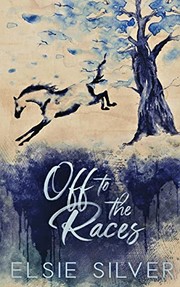
Off to the Races
A disgraced politician's daughter takes a job training a difficult racehorse at Gold Rush Ranch, where her new boss carries a family scandal of his own.
2,318-word summary · 10 min read

Love Her or Lose Her
Rosie Vega wants more from life than a perfume counter and a silent marriage, so she asks her stoic husband Dominic to try therapy.
2,433-word summary · 11 min read

The Next Always
A widowed architect restores an old hotel in Boonsboro and falls again for the bookseller across the street, in a warm small-town romance.
2,242-word summary · 10 min read
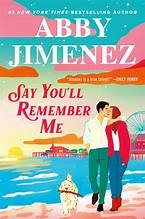
Say You'll Remember Me
A vet who writes off a sick kitten falls for the woman who saves it, then follows her into the hard, funny work of caring for a mother with dementia.
2,293-word summary · 10 min read
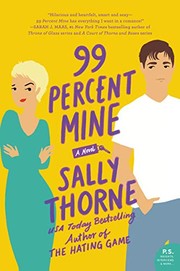
99 Percent Mine
Darcy Barrett has wanted her twin brother's best friend since she was eight. When they inherit their grandmother's cottage, Tom Valeska arrives with power…
2,391-word summary · 11 min read

The Bookshop on the Corner
A Birmingham librarian loses her job, buys a van, and moves to the Scottish Highlands to run a mobile bookshop. Warm and bookish, with uneven pacing.
2,557-word summary · 11 min read
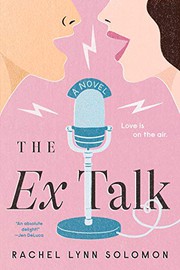
The Ex Talk
Two rival public radio producers pretend to be exes for a dating show, then fall for each other while the lie grows.
2,389-word summary · 11 min read

Act Your Age, Eve Brown
Eve Brown crashes into a Lake District bed and breakfast, breaks the owner's arm, and talks her way into his kitchen. A grumpy-sunshine romance about work,…
2,474-word summary · 11 min read

Two by Two
Sparks's twentieth novel turns from first love to a marriage breaking up: Russell Green loses his wife and his job, then rebuilds his life around his…
2,192-word summary · 10 min read

Indigo Ridge
A new police chief in a Montana town meets the founding family's eldest son in a bar, and one night later a body turns up under their cliff.
2,763-word summary · 12 min read
True Believer
Jeremy Marsh, a science journalist who debunks paranormal claims, comes to a small North Carolina town and falls for a librarian who believes in things he…
2,125-word summary · 9 min read

Juniper Hill
Fleeing New York with her baby, Memphis takes a housekeeping job above Knox Eden's garage, and the grumpy chef becomes the first person she can rely on.
2,021-word summary · 9 min read

Rule
A tattoo artist still grieving his twin and the polished girl who has loved him since she was thirteen finally collide one drunken night in Denver.
2,014-word summary · 9 min read
My Favorite Half-Night Stand
Millie, a criminology professor who has always been one of the guys, invents a secret dating profile and matches with her best friend Reid.
2,362-word summary · 10 min read
Take a Hint, Dani Brown
A viral rescue video turns a PhD student and a grumpy security guard into internet couple goals, and the fake relationship they build to keep the attention…
2,005-word summary · 9 min read

The Sky Is Everywhere
Lennie grieves Bailey while torn between Toby and Joe.
2,251-word summary · 10 min read
The Finish Line
Tobias King seeks forgiveness from Cecelia as the Ravenhood past closes in.
2,868-word summary · 13 min read
If Only I Had Told Her
Finn, Jack and Autumn speak after the crash that took one of them.
2,543-word summary · 11 min read
Everything We Keep
A widow questions her husband's death when a stranger claims his past.
2,307-word summary · 10 min read

The Simple Wild
City Calla flies to Alaska to face dying father and gruff pilot Jonah, learning bush life and love.
2,284-word summary · 10 min read

Secretly Yours
A bubbly Napa gardener sends anonymous love letters to her grumpy professor neighbor in this steamy small-town rom-com.
2,504-word summary · 11 min read