

The Fake Out
2,345-word summary 10 min read 448 pages in the book
- First published
- 2023
- Publisher
- Orion Publishing Co
- Pages
- 448
- ISBN
- 9781398724280
- Series
- Vancouver Storm (#2)
Reading options
What's inside (9 sections)
I picked this one up on a friend's recommendation, with fair warning that it was the second in a series and that I could read it on its own. The pitch on the author's own page is hard to resist if you have a weakness for this sort of thing: a pro hockey fake dating romance, a captain with a reputation, a physiotherapist with a grudge, and a cheating ex who has the bad luck to join the very same team. What surprised me was how much quieter the book is than that pitch suggests. Underneath the banter and the very considerable steam, there is a story about a woman learning to feel at home in her own body and a man finding out that being excellent at his job does not answer the question he is actually asking himself.
The Fake Out was first released on 7 December 2023, and the edition I read is the Orion paperback that followed in March 2024, 448 pages long. It is book two of the Vancouver Storm series, after Behind the Net, but Archer builds it so that you can come in cold. I had not read the first book and I never felt lost. The people from book one turn up, but they are supporting players here, not required reading.
A physio, a captain and a problem in a jersey
Hazel Hartley works as a physiotherapist for the Vancouver Storm. She is the older sister of Pippa, who was the centre of the first book, and she has been around this team long enough to know exactly how hockey players behave. She also has rules. She does not date hockey players, and she keeps a private rule that a one night stand is a once only arrangement with any given person. On paper she is the sensible one, sharp tongued and unimpressed by the usual charm. She spends her days in the treatment rooms, hands on about her work, and she has a goal that has nothing to do with the men in the dressing room: she wants to open a body positive yoga studio.
Rory Miller is the new captain, a top scorer in pro hockey, and a man who has been in love with Hazel since she tutored him in high school. He arrived in Vancouver with a reputation for arrogance and flirting, and the book takes a certain pleasure in letting you see what sits underneath it. Archer lists "golden retriever hero" and "boy obsessed" among the tropes on her site, which about sums up the shape of him. He teases Hazel relentlessly. He is huge and funny, and apparently incapable of walking past a shop without buying her something. Early on there is a game he helps win with a goal, and the win leaves him feeling an emptiness he cannot name. That emptiness is the real engine of his half of the story.
Then the ex arrives. Connor McKinnon cheated on Hazel, and the book is not gentle with him, and now he is a player on the same roster. Hazel is the person assigned to treat him, which puts her in a room with the one man she never wanted to see again. The arrangement that follows is impulsive. Hazel tells Connor she is dating Rory, and Rory, who needs a cleaner public image as captain, agrees to play along. Both of them get something out of it: she gets to look unbothered, and he gets to look settled. Every reader knows where this is heading, and the book is relaxed about that. The interest is in how the two of them get there.
The rules of a fake relationship
The fake dating in The Fake Out is less a grand romantic gesture than a piece of logistics. The two of them work out what the performance will look like, who knows about it, and which lines are not supposed to be crossed. Hazel keeps her distance at first, then finds that being seen with Rory has an effect on Connor that she rather enjoys. Rory, for his part, is hardly acting at all. The whole point of the arrangement for him is proximity to a woman he has wanted for years, and Archer is fairly open that he was never faking very much. The book's closing question, whether he was ever pretending, is not a serious mystery.
What makes the middle of the book work is an accumulation of small, specific things. Rory teaches Hazel to skate, which is a funny idea given how many years she has spent around hockey players and how determined she is to keep them at arm's length. He buys her clothes and lingerie with a generosity that is both ridiculous and part of the joke. There are scenes where the pair have to perform closeness for an audience, including a so called fake FaceTime call, and scenes where the performance stops and neither of them says anything about it. He sleeps in her bed. He talks her out of her once only rule. Hazel keeps telling herself the arrangement has an expiry date, and the story keeps giving her reasons to postpone it.
I liked that the book does not drag the secret out for hundreds of pages. The people who matter know almost at once, and the tension comes from Hazel's refusal to admit what is happening rather than from a misunderstanding that could have been cleared up with one honest conversation. That is a real relief in a genre that often runs on avoidable confusion. It is also the book's main limitation, in a way, because once you know where it is going, you are watching two people walk a very well marked path.
The dragon statues, and the turn
The detail that won me over is small. Rory calls Hazel a fierce fire breathing dragon, and he buys her a little stone dragon to keep near her while he is away on the road. Later he buys himself a matching one to carry with him. That is the whole argument for the character in one gesture. He is not buying her affection with a grand display; he is making sure they have the same object in two different places. It is goofy, and it made me take him seriously in a way his flirting alone never quite did.
The turn toward something real happens through ordinary invitations rather than dramatic ones. Hazel asks Rory to come home with her for Christmas, and his enthusiastic yes tells you more about his feelings than any speech could. Her family is part of the pleasure here. Her father is a devoted hockey fan who gets star struck by the players, and his return from the first book is handled with real warmth. Around the same time, Hazel starts admitting to herself that Rory sees parts of her that other people hurry past. He pays attention to what she actually wants, and he keeps showing up while she works out what to do with it.
By this stage the fake label has become a formality. The strength of the middle chapters is that the shift is built out of attention instead of a single dramatic kiss. There is a run of scenes where Rory does something thoughtful and Hazel has to revise her opinion of him, and the revisions feel earned because the gestures are so particular. He is a loud, teasing presence who turns out to be the quiet one in the moments that count. The chemistry carries a lot of this, and the book is unashamed of that, but the quieter beats are what made me care about the outcome.
What Hazel is carrying
Hazel's story is not only about a bad ex. Her mother was a ballerina who never got the break she wanted, and pregnancy with Hazel ended the professional career. She taught dance classes for years and never felt good about them, and now she talks about herself as too old and too large even to join a yoga class, though the book makes clear she is nothing of the sort. Hazel looks a great deal like her mother. When her mother says something harsh about her own body, Hazel hears it as a comment on the body they share, and the story follows that knot into Hazel's own ambitions and her relationship with her mother.
Her yoga studio idea gives the romance somewhere to go beyond the bedroom. That matters, because Rory's support is most valuable when he is helping her look at a space for the business and then letting her be the one to decide. He does not cure her insecurities or talk them away. The mother daughter material is the most serious writing in the book, and the readers who disliked it did so because it is uncomfortable, not because it is clumsy. One reviewer pointed out that the thread could have gone further, and I agree. Hazel's body image is the most interesting thing about her, and Archer keeps pulling back at the point where it starts to hurt. There is a content note worth passing on here, since the book deals with a mother's negative talk about her own body and the way a daughter absorbs it.
The book also gives Hazel a good sister in Pippa, whose relationship with Jamie is a stable, happy counterweight to Hazel's fears about trust. Those chapters work because they are ordinary. Nobody delivers a lecture about love. Hazel simply watches a couple who treat each other well and has to reckon with the fact that she wants something similar.
Rory's father and the cost of being good at something
Running alongside Hazel's storyline is Rory's argument with his own life. He is the top scorer in pro hockey and the captain of the team, and he is hollowed out by it. His father, Rick Miller, was a player with enormous expectations, and Rory has spent years being shaped by them. Archer is interested in the gap between the career other people wanted for him and the person he is becoming. Getting traded to Vancouver is meant to be a fresh start, but the emptiness follows him into the dressing room, and the book is patient enough to sit with that for a while.
The resolution comes through two relationships rather than one. With Hazel, Rory learns what it is to be with someone who is not measuring him by his points. With his father, there is a confrontation that opens slowly into a more honest understanding of what Rick wanted and what he regrets. His mother, Nicole, is another part of that repair, and the story handles both parents with more care than the usual sports romance villainy. Hazel is present for the reckoning too, and the book treats her presence as part of the work rather than as a prize for the hero. By the end Rory has chosen to be a different kind of captain, one who thinks about the team ahead of his own numbers, and the hockey material is at its best when it is doing that work instead of providing scenery.
The declaration, and how it all lands
The climax is public on purpose. In a pregame interview, Rory says outright that he loves Hazel and that he is staying with the Storm despite trade talk. It is a bold, slightly reckless move, and it sends Hazel rushing to the arena. The scene pays off the quieter work the book has done, because the declaration matters less as a grand romantic statement than as proof that he has stopped living for other people's expectations. Afterwards come the harder conversations with his parents, the studio space for Hazel's business, and the confession the two of them have been circling since the early chapters. Archer closes with a proposal, and it arrives without the standard third act breakup to make the reader earn it.
That structure is a genuine choice. The book is told in dual first person point of view, which gives Rory's longing a lot of room and lets the reader see how much he notices that Hazel assumes nobody sees. It also means the comedy lands well, since both characters are sharp about the other's nonsense. The author points readers toward Hayden and Darcy's story next, and there is enough set up here to make that appealing without turning this book into a thin advertisement for the following one.
Where it drags, and who it is for
I want to be straight about the limits. The plot is highly predictable, and the fake dating device does most of the work. If the idea of two attractive people pretending not to fall in love bores you, nothing here will change your mind. The spice is real but not extreme, and one reviewer who gave the series high marks put this book at about three out of five on heat, though others have rated it higher. A criticism worth repeating is that Hazel can feel thin next to Rory, whose difficult father and thematic weight give him more to play with. Her mother's story, which is the richest material on offer, is raised and then set down again. A piece in the Pitt News made exactly that complaint, and while I enjoyed the book more than that writer did, the point stands.
That said, I would hand it to a reader who wants a warm, funny hockey romance with a hero who pays attention and a heroine with a real grievance. I would be careful with anyone looking for a complicated psychological novel or a plot full of genuine surprises. What I got out of it was smaller and better than the pitch on the cover: two people performing versions of themselves for other people, and the relief of being seen by someone who has decided to look properly. The matching dragon statues are a silly detail, but they are the reason the ending convinced me.
FAQ
Do I need to read Behind the Net before The Fake Out?
No. The author says it can be read as a standalone, and the first book's characters appear here only as supporting figures.
What are the main tropes in The Fake Out?
The author lists boy obsessed, ex's rival, fake dating, forced proximity, a golden retriever hero, hockey and tattoos. The story uses dual first person point of view.
How steamy is The Fake Out?
It is a romance with real heat, but reviewers generally put the spice around three out of five rather than at the extreme end of the genre.
Similar books
More from Vancouver Storm first, then related titles.
The Dare
Dared to seduce Conor, Taylor fakes dating him and feels it turn real.
2,371-word summary · 11 min read
The Cheat Sheet
Best friends Bree and NFL star Nathan fake date for three weeks after her drunken confession goes viral.
2,401-word summary · 11 min read
Pretend You're Mine
A broke stranger agrees to pose as a National Guard captain's girlfriend in Benevolence, Maryland, only to find his locked basement holds a grief that could…
2,260-word summary · 10 min read
Off to the Races
A disgraced politician's daughter takes a job training a difficult racehorse at Gold Rush Ranch, where her new boss carries a family scandal of his own.
2,318-word summary · 10 min read
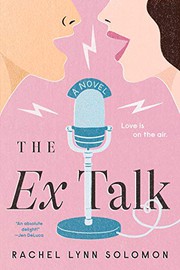
The Ex Talk
Two rival public radio producers pretend to be exes for a dating show, then fall for each other while the lie grows.
2,389-word summary · 11 min read
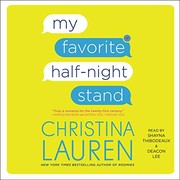
My Favorite Half-Night Stand
Millie, a criminology professor who has always been one of the guys, invents a secret dating profile and matches with her best friend Reid.
2,362-word summary · 10 min read
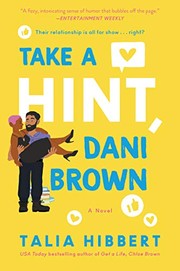
Take a Hint, Dani Brown
A viral rescue video turns a PhD student and a grumpy security guard into internet couple goals, and the fake relationship they build to keep the attention…
2,005-word summary · 9 min read

Lovelight Farms
Stella fakes dating Luka to save her Christmas tree farm.
2,584-word summary · 11 min read
Kulti
Pro soccer player Sal Casillas gets childhood idol Reiner Kulti as assistant coach, and a tense season turns into slow friendship.
2,544-word summary · 11 min read
Fix Her Up
Party clown Georgie fakes a romance with ex ballplayer Travis to earn respect, and their act turns real in Port Jefferson.
2,368-word summary · 11 min read
Hopeless
Fake engaged to town hero Beau Eaton, outcast bartender Bailey Jansen finds pretend and real blurring in Chestnut Springs.
2,491-word summary · 11 min read
A Not So Meet Cute
A broke woman poses as a billionaire's pregnant fiancee and falls for him.
2,888-word summary · 13 min read

The Right Move
Grumpy ball star and sunny flight attendant fake date for cameras and keep every rule but one.
1,995-word summary · 9 min read
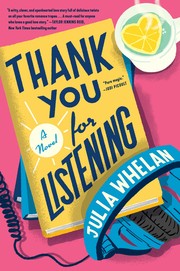
Thank You for Listening
A former child star turned audiobook narrator takes a final romance job to help her grandmother, only to fall for the secretive voice reading opposite her.
2,148-word summary · 10 min read

Kiss the Sky
Rose Calloway signs her family up for a reality show to save her fashion line, and her old rival Connor Cobalt keeps pace.
2,178-word summary · 10 min read

In Flight
A first class flight attendant loses her composure over a billionaire hotel owner with turquoise eyes, and neither of them is as unbroken as they look.
2,187-word summary · 10 min read
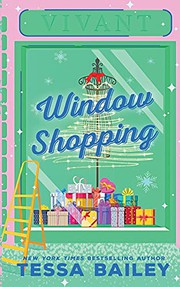
Window Shopping
Two weeks before Christmas, an ex-convict with an eye for design insults a department store window and ends up hired by its cheerfully relentless manager.
2,049-word summary · 9 min read
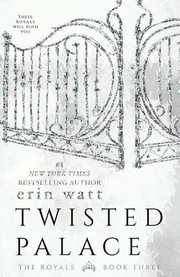
Twisted Palace
Twisted Palace closes The Royals with Reed accused of murder and a father back from the dead. Ella fights to clear his name while the family finally acts like…
2,303-word summary · 10 min read
The Wrong Bride
In Catharina Maura's Windsors opener, model Raven Du Pont takes her absent sister's place at the altar beside billionaire Ares Windsor, the man she has…
2,397-word summary · 11 min read

The Favorites
A modern retelling of Wuthering Heights set in competitive ice dance, told through a champion skater's memoir and the transcripts of a documentary about her…
2,207-word summary · 10 min read
Ten Tiny Breaths
Four years after a drunk-driving crash took her parents, boyfriend and best friend, Kacey flees to Miami with her sister and falls for a neighbor hiding a…
2,599-word summary · 12 min read
Roomies
A Broadway archivist with a crush on a subway busker marries him to solve his visa problem, and finds the roommates arrangement harder to keep practical than…
2,030-word summary · 9 min read
One with You
The final Crossfire novel finds Eva Tramell and Gideon Cross secretly married and fighting to stay that way, as old trauma, a tell-all book, and a dangerous…
2,344-word summary · 10 min read
Love Her or Lose Her
Rosie Vega wants more from life than a perfume counter and a silent marriage, so she asks her stoic husband Dominic to try therapy.
2,433-word summary · 11 min read
Game On
Tyler Neumann blackmails tattoo artist Stella McCormick into fake dating as a route to his father, and this trilogy closer turns revenge into something harder…
2,395-word summary · 11 min read
Daydream
A bookish junior tutors a hockey captain in exchange for dating lessons, with one rule: do not fall in love. Daydream finally gives Henry Turner his own Maple…
2,611-word summary · 12 min read
Betting on You
Bailey and Charlie clash on a flight to Omaha over whether guys and girls can be friends. Three years later, a wager at a waterpark changes everything.
2,293-word summary · 10 min read

Beautiful Oblivion
Cami tends bar and keeps her long distance boyfriend a secret, until a night at the Red Door puts Trenton Maddox in her way.
2,322-word summary · 10 min read