
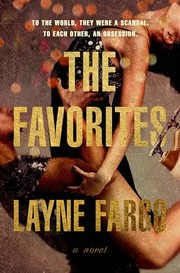
The Favorites
2,207-word summary 10 min read 448 pages in the book
- First published
- 2025
- Publisher
- Random House
- Pages
- 448
- ISBN
- 9780593732045
Reading options
What's inside (9 sections)
Two voices telling the same story
The book has an unusual shape. Katarina Shaw tells her own story in the first person, and between her chapters come transcripts from a fictional 2024 documentary called The Favorites: The Shaw & Rocha Story. In those transcripts, bloggers, officials, rivals and former friends offer their versions of what happened. The effect is that nothing is ever settled. Kat says one thing, and a documentary participant says another, and the reader is left to decide which account to believe. It is a smart way to write a book about a sport in which every performance is judged and every score is disputed.
Layne Fargo published this in January 2025, and it runs to 448 pages in the hardcover. It is a sports romance and a modern retelling of Wuthering Heights, though the parallel is looser than the marketing sometimes suggests. Kat is Catherine, Heath Rocha is Heathcliff, and the obsessive, destructive quality of their bond is the point of comparison. What Fargo adds is the world of competitive ice dance, which she writes about with enough technical detail to make the skating feel like work rather than decoration.
I picked it up because the structure appealed to me. A documentary that dissects a famous partnership, with talking heads contradicting the protagonist, is a very contemporary way to tell an old story. The book is about people who become a public narrative, and about the difference between what happened and what the cameras decided it meant.
The rink in Lake Forest
Kat and Heath are both orphans. They grow up poor in Lake Forest, Illinois, skating together at the local rink. Kat is driven by the example of Sheila Lin, an Olympic champion whose performances she watches obsessively. Heath, a foster child, is driven by something narrower and less healthy: his attachment to Kat. He does not want to be a champion the way she does. He wants to be necessary to her.
That asymmetry is the engine of the book. Kat wants out, and out means skating. Heath wants Kat, and skating is the way he stays close to her. For a while the two wants line up, and they are magnificent together. When they align less well, the partnership becomes a form of torture for both of them. Fargo is very good on the way a childhood bond can be both a lifeline and a trap. They have known each other so long that they cannot imagine a self outside the pair.
At the 2000 Nationals in Cleveland they place sixth, which is not a medal but is enough. Sheila Lin notices them and invites them to her academy in Los Angeles. There they meet her privileged twins, Bella and Garrett. Sheila is a formidable, manipulative figure who understands exactly what she has found and exactly how to use it. She sees the talent and the hunger, and she sets about turning both into a machine. The academy sections are the most enjoyable part of the book, partly because Fargo is clearly interested in the economics and politics of the sport. Talent is not enough. You need a coach, a patron, a narrative, and Sheila supplies all three while keeping a firm hand on the levers.
The book takes its time getting them to Los Angeles, and that time is well spent. Fargo writes the rink in Lake Forest as a place with its own economy of hope. It is cold, it is expensive, and it is full of parents who believe their children are special. Kat and Heath are the two kids nobody is paying much attention to, which gives them a freedom the other skaters do not have. They skate because there is nowhere else they would rather be. When Sheila Lin watches them at Nationals and sees something, the invitation feels less like a discovery than like a door opening onto a room they have been staring at for years.
Sheila herself is the most interesting adult in the book. She has built a career on identifying hunger in young people and directing it, and she understands that Kat and Heath have different kinds. Kat's is clean and ambitious. Heath's is desperate and directed at a person rather than a goal. Sheila knows how to use both. The twins, Bella and Garrett, grow up inside that machinery, privileged and damaged in their own ways, and the book is smart enough to give them lives beyond their function as obstacles.
Fourteen years of breaking apart
The middle of the book covers fourteen years in which Kat and Heath repeatedly separate and reunite. Heath walks out after Kat tells him he is holding her back. Kat skates with Garrett, Sheila's son, which is both a professional choice and a way of wounding Heath. Heath resurfaces three years later, trained by Sheila's rival Veronika Volkova in Russia, refusing to explain where he has been. Sheila manipulates all of them throughout, moving partners and allegiances like pieces on a board.
This is where the Wuthering Heights structure becomes visible. The separations are never final, and the reunions are never peaceful. Each character returns to the other with a new grievance and the same underlying need. Fargo is at her best when she writes the specific cruelty of people who know exactly where to press. Kat knows what to say to make Heath feel disposable. Heath knows what to say to make Kat feel that every achievement is his doing too. Their fights are not generic romantic conflict. They are the arguments of two people who built a shared identity as children and have been fighting over the ownership of it ever since.
The documentary transcripts do important work here. A blogger will describe a scene one way, and Kat's chapter will describe it another. An official will talk about a judging controversy as a matter of scoring, while Kat remembers it as a betrayal. The reader comes to understand that the public story of the Shaw and Rocha partnership is a collage of interested accounts, none of them complete. This is the book's most successful idea, and it makes the sports material more than a backdrop. A sport in which everything is measured is still a sport in which nothing is agreed about.
I want to say something about Heath, because the critics had a point even though I liked the book. He is written as a force more than a person for long stretches. Fargo gives him the cultivation of a champion and the emotional registers of a wounded animal: sullen, possessive, explosive, then suddenly tender. The Russian years with Veronika Volkova are handled in a few pages, which is a shame because that period should have been fascinating. When he refuses to explain where he has been, the refusal functions as mystery rather than character. He comes back harder and more beautiful, which is the least interesting thing a romance can do to a man.
What rescues him, for me, is the documentary frame. Because other people are always talking about him, the gaps in his account become visible. He is a version of himself assembled by Sheila, by Veronika, by bloggers, by Kat and by the documentary's producers. Whether there is a person underneath is the question the book keeps asking without fully answering it. That is more interesting than the Heathcliff correspondence, which mostly sits on the surface.
The collision and the child
Two events change the shape of the story. The first is a collision at the 2006 Nationals that costs them Olympic selection. It is the kind of moment that defines a sports biography, the one disaster that every later account returns to. In the documentary transcripts, people argue about whose fault it was. In Kat's account, the blame is less interesting than what the failure did to them. They were a pair who believed their talent made certain outcomes inevitable, and the collision taught them that the world did not owe them anything.
The second event is Bella's revelation that she is pregnant with Heath's child. This is the part of the retelling that pushes hardest against the Wuthering Heights parallel, because it introduces a next generation into a story about two people who never grew up. Heath's response to the pregnancy is one of the moments when he is most legible as a person rather than a force. He does not want to be a father in the way Bella expects, but he cannot bring himself to walk away from the child either. The book handles this with less attention than the skating, which is a missed opportunity.
Sochi
The climax arrives at the 2014 Sochi Games. Francesca Gaskell, a rival, sabotages their final skate by swapping Heath's approved painkillers for a banned drug. He coughs blood after a gold-medal performance. It is a shocking scene and Fargo writes it with the right combination of horror and outrage. The audience sees a triumph. The people on the ice know something is terribly wrong.
A hearing strips them of the medals. It is the public humiliation the whole book has been moving toward, and it is administered by people who treat the athletes as problems to be processed. Then Kat declines to appeal. Her reasoning is that she does not need medals to feel like a champion. That decision is the closest thing the novel has to a moral center. After hundreds of pages of people judging them, scoring them, ranking them and explaining them in documentaries, Kat refuses the framework. She walks away from the thing everyone assumed she wanted most.
I found the Sochi sequence genuinely gripping, and the decision to decline the appeal felt earned rather than pious. Kat has spent her life being told what a champion looks like by Sheila Lin, by coaches, by judges and by the documentary. At the end she is the one who decides what the word means.
The ending
The book closes with Kat and Heath reunited in Illinois. Bella runs a skating school and is raising their daughter, Mei. The pair who could never grow up are finally living in a world where someone else's childhood is being shaped around them. It is a gentle ending for a novel that has been so fierce, and it works because it is modest. There is no grand final performance, no last-minute vindication. They simply stop fighting the same fight.
Reception was sharp. Publishers Weekly called the book overly long, sunk by repetitive interpersonal drama and a foggy Wuthering Heights parallel. Kirkus found the characters stereotype-driven and described Heath as a furious cipher. Both criticisms identify real problems. The book does go on longer than it needs to, and the middle section repeats the same fight with different partners often enough that the rhythm dulls. The Wuthering Heights connection is sometimes asserted more than explored. You can read a great deal of the novel without needing to know the Brontë book at all, which is fine, but the marketing promises a tighter correspondence than the text delivers.
There is also a question about the book's length that is hard to ignore. Four hundred and forty-eight pages is a great deal for a story that could have been told in three hundred. The fourteen-year span gives Fargo room to show many seasons of the same argument, but after a while the separations begin to feel interchangeable. Each one has a different trigger, a different partner and a different city, but the emotional shape is the same, and the reader learns to recognize the beats before they arrive. The documentary transcripts help vary the texture, but they cannot entirely fix a structure that keeps returning to the same confrontation.
What works
The documentary structure is the strongest thing here, and it does more than provide variety. It makes the reader complicit in the same act of judgment the athletes are subjected to. We watch them the way the documentary audience watches them, collecting versions of the truth and deciding who to believe. By the end, Kat's refusal to appeal feels like a refusal of the reader's position too. She will not perform championship for us.
Fargo also understands that athletic partnerships are intimate in a way that ordinary romances are not. Two people who skate together are physically entwined in public, trusted with each other's bodies, and evaluated as a single entity. The emotional complications of that arrangement are fascinating, and the book makes the most of them. The training montages, the competitions, the judging scandals and the sponsorship politics all feel like a real world rather than a backdrop for a love story.
I finished it wanting a tighter book, but I finished it caring about these people. That is a decent trade. The best parts, the documentary voices and the skating and the final refusal, are good enough that the repetition is forgivable. If you like sports romances with a literary apparatus and a willingness to make the leads unpleasant to each other, this delivers. If you want a clean, short Wuthering Heights retelling, the length and the mess will get in your way.
FAQ
Is The Favorites a retelling of Wuthering Heights?
Yes, loosely. Kat and Heath echo Catherine and Heathcliff in their obsessive, destructive bond, but the book is set in competitive ice dance and Publishers Weekly found the parallel foggy rather than fully developed.
What is the documentary in the book?
It is a fictional 2024 film called The Favorites: The Shaw & Rocha Story. Its transcripts give bloggers, officials and rivals the chance to contradict Kat's own account of what happened.
Why does Kat refuse to appeal the medal decision?
After the Sochi doping sabotage strips them of their gold, she decides she does not need medals to feel like a champion. It is her refusal to keep performing for the people who have judged her throughout the book.
Similar books
Ugly Love
Colleen Hoover's Ugly Love retold: Tate and Miles, the rules, the past with Rachel, and the lake letter.
2,339-word summary · 10 min read
It Ends with Us
It Ends with Us from Lily's flower shop to her marriage: alternating past and present, Ryle's cycles of violence, and why the ending refuses a clean romantic…
2,381-word summary · 11 min read

Kiss the Sky
Rose Calloway signs her family up for a reality show to save her fashion line, and her old rival Connor Cobalt keeps pace.
2,178-word summary · 10 min read
Wake
Seventeen-year-old Janie Hannagan is pulled into other people's dreams whenever they sleep near her. A nursing-home job, a secretive boy and a drug bust give…
2,488-word summary · 11 min read
Twisted Palace
Twisted Palace closes The Royals with Reed accused of murder and a father back from the dead. Ella fights to clear his name while the family finally acts like…
2,303-word summary · 10 min read
Theft
Gurnah traces three linked lives in Tanzania, where a servant's accusation of theft opens a family history of love, duty and quiet betrayal.
2,454-word summary · 11 min read
The Fake Out
A guarded hockey physiotherapist agrees to fake date her team's captain to spite her cheating ex, and finds he has been paying attention to her for years.
2,345-word summary · 10 min read
The Art of Hearing Heartbeats
When a New York lawyer vanishes, his daughter follows an old love letter to Burma, where a stranger narrates the story of the father she never knew.
2,950-word summary · 13 min read
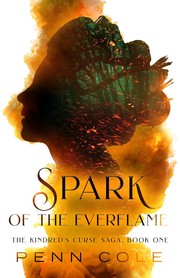
Spark of the Everflame
A village healer stops taking the powder that keeps her strange powers quiet. After a dying king names her his heir, Diem Bellator faces a choice between a…
2,293-word summary · 10 min read
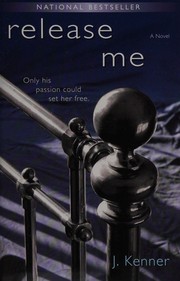
Release Me
A guarded engineering graduate newly arrived in Los Angeles is used as bait at an art gala, then offered a million dollars to pose for a powerful man's private…
2,070-word summary · 9 min read
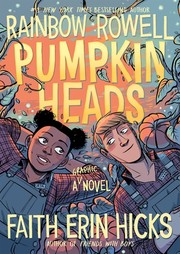
Pumpkinheads
Deja and Josiah have worked the Succotash Hut together every autumn. On their last Halloween shift, she pushes him to chase a crush and they discover something…
2,409-word summary · 11 min read
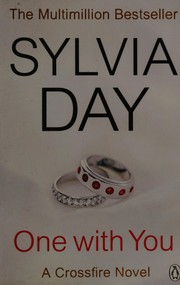
One with You
The final Crossfire novel finds Eva Tramell and Gideon Cross secretly married and fighting to stay that way, as old trauma, a tell-all book, and a dangerous…
2,344-word summary · 10 min read
On the Island
A Chicago teacher and her teenage student survive a seaplane crash in the Maldives and build a life on an uninhabited island, in a romance that gets harder…
2,171-word summary · 10 min read
Off to the Races
A disgraced politician's daughter takes a job training a difficult racehorse at Gold Rush Ranch, where her new boss carries a family scandal of his own.
2,318-word summary · 10 min read
Just One Day
A carefully planned European tour unravels when a Dutch actor takes Allyson to Paris for one day and vanishes, leaving her a year of searching for answers.
2,561-word summary · 11 min read
Impulse
Three teenagers in a Reno residential hospital tell in free verse how they arrived there after suicide attempts and what recovery costs.
2,030-word summary · 9 min read
Heart the Lover
Lily King's seventh novel revisits a 1980s college love triangle thirty years on, as a woman who once gave up a baby decides what to tell the lover who never…
2,441-word summary · 11 min read
Girls in Pants: The Third Summer of the Sisterhood
The four friends face their last summer before college, with art school, an old flame, a guilty conscience and a new baby in the balance.
2,382-word summary · 11 min read
Brida
A young Irishwoman convinced she has a spiritual Gift seeks out a forest Magus and a Dublin witch, and learns that her gift is to bridge the visible and…
2,012-word summary · 9 min read

Beautiful Oblivion
Cami tends bar and keeps her long distance boyfriend a secret, until a night at the Red Door puts Trenton Maddox in her way.
2,322-word summary · 10 min read
Today Tonight Tomorrow
On the last day of senior year, academic rivals Rowan Roth and Neil McNair team up for a citywide Seattle scavenger hunt and start seeing each other…
2,233-word summary · 10 min read
The Rom-Commers
A stalled screenwriter leaves her Texas caretaker life for six weeks in Los Angeles to fix a famous writer's terrible rom-com script, and finds far more than a…
2,356-word summary · 10 min read

The Next Always
A widowed architect restores an old hotel in Boonsboro and falls again for the bookseller across the street, in a warm small-town romance.
2,242-word summary · 10 min read
Tell Me Three Things
A grieving Chicago teen lands in her new stepfamily's Los Angeles mansion, then gets anonymous emails promising to guide her through a brutal private school.
2,292-word summary · 10 min read
Say You'll Remember Me
A vet who writes off a sick kitten falls for the woman who saves it, then follows her into the hard, funny work of caring for a mother with dementia.
2,293-word summary · 10 min read

What Happened to Goodbye
Mclean has reinvented herself in four towns since her parents divorced. In Lakeview she uses her real name, and for the first time staying put becomes a choice.
2,796-word summary · 12 min read

The Japanese Lover
A Polish refugee and the son of a Japanese gardener fall in love in San Francisco in 1939, then keep the affair secret for nearly seventy years.
2,286-word summary · 10 min read
Alone With You in the Ether
Two people in Chicago agree to six conversations, and the experiment becomes a love affair that is also a study of bipolar disorder, obsession, and the shape…
2,713-word summary · 12 min read

Dumplin'
Willowdean Dickson enters her town's beauty pageant as a protest and discovers that confidence is harder to keep once she lets someone close.
1,922-word summary · 9 min read
Reason to Breathe
Emma Thomas is a star student with a careful, invisible life at home. Evan Mathews notices the cracks, and the novel follows what happens when kindness gets…
2,197-word summary · 10 min read