
Pumpkinheads
2,409-word summary 11 min read 224 pages in the book
- First published
- 2019
- Publisher
- First Second
- Pages
- 224
- ISBN
- 9781626721623
Reading options
What's inside (8 sections)
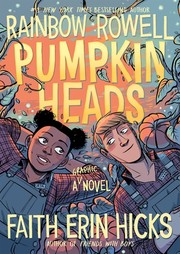
I picked this up on a whim in late October, expecting the kind of book Rowell is known for, which usually means sharp, a little bruising, and full of teenagers who notice everything about each other. What I got instead was a warm, silly, beautifully drawn story about two kids stirring lima beans in a cauldron. It is her first graphic novel, drawn by Faith Erin Hicks with colors by Sarah Stern, and it came out from First Second on August 27, 2019. At 224 pages it is the sort of book you can finish in a single sitting, and I finished it in about an hour and a half with a stupid grin on my face.
The thing that surprised me most is how much of the feeling lives in the art. Rowell's prose is economical here, because a graphic novel gives a writer less room to explain, and Hicks picks up the slack. A glance, a slump of the shoulders, the way Josiah's face changes when he talks about the girl he likes, all of that is carried by the drawings. I want to be honest up front that this is a comedy about two people who care about each other, and that its stakes are deliberately small. If you want the ache of Eleanor & Park, this is not that book. It is something lighter, and it knows it.
Two lifers at the Succotash Hut
Deja and Josiah have worked at the same place every autumn since they started high school. The place is DeKnock's World Famous Pumpkin Patch and Autumn Jamboree, somewhere outside Omaha, Nebraska, and the book takes pains to insist that this is the best pumpkin patch in the whole wide world. That claim is part of the joke and part of the truth, because for these two it really is the center of the year. They say goodbye every Halloween and get back together every September first. Their whole friendship runs on that rhythm.
By the time the book opens they are seniors, and this is their last season. After Halloween there is no coming back in September. Graduation is coming, college is coming, and, as Josiah points out, college does not send you home for Halloween break. He has been the most valuable pumpkin patch person, the MVPPP, in almost every month he has worked there. He loves the place with a stubborn loyalty. He loves the lima beans, apparently, or at least he loves stirring them in the big caldron at the Succotash Hut, which is the stand he and Deja have run together for three years.
Josiah wants to spend their last night sad about it. Deja will not let him. She is the one with the energy in this pairing, the one who decides that a melancholy shift is a waste of a perfectly good last night. She has a plan, and the plan involves walking away from the Succotash Hut for a few hours and taking a tour of everything the patch has to offer. They will see the sights. They will eat the snacks. And, most important, Josiah will finally work up the nerve to talk to the girl he has been quietly admiring for three years.
That girl works at the Fudge Shoppe, and Josiah calls her the Fudge Girl because he has never actually said a word to her. Deja has made it her mission to fix that. The first clever move is a switch: she convinces the people at the Pie Palace, across from the Fudge Shoppe, to trade stations with them for dinner time. Now Josiah is standing at a post where he can see his crush, with Deja beside him pushing him to go over and say something. It is a small scheme, and it is the engine of the whole book. Everything that follows grows out of Josiah's nerves and Deja's refusal to let him sit still.
The tour begins, and nothing goes to plan
The trouble is that the Fudge Girl is never where they expect her to be. By the time Josiah gets free and heads down to the Fudge Shoppe, she has moved to the S'mores Pit. When they get to the S'mores Pit, somebody tells them she is at the Kettle Corn Kettle. At the Kettle Corn Kettle they learn there are two Kettle Corn Kettles, and she has left for the last hayride. The chase becomes the shape of the night. Rowell keeps moving the target just out of reach, and Hicks draws the two of them plunging through crowds and around corners with the loose, cheerful energy of a cartoon.
I enjoyed this section more than I expected to, mostly because the detours are the point. Each stand they visit is a little comic set piece. At the S'mores Pit they make s'mores and end up talking about the first time they met and started working together, which is the book quietly reminding you that these two have a history longer than any crush. At the Pie Palace they grab a Freeto Pie. There is a Pumpkin Bomb Stand, and a Pappy's Apples, and a Tour de Pumpkin go-cart track that they use as a shortcut. A corn maze, a petting zoo, a haunted house, and a mini train all get their moment. The patch is built as a place you could wander for hours, and the book wanders all of it.
Running through the chaos is a ram named Buck. Buck has escaped from the petting zoo and is charging around the grounds, and the staff spend the evening trying to catch him while he terrorizes visitors. He turns up again and again, which gives the book a running gag that never quite stops being funny. There is also a bratty little kid who steals Deja's candy apple, and another kid who makes a cruel joke about Deja's weight, at which point Josiah steps in and defends her without hesitation. That moment matters more than the ram, I think, because it shows you exactly what kind of friend he is. He is shy about his own feelings, but he is not shy about standing up for her.
Deja keeps running into people from her past, too. There is an ex named Jess, and another ex named Tim near the corn maze, and the encounters are awkward in the way that only encounters with old flames at a Halloween attraction can be. These scenes could have felt like padding, but they do a job. They tell you that Deja has a history outside this patch and that she is not as carefree as she looks. One of the sweetest lines in the book comes when she tells Josiah that every single year she asked to be assigned to work with him. He was not stuck with her. She chose him, over and over, and she is telling him this now because the choosing is about to end.
A crush that does not survive the night
When Josiah finally reaches the girl, the confrontation is nothing like the fantasy. He has imagined this conversation for three years, and now that it is happening he can barely get the words out. Her name is Marcy, and she is kind about it, but she lets him down gently. She does not see him that way. Worse, or better, she tells him she actually dislikes the pumpkin patch and only took the job to be with her friends. The object of his devotion, it turns out, does not even like the place they have both been loyal to for years.
This is the moment the book has been building toward, and I like how understated it is. There is no humiliation, no cruel rejection, no public disaster. Josiah is disappointed, and he handles it with a grace that surprised me. He got up the nerve, he said what he needed to say, and the world did not end. Rowell is interested in the relief that follows a risky thing, not the sting of failure. Marcy being someone who merely tolerates the patch also lets Josiah see his own attachment more clearly. He was in love with an idea of her, an idea that had grown in the same soil as his love for this place. When the idea goes away, the place is still there, and so is Deja.
A lost little girl shows up near the end as well, and the two of them help her find her mother. It is one of those small, decent interruptions that remind you what kind of story this is. Nobody is in real danger. Buck the ram eventually turns his attention to the candy apple thief, which settles that particular score, and the patch winds down around them. Josiah and Deja walk the emptying grounds as the lights go out, and the sadness he felt at the start has changed shape. He is not dreading the goodbye anymore. He is thinking about what comes next.
The person who was there all along
The ending is a first kiss, and I want to be clear that it arrives without any of the heaviness you might expect. Josiah asks Deja out, and they kiss while she is eating a Pumpkin Bomb, which is vanilla ice cream sandwiched between two slices of pumpkin pie and covered in chocolate. He admits that Marcy was never who he thought she was, and that he is over the crush. He also realizes, in a way that feels earned rather than sudden, that Deja is the person who has understood him through all of it. She pushed him to be brave, stood up for him and with him, and asked to work beside him every year. The new mission he makes at the end is to make the rest of the night, and whatever comes after it, count.
Romance between best friends is a familiar setup, and Rowell does not pretend otherwise. What makes it work here is the patience of it. These two have three years of shared shifts behind them, and the book has spent its whole length showing rather than telling you how they talk to each other. The kiss lands because the friendship was already whole. It is less a dramatic confession than an acknowledgment of something that had been there the whole time, and Hicks draws it with a warmth that keeps it from feeling like a reward the plot owed them.
There is a line in here about true love trumping lima beans, and it made me laugh out loud. That is a fair description of the book's whole attitude. It is willing to be corny. It loves puns and snack food and a ram named Buck and the specific, silly pride of being the most valuable pumpkin patch person. I found that charming, though I can see how a reader looking for more edge would find it too sweet by half. Rowell's other young adult novels lean toward darker themes and misfits, so this one is a deliberate change of register. It is a Halloween candy book, and that is both its strength and its limit.
What the collaboration gets right
A graphic novel lives or dies on the partnership between the writer and the artist, and this one is unusually well matched. Rowell keeps the script light on explanation, trusting Hicks to supply the expression and the timing. Hicks, who won an Eisner Award, draws faces that are quick to read and bodies that move with real momentum, and Sarah Stern's colors give the patch that orange and gold autumn glow without making it sticky. The panels are easy to follow even in the busy crowd scenes, which is not always the case in comic work aimed at younger readers.
The pacing is another thing I appreciated. The book moves fast from stand to stand, but it keeps finding places to stop. A quiet conversation at the S'mores Pit, a serious moment when Josiah talks about not wanting the tradition to end, the walk through the closing grounds, all of it has room to breathe. That balance is hard to strike in a short comic, and it is the reason the emotional beat at the end does not feel bolted on.
For all that, there are things I would change. The running jokes, especially Buck, keep coming after you have got the point, and a few of the food gags wear out before the book does. Some of the ex-boyfriend encounters feel like they are there mainly to fill out the tour. The romance is so gentle and so free of real obstacles that it never generates much tension, and if you need a story with friction you will probably find this one too easy. The book also assumes you will find the idea of a pumpkin patch charming on its own, which might not land for everyone. These are small complaints about a small book, and none of them spoiled my time with it.
Who I would hand it to
I would give this to a teenager who wants a romance that is funny and kind, or to any reader who wants a graphic novel that does not take itself too seriously. It is short, it is full of autumn food, and it has a big heart without asking for anything heavy in return. The age range on the publisher's page is fourteen and up, though the New York Times review suggested it for twelve and up, and I think either is fair. There is nothing here that would trouble a younger reader.
I would be careful with someone who only knows Rowell from her heavier books and expects the same weight here. That is not the deal. Pumpkinheads is about a last night at a pumpkin patch, two best friends, a crush that goes nowhere, and a kiss over a pumpkin pie ice cream sandwich. It is about how scary it is when a routine you love comes to an end, and how the people you do that routine with matter more than the routine itself. It says all of that with a light hand and a lot of Halloween candy, and for me that was exactly enough. I closed it glad I had spent the evening at DeKnock's, even if I was reading about it from a couch in October.
FAQ
Is Pumpkinheads a novel or a graphic novel?
It is a graphic novel, Rowell's first, with art by Faith Erin Hicks and colors by Sarah Stern. First Second published it on August 27, 2019, and it runs 224 pages.
Do Deja and Josiah end up together?
Yes. After Josiah's crush on the Fudge Girl fizzles, he realizes how much Deja means to him, and the two share a first kiss over a Pumpkin Bomb near the end of the book.
Is Pumpkinheads suitable for younger readers?
First Second lists an age range of fourteen and up, while the New York Times review suggested twelve and up. It is a gentle, funny story without heavy content.
Similar books
Impulse
Three teenagers in a Reno residential hospital tell in free verse how they arrived there after suicide attempts and what recovery costs.
2,030-word summary · 9 min read
Girls in Pants: The Third Summer of the Sisterhood
The four friends face their last summer before college, with art school, an old flame, a guilty conscience and a new baby in the balance.
2,382-word summary · 11 min read
Today Tonight Tomorrow
On the last day of senior year, academic rivals Rowan Roth and Neil McNair team up for a citywide Seattle scavenger hunt and start seeing each other…
2,233-word summary · 10 min read
This One Summer
Mariko Tamaki and Jillian Tamaki's graphic novel about two friends at a lake town, where a mother's grief and a pregnant teenager reshape one summer.
2,324-word summary · 10 min read
Tell Me Three Things
A grieving Chicago teen lands in her new stepfamily's Los Angeles mansion, then gets anonymous emails promising to guide her through a brutal private school.
2,292-word summary · 10 min read

Dumplin'
Willowdean Dickson enters her town's beauty pageant as a protest and discovers that confidence is harder to keep once she lets someone close.
1,922-word summary · 9 min read
The Second Summer of the Sisterhood
Four friends share the traveling pants through a summer of grandmothers, first loves, and mothers who are learning to let go.
2,209-word summary · 10 min read

Aristotle and Dante Dive into the Waters of the World
Ari and Dante return for senior year in El Paso, navigating first love, AIDS, family grief, and the cost of being openly gay in 1987 Texas.
2,188-word summary · 10 min read

Someone Like You
Halley and her best friend Scarlett face a summer of grief, a surprise pregnancy, and Halley's dangerous first romance in Sarah Dessen's 1998 young adult novel.
2,218-word summary · 10 min read
Loveless
Georgia starts university sure she wants love, then learns she is aro-ace.
2,539-word summary · 11 min read
Since You've Been Gone
Shy Emily spends summer finishing her vanished best friend Sloane list of thirteen dares, finding Frank, Dawn, and courage.
2,566-word summary · 11 min read
Stargirl
Leo Borlock likes blending in until homeschooled Stargirl Caraway arrives at Mica High with a ukulele, a pet rat, and kindness that tests them both.
2,980-word summary · 13 min read
Will Grayson, Will Grayson
Two Chicago teens with one name collide, with Tiny Cooper's musical stealing every scene.
2,742-word summary · 12 min read
If He Had Been with Me
Childhood friends Autumn and Finn drift apart in high school until one August night changes everything.
2,785-word summary · 12 min read
Heartstopper: Volume Three
Nick and Charlie test honesty on a Paris trip while friends face exams, outings, and eating-disorder strain.
2,355-word summary · 10 min read
Wayward Son
Simon and Baz road trip America after the war to decide what normal means.
2,505-word summary · 11 min read
Fangirl
Twin Cath Avery starts college clinging to fanfiction while her sister, her dad, and a boy named Levi pull her outward.
2,099-word summary · 9 min read
The Distance Between Us
Seventeen-year-old Caymen Meyers distrusts rich people, then a wealthy boy keeps proving her wrong while her mother's doll shop struggles to survive.
2,231-word summary · 10 min read
Wake
Seventeen-year-old Janie Hannagan is pulled into other people's dreams whenever they sleep near her. A nursing-home job, a secretive boy and a drug bust give…
2,488-word summary · 11 min read

Nick and Norah's Infinite Playlist
Rachel Cohn and David Levithan trade chapters as two music-obsessed teenagers spend one long New York night together, from a five-minute fake date to something…
2,355-word summary · 10 min read

Just One Day
A carefully planned European tour unravels when a Dutch actor takes Allyson to Paris for one day and vanishes, leaving her a year of searching for answers.
2,561-word summary · 11 min read
Finding Audrey
A fourteen-year-old who cannot leave the house or remove her dark glasses finds her way back through therapy, a film project and a patient new friend.
2,559-word summary · 11 min read
El Deafo
A deaf girl in a world of rabbits turns her bulky Phonic Ear hearing aid into a superhero identity while searching for a true friend.
2,515-word summary · 11 min read
Dear Martin
Nic Stone's debut follows Justyce McAllister, a scholarship student at a mostly white Atlanta prep school, who starts writing letters to Dr. King after a…
2,596-word summary · 12 min read

What Happened to Goodbye
Mclean has reinvented herself in four towns since her parents divorced. In Lakeview she uses her real name, and for the first time staying put becomes a choice.
2,796-word summary · 12 min read
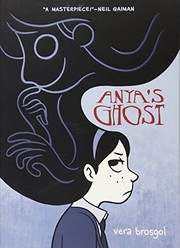
Anya's Ghost
A lonely Russian immigrant falls into a well, befriends the ghost trapped there, and discovers that the ghost's help comes with a dangerous price.
2,001-word summary · 9 min read
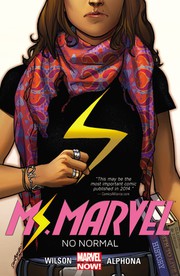
Ms. Marvel, Vol. 1: No Normal
Kamala Khan, a Jersey City teenager and Carol Danvers fan, gains shapeshifting powers and has to decide what kind of hero she wants to be.
2,579-word summary · 11 min read
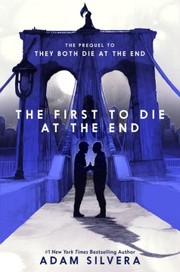
The First to Die at the End
On the night Death-Cast launches, a boy with a bad heart meets a model with everything ahead of him, and one of them gets the call.
2,908-word summary · 13 min read
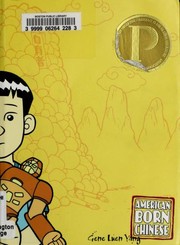
American Born Chinese
Three stories, a monkey king, a Chinese-American boy and a sitcom cousin, converge in a graphic novel about shame, assimilation and learning to accept yourself.
2,107-word summary · 9 min read
Paper Girls, Volume 1
Four paper girls in 1988 Ohio chase a stolen walkie-talkie into a basement and stumble into a time war, flying dinosaurs, and an older version of themselves.
2,235-word summary · 10 min read